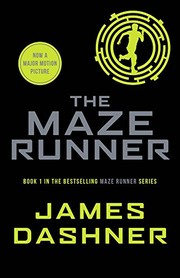
the maze runner
In 60 seconds
Thomas wakes in an elevator with no memory except his name, delivered to the Glade—a grassy compound surrounded by massive, shifting Maze walls patrolled by lethal biomechanical Grievers. When the first girl, Teresa, arrives with a note reading 'She's the last one. Ever.', she later triggers the Ending: the sky turns gray, the Box stops coming, and the Maze doors stay open at night, with Grievers taking one boy per night. Thomas deliberately endures the Griever sting's Changing, recovering memories that he helped design the Maze for WICKED. He leads the surviving Gladers through the Griever Hole, where Teresa types the code hidden in the Maze maps, and escapes—only to learn from Ava Paige's memo that the Maze Trials were merely Phase One of an experiment to cure the Flare.
Before you start
Why it matters
This is the book that made amnesia thrillers and death-maze plots a YA staple, and it still earns its reputation: the mystery tightens with every chapter, and the reveal recontextualizes everything without cheating. Read it if you like survival stories where the real question isn't 'how do we get out' but 'who put us here and why'—and if you'd rather trust no adult, no system, and no memory, including your own.
Spoilers ahead
The story
- 1
Act 1
The Greenie in the Box
A boy wakes in darkness, riding a metal elevator upward, with nothing in his head but his own name: Thomas. The doors open onto the Glade, a grassy compound ringed by concrete walls hundreds of feet high, where roughly fifty teenage boys—the Gladers—stare at the newest arrival, the 'Greenie.' Chuck, a chubby, curly-haired kid around thirteen, appoints himself Thomas's first friend and walking guide, explaining the rhythm of their prison: the Box delivers supplies every week and a new amnesiac boy every month. Thomas learns the walls' openings slide shut every night with a deafening rumble, sealing everyone inside, and beyond them sprawls the Maze, which no one has ever escaped. Minho, the Keeper of the Runners—an Asian boy with heavily muscled arms—shows him the daily routine: Runners sprint into the Maze to map its walls, which shift configuration every night, hunting for an exit while avoiding the Grievers, lethal creatures of metal and flesh. Then the routine shatters. Ben, a Builder who went through the Changing after a Griever sting, attacks Thomas in the graveyard, screaming that he isn't one of them, and Alby tackles him to save Thomas's life. Ben is sentenced to banishment—pushed into the Maze as the doors close, his screams audible through the night. Before Thomas can process any of it, the Box rises one more time: a girl, the first ever, comatose, clutching a note that reads 'She's the last one. Ever.'
- 2
Act 2
The Night in the Maze
Minho finds what he thinks is a dead Griever deep in the Maze and takes Alby to see it. It isn't dead. A living Griever stings Alby, and Minho carries the collapsing leader back toward the Glade—arriving just as the doors begin to grind shut. Thomas, watching from the edge, makes the choice no Glader has ever made: he darts into the Maze as the walls close, stranding all three boys outside overnight, a death sentence by every rule the Glade knows. Minho, calculating the odds, abandons them when Grievers come. Thomas doesn't. He uses the ivy vines on the wall to hoist the stung, unconscious Alby out of reach and ties him off. Minho returns, and together they lure four Grievers off the Cliff into the void. At dawn, Thomas walks back through the open doors—the first person in Glade history to survive a night inside. The price of fame is immediate: Newt calls a Gathering of the Keepers to judge him. Gally, Keeper of the Builders, wants him punished; Minho nominates him as a Runner. Gally and Minho nearly come to blows before Gally storms out, and Newt splits the difference—one day in the Slammer, then Runner training. Alby, recovering from the Changing, asks to see Thomas alone and tries to tell him something about his past—then suddenly starts choking himself, later claiming someone was controlling his actions.
- 3
Act 3
The Ending
The girl wakes. She communicates with Thomas telepathically and tells him she triggered the Ending—'It was you and me, Tom. We did this to them.' Her name is Teresa, and her arm bears a WICKED tattoo reading 'WICKED is good.' The Ending arrives on schedule: the sky turns permanently gray, the Box stops coming, and the Maze doors stay open at night. Gally, who had vanished after the Gathering, returns with a warning: 'They'll come for one of us every night till we're all dead. Just like they did with Ben.' That night, Grievers enter the Homestead for the first time; Gally throws himself at them and is taken. Despairing, Alby sets fire to the map room—though Minho and Newt had secretly saved copies in the Weapons Room. Studying the salvaged maps, Thomas has the insight no one else had: compare sections across the same day, not days within a section. Layered on wax paper, the maps spell out six words: FLOAT, CATCH, BLEED, DEATH, STIFF, PUSH. Grievers keep taking one boy per night, so Thomas deliberately stings himself with a severed Griever stinger to undergo the Changing. Unconscious for days, he recovers fragments: he helped design the Maze, and he worked for WICKED—World In Catastrophe: Killzone Experiment Department. He wakes knowing the way out: the Griever Hole beyond the Cliff, where a computer awaits a code.
- 4
Act 4
The Griever Hole
Newt hands leadership to Thomas, and the remaining Gladers arm themselves from the Weapons Room for a final battle. Thomas and Teresa lead a group into the Maze toward the Cliff while the others fight as decoys; Gladers grapple Grievers hand-to-hand and die in the corridors, but Thomas, Teresa, Minho, Newt, and Chuck reach the Cliff. Thomas and Teresa jump into the Griever Hole and find the computer terminal. Teresa types the code—FLOAT, CATCH, BLEED, DEATH, STIFF—but the final word, PUSH, fails. Chuck, the kid who'd been Thomas's first friend since the Box, realizes it was never a word at all: push the button. The Maze shuts down, the Grievers stop, and the survivors descend into a facility where they find a room of monitors and Chancellor Ava Paige watching. Gally appears, deranged, holding a knife—taken and controlled by WICKED—and throws it at Thomas. Chuck leaps in front of him and takes the blade, dying in Thomas's arms. Seconds later, a rescue team of armed adults bursts in, kills the remaining WICKED staff, and escorts the Gladers out. They're fed and bedded down in a dormitory, where Thomas grieves Chuck and vows to destroy WICKED. The epilogue is Ava Paige's memo to her staff: the Maze Trials were Phase One of an experiment to find a cure for the Flare. 'They think they're so close to being done... Phase Two begins now.'
Who's who
Characters
- ThomasA boy about sixteen who arrives knowing only his name and privately wonders if he has been in the Maze before. He becomes the first to survive a night inside, deliberately endures the Changing to recover his memories, and learns he helped design the Maze for WICKED—then leads the escape anyway.
- TeresaThe first and only girl sent to the Glade, arriving comatose with a note reading 'She's the last one. Ever.' She shares a telepathic link and fragmented memories with Thomas, and together they trigger the Ending and solve the Maze's code.
- AlbyThe dark-skinned leader of the Gladers who holds the Glade together with rules. A Griever sting and the Changing break something in him; he sets fire to the map room and later commits suicide by walking into a group of Grievers.
- NewtAlby's second-in-command, blond and limping from a broken leg. Kind where others are suspicious, he mediates the Glade's fights, sentences Thomas to one day in the Slammer and then Runner training, and eventually hands leadership decisions to Thomas.
- MinhoThe sarcastic, brave Keeper of the Runners who maps the Maze's nightly shifts. He abandons Thomas and Alby in the Maze when Grievers come—then returns, helps lead four Grievers off the Cliff, and becomes a close friend to Thomas.
- ChuckA chubby thirteen-year-old who befriends Thomas like a little brother from his first day. He realizes 'PUSH' means to push a button, and dies taking a knife Gally threw at Thomas.
- GallyThe Keeper of the Builders and the Glade's chief antagonist, who distrusts Thomas from the start and storms out of the Gathering rather than accept him. Having been taken and controlled, he returns at the end to throw a knife at Thomas—and kills Chuck instead.
- Ava PaigeThe chancellor of WICKED, who appears in the facility and in the epilogue's memo, calmly announcing that Phase Two begins now.
What it's really about
Themes
Memory as identity
Every Glader arrives with nothing but their first name, which means every friendship, grudge, and alliance in the Glade is built from scratch—Chuck befriends Thomas on his first day, and Gally distrusts him. The Changing shows the flip side: recovering memories is so painful that Ben goes murderous and Alby falls apart after his. When Thomas deliberately stings himself with a severed Griever stinger to get his memories back, he's betting that knowing the truth—even the truth that he helped design the Maze—is worth more than the comfortable blank of amnesia. The book's answer is that you are what you do, not what you remember: Thomas's choices in the Glade define him, even after he learns who he used to be.
Order versus survival
Newt explains the Glade's three strict rules, and the system works—until it doesn't. Ben is banished into the Maze at night for attacking Thomas; Gally demands Thomas be punished for breaking the rules by entering the Maze at night. The rules exist to keep fifty boys alive in an impossible place, and the book takes that seriously: Thomas survives precisely because the Glade's order gave him a structure to rebel against. But when the Ending comes—gray sky, no supplies, open doors—the old order is useless, and Alby, the man who embodied it, sets fire to the map room and later walks into the Grievers. The point: rules are tools, not truths, and clinging to them when the world changes is its own kind of death.
Sacrifice and who pays for the mission
Chuck is the book's moral center: a thirteen-year-old with no special skills, who befriends the newcomer first, realizes the code's final word means push a button, and then throws himself in front of a knife meant for Thomas. His death lands hardest because the whole escape was supposed to be the happy ending—the Gladers fought through the Maze, shut it down, and made it out. The book refuses to let the escape be clean. Alby commits suicide by walking into a group of Grievers; Ben is banished into the Maze; boys are taken nightly during the Ending; Chuck dies seconds after victory. The point: survival has a body count, and the people who pay are rarely the ones who benefit.
Trust and manipulation
The Gladers' entire world is a controlled experiment. The Box, the supplies, the monthly arrivals, the Maze's shifting walls—all of it is managed by WICKED, and Thomas helped design the Maze. Teresa's telepathic confession that she and Thomas 'did this to them' makes the betrayal personal, not institutional. Even Gally's final attack comes from a boy who has been taken and controlled by WICKED. The book keeps asking who you can trust when your memories can be wiped, your actions can be puppeteered, and the people running the experiment believe they're the good guys—Teresa's tattoo reading 'WICKED is good' is the thesis stated as a provocation.
Community under pressure
Roughly fifty teenage boys, no adults, no memories, and a death maze outside the walls—and they build a functioning society with jobs (Sloppers, Builders, Runners), leaders, rules, a cemetery, and a prison called the Slammer. The Glade works because everyone has a role, and it frays exactly when roles stop mattering: when the Box stops coming and the Grievers start taking one boy a night, the social contract collapses into despair and Gally's warning. The escape only works when the community acts as one—decoys fighting while Thomas and Teresa run for the Cliff. The book's quiet argument is that cooperation is the only technology that survives catastrophe.
Look closer
Symbols
- The Maze
- A vast, shifting labyrinth of stone walls that surrounds the Glade and defines every life inside it. It stands for the controlled, cruel system the boys are trapped in—impossible to solve by force, survivable only by patience, mapping, and cooperation. When the code finally shuts it down, the system's walls stop being fate.
- Grievers
- Biomechanical, cow-sized creatures that live in the Maze and sting Gladers, inducing the Changing. They are the system's enforcers—part animal, part machine, like the experiment itself. Their nightly harvest during the Ending shows what happens when the people controlling the machinery decide the cost is acceptable.
- The Changing
- The painful, dangerous process a stung Glader undergoes, regaining fragments of stolen memories. It represents the price of truth: Ben comes out of it violent, Alby comes out of it broken, and Thomas comes out of it knowing he helped design the Maze. Knowing costs; ignorance costs differently.
- The Box
- The metal elevator that delivers weekly supplies and monthly amnesiac boys—the Gladers' only connection to the outside world. It stands for their total dependence on unseen caretakers, and its silence during the Ending marks the moment the caretakers stop pretending to be benevolent.
- The Maps
- The Runners' daily drawings of the Maze's configurations, layered to reveal the escape code. They stand for accumulated, collective knowledge—years of dangerous work that looks pointless until someone finds the right way to read it. Alby setting fire to them is despair destroying hope; Minho and Newt's hidden copies are the community refusing to let it die.
Spoilers
Ending explained
The ending is a trapdoor. Thomas wins—shuts down the Maze, survives the Grievers, leads his friends out—and the victory is immediately hollowed out twice. Chuck's death seconds after the escape insists that winning doesn't mean no one pays; the kid who befriended Thomas from day one never gets to see what comes next. Then Ava Paige's memo reframes the entire book: the Maze Trials were Phase One of an experiment to find a cure for the Flare, the suffering was data, and Phase Two begins now. The rescue that felt like salvation is just a scene change in someone else's experiment. Some readers find this cheap—a sequel hook disguised as an ending. But it's the book's actual argument: systems that treat children as instruments don't stop when one test concludes, and the people running them can write 'WICKED is good' and mean it. The ending lands because it converts Thomas's hard-won agency into a debt—his vow to destroy WICKED is the only response left that the experimenters haven't scripted.
For class or book club
Discussion questions
- 1.Thomas regains his memories and learns he helped design the Maze. Does the book argue that who you were matters less than who you choose to be—or does Thomas's guilt suggest the past is never really past?
- 2.Alby rules by strict rules, banishes Ben to his death, and eventually burns the maps and walks into the Grievers. Is Alby a failed leader, or the only honest one in the Glade?
- 3.Ava Paige's memo frames the Maze Trials as a necessary step toward curing the Flare. Does the book actually refute 'WICKED is good,' or does it leave the utilitarian argument uncomfortably alive?
Worth remembering
Best lines
“She's the last one. Ever.”
“It was you and me, Tom. We did this to them.”
“They'll come for one of us every night till we're all dead. Just like they did with Ben.”
“They think they're so close to being done... Phase Two begins now.”
A fair critique
Where it falls short
The invented slang ('shuck,' 'klunk,' 'Greenie') divides readers—some find it immersive, others grating—and the amnesia premise means the protagonist spends much of the book being told things rather than knowing them, which can make the early chapters feel like a guided tour. Female representation is thin: Teresa is the only girl in a cast of dozens, and she spends her introduction in a coma. The plot's machinery—telepathy, memory wipes, conveniently timed reveals—runs on coincidence, and the ending resolves the Maze only to defer nearly every real question to the sequel. Readers who need answers in book one should know they're signing up for a trilogy.
In one sentence
A boy without a past must solve the lethal Maze he helped design—and escaping it only reveals the experiment has barely begun.
Is it for you?
Who should read it
Readers who want a plot that moves like a thriller and a mystery that actually pays off—especially teens and adults who enjoyed Hunger Games-style survival stories but want more puzzle than romance. Also ideal for reluctant readers: short chapters, constant danger, and a reveal that makes rereading worthwhile.
4 questions
Quick quiz: how well do you know the maze runner?
0 of 4 answered
FAQ
What is the maze runner about?
The Maze Runner is about a teenage boy named Thomas who wakes up in a mysterious, isolated community called the Glade, surrounded by an enormous, deadly Maze. With no memory of his past, Thomas and the other Gladers must navigate the ever-changing Maze, evade monstrous creatures, and uncover the truth behind their imprisonment to find a way to escape.
Is the maze runner worth reading?
Yes, The Maze Runner is widely considered worth reading, especially for fans of young adult dystopian fiction. It offers a fast-paced, suspenseful plot with a compelling mystery, engaging characters, and thought-provoking themes about memory, survival, and control. Its unique premise and thrilling action keep readers hooked from beginning to end.
How does the maze runner end?
Spoiler: Thomas and a group of surviving Gladers escape the Maze through the Griever Hole, entering a laboratory where they confront the Creators. They are then 'rescued' by a group claiming to be rebels, who take them to a safe haven. However, an epilogue memo from Ava Paige, Chancellor of WICKED, reveals that the 'rescue' was merely another phase of WICKED's ongoing experiment to find a cure for the Flare disease.
Who should read the maze runner?
The Maze Runner is ideal for young adult readers (ages 12+) who enjoy dystopian science fiction, adventure, and mystery. Fans of books like The Hunger Games or Divergent will likely appreciate its themes of survival, rebellion, and a corrupt governing power. It's also suitable for anyone looking for a thrilling, action-packed story.
How long does it take to read the maze runner?
On average, it takes about 6-7 hours to read The Maze Runner. This estimate is based on an average reading speed of 250 words per minute and the book's approximate length of 100,000 words. Individual reading times may vary depending on reading speed and comprehension.
Who wrote the maze runner?
the maze runner was written by james dashner and first published in 2009.
What genre is the maze runner?
the maze runner is listed under Children & Young Adult.
More Children & Young Adult summariesHow many pages is the maze runner?
the maze runner is about 375 pages long (the median page count across its editions, per Open Library).