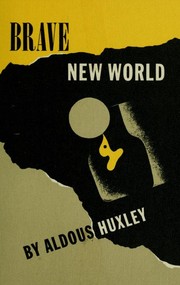
brave new world
In 60 seconds
In AF 632, human embryos are grown in bottles, conditioned, and caste-sorted into a drugged, promiscuous World State. Bernard Marx brings John, a 'savage' raised on Shakespeare from a New Mexico reservation, back to London as a celebrity curiosity. John recoils from the comfort and emptiness, clashes with World Controller Mustapha Mond, and retreats to an abandoned lighthouse near Puttenham to purify himself. Crowds turn his self-flagellation into entertainment; after a soma-fueled orgy, he hangs himself from the lighthouse archway.
Before you start
Why it matters
Huxley wrote a dystopia with no boot on the neck: control comes through pleasure, conditioning, and endless distraction, not fear. That makes it the sharper mirror for any age of screens, pills, and engineered contentment. Read it if you want to argue about whether comfort is worth the cost of art, religion, passion, and the right to be unhappy.
Spoilers ahead
The story
- 1
Act 1
Bottles, Not Mothers
London, AF 632. The Director of Hatcheries and Conditioning walks students through the Fertilizing Room, where human embryos grow in bottles instead of wombs. On the shield above: 'Community, Identity, Stability.' Bokanovsky's Process lets one egg yield up to 96 identical twins — the Director calls it a major instrument of social stability. Alphas and Betas develop optimally; Gammas, Deltas, and Epsilons are chemically stunted, Epsilons deprived of oxygen and dosed with alcohol to keep them simple-minded for menial work. In the next room, Delta babies get electric shocks and loud noise when they approach books and roses, so they will grow up hating both. Sleeping children murmur hypnopaedic lessons: 'I'm really awfully glad I'm a Beta, because I don't work so hard.' Mustapha Mond, one of the ten World Controllers, explains why: the Nine Years' War and anthrax bombings made the world choose stability over freedom; religion, family, and monogamy were banned. Soma — 'all the advantages of Christianity and alcohol; none of their defects' — keeps everyone happy. Lenina Crowne confesses to her friend Fanny that she has seen Henry Foster for four months, exclusively; Fanny scolds her: 'everyone belongs to everyone else.' Bernard Marx, an Alpha-Plus psychologist too short for comfort, overhears Henry Foster and the Assistant Predestinator talking about Lenina 'having her' and reacts with anger and disgust.
- 2
Act 2
The Reservation
Bernard, insecure even with Lenina — she laughs at his nervousness when he struggles to speak to her about their planned trip to the Savage Reservation — confides his resentment to Helmholtz Watson, an Emotional Engineering lecturer too talented for his world. Bernard attends a Solidarity Service with twelve members who chant 'Orgy-porgy' and take soma in a parody of a religious communion, but feels more isolated and dissatisfied than ever afterward. On their date he refuses soma, talks about wanting to feel strongly, and says he wishes the sea were rough; Lenina finds the desire for intense emotion dangerous and absurd. At the airport, the Director, Thomas (Tomakin), tells a story from twenty years back: he lost a girl named Linda in the New Mexico Savage Reservation during a storm, never found — presumed dead. Then he threatens Bernard with exile to Iceland in front of the crowds at the airport. In Malpais, Bernard and Lenina watch a ritual snake dance and whipping ceremony, then meet Linda — bloated, toothless, drunken — and her son John, born naturally on the Reservation. John explains he was excluded from the rituals for his pale skin and his mother's promiscuity; he once tried to undergo the whipping ceremony to prove himself but was rejected. His childhood: Linda taught him to read from her only book, a technical manual on embryo development, and later gave him a volume of Shakespeare's complete works found by Popé. He hated Popé, once tried to stab him while he slept after Popé gave Linda mescal and she passed out. The boys of Malpais called Linda a whore and taught him shame — he found her in bed with Popé and quoted Hamlet's 'rank sweat of an enseamed bed.' He longed for the 'brave new world' Linda had told him about.
- 3
Act 3
Celebrity and Collapse
Bernard gets Mustapha Mond's permission to bring John and Linda back to London; John, reading alone while Bernard arranges the trip, finds himself eager and anxious to see the civilized world. Back at the Hatchery, the Director publicly begins Bernard's exile ceremony — and Bernard presents Linda and John. John kneels and calls the Director 'father.' The room erupts in laughter; the humiliated Director flees and later resigns. Suddenly Bernard is popular: as custodian of 'the Savage,' he basks in reflected attention, boasts about his romantic conquests, and hosts parties. Linda, sent to a reconditioning centre, spends her days in a soma haze. John is toured around facilities like an exhibit — at Eton he watches children being death-conditioned to associate sweets with dying, and is horrified. But John refuses to come out of his room at Bernard's party; the guests leave, Bernard is humiliated, his social standing collapses. Helmholtz reads a heretical poem about solitude to his students and is reported; he and John bond over Shakespeare — Helmholtz laughs at Romeo and Juliet's passionate language about parents' objections, finding it absurd, but appreciates the power of the words. Lenina, infatuated, visits John and strips to seduce him; appalled by her promiscuity and his own desire, he reacts with violence, calling her an 'impudent strumpet' and nearly strangling her before she flees. Then word comes: Linda is dying at the Park Lane Hospital for the Dying. John rushes to her bedside, weeping openly while children on a death-conditioning field trip watch with curiosity and discomfort. In her soma trance she mistakes him for Popé and speaks of mescal; enraged and grieving, he shakes her and shouts at her before she dies.
- 4
Act 4
The Right to Be Unhappy
At the hospital, John encounters a group of Delta workers receiving their soma ration. He seizes the soma and throws it out the window, declaring freedom; a riot breaks out until police arrive with soma vapor and anesthetic spray to subdue the crowd. Helmholtz joins the protest; Bernard hesitates at the edge of the crowd, unsure whether to participate or flee, and is eventually arrested along with the others. Before Mustapha Mond, the three hear the World State's logic: science and art must be constrained because change and truth threaten stability; happiness is prioritized over truth and beauty. Mond reveals he himself once faced the choice between exile and conforming to the Controller path, and he keeps forbidden books — including Shakespeare and the Bible — locked in his safe, which he shows to the three men. Mond sentences Bernard and Helmholtz to exile on islands. Bernard panics and pleads to stay, being dragged out; Helmholtz accepts his fate and requests an island with a bad climate, choosing the Falkland Islands. In private, Mond and John debate the cost of happiness: John argues for the right to poetry, danger, sin, and God; Mond replies that all these things are incompatible with civilization — 'the world's stable now. People are happy; they get what they want, and they never want what they can't get.' John's answer: 'I claim the right to be unhappy.' Mond refuses John's request to join the exiles, saying he wants to see how John's experiment in self-torment continues. John retreats to an abandoned lighthouse near Puttenham, Surrey, plants a garden, and performs rituals of self-flagellation with a knotted whip to atone for his desire for Lenina. Reporters, including one from the Hourly Radio, discover John at the lighthouse and publicize his self-flagellation; Darwin Bonaparte, a feely photographer, secretly films it and releases it as 'The Savage of Surrey.' Crowds of sightseers arrive by helicopter to watch, and a feely (sensory film) is made of his penance. Lenina emerges from the crowd; John, tormented by love and disgust, whips her (or at her) and then himself — and the crowd, aroused by the spectacle, descends into a soma-fueled orgy. The next morning John wakes, remembers his participation in the orgy, and is overwhelmed with shame and self-loathing. That evening, when more crowds arrive, they find he has hanged himself from the lighthouse archway, his feet turning like a compass needle.
Who's who
Characters
- John the SavageIllicit son of the Director and Linda, raised on a New Mexico reservation with only Shakespeare and shame for company. He wants love, sin, and meaning — and after an orgy he participates in, he hangs himself from the lighthouse archway.
- Bernard MarxAn Alpha-Plus psychologist, stunted by an alcohol accident in his blood-surrogate, angry and jealous in a world built for contentment. He brings John back as a celebrity drawcard, collapses when the novelty fails, and panics and pleads when sentenced to exile in Iceland.
- Lenina CrowneA popular, desirable hatchery worker who cannot comprehend monogamy or John's Shakespearean idea of courtship. She strips to seduce him, is nearly strangled, and finally emerges from a helicopter crowd; John whips her (or at her) and then himself.
- Mustapha MondOne of the ten World Controllers, who keeps forbidden books — Shakespeare and the Bible — in his safe. He argues happiness must outrank truth and beauty, and refuses John's request to join the exiles because he wants to see how John's experiment in self-torment continues.
- Helmholtz WatsonA handsome, brilliant Emotional Engineering lecturer who feels there is something he wants to write but cannot express. Reported for a heretical poem about solitude, he accepts exile and requests an island with a bad climate, choosing the Falkland Islands.
- LindaThe Director's lost lover, left behind on the Reservation twenty years ago, ashamed of her pregnancy and never found. Back in London she spends her days in a soma haze and dies in a hospital bed, mistaking her son for Popé.
- The Director (Thomas)Director of Hatcheries and Conditioning, who threatens Bernard with exile to Iceland and tells the story of losing Linda. John's public 'father' destroys him; he flees in humiliation and later resigns.
What it's really about
Themes
Engineered happiness as control
The World State uses soma, hypnopaedia, and promiscuity to keep citizens peaceful. Babies are shocked away from books and roses, sleepers murmur 'everyone belongs to everyone else,' and Delta workers line up for their drug ration without protest. When John throws the soma out a hospital window and declares freedom, a riot breaks out until police subdue the crowd with soma vapor and anesthetic spray. Mond's defense is chillingly reasonable: 'the world's stable now. People are happy; they get what they want, and they never want what they can't get.' The book's point: a population kept comfortable will never ask what it surrendered.
Shakespeare versus the machine
John's entire moral vocabulary comes from one volume of Shakespeare, found by Popé on the Reservation. He quotes Hamlet after finding his mother in bed with Popé, calls Lenina an 'impudent strumpet,' and greets civilization with Miranda's 'O brave new world' — wonder curdling into irony as he learns what such people actually are. Helmholtz laughs at Romeo and Juliet's passion over parental objections, yet feels the power of the words. Mond keeps forbidden books — including Shakespeare and the Bible — locked in his safe. The point: poetry carries the emotions this world has engineered away, which is exactly why it must be censored.
The cost of stability
Mond tells the students the Nine Years' War and anthrax bombings led the world to choose stability over freedom; religion, family, and monogamy were banned. Science and art are constrained because change and truth threaten the balance. Even Helmholtz, an Emotional Engineering lecturer, feels there is something he wants to write and cannot. Mond reveals he once faced the choice between exile and conforming to the Controller path. The book's point: stability is real and valuable — and its price is everything John claims: poetry, danger, sin, God, and the right to be unhappy.
Outsiders everywhere
John belongs nowhere: too pale and too well-read for Malpais, where boys mocked his mother as a whore and rejected him from the rituals; too moral for London, where death-conditioned children watch his grief with curiosity and discomfort. Bernard is a misfit among Alphas for his short stature; Helmholtz for his surplus of talent. Even Linda, a World State citizen, becomes a freak on the Reservation and an embarrassment at home. The book's point: a society engineered for uniform contentment has no place for anyone who feels too much — and neither, it turns out, does anywhere else.
Look closer
Symbols
- Soma
- The state's perfect drug: 'all the advantages of Christianity and alcohol; none of their defects.' It dissolves grief (Linda's haze), enforces communion (the Solidarity Service's 'Orgy-porgy'), and quells riots (soma vapor and anesthetic spray over the crowd). When John throws it out the window, he is attacking the entire bargain of the World State — and a riot breaks out.
- Shakespeare
- John's single inherited book is his language for love, shame, and rage — the title itself comes from Miranda's line in The Tempest, used ironically as wonder turns to horror. That the same volume sits locked in Mond's safe shows the state knows exactly what literature costs and contains: the forbidden feelings it has bred out of everyone else.
- The lighthouse
- John's chosen refuge near Puttenham, Surrey, meant for purification and solitude — garden, knotted whip, atonement. Instead it becomes a stage: filmed as 'The Savage of Surrey' by Darwin Bonaparte, swarmed by helicopter crowds demanding his whipping as entertainment. The place of retreat becomes the site of the orgy and the hanging; sanctuary is the one thing this world will not grant.
- Bottles
- Human life begins in bottles, sorted and stunted — Epsilon embryos deprived of oxygen and treated with alcohol. The bottle is the World State in miniature: controlled origin, predetermined role, no mother, no accident. John, born naturally on the Reservation, is the uncontrolled variable the whole system cannot process.
Spoilers
Ending explained
John's suicide is the logical end of a man with nowhere left to stand. He came to civilization expecting the 'brave new world' his mother described; he found comfort without dignity, sex without love, death without mourning. His lighthouse asceticism was a last attempt to purify himself of desire — and the crowd turned even his penance into a feely, then into an orgy he participated in. Huxley leaves the final image deliberately cold: feet turning 'like a compass needle,' while the crowd reacts with casual, uncomprehending reaction. One reading: John is a martyr to full humanity, proving Mond wrong by dying of it. Another, harsher: John is himself a creature of borrowed absolutes — his Shakespearean ideals were as implanted as any hypnopaedic slogan — and his tragedy is that he could only answer one conditioning with another. The ending lands because the world does not change: the helicopters simply come back the next evening, and the crowd finds a show already over.
For class or book club
Discussion questions
- 1.Mond argues happiness must outrank truth and beauty; John claims 'the right to be unhappy.' Whose position does the novel actually vindicate — and does John's suicide strengthen or undermine his argument?
- 2.John's Shakespearean morality is itself a kind of conditioning, imported wholesale from one book. Is he a free man or simply programmed by a different code?
- 3.Compare the World State's control through pleasure with dystopias built on fear: which model better predicts modern media, pharmaceuticals, and consumer culture — and why does Huxley's version age better?
Worth remembering
Best lines
“Community, Identity, Stability”
“I'm really awfully glad I'm a Beta, because I don't work so hard.”
“the world's stable now. People are happy; they get what they want, and they never want what they can't get.”
“I claim the right to be unhappy.”
A fair critique
Where it falls short
The Savage Reservation is sketched with broad strokes — snake dances, whippings, mescal — that flatten living cultures into a single primitive backdrop against which civilization looks uniformly artificial. The women fare worst: Lenina exists mainly to be desired, scolded, seduced, and whipped, and Linda's degradation is played for horror and pity with little interior life. John's ideal of love is chivalric and punishing, and the book never fully interrogates whether his disgust at Lenina's sexuality is any healthier than her conditioning. The debate chapters can feel like essays wearing costumes. But the arguments are the point — few novels let the antagonist win so much of the debate.
In one sentence
A world that has abolished pain has also abolished everything worth being awake for — and the only man who knows it would rather hang than be happy.
Is it for you?
Who should read it
Anyone who suspects that comfort might be the most efficient form of control ever invented — readers of Orwell, of Black Mirror, of pharmaceutical debates. Also anyone who has ever loved a book so much it became their personality.
4 questions
Quick quiz: how well do you know brave new world?
0 of 4 answered
FAQ
What is brave new world about?
Brave New World depicts a dystopian future society, the World State, where humans are genetically engineered and conditioned for specific social roles. It explores the conflict between this manufactured happiness and stability, and the desire for individual freedom, truth, and genuine human experience, primarily through the eyes of an outsider named John the Savage.
Is brave new world worth reading?
Yes, Brave New World is highly worth reading. It's a foundational work of dystopian literature that offers a profound and unsettling critique of technological control, consumerism, and the potential loss of humanity in pursuit of a 'perfect' society. Its themes remain remarkably relevant, prompting readers to consider the true costs of comfort and stability.
How does brave new world end?
Spoiler: John the Savage, unable to reconcile himself with the World State's values and overwhelmed by the constant intrusion and spectacle surrounding him, retreats to an abandoned lighthouse. Despite his efforts to live a life of solitude and penance, he is discovered by reporters and becomes a public attraction. Driven to despair by the crowds and his own internal conflict, John ultimately hangs himself.
Who should read brave new world?
Anyone interested in dystopian fiction, science fiction, or philosophical critiques of society should read Brave New World. It's particularly relevant for those who ponder the ethics of genetic engineering, the impact of technology on human nature, the balance between individual freedom and societal control, and the nature of happiness.
How long does it take to read brave new world?
On average, it takes about 4 to 5 hours to read Brave New World. This estimate is based on an average reading speed of 250 words per minute for a book of approximately 60,000 to 70,000 words.
Who wrote brave new world?
brave new world was written by aldous huxley and first published in 1932.
What genre is brave new world?
brave new world is listed under Science Fiction.
More Science Fiction summariesWhere is brave new world set?
brave new world is set in Central London Hatchery, London and United Kingdom.
How many pages is brave new world?
brave new world is about 240 pages long (the median page count across its editions, per Open Library).