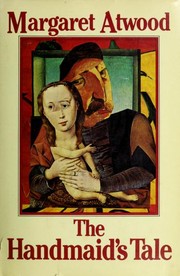
About The Handmaid’s Tale
The Handmaid’s Tale is a dystopian novel set in the Republic of Gilead, a totalitarian, theocratic state that has replaced the United States. The story is narrated by Offred, a Handmaid, one of the few remaining fertile women. In a society plagued by environmental degradation and widespread infertility, Handmaids are assigned to high-ranking Commanders and forced to bear children for them, serving as vessels for reproduction. Offred recounts her daily life, which is meticulously controlled, monitored, and devoid of personal freedom, as she navigates the oppressive rituals and strict social hierarchy of Gilead.
The novel explores themes of subjugation, identity, and the power of language. Offred's memories of her past life, her husband Luke, and her daughter provide a stark contrast to her present existence, highlighting the drastic loss of rights and autonomy for women under the new regime. Her internal monologue reveals her struggle for survival, her small acts of defiance, and her longing for connection and escape. The book serves as a cautionary tale, examining how easily fundamental freedoms can be eroded when society is pushed to extremes, and how religious fundamentalism can be twisted to justify horrific injustices.
The Handmaid's Tale remains profoundly relevant due to its exploration of reproductive rights, bodily autonomy, and the dangers of authoritarianism. It forces readers to confront the fragility of democratic institutions and the potential for a society to regress into a state where human beings are reduced to their biological functions. The ambiguous ending, coupled with the 'Historical Notes' section, leaves a lasting impression, prompting reflection on the nature of history, memory, and the continuous struggle against oppression.
Key takeaways
- Recognize that fundamental freedoms can be eroded incrementally, often under the guise of security or moral purity.
- Value and protect the right to bodily autonomy and reproductive freedom, as these are often the first targets in oppressive regimes.
- Understand that language and storytelling are powerful tools for resistance and preserving identity in the face of censorship.
- Be wary of religious extremism and its potential to justify discrimination and violence against marginalized groups.
- Cultivate and maintain personal connections, as community and solidarity are crucial for survival and resistance against totalitarian control.
- Reflect on the importance of historical context and critical analysis to prevent past mistakes from being repeated.
- Challenge societal norms that seek to define individuals solely by their biological functions or assigned roles.
Key ideas at a glance
Totalitarianism and control
- Cultivate and maintain personal connections, as community and solidarity are crucial for survival and resistance…
Feminism and patriarchy
- Recognize that fundamental freedoms can be eroded incrementally, often under the guise of security or moral purity.
Reproductive rights
- Value and protect the right to bodily autonomy and reproductive freedom, as these are often the first targets in…
Identity and memory
- Be wary of religious extremism and its potential to justify discrimination and violence against marginalized groups.
Resistance and rebellion
- Reflect on the importance of historical context and critical analysis to prevent past mistakes from being repeated.
Language as power
- Understand that language and storytelling are powerful tools for resistance and preserving identity in the face of…
Chapter summaries
NIGHT
Offred, a Handmaid in the Republic of Gilead, reflects on her new, highly restricted life in the Commander's house. She recalls her training at the Red Center, overseen by the Aunts, where women like her were indoctrinated into their new roles as reproductive vessels. Memories of her past life, her husband Luke, and her daughter surface, contrasting sharply with her present existence. She describes her room, the window overlooking the garden, and the constant surveillance, both internal and external. The initial chapters of this section establish the oppressive atmosphere, the uniform, and the profound sense of loss and isolation that defines Offred's daily routine, as she grapples with the complete erasure of her former identity and freedoms.
SHOPPING
Offred embarks on her first shopping trip with Ofglen, another Handmaid. This section vividly portrays the public face of Gilead: the heavily guarded streets, the Wall displaying the bodies of executed dissidents, and the specific, highly regulated shops like 'Milk and Honey' and 'Loaves and Fishes.' They encounter various social classes—Wives, Marthas, Econowives—and exchange coded greetings. Offred observes the Eyes, Gilead's secret police, and the general atmosphere of fear and control. During this outing, Ofglen subtly reveals a connection to a resistance movement, 'Mayday,' through a coded phrase, planting a seed of hope and danger in Offred's mind, and highlighting the pervasive surveillance even in mundane activities.
NIGHT
Back in her room, Offred delves deeper into her memories and the process of her transformation into a Handmaid. She recalls her friend Moira, their shared past, and Moira's rebellious spirit. She also remembers her mother, a feminist activist, and the gradual erosion of women's rights that led to Gilead's rise. This section explores the psychological impact of her new reality, the constant struggle to maintain her sanity and sense of self amidst the dehumanizing regime. She reflects on the loss of her name, her personal history, and the profound loneliness that accompanies her existence, finding solace only in her internal monologue and forbidden memories.
WAITING ROOM
Offred undergoes her monthly medical examination, a sterile and impersonal procedure designed to monitor her fertility. The doctor, a man, offers to impregnate her himself, suggesting that the Commander might be sterile and implying that Handmaids are often blamed for infertility. This illicit offer highlights the hypocrisy and corruption within Gilead's rigid system, where the primary goal is reproduction at any cost. Offred is faced with a dangerous choice, weighing the potential for conception against the severe risks of discovery. The encounter underscores the intense pressure on Handmaids to conceive and the desperate measures some are willing to take.
NIGHT
Offred continues her internal reflections, focusing on her body as a mere vessel for reproduction. She recalls the early days of Gilead's takeover, the freezing of bank accounts, and the loss of her job. She remembers her desperate attempt to escape with Luke and their daughter, and the traumatic separation that followed. This section emphasizes her profound sense of loss and the constant mental battle to resist succumbing to despair. She uses her memories and imagination as a form of escape, replaying past events and constructing alternative realities to cope with the suffocating present, highlighting her resilience in the face of overwhelming oppression.
HOUSEHOLD
This section describes 'The Ceremony,' the monthly ritual where the Commander attempts to impregnate Offred while Serena Joy, his Wife, is present. Based on the biblical story of Rachel and Bilhah, the act is devoid of intimacy, a cold and clinical duty. Offred recounts her detachment during the process, focusing on mundane details to distance herself from the humiliation. She observes the strained dynamics between the Commander and Serena Joy, whose bitterness and resentment are palpable. The Marthas, Rita and Cora, also play their roles in the household, maintaining a facade of normalcy while Offred navigates the complex power structures and emotional barrenness of her daily life.
NIGHT
Following the Ceremony, Offred grapples with the emotional aftermath and the dehumanizing nature of her existence. She recalls more memories of Moira, specifically her daring but ultimately unsuccessful escape attempt from the Red Center. These memories serve as both a source of inspiration and a stark reminder of the dangers of defiance. Offred reflects on the pervasive fear and the constant threat of being sent to the Colonies or worse. She yearns for genuine human connection and intimacy, contrasting her current sterile life with the warmth and love of her past, further emphasizing her profound isolation and longing.
BIRTH DAY
Offred and the other Handmaids attend the 'Birth Day' of Janine (Ofwarren), who successfully delivers a baby. This event is a rare occasion for collective celebration and a temporary reprieve from their usual isolation. The Wives also participate, with Serena Joy showing a mix of envy and hope. The ritual involves the Handmaids mimicking labor pains in solidarity, and the Wives taking credit for the birth. The baby is healthy, a rare and precious outcome in Gilead, bringing a fleeting moment of joy and relief, but also reinforcing the Handmaids' sole purpose and the high stakes involved in their reproductive roles.
NIGHT
Offred begins her secret meetings with the Commander in his study, initiated by him. These clandestine encounters involve playing Scrabble, a forbidden activity, and reading old magazines. The Commander seems to seek companionship and a connection beyond his official role, revealing a glimpse of his own loneliness and the hypocrisy of Gilead's elite. Offred, despite the danger, finds a perverse thrill in these transgressions, enjoying the small acts of rebellion and the intellectual stimulation. These meetings complicate her understanding of the Commander and the regime, blurring the lines between oppressor and individual.
SALVAGING
Offred and the other Handmaids are forced to attend a 'Salvaging,' a public execution. Three men are hanged, including a 'gender traitor' (a homosexual). Following this, the Handmaids are compelled to participate in a 'Particicution,' a ritualistic mob killing of a man accused of rape. The Aunts incite the Handmaids to violence, releasing their pent-up aggression and fear in a brutal display of collective punishment. Offred is horrified but also swept up in the frenzy, highlighting the psychological manipulation and control exerted by the regime, and the complicity it forces upon its citizens, even the victims.
NIGHT
Serena Joy, desperate for a baby, arranges for Offred to have sex with Nick, the Commander's chauffeur, believing the Commander to be sterile. These illicit encounters take place in secret, adding another layer of danger and complexity to Offred's life. Unlike the Ceremony, Offred finds a surprising, albeit forbidden, intimacy and connection with Nick. This relationship offers her a glimmer of genuine human warmth and affection, stirring conflicting emotions and a sense of hope, but also increasing her vulnerability and the risk of severe punishment if discovered by the Eyes.
SOONER OR LATER
Offred discovers a message scratched into her closet by the previous Handmaid: "Nolite te bastardes carborundorum" (Don't let the bastards grind you down). This message becomes a powerful symbol of defiance and resilience. Shortly after, Offred's original Ofglen is replaced, and the new Ofglen reveals herself to be part of the Mayday resistance, urging Offred to gather information. Offred also learns that Nick might be involved with Mayday. These revelations intensify her sense of hope and danger, pushing her towards a decision about whether to trust Nick and actively participate in the resistance, as her pregnancy remains uncertain.
NIGHT
Offred's relationship with Nick deepens, and she believes she might be pregnant. The new Ofglen reveals that the original Ofglen committed suicide to avoid capture by the Eyes, further highlighting the extreme dangers of resistance. Offred's fear and hope are intertwined as she contemplates her future. The tension builds as she awaits her fate, unsure if she is truly pregnant or if her actions have been discovered. This section culminates in the arrival of a black van, signaling either her rescue by Mayday or her capture by the Eyes, leaving her immediate future ambiguous.
NIGHT
This final 'NIGHT' section of Offred's narrative brings her story to an abrupt and uncertain climax. The black van, driven by the Eyes, arrives at the Commander's house. Nick, who has been revealed to be either an Eye or a member of Mayday, tells Offred to trust him and go with them. Offred, filled with a mixture of fear and a desperate hope for freedom, chooses to enter the van, leaving her fate entirely unknown. Her narrative ends here, with her stepping into the darkness, her future hanging precariously between escape and capture, freedom and punishment, a testament to the pervasive uncertainty of life in Gilead.
HISTORICAL NOTES ON THE HANDMAID'S TALE
Set in 2195, this epilogue presents a transcript from a symposium on Gileadean Studies. Professor James Darcy Pieixoto discusses Offred's narrative, which was discovered on cassette tapes, as a historical document. He explains the context of Gilead's rise, its social structures, and the challenges of authenticating Offred's story. The professors debate the reliability of the narrative and the identity of its author, highlighting the academic detachment from the human suffering described. This section provides a critical, scholarly perspective on Gilead, framing Offred's tale as a historical artifact and emphasizing the cyclical nature of power and the enduring human struggle for freedom, while leaving Offred's personal fate unresolved.
Full summary
"The Handmaid’s Tale," by Margaret Atwood, is a dystopian novel set in a near-future society called Gilead, where totalitarianism reigns and women’s rights are stripped away. The story follows Offred, a Handmaid forced to bear children for elite couples.
In Gilead, infertility has led to a class system where Handmaids are valued solely for their reproductive capabilities. Offred navigates her oppressive life, recalling memories of her past, her husband Luke, and her daughter. Major themes include the loss of identity, the subjugation of women, and the misuse of religion to justify oppression. The characters' struggles highlight the fragility of freedom.
Key elements include Offred's relationships with the Commander, who wields power, and Serena Joy, his wife, illustrating the complexity of female rivalry. Offred’s internal conflicts reveal the human spirit’s resilience against dehumanization.
Atwood’s novel serves as a cautionary tale about the dangers of extremist ideologies an...
Memorable quotes
“Nolite te bastardes carborundorum.”
“We were the people who were not in the papers. We lived in the blank white spaces at the edges of print. It was the absence of stories, of information, that was most frightening.”
“Ignoring isn't the same as ignorance. You have to work at it.”
“A rat in a maze is free to go anywhere, as long as it stays inside the maze.”
“But I keep on going, trying to remember what it was like to be in love. It's like trying to remember a dream. You can't quite get a hold of it.”
Characters
- OffredThe protagonist and narrator, a Handmaid assigned to Commander Fred. She struggles to retain her identity and memories in the oppressive Republic of Gilead.
- The Commander (Fred)Offred's Commander, a high-ranking official in Gilead. He is a complex figure who secretly engages in forbidden activities with Offred, revealing the hypocrisy of the regime.
- Serena JoyThe Commander's Wife, a former gospel singer and anti-feminist activist who now lives a life of bitter idleness. She resents Offred but is desperate for a child.
- OfglenOffred's shopping partner and a fellow Handmaid who is secretly part of the Mayday resistance movement. She represents the hidden acts of defiance within Gilead.
- MoiraOffred's best friend from before Gilead, a rebellious and strong-willed woman. Her fate as a Jezebel highlights the different forms of subjugation women face.
- NickThe Commander's chauffeur, who becomes Offred's secret lover. He is enigmatic and may be an Eye, a member of the resistance, or both.
- Aunt LydiaOne of the Aunts responsible for indoctrinating Handmaids. She embodies the cruel authority and twisted ideology of Gilead, teaching Handmaids to accept their roles.
Themes
- Totalitarianism and control
- Feminism and patriarchy
- Reproductive rights
- Identity and memory
- Resistance and rebellion
- Language as power
About Margaret Atwood
Margaret Atwood is a celebrated Canadian author known for her extensive body of work, including novels, poetry, short stories, and essays. She has written numerous acclaimed books such as 'Alias Grace,' 'The Blind Assassin' (which won the Booker Prize), and 'The Testaments,' a sequel to 'The Handmaid's Tale.' Atwood wrote 'The Handmaid's Tale' in 1985, drawing inspiration from historical events, political movements, and religious fundamentalism she observed globally. Her work often explores themes of power, gender, identity, and environmental concerns, establishing her as a prominent voice in contemporary literature.
FAQ
What is The Handmaid’s Tale about?
The Handmaid’s Tale is a dystopian novel set in the Republic of Gilead, a totalitarian state where fertile women, called Handmaids, are forced to bear children for high-ranking officials. It follows Offred, a Handmaid, as she navigates her oppressive existence, recalling her past life and engaging in small acts of defiance. The book explores themes of subjugation, identity, and the dangers of religious extremism and eroded freedoms.
Is The Handmaid’s Tale worth reading?
Yes, The Handmaid’s Tale is widely considered a seminal work of dystopian fiction and is highly worth reading. Its powerful exploration of reproductive rights, totalitarian control, and the fragility of freedom remains profoundly relevant. The novel offers a chilling cautionary tale, prompting readers to critically examine societal structures and the potential for oppression, making it a thought-provoking and impactful experience.
How does The Handmaid’s Tale end?
Spoiler: The Handmaid's Tale ends ambiguously. Offred is taken away by the Eyes, who may be arresting her or helping her escape as part of the Mayday resistance, orchestrated by Nick. The narrative then jumps to a 'Historical Notes' section from 2195, where scholars discuss Offred's story as a historical document, revealing that Gilead eventually fell. Her ultimate fate is left unknown, emphasizing the difficulty of recovering individual stories from oppressive regimes.
Who should read The Handmaid’s Tale?
The Handmaid’s Tale is recommended for readers interested in dystopian fiction, feminist literature, and social commentary. It appeals to those who enjoy thought-provoking narratives about political oppression, human rights, and the resilience of the human spirit. It's particularly relevant for anyone concerned with reproductive rights, gender equality, and the dangers of totalitarianism.
How long does it take to read The Handmaid’s Tale?
On average, it takes about 5 to 7 hours to read The Handmaid’s Tale, depending on your reading speed. At a typical pace of 250 words per minute, the book's length usually translates to approximately 6 hours of reading time.