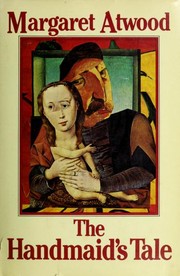
About Handmaid's Tale
Margaret Atwood's "The Handmaid's Tale" plunges readers into the Republic of Gilead, a totalitarian, theocratic state that has overthrown the United States government. In a world ravaged by environmental disasters and declining birth rates, fertile women, known as Handmaids, are forcibly assigned to high-ranking officials (Commanders) to bear children. The story is narrated by Offred, a Handmaid serving Commander Fred, whose former life, name, and identity have been stripped away. She recounts her daily existence, marked by strict surveillance, ritualized sexual servitude, and the constant threat of severe punishment for any deviation from Gilead's rigid doctrines.
Offred's narrative weaves between her harrowing present and fragmented memories of her past life before Gilead, when she had a husband, Luke, and a daughter. Her internal struggle for survival involves navigating the complex power dynamics within the Commander's household, including his barren wife, Serena Joy, and the enigmatic driver, Nick. The novel explores themes of female subjugation, the fragility of freedom, the power of language, and the human spirit's resilience in the face of extreme oppression. It serves as a stark warning about the potential consequences of religious extremism, political complacency, and the erosion of fundamental human rights, resonating deeply with contemporary social and political anxieties.
Key takeaways
- Vigilance is crucial in safeguarding fundamental human rights and freedoms against encroaching authoritarianism.
- The power of language extends beyond communication, serving as a tool for control, resistance, and the preservation of identity.
- Memory and personal history are vital for maintaining one's sense of self and resisting psychological manipulation.
- Oppressive regimes often exploit environmental crises and social anxieties to justify extreme measures and consolidate power.
- Solidarity among the oppressed, even in subtle forms, can provide a lifeline and foster hope for resistance.
- The erosion of reproductive rights and bodily autonomy can lead to profound societal control and dehumanization.
- Never underestimate the human capacity for cruelty, but also the enduring will to survive and find meaning.
Key ideas at a glance
Feminist Oppression
- Oppressive regimes often exploit environmental crises and social anxieties to justify extreme measures and consolidate…
- Solidarity among the oppressed, even in subtle forms, can provide a lifeline and foster hope for resistance.
Reproductive Rights
- Vigilance is crucial in safeguarding fundamental human rights and freedoms against encroaching authoritarianism.
- The erosion of reproductive rights and bodily autonomy can lead to profound societal control and dehumanization.
Identity and Memory
- Memory and personal history are vital for maintaining one's sense of self and resisting psychological manipulation.
Language as Power
- The power of language extends beyond communication, serving as a tool for control, resistance, and the preservation of…
Resistance and Survival
- Never underestimate the human capacity for cruelty, but also the enduring will to survive and find meaning.
Chapter summaries
Night
Offred, a Handmaid in the Republic of Gilead, recounts her new life in the Commander's house. She describes the restrictive environment, the red uniform, the lack of personal possessions, and the constant surveillance. Her room is sparse, with a window that only opens a crack. She reflects on the loss of her former identity, her name, and her family. Memories of the Red Center, where Handmaids were indoctrinated by Aunts like Aunt Lydia, flash through her mind. She learns the strict rules of silence and obedience, and the severe punishments for disobedience, such as the removal of a hand or eye. Offred's internal monologue reveals her struggle to maintain sanity and hope in a world where women are stripped of their rights and reduced to reproductive vessels.
Shopping
Offred goes on her first shopping trip with Ofglen, another Handmaid. They walk through the city, observing the strict social hierarchy and the oppressive atmosphere. They pass the Wall, where the bodies of executed dissidents, including doctors who performed abortions, are displayed as a warning. Offred notes the different uniforms: the blue of the Wives, the green of the Marthas, the striped dresses of the Econowives, and the brown of the Aunts. Communication is minimal and heavily monitored. They visit the various shops, which no longer have names but are identified by pictures. Offred and Ofglen exchange only formulaic greetings, but Offred senses a subtle defiance in Ofglen, a hint of something more beneath the surface.
Household
This section details Offred's daily life within the Commander's house. She describes the rigid routines, the sterile environment, and her interactions with the household members: Serena Joy, the Commander's Wife, who is bitter and resentful; Nick, the enigmatic Chauffeur; and Rita and Cora, the Marthas. Offred reflects on the past, remembering Serena Joy as a televangelist from before Gilead. The Ceremony, a ritualized, emotionless act of sexual intercourse between the Commander and Offred, is introduced. It is a monthly event, performed in the presence of Serena Joy, intended solely for procreation. Offred finds the experience dehumanizing and struggles to detach herself emotionally from the forced intimacy.
Nap
Offred spends her afternoons in her room, often napping or reflecting on her past. She recalls her life before Gilead, her husband Luke, and their daughter. She remembers the gradual erosion of women's rights: bank accounts frozen, jobs lost, and the increasing control over their bodies. These memories are fragmented and painful, as she grapples with the uncertainty of her family's fate. She also remembers her friend Moira from college, a defiant and spirited woman. Offred's internal monologues reveal her longing for connection and her struggle to hold onto her identity amidst the constant pressure to conform. She finds small acts of rebellion, like stealing butter to moisturize her skin.
Waiting Room
Offred is taken to the doctor for her monthly check-up, a humiliating and invasive procedure. The doctor, a man, examines her and subtly offers to impregnate her himself, suggesting that many Commanders are sterile, but it is always the Handmaid who is blamed. He implies that he could help her conceive, thereby saving her from being sent to the Colonies. Offred is terrified by the proposition but also tempted by the possibility of survival and a child. She refuses, fearing the severe consequences if caught. This encounter highlights the immense pressure on Handmaids to conceive and the hypocrisy within Gilead's system, where male infertility is a taboo subject.
Soul Scrolls
Offred continues her daily walks, observing more of Gilead's society. She passes the Soul Scrolls machines, which print out pre-programmed prayers, bought by Wives to accumulate spiritual merit. This mechanization of faith underscores the emptiness of religious practice in Gilead. Offred also notices the increasing tension between Handmaids and the general population. During a shopping trip, she and Ofglen witness a group of Japanese tourists, who are shocked by the Handmaids' attire and lack of freedom. This encounter provides a glimpse of an outside world that still remembers individual liberty, further emphasizing Offred's confinement and the stark contrast with Gilead's ideology.
Jezebel's
The Commander begins to summon Offred to his study at night, a secret and forbidden activity. He asks her to play Scrabble, read old magazines, and eventually gives her a costume from the past: a sequined outfit. He then takes her to Jezebel's, a secret club for Commanders, where women who are not Handmaids, Wives, or Marthas are forced into prostitution. Here, Offred is shocked to find Moira, her old friend, working as a Jezebel. Moira recounts her escape from the Red Center and her subsequent capture, revealing the harsh realities of resistance and the limited options for women who defy the regime. This experience exposes the hypocrisy and corruption at the highest levels of Gilead.
Salvaging
Offred attends a "Salvaging," a public execution where Handmaids and other citizens are forced to participate. The first execution is of a Guardian accused of rape, but the Handmaids, including Offred, are encouraged to tear him apart in a frenzy of collective violence. This event is a brutal display of Gilead's power and its manipulation of women's anger and fear. Later, three men are hanged for various crimes, including "gender treachery." During this event, Offred realizes that Ofglen, her shopping partner, has been replaced by a new Handmaid. The new Ofglen reveals that the original Ofglen committed suicide to avoid torture after being discovered as part of the resistance.
Night (second instance)
Following the traumatic events of the Salvaging and the revelation about Ofglen, Offred feels increasingly isolated and desperate. She reflects on the pervasive fear and the constant threat of discovery. Her secret meetings with the Commander continue, but they offer little comfort. She also begins a sexual relationship with Nick, the Chauffeur, initiated by Serena Joy in a desperate attempt to get Offred pregnant. Offred finds unexpected solace and intimacy in these forbidden encounters with Nick, which become a small act of defiance and a source of genuine human connection in her otherwise sterile existence. She grapples with her feelings for both Luke and Nick.
The Bath
Offred is taken to the "Bath," a facility where Handmaids are ritually cleansed before the Birth Day ceremony. This section emphasizes the objectification of Handmaids' bodies, which are seen purely as vessels for reproduction. Offred observes other Handmaids, some pregnant, some not, and reflects on the intense pressure and competition among them. The atmosphere is one of forced camaraderie mixed with underlying tension and fear. The ritualistic bathing reinforces the idea of purity and preparation for their sacred duty, further stripping them of individuality and personal agency. Offred feels a profound sense of detachment from her own body.
The Birth Day
Offred attends the Birth Day of Janine, another Handmaid. The ceremony is a highly ritualized event, where the Handmaid gives birth in the presence of the Wife, who pretends to be in labor herself, mimicking the Handmaid's pains. This bizarre ritual highlights the Wives' desperate need for children and their appropriation of the Handmaids' biological function. The Handmaids gather to support Janine, singing and chanting. The baby, a healthy girl, is immediately given to the Wife, and Janine is left with nothing but the memory of her pain. Offred reflects on her own lost child and the injustice of the system.
The Secret
Offred discovers a message carved into the closet wall by the previous Handmaid: "Nolite te bastardes carborundorum." She asks the Commander about it, and he translates it as a mock-Latin phrase meaning "Don't let the bastards grind you down." This message becomes a source of secret strength and connection for Offred, a sign that others have resisted before her. She also learns more about the Commander's past and his role in creating Gilead, which complicates her feelings towards him. Offred's relationship with Nick deepens, and she finds herself increasingly drawn to him, despite the dangers.
The Departure
Offred's world begins to unravel. Serena Joy discovers Offred's secret meetings with the Commander and confronts her, threatening her with severe punishment. Offred also learns that the new Ofglen, who was part of the resistance, has disappeared, likely taken by the Eyes. The atmosphere in the house becomes increasingly tense and dangerous. Offred feels trapped and isolated, with her few connections severed. She contemplates escape but sees no viable path. Her pregnancy remains uncertain, adding to her anxiety and vulnerability. The threat of being sent to the Colonies or worse looms large.
The Salvaging
Offred is forced to attend a second Salvaging, a public execution. This time, the condemned are Handmaids accused of "gender treachery" (homosexuality) and a Martha. Offred witnesses the brutal efficiency of Gilead's justice system. During the Particicution, where Handmaids are encouraged to participate in the execution, Offred and the other Handmaids are given the opportunity to kill a man accused of rape. However, the new Ofglen, before being taken away, reveals that the man was actually a member of the resistance. Offred, along with other Handmaids, participates in the violent act, but her actions are driven by a mix of fear, anger, and a desperate need to survive.
The Escape
Offred is in her room, awaiting her fate, knowing that Serena Joy has discovered her transgressions. Suddenly, Nick appears and tells her that the Eyes are coming for her. He claims they are part of Mayday, the resistance movement, and that he has arranged for her escape. Offred is filled with uncertainty and fear, unsure whether to trust Nick or if it's a trap. A black van arrives, and two men, identified as Eyes, take her away. Nick urges her to trust him. Offred gets into the van, entering the unknown, leaving her fate ambiguous. She wonders if she is being rescued or taken to her death.
Historical Notes on The Handmaid's Tale
This section is presented as a transcript of a symposium held in 2195, long after the events of Offred's narrative. Professor James Darcy Pieixoto discusses the authenticity and historical context of Offred's recorded tapes, which were discovered in a locker. He explains the challenges of reconstructing the past from such fragmented evidence and provides academic commentary on the Republic of Gilead, its rise, and its eventual fall. Pieixoto's detached, academic tone, and his focus on the "problem" of Offred's identity rather than her suffering, highlight the enduring patriarchal attitudes and the potential for history to repeat itself, leaving Offred's personal story as a mere historical curiosity.
Full summary
"Handmaid's Tale," published in 1985 by Margaret Atwood, is a dystopian novel set in a totalitarian regime called Gilead, where women’s rights are severely restricted. The story follows Offred, a Handmaid forced to bear children for elite couples. Gilead's society enforces rigid roles, stripping women of autonomy, and intertwining religious dogma with political control. The narrative explores themes of power, oppression, and the subjugation of female identity.
Key characters include Offred, her Commander, Serena Joy, and Moira, representing various responses to oppression. Offred's internal struggles and memories illustrate her longing for freedom and the past. Relationships, such as those between Handmaids and their Commanders, highlight the complexities of survival in a repressive world.
Atwood's work critiques patriarchal structures and warns against complacency in the face of authoritarianism. The novel serves as a powerful reminder of the fragility of women's rights. Its rele...
Memorable quotes
“Nolite te bastardes carborundorum.”
“We were the people who were not in the papers. We lived in the blank white spaces at the edges of print. It was the absence of stories, of information, that was most frightening.”
“Ignoring isn't the same as ignorance. You have to work at it.”
“A rat in a maze is free to go anywhere, as long as it stays inside the maze.”
“Better never means better for everyone. It always means worse for some.”
Characters
- OffredThe protagonist and narrator, a Handmaid assigned to Commander Fred, struggling to survive and retain her identity in Gilead.
- The Commander (Fred)A high-ranking official in Gilead and Offred's assigned 'master,' who secretly breaks the rules and seeks companionship from Offred.
- Serena JoyThe Commander's barren wife, a former gospel singer and anti-feminist activist, who resents Offred but is also a victim of Gilead's system.
- NickThe Commander's driver, who has a secret affair with Offred and is potentially involved with the Mayday resistance or the Eyes.
- OfglenOffred's initial shopping partner, who reveals herself to be part of the Mayday resistance, offering Offred a connection to rebellion.
- MoiraOffred's rebellious best friend from before Gilead, who attempts escape and is later found working at Jezebel's, a state-sanctioned brothel.
- Aunt LydiaOne of the Aunts responsible for indoctrinating and disciplining Handmaids at the Red Center, embodying Gilead's oppressive ideology.
- LukeOffred's husband from before Gilead, whose fate remains unknown after their separation during the regime's takeover.
Themes
- Dystopian Control
- Feminist Oppression
- Reproductive Rights
- Identity and Memory
- Language as Power
- Resistance and Survival
About Margaret Atwood
Margaret Atwood is a celebrated Canadian author known for her prolific output across various genres, including novels, poetry, and essays. She has written numerous acclaimed works such as "Oryx and Crake," "Alias Grace," and "The Testaments," a sequel to "The Handmaid's Tale." Atwood often explores themes of power, gender, environmentalism, and dystopian futures. She wrote "The Handmaid's Tale" in 1985, drawing inspiration from historical events, political movements, and religious fundamentalism, aiming to create a story where nothing happened that hadn't happened somewhere in history.
FAQ
What is Handmaid's Tale about?
The Handmaid's Tale is about Offred, a woman forced into sexual servitude as a Handmaid in the totalitarian, theocratic Republic of Gilead. The story details her struggle for survival, identity, and freedom in a society where fertile women are reduced to reproductive vessels due to declining birth rates.
Is Handmaid's Tale worth reading?
Yes, The Handmaid's Tale is widely considered a seminal work of dystopian fiction and feminist literature. It offers a powerful, thought-provoking exploration of human rights, totalitarianism, and the resilience of the human spirit, making it highly relevant and impactful for contemporary readers.
How does Handmaid's Tale end?
Spoiler: The Handmaid's Tale ends ambiguously. Offred is taken away in a black van by Nick, who claims it's the Mayday resistance, though it could also be the Eyes. The final section, 'Historical Notes,' is set centuries later, where academics discuss Offred's narrative as a historical document, implying Gilead eventually fell but leaving her personal fate unknown.
Who should read Handmaid's Tale?
Readers interested in dystopian fiction, feminist literature, social commentary, and stories that explore themes of power, oppression, and individual resistance will find this book compelling. It's particularly relevant for those concerned with women's rights and political extremism.
How long does it take to read Handmaid's Tale?
On average, it takes about 6 to 7 hours to read The Handmaid's Tale. This estimate can vary based on individual reading speed and engagement with the text's complex themes and narrative style.