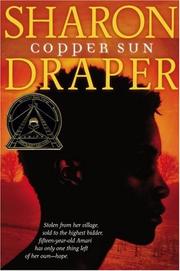
About Copper sun
Copper Sun" by Sharon M. Draper is a powerful and harrowing historical novel that chronicles the brutal journey of a young Ashanti girl named Amari, from her peaceful village in West Africa to the horrors of slavery in America. The story begins in 1758, depicting Amari's idyllic life in Ziawi, where she is preparing for marriage. Her world is shattered when her village is attacked by white slave traders and their African collaborators, resulting in the massacre of her family and her own capture. Amari is then forced onto a slave ship, enduring the unspeakable atrocities of the Middle Passage, a journey marked by disease, death, and dehumanization.
Upon arrival in Charles Town, South Carolina, Amari is sold at auction to Mr. Derby and taken to his sprawling plantation. There, she is subjected to the cruel whims of his sadistic son, Clay, and forced into a life of servitude. Amidst the despair, Amari forms an unlikely bond with Polly, a white indentured servant, and finds a surrogate family with Teenie, an older enslaved woman, and her young son, Tidbit. Together, they navigate the daily brutalities of plantation life, witnessing profound injustices and experiencing personal tragedies. The novel vividly portrays the resilience of the human spirit in the face of unimaginable suffering and the enduring quest for freedom.
The novel matters because it offers a visceral and unflinching portrayal of the transatlantic slave trade and plantation life through the eyes of a young protagonist. It highlights themes of survival, friendship, the loss of innocence, and the persistent hope for a better future. Draper masterfully crafts a narrative that educates readers about a dark period in history while emphasizing the strength and dignity of those who endured it. It serves as a stark reminder of the devastating impact of slavery and the importance of remembering historical injustices to foster empathy and understanding.
Key takeaways
- The human spirit possesses an incredible capacity for resilience and hope even in the face of unimaginable suffering.
- True friendship and solidarity can emerge from the most unlikely circumstances, transcending race and social status.
- The pursuit of freedom, though fraught with peril, is a fundamental human drive that can inspire extraordinary courage.
- Understanding history, particularly the horrors of slavery, is crucial for fostering empathy and preventing future injustices.
- Even in the darkest times, small acts of kindness and connection can provide vital strength and a reason to continue.
- The loss of innocence is a profound consequence of trauma, but it does not diminish one's inherent worth or potential for growth.
Chapter summaries
The Ashanti Village
Amari, a fifteen-year-old Ashanti girl, lives a peaceful life in her village of Ziavi, Ghana. She is betrothed to Besa, a strong young man from a neighboring village. Her days are filled with traditional tasks, storytelling, and the anticipation of her marriage. This idyllic existence is shattered when white slave traders, accompanied by their African allies, attack the village. The villagers are brutally massacred, and Amari, Besa, and a few others are captured, their homes burned, and their families slaughtered. They are then forced on a grueling march towards the coast, enduring immense suffering and loss.
The Middle Passage
Amari and the other captured Africans endure a brutal march to the coast, where they are held in a barracoon, a slave fort, experiencing starvation, disease, and violence. Besa is separated from Amari, and she fears he is dead. She is then forced onto a slave ship, The African Pearl, for the horrific journey across the Atlantic, known as the Middle Passage. Crammed into the ship's hold with hundreds of other captives, she witnesses unspeakable cruelty, sickness, death, and despair. Many die from disease, starvation, or suicide. Amari survives, clinging to a fragile hope, and eventually arrives in Charles Town, South Carolina.
The Auction Block
Upon arrival in Charles Town, Amari and the other survivors are cleaned, oiled, and prepared for sale. She is terrified and disoriented, unable to understand the language or the customs. At the slave auction, she is bought by Percival Derby, a wealthy plantation owner, as a birthday gift for his cruel and sadistic sixteen-year-old son, Clay. Amari is then transported to the Derby plantation in South Carolina, where she is immediately thrust into a life of brutal servitude. She meets Polly, a white indentured servant, and Teenie, an older enslaved woman who becomes a maternal figure, teaching Amari about plantation life and survival.
Life on the Derby Plantation
Amari's life on the Derby plantation is one of relentless hardship and abuse. She is forced to work in the fields and serve the Derby family. Clay Derby, Percival's son, frequently abuses her, leading to her becoming pregnant. Polly, initially resentful of her own servitude and prejudiced against Amari, gradually forms a bond with her, teaching her English and sharing her knowledge. Teenie, with her young son Tidbit, provides comfort and guidance, helping Amari navigate the harsh realities of slavery, including the constant threat of violence and the despair of her situation. Amari learns to adapt and survive.
A Glimmer of Hope
Amari gives birth to a baby boy, whom she names Kwasi. The joy of motherhood is overshadowed by the fear that her child will also be enslaved and subjected to the same brutal life. The brutal realities of the plantation continue, culminating in a horrific incident where Tidbit is used as alligator bait by Clay Derby, though he miraculously survives. This event, coupled with the constant threat to her child and the escalating cruelty, solidifies Amari's resolve to escape. Polly, witnessing the escalating inhumanity, also yearns for freedom and begins to plan an escape with Amari and Teenie.
The Escape
With the help of Teenie, who provides them with food, supplies, and directions, Amari, Polly, and Tidbit make their daring escape from the Derby plantation. They face immense dangers and challenges on their journey, including treacherous swamps, wild animals, and the constant threat of being recaptured by slave catchers. They rely on their wits, courage, and the kindness of strangers, including an old white woman who offers them shelter and food, and a kind Jewish merchant named Fiona who helps them further along their path, providing them with a map and directions to Fort Mose, a free black settlement in Spanish Florida.
Fort Mose
Amari, Polly, and Tidbit continue their arduous journey south, following the directions to Fort Mose, a beacon of hope and freedom. They face exhaustion, hunger, and the constant fear of discovery, but their determination to reach freedom keeps them going. Their bond strengthens as they overcome obstacles together. Finally, after weeks of travel, they reach Fort Mose, a community where former slaves and free blacks live in safety. They are welcomed into the settlement, where they find safety, a sense of belonging, and the opportunity to build new lives free from the horrors of slavery. Amari, Polly, and Tidbit begin to heal and look towards a future of self-determination.
Full summary
"Copper Sun" by Sharon M. Draper tells the story of two young girls, Amari and Polly, whose lives intertwine during the horrors of the Atlantic slave trade. Set in the 18th century, Amari, an African girl, is captured and sold into slavery. The narrative follows her harrowing journey across the Middle Passage, where she faces unimaginable brutality, culminating in her arrival in America. Polly, a white indentured servant, becomes her unlikely ally. Together, they navigate themes of resilience, friendship, and the quest for freedom as they escape captivity.
Key characters include Amari, whose strength embodies hope; Polly, whose growth challenges societal norms; and their captor, who represents the cruelty of slavery. Their bond defies racial boundaries, emphasizing human connection amidst oppression.
The novel critiques the inhumanity of slavery while celebrating the spirit of survival. It vividly illustrates the struggle for identity and freedom in an unforgiving world. Ultimate...