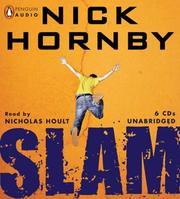
Slam
In 60 seconds
Sam Jones is fifteen when his girlfriend Alicia tells him she's pregnant. He panics, imagines running away to Hastings, and asks a poster of Tony Hawk for advice — and the poster answers. Over the following months he faces furious parents, a dishwashing job he quits in two shifts, antenatal classes full of married adults, and the birth of his son Rufus. He and Alicia break up, Sam moves back home with his mum, and fatherhood slowly becomes real. The book ends with Sam holding Rufus at the skate park, telling him they're going to be okay.
Before you start
Why it matters
This is teenage panic written from the inside — no wisdom, no hindsight, just a boy whose life changes in one sentence. Hornby takes the scariest what-if of adolescence and treats it with honesty and dark humour instead of a lecture. Read it if you were ever fifteen and terrified, if you parent teenagers, or if you teach them. It's short, funny, and it doesn't lie to you about how hard it is.
Spoilers ahead
The story
- 1
Act 1
The Poster Talks Back
Sam Jones is fifteen, lives in London with his mum Annie, and skates. He also talks to a poster of Tony Hawk on his wall — and the poster talks back. Then Alicia, his sixteen-year-old girlfriend, tells him she's pregnant. His first instinct is to run to Hastings, a town he's never even been to, just because it sounds far enough away. He goes to the skate park and asks Tony Hawk if he ever got a girl pregnant when he was young. Tony says he didn't, and tells him: "You'll be fine. Just take it easy. Don't do anything stupid." Sam tells his mum. Annie, a single parent who works in a café, goes silent for a long time, then says quietly, "Oh, Sam." Alicia's parents are less gentle. Robert, a university lecturer, shouts at Sam, calls him "a stupid little boy," and says he's ruined Alicia's life. Sam and Alicia visit a family planning clinic, where a counsellor named Janet walks them through abortion, adoption, and keeping the baby. Sam hates the clinical language and the diagrams. Alicia decides she wants to keep the baby. Sam agrees out loud while quietly wishing he could turn back time.
- 2
Act 2
Pizza and Panic
Sam's mum tells him he has to get a job — "You can't bring a child into the world and expect everyone else to pay for it." He gets one washing dishes at Pizza Express and quits after two shifts because of the heat and the greasy water. He and Alicia start arguing about money, where they'll live, and whether he's committed enough. She accuses him of not understanding what her body is going through. They go to an antenatal class run by the National Childbirth Trust, where every other couple is older, married, and middle-class. The instructor asks everyone to introduce themselves and say why they're there, and Sam finds it excruciating. He starts having a recurring dream: he's skateboarding down a huge ramp, and at the bottom, instead of flat ground, there's a giant baby's mouth waiting to swallow him. He wakes up sweating. His dad, who left when Sam was a child, turns up briefly, takes him to a pub, gives him a twenty-pound note, tells him not to make the same mistakes he did, and disappears again.
- 3
Act 3
The Birth
Alicia goes into labour while Sam is at the skate park. Rabbit — a slightly older, cooler skater whose real name is Mark — has to drive him to the hospital in his beaten-up car. Sam panics the whole way, shouting that he isn't ready. In the delivery room he feels useless. Alicia screams in pain and tells him, "You did this to me!" He holds her hand but feels like he's watching a disaster he caused from a great distance. Then the baby arrives: a boy, small and red and wrinkled. Sam is shocked by how tiny he is, and feels something unexpected — a surge of protectiveness mixed with sheer terror. They name him Rufus, after Alicia's grandfather. Sam thinks the name sounds like a Victorian chimney sweep but doesn't say so.
- 4
Act 4
We're Going to Be Okay
Sam takes Rufus out in his pram alone for the first time and feels everyone staring at the teenage dad. He pushes the pram to the skate park but feels too self-conscious to skate. His mum Annie helps with childcare while Sam finishes his GCSEs, and he notices she seems younger and happier now she has a grandchild — which confuses and slightly annoys him. The strain finally tells: Alicia tells Sam she thinks they're only together because of Rufus, and that she needs space to figure out her own life. They break up. Sam moves back in with his mum, feeling like a failure but also quietly relieved to be out of the cramped, tense flat with Alicia and her parents. Then one day he takes Rufus to the skate park and, holding him, carefully rides down a small ramp. For the first time he feels like he and his son are a team. He tells the sleeping Rufus, "We're going to be okay." The book closes with Sam reflecting that his life is nothing like he imagined — but he's still here, still skating, still talking to Tony Hawk. The poster doesn't talk back as much anymore, and Sam finds he doesn't mind as much as he thought he would.
Who's who
Characters
- Sam JonesA fifteen-year-old skateboarder from London whose girlfriend gets pregnant. He wants his old life back; instead he becomes a father, quits his first job in two shifts, and slowly finds his footing.
- AliciaSam's sixteen-year-old girlfriend, who decides to keep the baby and carries the physical and emotional weight of it. She ends the relationship, telling Sam they're only together because of Rufus.
- AnnieSam's single-parent mother, who works in a café and reacts to the news with devastated silence. She pushes Sam to work and helps with childcare — and seems younger and happier as a grandmother.
- Tony HawkThe professional skateboarder on Sam's bedroom poster, who talks back. He becomes Sam's confidant and conscience, and falls quiet as Sam grows up.
- Rabbit (Mark)A slightly older, cooler skater and Sam's friend. He gives brutal, minimal advice and drives Sam to the hospital when labour starts.
- Robert BurnsAlicia's father, a university lecturer, who shouts at Sam and calls him a stupid little boy for ruining Alicia's life.
- RufusSam and Alicia's son, named after Alicia's grandfather. Small, red, and wrinkled at birth — and the reason his teenage parents find out who they are.
What it's really about
Themes
Growing up too fast
Sam is fifteen when Alicia tells him she's pregnant, and his first thought is fleeing to Hastings — a town he's never visited — purely because it sounds far away. From there, adulthood arrives in ugly instalments: a job washing dishes at Pizza Express that he quits after two shifts, antenatal classes where every other couple is older, married, and middle-class, and a delivery room where Alicia screams "You did this to me!" The book refuses to pretend teenagers can absorb this gracefully. Sam stumbles through every stage, terrified and unready. The point isn't that he fails — it's that nobody would have been ready, and he does it anyway.
Fear of a wasted life
Sam's deepest fear isn't nappies or money — it's that his life is over. He believes he'll never be a professional skateboarder now, and that his friends will leave him behind. That fear shows up in his recurring dream: skateboarding down a huge ramp toward a giant baby's mouth waiting to swallow him. The book takes this adolescent catastrophising seriously rather than mocking it. By the end, Sam is still skating, still at the skate park, still himself — fatherhood hasn't erased him. The dream's mouth never actually swallows him, and that's the book's quiet argument: the life you fear losing doesn't vanish; it changes shape.
Talking to your heroes
Sam's most functional relationship is with a poster of Tony Hawk that talks back. Tony offers calm, simple counsel — take it easy, don't do anything stupid — and admits he never got a girl pregnant young. It's funny, but it's also how a lot of teenagers actually cope: outsourcing wisdom to distant, idealised figures because the real adults in the room are shouting or crying. The telling detail is the ending: the poster doesn't talk back as much anymore, and Sam doesn't mind as much as he expected. Growing up, the book suggests, means needing your heroes less — not because they failed you, but because you started answering yourself.
Families, made and remade
Every family in the book is improvised. Sam's dad left when he was a child and reappears only to hand over a twenty-pound note in a pub and warn Sam not to repeat his mistakes before vanishing again. Annie, a single parent working in a café, becomes a grandmother while her son is still doing GCSEs — and seems younger and happier for it, which confuses and annoys Sam. Alicia's parents Robert and Andrea respond to the pregnancy with fury. Then Sam and Alicia themselves break up, deciding they're only together because of Rufus. The book's point: families aren't a fixed shape you inherit or ruin — they're arrangements you keep rebuilding.
Look closer
Symbols
- The Tony Hawk poster
- Sam's conscience, confidant, and imaginary escape hatch — a fixed point of calm while everything real collapses. That it talks back at all marks Sam as a kid clinging to childhood. Its growing silence by the end mirrors Sam's growth: he needs the poster less because he's started trusting himself.
- The ramp and the baby's mouth
- Sam's recurring dream — skating down a huge ramp toward a giant baby's mouth waiting to swallow him — turns fatherhood into the thing at the bottom of the drop he can't avoid. It captures his fear that the child will consume the life he planned. Waking up sweating, night after night, is the fear in its purest form.
- The skate park
- Sam's territory, his competence, his identity. First he's too self-conscious to skate while pushing Rufus's pram; later he rides down a small ramp holding his sleeping son. The park traces his arc from boy hiding from responsibility to father carrying it with him.
- Hastings
- The town Sam has never been to but wants to run to the moment he hears the news — chosen purely because it sounds far enough away. It stands for the fantasy of escape: distance as a solution. He never goes, and the book's answer to Hastings is staying, and staying put.
Spoilers
Ending explained
The ending is deliberately undramatic: no reconciliation, no grand transformation, just Sam at the skate park with his sleeping son, saying they're going to be okay. One reading is that this is genuine growth — the boy who wanted to run to Hastings now stays, holds his child, and rides down a ramp anyway. The poster talking back less can be read two ways: either Sam is maturing past imaginary mentors, or the magic of childhood is quietly dying, and Hornby leaves that ache unresolved. What lands is the honesty of 'okay' — not 'great', not 'fine', just okay. That modest word is the book's whole thesis about teenage parenthood: survival is the victory, and it's enough.
For class or book club
Discussion questions
- 1.The Tony Hawk poster functions as Sam's conscience and confidant. Is talking to a poster a sign of immaturity Sam must outgrow, or a healthy coping mechanism — and what does its fading silence signify at the end?
Worth remembering
Best lines
“You'll be fine. Just take it easy. Don't do anything stupid.”
“You can't bring a child into the world and expect everyone else to pay for it.”
“You did this to me!”
“We're going to be okay.”
A fair critique
Where it falls short
The magical premise — a poster that talks back — sits oddly against the otherwise grounded realism, and readers wanting a strictly realist novel may find it a distraction rather than a device. Alicia can feel underwritten: we see her body, her anger, and her decision to keep the baby, but her inner life gets less page than Sam's. The supporting adults — Robert, Andrea, Sam's vanishing dad — function mostly as pressure points rather than full people. And the tidy emotional landing, with Annie happier and Sam reassured, risks softening hardships that real teenage parents don't resolve so neatly.
In one sentence
A terrified fifteen-year-old skateboarder stumbles into fatherhood, guided by a talking poster of Tony Hawk, and discovers that 'okay' is a destination you can actually reach.
Is it for you?
Who should read it
Teenagers who suspect adulthood is a trap, and any adult who remembers being fifteen and terrified. Also a sharp pick for parents and teachers who want to understand teenage pregnancy from the inside rather than from a lecture.
4 questions
Quick quiz: how well do you know Slam?
0 of 4 answered
FAQ
What is Slam about?
Slam is about Sam, a fifteen-year-old skateboarder whose life is turned upside down when his girlfriend, Alicia, becomes pregnant. The book follows his journey as he grapples with premature fatherhood, the reactions of his family and friends, and his struggle to reconcile his teenage desires with adult responsibilities, often consulting his idol Tony Hawk in his head.
Is Slam worth reading?
Yes, Slam is worth reading for its honest and humorous portrayal of teen parenthood and coming-of-age. Nick Hornby's distinctive voice, combined with the unique narrative device of Sam's imagined conversations with Tony Hawk and glimpses of his future self, makes it a compelling and thought-provoking read for young adults and adults alike.
How does Slam end?
Spoiler: Slam ends with Sam having grown significantly, accepting his role as Lucy's father and making difficult but mature decisions about his future. While not everything is perfectly resolved, he has learned to embrace his responsibilities and navigate the complexities of his new life, finding a path forward with a newfound sense of purpose.
Who should read Slam?
Slam is ideal for young adults, particularly those interested in contemporary fiction and coming-of-age stories. Fans of Nick Hornby's other works will appreciate his signature blend of humor and poignant observation. It's also a good read for anyone interested in themes of responsibility, unexpected parenthood, and personal growth.
How long does it take to read Slam?
On average, it takes approximately 4.5 to 5 hours to read Slam, depending on your reading speed. It's a relatively quick read, making it accessible for a wide range of readers.
Who wrote Slam?
Slam was written by Nick Hornby and first published in 2007.
What genre is Slam?
Slam is listed under Children & Young Adult.
More Children & Young Adult summariesWhere is Slam set?
Slam is set in England.
How many pages is Slam?
Slam is about 307 pages long (the median page count across its editions, per Open Library).