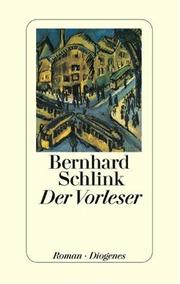
De voorlezer
In 60 seconds
In 1958 West Germany, fifteen-year-old Michael Berg falls ill and is helped home by Hanna, a tram conductor in her mid-thirties. Their affair runs on a strange ritual: before sex, he must read aloud to her. Years later, as a law student, Michael watches Hanna stand trial as an SS guard accused of letting prisoners burn in a locked church — and realizes she is illiterate, hiding it even at the cost of her life. He sends her cassette tapes of himself reading for eighteen years; she teaches herself to read, then hangs herself the night before her release, leaving her savings to a survivor.
Before you start
Why it matters
This is the novel that made a whole generation ask whether love can survive knowledge — whether you can pity someone who helped murder people. Schlink makes you feel the pull of Hanna through Michael's body and memory before you learn what she did, so your judgment is compromised exactly as his is. Read it if you care about guilt, the German past, or the quiet tyranny of shame. It is short, plain, and it will not let go.
Spoilers ahead
The story
- 1
Act 1
The Reader in the Street
A fifteen-year-old boy, Michael Berg, becomes ill with jaundice on his way home from school in a West German city in 1958 and vomits on the pavement outside an apartment building. A woman in her mid-thirties finds him, cleans him up, and walks him home. Her name is Hanna Schmitz. Months of hepatitis keep him out of school; when he recovers in spring, he carries flowers to her flat on Bahnhofstrasse to say thank you. She is ironing, indifferent, about thirty-six. She sends him away; he watches her put on stockings before she does so. He returns after recovering in spring. She asks him to fetch coal from the cellar; he gets covered in coal dust. She tells him to take a bath, and when he gets out she wraps him in a towel and initiates sex with him. So begins their affair. Hanna works as a tram conductor, calls him 'kid', quizzes him about schoolwork. Before they make love she demands he read aloud to her — a ritual in which he reads literary works. Michael reads from Goethe's 'Elective Affinities': 'One should never be in a hurry to go, at least not from a party.' Hanna is moved by this line. He reads Homer's 'Odyssey' to Hanna, including the description of Odysseus being bathed by his old nurse and her recognizing him by his scar. Hanna asks Michael: 'What's your name?' He tells her, and she repeats it: 'Michael.' She never calls him by a nickname. He realizes he knows almost nothing about her.
- 2
Act 2
The Belt and the Empty Flat
During a bicycle trip at an inn she wakes and does not recognize Michael for a moment. They argue and she strikes him with a leather belt, then is immediately remorseful, and he stays. Hanna abruptly ends the relationship and disappears without warning. She is being transferred, quits her tram job, and moves out of her apartment. Michael searches for her at the depot and the flat but she is gone, leaving no forwarding address. He distances himself from his family and friends and becomes emotionally closed off.
- 3
Act 3
The Trial
Years later, as a law student, Michael attends a seminar on Nazi concentration camp trials led by a professor who believes in confronting the past. The class travels to a provincial German town to observe a trial of former female SS guards. Hanna is one of five female defendants. She was a former SS guard at a satellite camp of Auschwitz near Krakow. The charges include selecting prisoners for death and letting prisoners die in a locked church during a death march. A survivor — the daughter of the mother and child who died in the burning church — testifies about the church fire. She wrote a book about the experience, which is read in court. The guards locked the doors and the prisoners burned alive. She describes how Hanna chose young girls to read to her in the camp. The other defendants claim Hanna wrote the report on the church fire. A handwriting expert's testimony could have exonerated her. When asked for a handwriting sample, Hanna admits: 'You don't have to. I wrote the report.' Michael realizes Hanna is illiterate; her shame about this secret is so great that she prefers to accept full criminal responsibility rather than reveal it. Michael remembers moments from their affair that now make sense: Hanna never read menus, she had him read aloud, she avoided written tasks. He struggles with whether to tell the judge about her illiteracy, which could mitigate her sentence. He visits his father, a philosophy professor, who tells him: 'There is no such thing as morality for individuals. Morality is for the collective.' He advises Michael to talk to the judge. Michael does not act. When the judge asks why she did not unlock the church doors, Hanna answers: 'What would you have done?' The question hangs in the courtroom. Hanna is sentenced to life imprisonment; the other defendants receive lighter sentences.
- 4
Act 4
Tapes, and the Night Before
Michael begins sending Hanna cassette tapes of himself reading books aloud — starting with Homer's Odyssey, works by Schnitzler, Chekhov, and others — never including a personal message, only his voice reading. Hanna learns to read and write using Michael's tapes and library books. She sends him a handwritten note: 'Thank you. I liked the last one especially. Hanna.' Her handwriting is childlike but legible. After eighteen years in prison, Hanna is granted parole. The prison warden, a woman, contacts Michael as Hanna's only outside contact and asks him to help Hanna find a job and a place to live. Michael visits Hanna in prison a week before her release. In the prison visiting room, Hanna reaches out her hand to Michael. He takes it briefly but feels the age and work-worn texture of her skin. She says: 'You've grown up, kid.' He feels distant and formal with her and does not know how to respond. He sees her as an old woman with grey hair and deep wrinkles. The night before her release, Hanna hangs herself in her cell. She leaves behind money and a note asking Michael to give her savings to the daughter who survived the church fire. The warden tells Michael that Hanna had been reading books about the Holocaust and the camps. Michael travels to New York to meet her, tells her about his relationship with Hanna and Hanna's illiteracy. The woman refuses the money but asks him to donate it to a Jewish literacy organization in Hanna's name. Michael keeps the tin box where Hanna kept her mementos: his cassette tapes, a picture of him as a schoolboy, and newspaper clippings about the trial. He begins to write the story of his relationship with Hanna.
Who's who
Characters
- Michael BergThe narrator, fifteen in 1958, a post-war German boy who becomes Hanna's reader and lover. He spends his life caught between love and judgment, guilt and numbness — and finally writes it all down.
- Hanna SchmitzA tram conductor in her mid-thirties, later revealed as a former SS guard at an Auschwitz satellite camp. Her illiteracy is the secret that shapes everything — her ritual of being read to, her false confession, her death.
- The survivorDaughter of the mother and child who died in the burning church; she wrote the book about it and testifies at the trial. She refuses Hanna's money but redirects it to teach people to read.
- Michael's fatherA philosophy professor Michael turns to in his moral crisis. He offers a cold, collectivist view of morality and the advice Michael fails to follow.
What it's really about
Themes
Guilt across generations
Michael belongs to the generation born after the crimes, and the trial drags his private past into Germany's public one. The lover he remembers from Bahnhofstrasse sits in the dock accused of letting prisoners burn in a locked church. His seminar professor believes in confronting the past, but confrontation turns out to mean something personal: the woman he loved is one of the perpetrators. Michael's paralysis — knowing about her illiteracy and saying nothing to the judge — makes him complicit in a small way, a second-hand guilt he can never resolve. The book's point is that the past is not history for those who loved its perpetrators; it is a living inheritance.
Illiteracy and shame
Hanna's illiteracy explains the affair's strange grammar: she never read menus, she demanded he read aloud, she chose girls to read to her in the camp. When a handwriting expert could have exonerated her, she confesses instead — 'You don't have to. I wrote the report.' Shame about not reading outweighs, in her mind, responsibility for mass death. Schlink never lets this excuse her; it only explains her. The tragedy is that literacy comes too late: she learns to read in prison, reads books about the Holocaust and the camps, and hangs herself the night before release. Reading, the book suggests, is both intimacy and judgment.
Reading as intimacy and power
The affair's ritual — sex only after he reads aloud — makes the boy the provider and the woman the dependent, an inversion that feels tender and sinister at once. In the camp, Hanna chose young girls to read to her before sending them to death; the same hunger for the written word served love and atrocity. The cassette tapes continue the dynamic across prison walls: his voice, her listening, no personal message. When she finally learns to read, the relationship's power flips — she can now read what he never said. The book's point is that reading binds people together and can never substitute for the words that are missing between them.
The limits of understanding
When the judge asks why she did not unlock the church doors, Hanna answers: 'What would you have done?' The question hangs in the courtroom because it refuses the comfort of distance — it puts the judges, and the reader, in the dock. Michael's father tells him there is no morality for individuals, only for the collective, and advises him to speak to the judge; Michael does nothing. Understanding Hanna's shame does not dissolve her guilt, and failing to act does not dissolve his. The book's point is that comprehension and absolution are different things, and the second is not on offer.
Numbness as survival
After Hanna disappears, Michael says: 'I tried to feel nothing about Hanna. I wanted to be numb.' He distances himself from family and friends and becomes emotionally closed off — a strategy that works too well, since when he finally faces her as an old woman in the visiting room, he feels distant and formal and cannot respond when she says, 'You've grown up, kid.' The numbness he chose to survive her loss becomes the wall that keeps him from her at the end. The book's point is that the defenses we build against one wound end up blocking every hand that reaches out after.
Look closer
Symbols
- Reading aloud
- The ritual that defines the affair: he reads, she listens, then they make love. It stands for Hanna's dependence on the literate world she secretly cannot enter — and for the intimacy that survives even atrocity, since she demanded the same ritual from the girls in the camp.
- The cassette tapes
- Michael's voice on tape is the lifeline to Hanna in prison — the tool through which she finally learns to read and write. They continue the old dynamic of him as the reader, but they also carry everything he cannot say, since no personal message ever accompanies them.
- The tin box
- Hanna keeps her savings and mementos in a tea tin: the tapes, a picture of Michael as a schoolboy, newspaper clippings about the trial. After her death Michael keeps it — a container for a love that could only be stored, never lived openly.
- The locked church doors
- The central image of Hanna's crime: guards who kept doors shut while prisoners burned. Her question — 'What would you have done?' — turns the locked doors outward, onto the courtroom and the reader, asking whether anyone can claim they would have opened them.
Spoilers
Ending explained
Hanna's suicide the night before her release is the book's hardest sentence, and it resists a single reading. One view: once literate, she could finally read what the world said about her — the Holocaust books the warden mentions — and the weight of self-knowledge made freedom unbearable; the woman who could not read her own indictment could now read her own guilt. Another view: the visit itself killed her. Michael arrives distant and formal, takes her hand briefly, cannot respond to 'You've grown up, kid' — the numbness he cultivated to survive her absence confirms that no future exists between them. Her final act, leaving the money to the survivor, reads either as restitution or as a last attempt to transfer a debt she cannot repay. The survivor's answer — refuse the money, but teach someone to read with it — is the only gesture in the book that converts guilt into something usable. Michael's response is to write, which is both tribute and confession: the reader becomes the writer, and the story of a man who could not speak becomes the book you are holding.
For class or book club
Discussion questions
- 1.Is Michael's silence about Hanna's illiteracy a moral failure or an understandable mercy? What would telling the judge have actually changed — her sentence, or only his conscience?
- 2.Hanna's question, 'What would you have done?', is never answered in the book. Can that question ever be legitimate from a perpetrator, or is it always a deflection?
- 3.The novel links Hanna's illiteracy to her crimes without excusing them. Does explaining a perpetrator's inner life risk humanizing atrocity — or is that exactly what literature is for?
Worth remembering
Best lines
“You don't have to. I wrote the report.”
“What would you have done?”
“There is no such thing as morality for individuals. Morality is for the collective.”
“You've grown up, kid.”
A fair critique
Where it falls short
The survivor who testifies exists largely as a function: she is the voice of the victims, given little interior life compared to the perpetrator at the story's center. Some readers find the framing troubling — a German court's drama and a love affair absorb the attention that the murdered prisoners might claim, and Hanna's illiteracy risks making her pitiable on terms the victims never get. Michael is also a deliberately passive narrator; his numbness is the point, but it can make the middle of the book feel airless. The prose is cool and controlled, which suits the material but denies the reader catharsis.
In one sentence
A boy who read aloud to his secret lover spends his life learning that she could not read at all — and that listening is not the same as understanding.
Is it for you?
Who should read it
Anyone who wants to understand how the post-war generation wrestled with the Holocaust through fiction rather than history books. Also for readers who like their love stories poisoned at the root — this one is short, severe, and unforgettable.
4 questions
Quick quiz: how well do you know De voorlezer?
0 of 4 answered
FAQ
What is De voorlezer about?
"De voorlezer" (The Reader) tells the story of Michael Berg, who, as a teenager, has an affair with an older woman, Hanna Schmitz. Years later, he discovers she is on trial for war crimes committed as an SS guard during World War II. The novel explores their complex relationship, Hanna's secret illiteracy, and Michael's struggle to reconcile his love for her with her horrific past, examining themes of guilt, justice, and memory in post-Holocaust Germany.
Is De voorlezer worth reading?
Yes, "De voorlezer" is highly regarded for its profound exploration of moral dilemmas, historical guilt, and the complexities of human relationships. It challenges readers to confront uncomfortable questions about justice, empathy, and the legacy of the Holocaust, making it a thought-provoking and emotionally resonant read.
How does De voorlezer end?
Spoiler: After serving over twenty years in prison for war crimes, Hanna Schmitz is due for release. However, on the day before her scheduled release, she commits suicide in her cell. Michael Berg, who had been sending her recorded readings for years, visits a concentration camp survivor in New York to deliver money Hanna bequeathed to her, finally sharing his story.
Who should read De voorlezer?
This book is ideal for readers interested in literary fiction, post-war German history, and stories that delve into complex moral and ethical questions. It appeals to those who appreciate nuanced character development and a deep exploration of themes like guilt, love, and the impact of historical events on individual lives.
How long does it take to read De voorlezer?
"De voorlezer" is a relatively short novel, typically around 200 pages. Most readers can expect to finish it in approximately 3 to 5 hours, depending on their reading speed and engagement with the text.
Who wrote De voorlezer?
De voorlezer was written by Bernard Schlink and first published in 1995.
What genre is De voorlezer?
De voorlezer is listed under Mystery & Thriller.
More Mystery & Thriller summariesWhere is De voorlezer set?
De voorlezer is set in West Germany, Auschwitz and Germany.
How many pages is De voorlezer?
De voorlezer is about 206 pages long (the median page count across its editions, per Open Library).