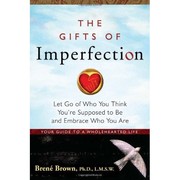
About the gifts of imperfection
In "The Gifts of Imperfection," Brené Brown, a research professor and storyteller, introduces the concept of Wholehearted living, a way of engaging with the world from a place of worthiness. Drawing on twelve years of research into shame, vulnerability, courage, and authenticity, Brown challenges the pervasive cultural messages that tell us we are not enough. She argues that true belonging and connection come not from striving for perfection or fitting in, but from having the courage to be vulnerable, to embrace our imperfections, and to show up authentically in our lives.
The book outlines ten "Guideposts for Wholehearted Living," each addressing a specific area where individuals can cultivate practices to move away from shame and fear and towards a more fulfilling existence. These guideposts include cultivating authenticity, self-compassion, a resilient spirit, gratitude, joy, intuition, creativity, play, rest, calm, meaningful work, laughter, song, and dance. Brown emphasizes that vulnerability is not a weakness but the birthplace of connection, innovation, and change. By letting go of what we think we should be and embracing who we are, we can live lives filled with courage, compassion, and connection, ultimately finding the gifts inherent in our imperfections.
Key takeaways
- Embrace vulnerability as a strength, recognizing it as the birthplace of connection, courage, and creativity.
- Practice self-compassion by treating yourself with kindness and understanding, especially during moments of perceived failure or inadequacy.
- Cultivate authenticity by letting go of who you think you're supposed to be and embracing who you truly are.
- Challenge perfectionism, understanding it as a self-destructive belief system fueled by the fear of shame.
- Foster gratitude and joy, actively seeking out and appreciating positive experiences despite the presence of fear or scarcity.
- Prioritize rest and play, recognizing them as essential for well-being rather than luxuries or rewards for productivity.
- Develop a resilient spirit by learning to navigate difficult emotions without numbing them or giving in to powerlessness.
- Cultivate meaningful connection by allowing yourself to be seen and known for your true self, imperfections and all.
Key ideas at a glance
Vulnerability as strength
- Embrace vulnerability as a strength, recognizing it as the birthplace of connection, courage, and creativity.
Self-compassion
- Practice self-compassion by treating yourself with kindness and understanding, especially during moments of perceived…
- Challenge perfectionism, understanding it as a self-destructive belief system fueled by the fear of shame.
Authentic connection
- Cultivate authenticity by letting go of who you think you're supposed to be and embracing who you truly are.
- Cultivate meaningful connection by allowing yourself to be seen and known for your true self, imperfections and all.
Letting go of perfectionism
- Foster gratitude and joy, actively seeking out and appreciating positive experiences despite the presence of fear or…
Worthiness
- Prioritize rest and play, recognizing them as essential for well-being rather than luxuries or rewards for productivity.
Courage
- Develop a resilient spirit by learning to navigate difficult emotions without numbing them or giving in to…
Chapter summaries
Introduction
Brené Brown introduces her extensive research on shame, vulnerability, and wholeheartedness, explaining how her initial findings on shame led her to explore what allows people to live with courage, compassion, and connection. She shares her personal "breakdown" experience, a moment of profound vulnerability that forced her to integrate her research into her own life, moving from studying wholeheartedness to practicing it. The introduction sets the stage for the ten Guideposts for Wholehearted Living, presenting them not as a rigid checklist but as daily practices and intentions. Brown emphasizes that the book is a guide to embracing imperfection, letting go of societal expectations, and cultivating a more authentic, fulfilling life by recognizing one's inherent worthiness.
The Gifts of Imperfection
This foundational section defines the core concept of wholehearted living, which Brown describes as engaging with the world from a place of worthiness. She argues that true belonging and connection stem from self-acceptance and authenticity, not from striving for an unattainable ideal of perfection or constantly seeking external validation. Brown introduces the three essential pillars of wholeheartedness: the courage to be imperfect, the compassion to be kind to oneself and others, and the connection that arises from genuine self-expression. The "gifts" are the profound freedom, joy, and peace that come from embracing one's imperfections and recognizing inherent worthiness, rather than perpetually trying to earn it. This section lays the crucial groundwork for understanding why the subsequent Guideposts are essential practices for living a full life.
Guidepost 1: Cultivating Authenticity: Releasing What People Think
This guidepost focuses on the practice of authenticity, defined as the daily choice to let go of who we think we're supposed to be and to embrace who we are. Brown discusses the profound impact of shame and the fear of judgment on our ability to be genuine. She explains that authenticity requires vulnerability and the courage to show up as our true selves, even when it feels risky. The chapter emphasizes that living authentically is a process of setting boundaries, choosing to engage with people who value us for who we are, and understanding that our worthiness is not contingent on external approval. It's about aligning our actions with our values.
Guidepost 2: Cultivating Self-Compassion: Releasing Perfectionism
Brown addresses the pervasive issue of perfectionism, distinguishing it from healthy striving. She argues that perfectionism is a self-destructive belief system that fuels shame and anxiety, driven by the desire to earn approval and avoid criticism. This guidepost advocates for cultivating self-compassion, which involves treating ourselves with the same kindness and understanding we would offer a good friend. It's about recognizing our shared humanity in struggle and imperfection, rather than using self-criticism as a motivator. Releasing perfectionism allows for greater resilience and the ability to embrace our inherent worthiness without needing to be flawless or constantly prove ourselves.
Guidepost 3: Cultivating a Resilient Spirit: Releasing Numbness and Powerlessness
This section explores the importance of building emotional resilience, which is the ability to bounce back from adversity. Brown discusses how many people cope with discomfort and pain by numbing their emotions, often through various forms of addiction or distraction. She argues that we cannot selectively numb difficult emotions without also numbing joy, gratitude, and connection. Cultivating a resilient spirit involves leaning into discomfort, feeling our emotions fully, and developing coping strategies that allow us to process pain rather than avoid it. It emphasizes finding meaning in struggle and understanding that vulnerability is a source of strength, not weakness, in facing life's challenges.
Guidepost 4: Cultivating Gratitude and Joy: Releasing Scarcity and Fear of the Dark
This guidepost challenges the pervasive "scarcity mentality" – the belief that we are never enough, have enough, or do enough. Brown explains how this mindset prevents us from fully experiencing joy and gratitude, often leading to "foreboding joy," where we anticipate disaster when things are going well. Cultivating gratitude involves actively acknowledging the good in our lives, while cultivating joy means allowing ourselves to fully experience moments of happiness without fear or reservation. It's about recognizing that joy is a vulnerable emotion and choosing to lean into it, even in an uncertain world, rather than holding back out of fear of loss.
Guidepost 5: Cultivating Intuition and Faith: Releasing the Need for Certainty
Brown delves into the importance of trusting our inner wisdom and embracing faith, particularly in a world that often demands certainty and control. She distinguishes between faith as a spiritual practice and faith as a belief in something greater than ourselves, whether that's a higher power, humanity, or our own inner knowing. This guidepost encourages releasing the need to have all the answers or to control every outcome. It's about learning to listen to our intuition, making decisions from a place of trust rather than fear, and accepting the inherent uncertainty of life. This allows for greater peace and less anxiety in navigating the unknown.
Guidepost 6: Cultivating Creativity: Releasing Comparison
This section highlights the vital role of creativity in wholehearted living, defining it broadly as the process of bringing new things into being. Brown argues that comparison is a significant barrier to creativity, as it leads to self-doubt, envy, and the belief that our own contributions are not good enough. She emphasizes that everyone is creative and that expressing our unique gifts is essential for well-being. Releasing comparison involves focusing on our own journey, celebrating our progress, and understanding that our worth is not diminished by the achievements of others. It encourages engaging in creative pursuits for the joy of it, not for external validation or competition.
Guidepost 7: Cultivating Play and Rest: Releasing Exhaustion as a Status Symbol and Productivity as Self-Worth
Brown challenges the societal glorification of busyness and exhaustion, arguing that they have become status symbols that undermine our well-being. This guidepost emphasizes the critical importance of play and rest for mental, emotional, and physical health. She defines play as any activity that is purposeless, joyful, and fully engaging, while rest is essential for rejuvenation. Releasing the belief that our worth is tied to constant productivity allows us to prioritize these vital activities. Brown encourages readers to rediscover what brings them joy and to integrate regular periods of rest and play into their lives without guilt, recognizing their inherent value.
Guidepost 8: Cultivating Calm and Stillness: Releasing Anxiety as a Lifestyle
This guidepost addresses the pervasive nature of anxiety in modern life and the tendency to treat it as an inevitable lifestyle. Brown advocates for cultivating calm and stillness, which involves intentionally creating space for reflection, mindfulness, and quiet. She explains that constant busyness and noise can be a way to avoid uncomfortable emotions or difficult truths. Releasing anxiety as a lifestyle means learning to sit with discomfort, practicing mindfulness, and developing strategies to manage stress rather than letting it consume us. It encourages finding moments of peace and presence in our daily lives to foster inner tranquility and emotional regulation.
Guidepost 9: Cultivating Meaningful Work: Releasing Self-Doubt and "Supposed To"
Brown explores the concept of meaningful work, which extends beyond paid employment to any activity that brings purpose and contribution. This guidepost encourages individuals to identify and pursue work that aligns with their values and passions, rather than succumbing to self-doubt or societal expectations of what they "should" be doing. She discusses how self-doubt, imposter syndrome, and the fear of failure often prevent us from engaging in work that truly matters to us. Releasing these barriers allows us to embrace our unique talents and make a genuine contribution, finding fulfillment and a sense of purpose in our efforts, whether professional or personal.
Guidepost 10: Cultivating Laughter, Song, and Dance: Releasing Being Cool and "Always in Control"
The final guidepost encourages embracing joy, spontaneity, and lightheartedness through laughter, song, and dance. Brown argues that many adults suppress these natural expressions of joy out of a fear of looking foolish or losing control. She highlights the importance of letting go of the need to appear "cool" or perfectly composed, and instead allowing ourselves to be fully present and expressive. This involves embracing vulnerability in joyful moments, connecting with others through shared laughter, and allowing our bodies to move freely. It's about finding freedom and connection in uninhibited self-expression, shedding the constraints of self-consciousness and societal expectations.
Daring Greatly
This concluding section serves as an overarching call to action, tying together all the Guideposts for Wholehearted Living. Brown reiterates the importance of vulnerability as the cornerstone of courage, compassion, and connection. She references Theodore Roosevelt's "Man in the Arena" speech, encouraging readers to step into the arena of their lives, to show up, be seen, and live wholeheartedly, even when there's a risk of failure or criticism. The section emphasizes that living a full, meaningful life requires daring to be imperfect, embracing our stories, and choosing courage over comfort. It's a powerful affirmation of the journey toward wholeheartedness and a reminder that true belonging begins with self-acceptance.
Full summary
Book Overview
"The Gifts of Imperfection" by Brené Brown is a seminal work that delves into the concepts of vulnerability, courage, and authenticity. Published in 2010, this self-help book encourages readers to embrace their imperfections and cultivate a life that prioritizes self-acceptance and connection. Brown, a research professor at the University of Houston, draws on her extensive research in social work and psychology to provide a framework for understanding the importance of embracing one's vulnerabilities as pathways to a more fulfilling life.
Main Content/Plot
The book is organized into ten guideposts that serve as a roadmap for cultivating a life of authenticity. Each chapter addresses a specific guidepost and elaborates on the practices and mindsets necessary to overcome societal pressures and self-imposed limitations.
1. Cultivating Authenticity: Brown emphasizes the necessity of embracing one’s true self rather than conforming to external expectations.
2. Cultivating Self-Compassion: This chapter stresses the importance of treating oneself with kindness and understanding, especially in times of failure.
3. Cultivating a Resilient Spirit: Here, Brown discusses the significance of resilience in overcoming adversity and the role it plays in personal growth.
4. Cultivating Gratitude and Joy: The author highlights how practicing gratitude can lead to a deeper sense of joy and fulfillment.
5. Cultivating Intuition and Trusting Faith: Brown advocates for the importance of intuition and faith in navigating life’s uncertainties.
6. Cultivating Creativity: This chapter explores how embracing creativity can lead to self-discovery and a deeper connection to oneself.
7. Cultivating Play and Rest: Brown underscores the need for play and rest as essential components of a balanced life.
8. Cultivating Calm and Stillness: The author emphasizes the necessity of finding calm amidst chaos for mental and emotional well-being.
9. Cultivating Meaningful Work: Brown discusses the significance of engaging in work that aligns with one’s values and passions.
10. Cultivating Laughter, Song, and Dance: The final guidepost highlights the importance of joy and lightheartedness in one’s life.
Key Themes
1. Embracing Vulnerability: Brown posits that vulnerability is not a weakness but a strength that fosters connection and authenticity.
2. Self-Acceptance: A significant theme throughout the book
Memorable quotes
“Vulnerability is not winning or losing; it's having the courage to show up and be seen when we have no control over the outcome.”
“Authenticity is the daily practice of letting go of who we think we're supposed to be and embracing who we are.”
“Perfectionism is a self-destructive and addictive belief system that fuels this primary thought: If I look perfect, live perfect, work perfect, I can avoid or minimize the painful feeling of shame.”
“Courage, compassion, and connection are the gifts of imperfection.”
“Wholehearted living is about engaging with our lives from a place of worthiness.”
“Shame needs three things to grow exponentially: secrecy, silence, and judgment.”
Themes
- Vulnerability as strength
- Self-compassion
- Authentic connection
- Letting go of perfectionism
- Worthiness
- Courage
About brene brown
Brené Brown is a research professor at the University of Houston, where she holds the Huffington Foundation Endowed Chair. She has spent decades studying courage, vulnerability, shame, and empathy, culminating in several bestselling books including "Daring Greatly," "Rising Strong," and "Dare to Lead." Brown wrote "The Gifts of Imperfection" as a foundational work to share her early research findings and introduce the concept of Wholehearted living, providing a roadmap for embracing our true selves and fostering deeper connection.
FAQ
What is the gifts of imperfection about?
The Gifts of Imperfection is about embracing our authentic selves and living a "Wholehearted" life. Brené Brown shares ten guideposts to cultivate courage, compassion, and connection by letting go of shame, fear, and the need for perfection. It's a guide to understanding that our imperfections are not liabilities but sources of strength and belonging.
Is the gifts of imperfection worth reading?
Yes, it is widely considered a highly impactful and worthwhile read. Readers often find it transformative, offering profound insights into self-acceptance, vulnerability, and building genuine connections. It provides practical strategies for overcoming shame and living a more authentic, fulfilling life, making it a valuable resource for personal growth.
Who should read the gifts of imperfection?
This book is ideal for anyone struggling with feelings of inadequacy, perfectionism, or the fear of not being enough. It's also beneficial for those seeking to deepen their understanding of vulnerability, improve their relationships, and cultivate greater self-compassion and authenticity in their lives. It offers universal lessons on human connection and worthiness.
How long does it take to read the gifts of imperfection?
Given its length of approximately 144 pages, most readers can expect to finish "The Gifts of Imperfection" in about 3 to 4 hours. This estimate assumes an average reading speed of 250 words per minute, though individual reading times may vary based on pace and time spent reflecting on the concepts.