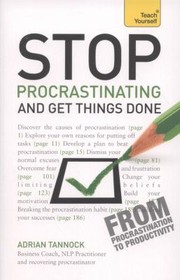
About Stop procrastinating and things done
The book "Stop Procrastinating and Get Things Done" by Adrian Tannock serves as a practical guide for individuals struggling with chronic procrastination and seeking to enhance their productivity. Tannock posits that procrastination is not merely a character flaw but often a symptom of underlying issues such as fear of failure, perfectionism, lack of clarity, or poor time management. The book systematically dismantles common myths about procrastination, offering readers a clear understanding of its psychological roots and practical, actionable strategies to overcome it.
Tannock emphasizes the importance of self-awareness in identifying personal triggers and patterns of delay. He then introduces a range of techniques, from goal setting and task breakdown to effective time management methods and habit formation. The core argument revolves around the idea that consistent, small steps, coupled with a shift in mindset, can lead to significant improvements in productivity and overall life satisfaction. The book provides tools to help readers not only start tasks but also maintain momentum and complete projects, fostering a sense of accomplishment and reducing stress associated with unfinished work.
Key takeaways
- Identify the root causes of your procrastination, whether it's fear, perfectionism, or lack of motivation, to address them effectively.
- Break down large, daunting tasks into smaller, manageable steps to reduce overwhelm and make starting easier.
- Implement time management techniques like the Pomodoro Technique or time blocking to create structured work periods and minimize distractions.
- Develop a clear understanding of your priorities and focus on high-impact tasks first to maximize productivity.
- Cultivate positive habits and routines that support consistent action and reduce the mental effort required to start tasks.
- Practice self-compassion and learn to forgive yourself for past procrastination, focusing instead on present and future improvements.
- Create an environment that supports focus by eliminating distractions and organizing your workspace.
Key ideas at a glance
Procrastination
- Identify the root causes of your procrastination, whether it's fear, perfectionism, or lack of motivation, to address…
- Practice self-compassion and learn to forgive yourself for past procrastination, focusing instead on present and future…
Productivity
- Develop a clear understanding of your priorities and focus on high-impact tasks first to maximize productivity.
Time Management
- Break down large, daunting tasks into smaller, manageable steps to reduce overwhelm and make starting easier.
- Implement time management techniques like the Pomodoro Technique or time blocking to create structured work periods and…
Habit Formation
- Cultivate positive habits and routines that support consistent action and reduce the mental effort required to start…
Self-Discipline
- Create an environment that supports focus by eliminating distractions and organizing your workspace.
Chapter summaries
Introduction & Understanding Procrastination
Adrian Tannock introduces procrastination not merely as laziness, but as a complex behavioral pattern often rooted in deeper psychological factors. He explores common causes such as fear of failure, perfectionism, lack of clarity, and low energy, urging readers to identify their personal triggers. The book emphasizes that understanding 'why' one procrastinates is the first crucial step towards overcoming it. Tannock details the detrimental impact of procrastination on productivity, mental well-being, and overall goal achievement, setting a foundational understanding for the practical strategies that follow in subsequent sections. He encourages self-awareness as a key tool for personal transformation.
The Psychology of Action & Mindset Shift
This section delves into the mental barriers that prevent action. Tannock discusses the pervasive influence of negative self-talk, limiting beliefs, and the inherent human aversion to discomfort. He provides actionable strategies for reframing negative thoughts, challenging internal narratives, and cultivating a resilient growth mindset. The book highlights the critical insight that motivation often follows action, rather than preceding it, encouraging readers to initiate tasks even when they don't 'feel like it.' It also introduces concepts like visualizing a 'future self' to align current actions with long-term aspirations and developing self-compassion to mitigate the harsh self-criticism often associated with procrastination.
Setting Clear and Compelling Goals
Tannock asserts that vague or undefined goals are a primary catalyst for procrastination. This part guides readers through the process of setting SMART goals – Specific, Measurable, Achievable, Relevant, and Time-bound – to provide clarity and direction. He emphasizes the importance of connecting these goals to personal values and a larger life vision, thereby making them more compelling and intrinsically motivating. The book provides practical exercises for breaking down large, seemingly daunting goals into smaller, more manageable steps, transforming an overwhelming objective into a clear, actionable pathway. This structured approach reduces the initial resistance to starting tasks.
Effective Planning and Prioritization
This section equips readers with practical tools and methodologies for organizing tasks and managing their workload efficiently. Tannock introduces and explains prioritization frameworks such as the Eisenhower Matrix, which categorizes tasks by urgency and importance, and the ABCDE method for ranking daily tasks based on their critical impact. He advocates for the creation of realistic daily and weekly plans, stressing the importance of avoiding overcommitment and building in buffer time. The book also discusses the powerful concept of 'eating the frog' – tackling the most difficult or unpleasant task first – to build momentum and alleviate mental burden for the rest of the day.
Time Management Techniques for Productivity
Tannock presents a range of proven time management strategies designed to directly combat procrastination and enhance productivity. Key techniques detailed include the Pomodoro Technique, which involves focused work intervals followed by short breaks, and time blocking, where specific periods are scheduled for particular tasks. He also covers the benefits of batching similar tasks to improve efficiency and reduce context-switching. The book provides practical advice on minimizing distractions, creating an optimal and conducive work environment, and leveraging individual peak productivity times to maximize output. The overarching goal is to make work feel less overwhelming and more structured, fostering consistent progress.
Building Productive Habits and Routines
This part delves into the science behind habit formation, explaining the habit loop comprising a cue, routine, and reward. Tannock provides actionable steps for establishing new, positive habits and systematically dismantling old, unproductive ones. He emphasizes the importance of consistency, starting with small, achievable actions, and utilizing habit stacking to integrate new behaviors seamlessly into existing routines. The book also discusses the significant role of environmental design in supporting habit change, such as removing temptations or setting up visual cues. Additionally, it touches on the value of accountability partners or systems in solidifying new, desired behaviors and maintaining commitment.
Sustaining Motivation and Overcoming Setbacks
Adrian Tannock acknowledges that the journey to overcome procrastination is rarely linear and will inevitably involve challenges. This final section focuses on strategies for maintaining long-term motivation, celebrating small wins to reinforce positive behavior, and developing resilience in the face of obstacles. He offers practical advice for dealing with burnout, unexpected challenges, and moments of relapse, encouraging readers to view setbacks as learning opportunities rather than failures. The book emphasizes the importance of self-reflection, continuously adapting strategies, and fostering a mindset of persistent growth to stay on track towards achieving personal and professional goals, ensuring lasting change.
Full summary
"Stop Procrastinating and Get Things Done" by Adrian Tannock is a practical guide aimed at helping readers overcome procrastination and boost productivity. The book highlights the psychological roots of procrastination, connecting it to fear, perfectionism, and lack of motivation.
Tannock outlines actionable strategies to combat procrastination, such as setting clear goals, breaking tasks into manageable parts, and utilizing time management techniques. He emphasizes the importance of self-discipline and creating a conducive environment for productivity. Through personal anecdotes and research, he illustrates the transformative power of taking action.
Key elements include the concept of the "procrastination cycle," which illustrates how avoidance behaviors lead to anxiety and guilt. Tannock also discusses common pitfalls and offers practical exercises to reinforce new habits.
The book serves as a motivational resource, encouraging readers to confront their procrastination with em...
Themes
- Procrastination
- Productivity
- Time Management
- Habit Formation
- Self-Discipline
- Mindset Shift
About Adrian Tannock
Adrian Tannock is a self-help author known for his practical guides on productivity, time management, and personal development. He aims to provide actionable strategies that readers can implement immediately to improve their lives. Tannock has written several books, including "The Power of Focus: How to Eliminate Distractions and Get More Done" and "Master Your Time, Master Your Life." He wrote "Stop Procrastinating and Get Things Done" to offer a clear, concise, and effective roadmap for individuals seeking to break free from the cycle of delay and achieve their goals.
FAQ
What is Stop procrastinating and things done about?
This book is a self-help guide by Adrian Tannock designed to help readers overcome procrastination. It delves into the psychological reasons behind delaying tasks and offers a comprehensive set of practical strategies, time management techniques, and habit-building advice to enhance productivity and achieve goals.
Is Stop procrastinating and things done worth reading?
Yes, it is considered worth reading for anyone struggling with chronic procrastination. The book provides actionable, easy-to-understand strategies that can be immediately applied. It offers a structured approach to understanding and tackling procrastination, making it a valuable resource for improving personal and professional effectiveness.
How does Stop procrastinating and things done end?
Spoiler: The book concludes by reinforcing the importance of sustained effort, self-compassion, and continuous improvement. It emphasizes that overcoming procrastination is an ongoing journey, not a one-time fix, and encourages readers to apply the learned techniques consistently to maintain productivity and achieve lasting change.
Who should read Stop procrastinating and things done?
This book is ideal for individuals who frequently find themselves delaying important tasks, struggle with motivation, or feel overwhelmed by their to-do lists. It's also beneficial for those seeking practical, step-by-step methods to improve their time management, build better habits, and increase overall personal productivity.
How long does it take to read Stop procrastinating and things done?
On average, it takes approximately 3 to 4 hours to read "Stop Procrastinating and Get Things Done." This estimate is based on the typical length of self-help books in this category and an average reading speed of about 250 words per minute.