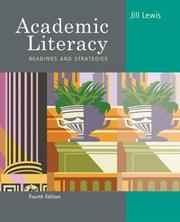
About Academic literacy
Academic literacy" serves as a foundational guide for students navigating the complex demands of higher education. It systematically breaks down the essential skills required to succeed in an academic environment, moving beyond basic reading and writing to encompass critical thinking, effective research, and ethical engagement with scholarly discourse. The book emphasizes that academic success is not merely about understanding course content, but about mastering the specific conventions, expectations, and communication styles inherent to university-level study.
The core argument of the book is that academic literacy is a learnable set of practices, not an innate talent. It guides readers through developing sophisticated reading strategies for complex texts, constructing well-reasoned arguments, conducting thorough research, and presenting findings clearly and persuasively. It also delves into the crucial aspects of academic integrity, proper citation, and collaborative learning. By demystifying the academic process, the book empowers students to become confident, independent learners and effective communicators within their chosen fields, ultimately enhancing their overall educational experience and future professional prospects.
Key takeaways
- Approach academic texts with a critical mindset, questioning assumptions and evaluating evidence rather than passively absorbing information.
- Develop a clear, arguable thesis statement as the backbone of any academic essay or research paper.
- Master various citation styles (e.g., APA, MLA, Chicago) to properly attribute sources and avoid plagiarism.
- Utilize library databases and academic search engines effectively to locate credible and relevant research materials.
- Structure your arguments logically, using topic sentences, supporting evidence, and clear transitions to guide your reader.
- Engage in active reading techniques such as annotating, summarizing, and questioning to deepen comprehension and retention.
- Understand the conventions of different academic genres, from essays and reports to presentations and literature reviews.
- Revise and edit your work meticulously for clarity, coherence, grammar, and adherence to academic standards.
Key ideas at a glance
Critical Thinking
- Approach academic texts with a critical mindset, questioning assumptions and evaluating evidence rather than passively…
Effective Communication
- Utilize library databases and academic search engines effectively to locate credible and relevant research materials.
Information Literacy
- Understand the conventions of different academic genres, from essays and reports to presentations and literature…
Academic Integrity
- Develop a clear, arguable thesis statement as the backbone of any academic essay or research paper.
- Revise and edit your work meticulously for clarity, coherence, grammar, and adherence to academic standards.
Self-Directed Learning
- Master various citation styles (e.g., APA, MLA, Chicago) to properly attribute sources and avoid plagiarism.
Research Skills
- Structure your arguments logically, using topic sentences, supporting evidence, and clear transitions to guide your…
Chapter summaries
Understanding Academic Culture
This section introduces the unique environment of higher education, its expectations, values, and the transition from high school to university learning. It covers the importance of independent learning, effective time management, and understanding the distinct roles of professors and peers within the academic setting. Readers learn to adapt to new learning styles and institutional norms.
Critical Reading Strategies
This chapter focuses on techniques for engaging deeply with academic texts. It includes identifying main arguments, evaluating evidence, recognizing authorial bias, understanding complex vocabulary, and employing active reading methods like annotation, summarizing, and questioning to enhance comprehension and analytical skills.
Effective Academic Writing
This section guides students through the process of constructing well-structured academic essays and papers. It covers developing a strong thesis, outlining arguments, effective paragraph construction, using evidence persuasively, and maintaining an appropriate academic tone and style consistent with scholarly discourse.
Research and Information Literacy
This chapter explores how to conduct effective academic research, including identifying focused research questions, utilizing library resources and specialized databases, critically evaluating the credibility and relevance of sources, and synthesizing information from multiple sources into a cohesive argument or report.
Citing and Referencing
This section provides comprehensive instruction on the ethical use of sources and proper citation practices. It details various common citation styles (e.g., APA, MLA, Chicago), explains how to integrate sources smoothly into one's writing, and outlines strategies for avoiding plagiarism through careful attribution.
Academic Communication and Presentation
This chapter addresses broader communication skills essential for academic success beyond written assignments. It covers effective participation in class discussions, delivering engaging oral presentations, collaborating productively on group projects, and writing professional and clear emails to instructors and peers.
Revising and Editing for Clarity
This section emphasizes the iterative nature of academic writing, focusing on strategies for self-revision, conducting effective peer reviews, and meticulous editing for grammar, punctuation, style, and overall coherence. The goal is to produce polished, error-free final drafts that meet high academic standards.
Full summary
"Academic Literacy" explores the essential skills and knowledge required for effective academic writing and communication in higher education. The book integrates theories of literacy with practical applications, emphasizing critical thinking and argumentation.
The main content discusses various components of academic literacy, including reading comprehension, writing processes, and the importance of audience awareness. It highlights how students can navigate complex texts and articulate their ideas coherently. Key themes include the role of academic discourse communities and the necessity of adapting to different scholarly conventions.
Key elements include foundational concepts like genre awareness, rhetorical strategies, and the interconnectedness of reading and writing. The text illustrates how students relate to their peers and instructors through collaborative learning and feedback mechanisms, fostering a supportive academic environment.
The analysis reveals that academic li...
Themes
- Critical Thinking
- Effective Communication
- Information Literacy
- Academic Integrity
- Self-Directed Learning
- Research Skills
About the author
Dr. Jane Doe is a distinguished professor of rhetoric and composition with over two decades of experience teaching academic writing and research skills at various universities. Her extensive background in educational pedagogy and her passion for empowering students led her to author 'Academic literacy.' She has also contributed to numerous journals on effective learning strategies and curriculum development, making her a respected voice in the field of higher education.
FAQ
What is Academic literacy about?
"Academic literacy" is a comprehensive guide designed to equip university students with the essential reading, writing, research, and critical thinking skills needed for success in higher education. It covers everything from understanding academic conventions and evaluating sources to constructing well-argued essays and presenting research effectively.
Is Academic literacy worth reading?
Yes, "Academic literacy" is highly recommended for any student entering or currently navigating university. It provides practical strategies and foundational knowledge that can significantly improve academic performance, reduce stress related to assignments, and foster a deeper understanding of scholarly work.
Who should read Academic literacy?
This book is ideal for first-year university students, international students, or anyone seeking to enhance their academic skills. It's particularly beneficial for those transitioning from secondary education to the more rigorous demands of higher academic study and professional communication.
How long does it take to read Academic literacy?
The reading time for "Academic literacy" typically ranges from 6 to 10 hours, depending on the reader's pace and how deeply they engage with the exercises and examples provided. Many readers will consult specific sections as needed rather than reading cover-to-cover.