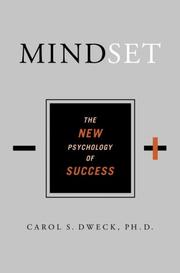
About Mindset
Carol S. Dweck's "Mindset: The New Psychology of Success" introduces two fundamental mindsets that profoundly influence how individuals approach life, challenges, and success: the fixed mindset and the growth mindset. A fixed mindset is characterized by the belief that one's basic qualities, such as intelligence or talent, are static traits that cannot be changed. Individuals with a fixed mindset tend to avoid challenges, give up easily when faced with obstacles, see effort as fruitless, ignore useful negative feedback, and feel threatened by the success of others. They are constantly trying to prove their existing abilities.
In contrast, a growth mindset is founded on the belief that one's most basic abilities can be developed through dedication and hard work. People with a growth mindset embrace challenges, persist in the face of setbacks, see effort as a path to mastery, learn from criticism, and find inspiration in the success of others. Dweck argues that these mindsets are not merely personality traits but rather fundamental beliefs that shape our behavior, motivation, and ultimately, our potential for achievement and happiness across all domains of life, including education, business, sports, and relationships. The book provides extensive research and real-world examples to illustrate the pervasive impact of these mindsets and offers practical strategies for cultivating a growth mindset.
Key takeaways
- Recognize that your mindset—whether fixed or growth—profoundly influences your approach to challenges, effort, and learning.
- Embrace challenges as opportunities for growth and learning, rather than as threats to your perceived intelligence or talent.
- Understand that effort is crucial for developing abilities and achieving mastery, not just a sign of insufficient talent.
- Learn from criticism and setbacks, viewing them as valuable information for improvement rather than as personal failures.
- Praise children and students for their effort, strategies, and progress, rather than solely for their intelligence or outcomes, to foster a growth mindset.
- Cultivate a growth mindset in your relationships by seeing problems as opportunities for mutual understanding and development.
- Actively work to identify and challenge fixed mindset triggers within yourself, consciously choosing a growth-oriented response.
- Understand that changing your mindset is a process, and consistent practice is required to shift from a fixed to a growth orientation.
Key ideas at a glance
Growth vs
- Recognize that your mindset—whether fixed or growth—profoundly influences your approach to challenges, effort, and…
- Actively work to identify and challenge fixed mindset triggers within yourself, consciously choosing a growth-oriented…
Effort and Learning
- Embrace challenges as opportunities for growth and learning, rather than as threats to your perceived intelligence or…
- Understand that effort is crucial for developing abilities and achieving mastery, not just a sign of insufficient…
Resilience
- Praise children and students for their effort, strategies, and progress, rather than solely for their intelligence or…
Potential and Achievement
- Cultivate a growth mindset in your relationships by seeing problems as opportunities for mutual understanding and…
Personal Transformation
- Learn from criticism and setbacks, viewing them as valuable information for improvement rather than as personal…
Chapter summaries
Introduction: The Mindsets
This introductory section lays the groundwork for understanding the central concepts of the fixed mindset and the growth mindset. Carol Dweck introduces the fundamental idea that our beliefs about our abilities and intelligence profoundly shape our lives. A fixed mindset, she explains, is the belief that qualities like intelligence and talent are static traits, leading individuals to avoid challenges and fear failure as it exposes perceived limitations. Conversely, a growth mindset is the belief that these qualities can be developed through dedication and hard work, fostering a love of learning and resilience. Dweck sets the stage by illustrating how these fundamental beliefs influence our motivation, achievement, and overall well-being, promising to explore their manifestations across various domains of life, from education to relationships and business.
Chapter 1: The Mindsets
This chapter elaborates on the definitions and fundamental differences between the fixed and growth mindsets, building upon the introduction. Dweck explains that people with a fixed mindset believe their intelligence, personality, and talents are inherent and unchangeable traits. They often strive to prove their existing abilities and avoid situations that might expose perceived weaknesses, seeing effort as a sign of low ability. Conversely, individuals with a growth mindset believe these qualities can be developed through effort, good strategies, and help from others. They embrace challenges as opportunities for learning and growth, viewing effort as a path to mastery rather than a sign of inadequacy. The chapter uses examples to illustrate how these mindsets influence reactions to success and failure, and how they shape an individual's entire psychological world and their pursuit of goals.
Chapter 2: Inside the Mindsets
Dweck delves deeper into the internal workings and consequences of each mindset, exploring how they manifest in daily thoughts and behaviors. She describes how a fixed mindset leads to a preoccupation with being judged, a desire to look smart, and a tendency to give up when faced with obstacles, often feeling threatened by the success of others. People with this mindset might avoid effort, seeing it as evidence of low ability, and interpret criticism as a personal attack. In contrast, the growth mindset fosters a love of learning, a resilience in the face of setbacks, and an appreciation for effort as a means to improvement. Dweck illustrates these internal dynamics with examples of students, showing how their mindset dictates their responses to academic challenges, feedback, and the learning process itself, emphasizing the different internal narratives they construct.
Chapter 3: The Truth About Ability and Accomplishment
This chapter challenges common misconceptions about talent and success, arguing that a growth mindset is crucial for true accomplishment. Dweck debunks the myth that natural talent alone guarantees success, presenting evidence that sustained effort, dedication to learning, and effective strategies are far more predictive. She discusses how a fixed mindset can lead to underachievement even in highly talented individuals, as they may shy away from challenges or fail to develop necessary skills if they believe their innate ability should suffice. The chapter highlights historical figures and contemporary examples, such as the story of Alfred Binet and the origins of the IQ test, to demonstrate that many celebrated achievers, often perceived as "naturals," actually cultivated their skills through relentless practice and a belief in their capacity to grow, emphasizing the role of passion and perseverance.
Chapter 4: Sport: The Mindset of a Champion
Dweck applies the mindset concepts to the world of sports, showcasing how a growth mindset distinguishes true champions and contributes to peak performance. She contrasts athletes who rely solely on natural talent (fixed mindset) with those who relentlessly train, learn from mistakes, and continuously seek improvement (growth mindset). Examples include legendary figures like Michael Jordan, who famously embraced failure as a learning opportunity and used setbacks to fuel his determination, and Jackie Joyner-Kersee, who overcame physical challenges through sheer will and practice. The chapter illustrates how a growth mindset in sports leads to greater resilience, better performance under pressure, and a sustained love for the game, emphasizing that effort, strategy, and continuous learning are paramount over innate athletic gifts.
Chapter 5: Business: Mindset and Leadership
This chapter explores the profound impact of mindsets within the business world, particularly in leadership and organizational culture. Dweck argues that fixed-mindset leaders often create "yes-men" cultures, fear criticism, and are threatened by the talent of their subordinates, leading to stagnation, poor decision-making, and a lack of innovation. She contrasts this with growth-mindset leaders who foster innovation, embrace challenges, value learning, and empower their teams to grow and take risks. Examples include Jack Welch of GE, who initially exhibited fixed-mindset traits but evolved, and Lou Gerstner at IBM, who transformed the company by instilling a growth-oriented culture focused on learning and adaptation. The chapter emphasizes how a leader's mindset profoundly shapes employee engagement, organizational resilience, and the company's capacity for adaptation and long-term success.
Chapter 6: Relationships: Mindsets in Love (Partners, Parents, Teachers, and Coaches)
Dweck examines how mindsets influence personal relationships, including romantic partnerships, parenting, and mentoring. In romantic relationships, a fixed mindset can lead individuals to believe that compatibility is instant and problems signify a flawed relationship or partner, fostering blame, defensiveness, and a tendency to give up. A growth mindset, however, encourages partners to work through challenges, communicate openly, and grow together, seeing conflicts as opportunities for deeper understanding. For parents, teachers, and coaches, a growth mindset involves praising effort, strategy, and the process of learning rather than just intelligence or talent, thereby fostering resilience and a love of learning in children and students. The chapter provides specific examples of how different mindsets manifest in interactions, shaping the quality and longevity of these crucial connections.
Chapter 7: Parents, Teachers, and Coaches: Where Do Mindsets Come From?
This chapter delves into the origins of mindsets, focusing on the critical role of parents, teachers, and coaches in shaping a child's or student's belief system about their abilities. Dweck explains that the messages children receive about effort, intelligence, and failure significantly influence whether they develop a fixed or growth mindset. She critiques the common practice of praising intelligence or talent alone, arguing that it can inadvertently foster a fixed mindset by making children fear failure and avoid challenges to protect their "smart" image. Instead, she advocates for praising effort, strategy, and the process of learning, which reinforces the idea that abilities can be developed. The chapter offers practical advice for adults on how to cultivate a growth mindset in those they influence, emphasizing the power of their words and actions in shaping future generations.
Chapter 8: Changing Mindsets: The Workshop
The final chapter provides practical strategies and a "workshop" for individuals to cultivate a growth mindset, acknowledging that changing a deeply ingrained mindset is a process, not an overnight transformation. Dweck outlines four key steps: first, learning to hear your fixed-mindset "voice" when it emerges; second, recognizing you have a choice in how to interpret challenges and setbacks; third, talking back to the fixed-mindset voice with a growth-mindset perspective; and fourth, taking growth-oriented action. The chapter offers concrete techniques for identifying fixed-mindset triggers and consciously choosing a growth-oriented response. It reinforces the idea that anyone can develop a growth mindset through awareness, practice, and a commitment to personal development, offering hope and a clear, actionable path forward for personal transformation.
Full summary
"Mindset" by Carol Dweck explores the profound impact of one’s mindset on personal and professional growth, emphasizing the difference between fixed and growth mindsets.
Dweck argues that individuals with a growth mindset, who believe their abilities can develop through effort, are more likely to embrace challenges, persist through obstacles, and achieve higher levels of success. Key themes include resilience, motivation, and the value of learning from failure, as well as how these mindsets influence relationships and performance in various domains, including education and sports.
Central to Dweck’s ideas are concepts like the “fixed mindset,” which limits potential, and the “growth mindset,” which fosters an environment conducive to learning. The relationships between students and teachers, as well as leaders and their teams, highlight how mindset affects interactions and outcomes.
Dweck’s analysis underscores that fostering a growth mindset not only enhances individual achie...
Memorable quotes
“The view you adopt for yourself profoundly affects the way you lead your life.”
“In a fixed mindset, people believe their basic qualities, like their intelligence or talent, are simply fixed traits.”
“In a growth mindset, people believe that their most basic abilities can be developed through dedication and hard work—brains and talent are just the starting point.”
“Why waste time proving over and over how great you are, when you could be getting better?”
“Effort is what ignites that ability and turns it into accomplishment.”
“Becoming is better than being.”
Themes
- Growth vs. Fixed Mindset
- Effort and Learning
- Resilience
- Potential and Achievement
- Personal Transformation
About Carol Dweck
Carol S. Dweck, Ph.D., is one of the world's leading researchers in the fields of personality, social psychology, and developmental psychology. She is the Lewis and Virginia Eaton Professor of Psychology at Stanford University. Dweck's groundbreaking research on mindsets has been published in numerous academic journals, and she is a member of the American Academy of Arts and Sciences. She wrote "Mindset" to synthesize decades of her research into an accessible format, demonstrating how a simple shift in belief can profoundly impact an individual's success and happiness across all areas of life.
FAQ
What is Mindset about?
Mindset by Carol Dweck explores two fundamental beliefs: the fixed mindset, where abilities are seen as static, and the growth mindset, where abilities can be developed through effort. The book details how these mindsets impact success, relationships, and personal fulfillment, and offers strategies for cultivating a growth mindset.
Is Mindset worth reading?
Yes, Mindset is highly regarded for its profound insights into human potential and motivation. It offers a transformative perspective on how our beliefs about ourselves shape our lives, providing actionable advice for personal and professional growth that many readers find invaluable.
How does Mindset end?
Spoiler: Mindset concludes by providing a clear, four-step process for developing a growth mindset. It emphasizes that this is an ongoing journey of recognizing fixed mindset triggers, consciously choosing growth-oriented responses, and embracing challenges as opportunities for continuous learning and development.
Who should read Mindset?
Mindset is highly recommended for anyone interested in personal development, parents, educators, business leaders, athletes, and individuals seeking to overcome challenges and unlock their full potential. Its lessons are broadly applicable across various aspects of life.
How long does it take to read Mindset?
On average, it takes approximately 4.5 to 5 hours to read Mindset, assuming a reading speed of around 250 words per minute. This can vary depending on individual reading pace and engagement with the material.