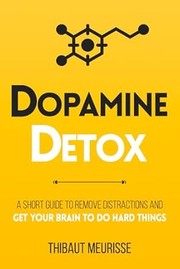
About Dopamine Detox
Thibaut Meurisse's "Dopamine Detox" addresses the modern epidemic of constant stimulation and instant gratification, which he argues leads to decreased focus, motivation, and overall life satisfaction. The book posits that our brains are constantly bombarded with easily accessible, highly rewarding activities – from social media and video games to junk food and endless entertainment – leading to an overstimulated reward system. This overstimulation desensitizes us to the natural pleasures of life and makes it difficult to engage in less exciting but more productive long-term tasks.
Meurisse introduces the concept of a "dopamine detox" as a temporary period of abstinence from these highly stimulating activities. The goal is not to eliminate dopamine, but to reset the brain's sensitivity to it, allowing individuals to regain control over their impulses and find joy in simpler, more meaningful pursuits. The book provides a practical framework for identifying personal triggers, implementing the detox, and integrating the lessons learned into a sustainable lifestyle, ultimately aiming to improve concentration, boost motivation, and foster greater self-discipline and contentment.
Key takeaways
- Temporarily abstaining from highly stimulating activities can reset your brain's reward system and increase sensitivity to simpler pleasures.
- Identify your biggest sources of instant gratification and consciously reduce your engagement with them to improve focus and motivation.
- The primary goal of a dopamine detox is to make less stimulating but more productive activities feel more appealing and easier to pursue.
- Replace passive consumption with active creation, learning, and engagement to foster long-term satisfaction and growth.
- Understand that dopamine is a powerful motivation chemical; learn to leverage its release for productive habits rather than impulsive indulgence.
- Integrate periods of boredom, quiet reflection, and mindful presence into your daily routine to encourage creativity and self-awareness.
- A dopamine detox is a starting point for self-improvement; sustainable change requires consistent effort and long-term habit adjustments.
Key ideas at a glance
Self-discipline
- Integrate periods of boredom, quiet reflection, and mindful presence into your daily routine to encourage creativity…
- A dopamine detox is a starting point for self-improvement; sustainable change requires consistent effort and long-term…
Digital minimalism
- Temporarily abstaining from highly stimulating activities can reset your brain's reward system and increase sensitivity…
Focus and productivity
- Identify your biggest sources of instant gratification and consciously reduce your engagement with them to improve…
- The primary goal of a dopamine detox is to make less stimulating but more productive activities feel more appealing and…
Habit formation
- Understand that dopamine is a powerful motivation chemical; learn to leverage its release for productive habits rather…
Mindfulness
- Replace passive consumption with active creation, learning, and engagement to foster long-term satisfaction and growth.
Chapter summaries
Part 1: Understanding Dopamine
This section introduces dopamine as a neurotransmitter crucial for motivation, reward, and pleasure. Meurisse explains how dopamine drives us to seek out rewards and achieve goals, but also how its dysregulation can lead to issues. He differentiates between "wanting" (driven by dopamine) and "liking" (driven by opioids), emphasizing that dopamine is primarily about anticipation and pursuit rather than the pleasure itself. The book highlights how modern society, with its constant access to instant gratification, has hijacked our dopamine system, leading to a state of chronic overstimulation and a diminished capacity to enjoy simple activities or pursue long-term goals. This part sets the stage for understanding why a "dopamine detox" might be necessary to reset our reward pathways.
Part 2: The Problem with Modern Life
Meurisse delves into how various aspects of contemporary living contribute to dopamine overload. He identifies common culprits such as social media, endless internet browsing, video games, pornography, junk food, excessive entertainment (TV shows, movies), and even certain drugs. The book explains that these activities provide quick, intense bursts of dopamine, making everyday tasks and delayed gratification seem dull and unappealing by comparison. This constant stimulation leads to a lowered baseline dopamine level, resulting in feelings of boredom, apathy, lack of motivation, and difficulty concentrating. The author argues that this overstimulation prevents individuals from engaging in more meaningful, long-term pursuits and enjoying the simple, natural rewards of life.
Part 3: What is a Dopamine Detox?
This section defines the concept of a dopamine detox, clarifying its purpose and what it entails. Meurisse explains that it's not about eliminating dopamine entirely, but rather about temporarily abstaining from highly stimulating activities to reset the brain's reward system. The goal is to reduce the constant bombardment of artificial dopamine spikes, allowing the brain to recalibrate and become more sensitive to natural, healthy rewards. The book emphasizes that a detox helps to increase focus, improve motivation for productive tasks, reduce impulsivity, and foster a greater appreciation for simple pleasures. It's presented as a tool to regain control over one's attention and habits, rather than a permanent lifestyle change.
Part 4: How to Do a Dopamine Detox
This practical section provides a step-by-step guide on implementing a dopamine detox. Meurisse outlines different levels of detox, from beginner (abstaining from one or two specific activities for a short period) to advanced (a full day or weekend of minimal stimulation). He lists common activities to avoid, such as social media, internet browsing, video games, pornography, junk food, excessive music, and even unnecessary talking. Conversely, he suggests engaging in low-stimulation activities like reading, walking in nature, meditation, journaling, cleaning, or working on a long-term project. The book stresses the importance of planning, setting clear rules, and preparing for potential withdrawal symptoms like boredom or restlessness, offering strategies to overcome them.
Part 5: Benefits and Long-Term Strategies
Meurisse details the numerous benefits one can expect from successfully completing a dopamine detox, including increased focus and concentration, enhanced motivation for productive tasks, improved mood, reduced anxiety, better sleep, and a greater appreciation for simple pleasures. He then transitions into how to integrate the principles of the detox into daily life for sustained well-being. This involves developing healthier habits, consciously managing exposure to high-dopamine activities, scheduling "dopamine fasts" regularly, and finding intrinsic motivation for work and personal growth. The book advocates for a balanced approach, where high-stimulation activities are enjoyed in moderation and intentionally, rather than as default behaviors, to maintain a healthy dopamine system.
Full summary
Book Overview
"Dopamine Detox" by Thibaut Meurisse is a compelling guide that addresses the pervasive issue of overstimulation in modern society. The book presents a practical framework for individuals seeking to regain control over their lives by managing their dopamine levels—essentially the brain's reward chemical. Meurisse emphasizes the importance of taking intentional breaks from addictive behaviors and distractions to enhance focus, creativity, and productivity.
Main Content/Plot
The book is structured around the concept of a "dopamine detox," which involves temporarily abstaining from activities that lead to excessive dopamine release, such as social media, video games, and junk food. Meurisse outlines a step-by-step plan to help readers implement this detox in their lives, including:
1. Understanding Dopamine: The author explains how dopamine functions in the brain, its role in motivation and pleasure, and how its overstimulation can lead to lethargy, lack of focus, and unhappiness.
2. Identifying Triggers: Readers are encouraged to identify their personal distractions and addictive behaviors that contribute to dopamine overload.
3. Detox Strategies: Meurisse provides actionable strategies for conducting a dopamine detox, including setting specific goals, creating a detox schedule, and establishing healthier habits.
4. Rebuilding Focus: After the detox period, the book guides readers on how to reintroduce activities in a balanced way that promotes sustained motivation and fulfillment.
Key Themes
1. Self-Discipline: The core of the dopamine detox is cultivating self-discipline to resist instant gratification and make healthier choices.
2. Mindfulness: The book encourages a mindful approach to consumption—whether it be food, media, or leisure activities—promoting awareness of one’s habits and their effects.
3. Balance: Striking a balance between pleasure-seeking behaviors and productive activities is essential for long-term well-being and success.
4. Personal Growth: Meurisse highlights that overcoming dopamine dependency can lead to significant personal growth, improved mental clarity, and enhanced satisfaction in life.
Important Takeaways
- Reset Your Brain: Engaging in a dopamine detox can recalibrate your brain’s reward system, helping you appreciate simple pleasures and regain motivation.
- Focus on Quality Over Quantity: By reducing distractions, you can devote more time and energy to meaningful projects, fostering a sense of accomplishment.
- Create Healthy Habits: The detox
Memorable quotes
“The goal of a dopamine detox is not to eliminate dopamine, but to reset your sensitivity to it.”
“Boredom is the catalyst for creativity and self-reflection.”
“We are constantly chasing the next hit of dopamine, leaving us feeling unfulfilled and unable to focus on long-term goals.”
“True freedom comes from controlling your impulses, not from indulging them.”
Themes
- Self-discipline
- Digital minimalism
- Focus and productivity
- Habit formation
- Mindfulness
About Thibaut Meurisse
Thibaut Meurisse is a prolific self-help author known for his practical, actionable advice on productivity, mindset, and personal development. He has written numerous books, including "Master Your Emotions" and "Crush Your Limits," which focus on empowering individuals to take control of their lives. Meurisse wrote "Dopamine Detox" to address the pervasive issue of modern overstimulation and provide a clear, accessible path for individuals to regain control over their focus and motivation in an increasingly distracting world.
FAQ
What is Dopamine Detox about?
It's about temporarily abstaining from highly stimulating activities like social media, video games, and junk food to reset your brain's reward system. The aim is to improve focus, increase motivation for productive tasks, and regain control over impulsive behaviors by making less stimulating activities more appealing.
Is Dopamine Detox worth reading?
Yes, for anyone feeling overwhelmed by constant distractions, struggling with focus, or seeking to break free from addictive digital habits. It provides a clear framework and practical advice for understanding and resetting your brain's reward system, leading to improved productivity and well-being.
How does Dopamine Detox end?
Spoiler: The book concludes by emphasizing that the detox is a starting point, not a permanent solution. It guides readers on how to integrate the lessons learned into their daily lives, build sustainable habits, and maintain a balanced relationship with stimulating activities to ensure long-term focus and self-control.
Who should read Dopamine Detox?
Individuals who feel addicted to their phones, social media, video games, or other instant gratification sources. It's also beneficial for those struggling with procrastination, lack of focus, or a general feeling of being overwhelmed by modern digital life.
How long does it take to read Dopamine Detox?
The book is relatively concise. A typical reader at 250 words per minute could likely finish it in 1.5 to 2.5 hours, depending on their reading speed and how much they pause to reflect.