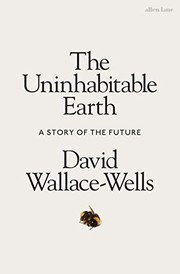
About Uninhabitable earth
The Uninhabitable Earth" by David Wallace-Wells is a stark and urgent exploration of the catastrophic consequences of climate change, presenting a future far more dire and immediate than often portrayed. Challenging the conventional narrative that climate change is a distant or manageable threat, Wallace-Wells meticulously details the cascading impacts that are already unfolding and those that are projected to accelerate within our lifetimes. The book moves beyond the familiar images of melting ice caps to paint a comprehensive picture of a world ravaged by extreme heat, widespread hunger, perpetual wildfires, rising sea levels, unbreathable air, and novel plagues, emphasizing that these are not isolated events but interconnected crises that will fundamentally reshape human civilization.
Wallace-Wells argues that humanity is on a trajectory towards a future where large parts of the planet become literally uninhabitable, leading to mass migrations, economic collapse, and incessant conflict. He critiques the prevailing complacency and the psychological mechanisms that allow societies to downplay the severity of the crisis, urging readers to confront the full scope of the impending disaster. While the book is unapologetically bleak in its prognosis, it also serves as a powerful call to action, suggesting that understanding the true scale of the threat is the first step towards mobilizing the radical changes necessary to mitigate the worst outcomes. It matters because it forces a reckoning with the most significant challenge facing humanity, demanding a re-evaluation of our priorities and a collective response commensurate with the scale of the emergency.
Key takeaways
- Climate change is happening faster and with more severe consequences than most people realize, challenging common misconceptions about its pace and scale.
- The impacts of global warming will manifest as cascading crises, affecting every aspect of human life, from food and water to economy and conflict.
- Even modest warming scenarios will lead to widespread suffering, societal disruption, and the potential uninhabitability of vast regions.
- Human inaction and psychological denial are significant barriers to addressing the climate emergency effectively, perpetuating a dangerous complacency.
- Technological solutions alone are insufficient; systemic political, economic, and cultural changes are urgently required to avert the worst outcomes.
- The future is not yet written, and collective, radical action can still mitigate the most catastrophic scenarios, but time is rapidly running out.
- Confronting the full horror of the climate crisis, though painful, is a necessary first step towards mobilizing meaningful and effective change.
Key ideas at a glance
Climate Catastrophe
- Climate change is happening faster and with more severe consequences than most people realize, challenging common…
- The future is not yet written, and collective, radical action can still mitigate the most catastrophic scenarios, but…
Human Inaction
- The impacts of global warming will manifest as cascading crises, affecting every aspect of human life, from food and…
- Human inaction and psychological denial are significant barriers to addressing the climate emergency effectively…
Existential Threat
- Even modest warming scenarios will lead to widespread suffering, societal disruption, and the potential…
Future Shock
- Confronting the full horror of the climate crisis, though painful, is a necessary first step towards mobilizing…
Systemic Failure
- Technological solutions alone are insufficient; systemic political, economic, and cultural changes are urgently…
Chapter summaries
Introduction: The Uninhabitable Earth
The introduction sets a stark, urgent tone, arguing that the climate crisis is far more immediate and catastrophic than commonly understood. Wallace-Wells challenges the prevailing narrative of gradual warming, presenting a future shaped by rapid, cascading environmental collapses. He emphasizes that climate change is not merely an environmental problem but a complete reordering of human life, impacting every aspect from economics to culture, and that humanity is currently on a path towards a truly "uninhabitable" planet within this century without drastic intervention. He aims to shock readers out of complacency by detailing the worst-case, yet increasingly plausible, scenarios, drawing on scientific consensus and projections to illustrate the scale of the impending crisis.
Chapter 1: Heat Death
This chapter focuses on the direct physiological threat of extreme heat, a primary and often underestimated danger of global warming. Wallace-Wells explains the concept of wet-bulb temperature, a measure combining heat and humidity, beyond which human bodies cannot cool themselves, even in shade. He details how vast regions, particularly in the tropics and subtropics, could become lethally hot for significant portions of the year, making outdoor labor impossible and even indoor survival difficult without constant air conditioning. This would lead to mass mortality, forced migration, and the collapse of societal functions in affected areas, rendering entire regions uninhabitable for human life.
Chapter 2: Hunger
This chapter explores how rising global temperatures, altered precipitation patterns, and extreme weather events will devastate agricultural productivity worldwide. Wallace-Wells details the projected declines in staple crop yields, such as corn and wheat, due to heat stress, droughts, and floods, particularly impacting regions already vulnerable to food insecurity. He discusses the loss of arable land to desertification and salinization, the spread of agricultural pests, and the disruption of global food supply chains. These impacts will lead to widespread food insecurity, famine, and increased competition for dwindling resources, exacerbating existing inequalities and potentially triggering mass migrations and conflicts over food access on an unprecedented scale.
Chapter 3: Drowning
This chapter addresses the catastrophic consequences of sea-level rise, driven by melting ice sheets and thermal expansion of warming oceans. Wallace-Wells describes the inevitable inundation of major coastal cities and low-lying regions globally, displacing hundreds of millions of people from places like Bangladesh, Florida, and major port cities. He also covers the increased frequency and intensity of storm surges, the salinization of freshwater aquifers near coastlines, and the destruction of critical infrastructure. The chapter emphasizes that even moderate sea-level rise will render vast areas uninhabitable, creating a global refugee crisis and immense economic costs.
Chapter 4: Wildfire
This chapter examines the escalating threat of wildfires, which are becoming more frequent, intense, and widespread due to hotter, drier conditions and prolonged droughts. Wallace-Wells details the destruction of forests, homes, and critical infrastructure, citing examples like the fires in California and Australia. He also discusses the severe health impacts of smoke inhalation, which can travel thousands of miles, affecting air quality far from the blaze. The chapter highlights the dangerous feedback loops where massive wildfires release vast amounts of stored carbon, further accelerating global warming and creating conditions for even more intense fires in the future.
Chapter 5: Disasters No Longer Natural
This chapter argues that extreme weather events—including hurricanes, floods, droughts, and heatwaves—are no longer "natural" but are amplified and made more destructive by human-caused climate change. Wallace-Wells illustrates how these events are increasing in frequency and intensity, overwhelming existing infrastructure, emergency services, and societal resilience. He cites examples of superstorms and unprecedented flooding, emphasizing that these are not isolated incidents but symptoms of a fundamentally altered climate. The chapter underscores that the human and economic costs of these "unnatural disasters" are escalating rapidly, leading to unprecedented levels of damage and human suffering globally.
Chapter 6: Freshwater Drain
This chapter focuses on the global water crisis, detailing how climate change is leading to the rapid depletion of freshwater resources. Wallace-Wells describes the accelerated melting of glaciers, which feed major river systems, the drying up of significant rivers and lakes, and the unsustainable over-extraction of groundwater from aquifers. He highlights the severe implications for agriculture, human consumption, and industrial use, particularly in already water-stressed regions like the Middle East and parts of Asia. The chapter warns of potential geopolitical conflicts over increasingly scarce water supplies and the displacement of populations due to water scarcity.
Chapter 7: Dying Oceans
This chapter explores the multifaceted threats to marine ecosystems, detailing how climate change is devastating the world's oceans. Wallace-Wells discusses ocean acidification, caused by the absorption of excess atmospheric CO2, which threatens shell-forming organisms and coral reefs. He also covers ocean deoxygenation, leading to "dead zones," and rising sea temperatures, which cause coral bleaching and disrupt marine food webs. The chapter describes the collapse of fish populations, the loss of biodiversity, and the profound consequences for global food security and the livelihoods of billions who depend on healthy oceans for sustenance and economic activity.
Chapter 8: Unbreathable Air
This chapter discusses the severe health impacts of air pollution exacerbated by climate change, making the air in many regions increasingly dangerous to breathe. Wallace-Wells details how rising temperatures increase ground-level ozone, a harmful pollutant, and how more frequent and intense wildfires and dust storms contribute to dangerous levels of particulate matter. He also touches on the spread of allergens due to altered growing seasons and the release of industrial pollutants. The chapter outlines the rise in respiratory illnesses, cardiovascular problems, and other health issues, particularly in urban and industrial areas and among vulnerable populations, emphasizing that declining air quality will lead to widespread public health crises.
Chapter 9: Plagues of Warming
This chapter examines how rising temperatures and ecological shifts facilitate the spread of new and re-emerging infectious diseases. Wallace-Wells covers the expansion of vector-borne illnesses like malaria, dengue, Zika, and Lyme disease into new geographic regions as their insect carriers thrive in warmer climates. He also discusses the alarming prospect of ancient pathogens thawing from melting permafrost and the challenges these pose to global public health systems, which may be unprepared for novel diseases. The chapter highlights how climate change creates conditions ripe for pandemics, stressing the interconnectedness of environmental health and human well-being.
Chapters 10-11: Economic Collapse and Climate Conflict
This combined section details the profound economic and geopolitical consequences of unchecked climate change. Wallace-Wells outlines how massive infrastructure damage, decreased agricultural productivity, resource scarcity, and disrupted global supply chains will lead to widespread economic instability, poverty, and potentially a global recession or depression. He then explores how these environmental and economic stresses act as "threat multipliers," exacerbating existing social, ethnic, and political tensions. The chapter describes how resource wars, mass migration, and state collapse will become more frequent, particularly in vulnerable regions, leading to unprecedented levels of conflict and humanitarian crises globally. It argues that climate change will fundamentally destabilize the global order, challenging peace and security.
Chapter 12: The Church of Perpetual Growth
This chapter critiques the dominant economic and cultural ideology of endless growth and consumption on a finite planet, arguing it is a fundamental driver of the climate crisis. Wallace-Wells examines how this mindset, deeply embedded in modern capitalism, fosters a collective denial or complacency about the scale of the problem and the necessity of radical change. He discusses the psychological and cultural barriers to acknowledging ecological limits, including the belief in technological salvation, the pursuit of individual prosperity, and the reluctance to sacrifice immediate comforts for long-term planetary health. The chapter posits that this ingrained ideology actively prevents effective and timely action on climate change.
Chapter 13: History's End
This chapter reflects on the profound psychological and philosophical implications of climate change, suggesting it marks an end to humanity's comfortable historical narratives of progress and mastery over nature. Wallace-Wells posits that humanity is entering an unprecedented era where the past offers little guidance, and the future is defined by ecological limits and existential threats. He explores how the scale of the climate crisis challenges our sense of control and purpose, forcing a radical re-evaluation of our place in the world. The chapter suggests that the climate crisis is not just an environmental problem but a crisis of meaning and human identity.
Chapter 14: The Comfort of Your Own Story
This chapter explores the human tendency to personalize climate change or to distance oneself from its overwhelming scale, often through individual actions that, while well-intentioned, are insufficient to address the systemic crisis. Wallace-Wells discusses the psychological coping mechanisms, including denial, despair, and a focus on individual rather than collective responsibility, which allow people to avoid confronting the full implications of the crisis. He argues that this individualistic framing prevents the necessary collective political and economic action required, trapping humanity in a narrative that minimizes the urgency and systemic nature of the threat.
Chapter 15: The Human Story
This chapter examines how climate change challenges the very notion of human exceptionalism and our perceived separation from nature. Wallace-Wells delves into the psychological and cultural shifts required to confront the crisis, arguing that humanity must recognize its deep interconnectedness with the planet and move beyond anthropocentric views to ensure survival. He explores the idea that the climate crisis is a mirror reflecting humanity's impact and responsibility, forcing a redefinition of what it means to be human in an era of ecological collapse. The chapter calls for a new narrative that embraces collective action and planetary stewardship.
Chapter 16: The Politics of Climate Change
This chapter discusses the pervasive political failures and immense challenges in addressing climate change effectively. Wallace-Wells highlights the powerful influence of fossil fuel lobbies, the short-term focus of electoral cycles that prioritize immediate economic gains over long-term environmental stability, and the difficulty of achieving international consensus on binding climate agreements. He critiques the slow pace of policy implementation and the lack of radical political will required to implement effective mitigation and adaptation strategies. The chapter argues that systemic political change is essential to overcome these entrenched barriers and avert the worst climate outcomes.
Chapter 17: The Case for Alarm
This chapter serves as a powerful reaffirmation of the urgency and severity of the climate crisis, arguing against complacency and the dangers of understating the threat. Wallace-Wells emphasizes that while the future is not yet written, the current trajectory demands immediate and transformative action, far beyond what is currently being undertaken. He contends that a degree of alarm, grounded in scientific reality and the potential for catastrophic outcomes, is not only justified but a necessary catalyst for change, shaking humanity out of its inertia. The chapter stresses that accepting the full scale of the threat is the first and most crucial step towards mobilizing the collective will to respond effectively.
Chapter 18: Carbon Capitalism
This chapter critiques the inherent contradictions between the capitalist system's relentless drive for profit and growth, and the imperative to rapidly decarbonize the global economy. Wallace-Wells explores how existing economic structures perpetuate reliance on fossil fuels, incentivize unsustainable consumption, and externalize environmental costs, making it difficult to transition to a sustainable future. He argues that fundamental systemic changes are required, far beyond individual consumer choices or market-based solutions, to achieve climate stability. The chapter suggests that a radical re-imagining of economic systems, potentially moving beyond traditional capitalism, is necessary to align human activity with planetary boundaries and avoid catastrophic warming.
Chapter 19: The Climate of Our Future
This chapter concludes the main body of the book by reflecting on the potential futures humanity faces, from catastrophic warming to a more sustainable path, depending on the actions taken now. Wallace-Wells emphasizes that the future is still in our hands, but requires unprecedented collective action, technological innovation, and a fundamental shift in values and priorities. He discusses the concept of "deep adaptation" and the need to prepare for inevitable changes while still striving for mitigation. The chapter offers a nuanced perspective, acknowledging the immense challenges but also the possibility of avoiding the worst-case scenarios through concerted global effort.
Epilogue: The Anthropic Principle
The epilogue reiterates the central theme that humanity's actions are the primary determinant of the planet's future, emphasizing the immense power and responsibility we hold. It offers a cautious, yet urgent, call to action, suggesting that while the worst outcomes are still avoidable, they require a radical and immediate transformation of our global systems and individual behaviors. Wallace-Wells concludes by stressing that the scale of the problem demands a collective, global response, and that the future of the Earth is inextricably linked to the human story. He leaves readers with the stark choice: to continue on the current path or to embrace the necessary changes for survival.
Full summary
Summary of the Book "The Uninhabitable Earth" by David Wallace-Wells
Overview of the Book
"The Uninhabitable Earth," written by David Wallace-Wells, is a profound and alarming examination of climate change and its consequences for the planet and humanity. This book analyzes the scientific and social aspects of the climate crisis and portrays its implications for the future of humankind. Wallace-Wells conveys to the reader that without serious action, a dark future awaits humanity, using scientific data and expert predictions.
Content/Main Story
The book addresses various structures, including rising temperatures, changes in precipitation patterns, rising sea levels, and the increasing intensity and frequency of natural disasters. Wallace-Wells employs scientific evidence and credible reports to demonstrate how these changes could impact individuals, ecosystems, and the global economy. He explores different scenarios in which the Earth could become uninhabitable and the consequences this would have on human societies.
Key Themes
1. Climate Change and Its Effects: The book provides an in-depth exploration of climate change and its impact on human life and the planet.
2. Technology and Policy: Wallace-Wells emphasizes the necessity for international cooperation and the creation of effective policies to mitigate the effects of climate change.
3. Awareness and Education: One of the key themes of this book is the importance of public awareness and education regarding climate change and its implications.
Important Points
- Urgency of the Issue: Wallace-Wells stresses the urgency of the climate crisis, asserting that the time for action is rapidly diminishing.
- Disturbing Scenarios: The author references various scenarios that illustrate how dire the situation could become if effective measures are not taken.
Memorable quotes
“It is worse, much worse, than you think.”
“The slowness of climate change is a fairytale, perhaps as deadly as the one that says it isn’t happening at all.”
“Every degree of warming means more death, more suffering, more dislocation, more injustice, more devastation.”
“We have not just failed to solve global warming; we have failed to slow it down.”
“Absent a revolution in the way that humans conduct their lives, parts of the Earth will become close to uninhabitable, and other parts will be transformed by the end of the century.”
“It is not a question of whether we will act, but how much suffering we will allow before we do.”
Themes
- Climate Catastrophe
- Human Inaction
- Existential Threat
- Future Shock
- Systemic Failure
- Environmental Justice
FAQ
What is Uninhabitable earth about?
"The Uninhabitable Earth" by David Wallace-Wells is a non-fiction book that presents a stark and urgent account of the catastrophic future impacts of climate change. It details how global warming will lead to extreme heat, widespread hunger, rising seas, economic collapse, and conflict, arguing that the crisis is far more severe and immediate than commonly understood.