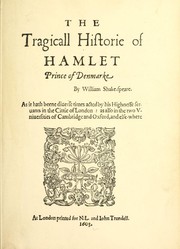
About Hamlet
Hamlet, Prince of Denmark, is a tragedy that explores themes of revenge, madness, moral corruption, and the complexities of human existence. The play opens with Hamlet grappling with the recent death of his father, King Hamlet, and the hasty marriage of his mother, Queen Gertrude, to his uncle, Claudius, who has now usurped the throne. The ghost of his father appears to Hamlet, revealing that he was murdered by Claudius and demanding that Hamlet avenge his death.
Consumed by grief and a profound sense of disillusionment, Hamlet struggles with the moral implications of revenge and the burden of action. He feigns madness to conceal his intentions and observe Claudius, leading to a series of events that spiral into chaos and destruction. His indecision, philosophical introspection, and the pervasive corruption within the Danish court ultimately lead to a tragic climax where nearly all the main characters perish, leaving a lasting legacy on literature and the study of the human psyche.
Key takeaways
- Indecision and overthinking can lead to catastrophic delays and unintended consequences.
- Revenge, even when seemingly justified, often consumes the avenger and those around them.
- The line between genuine madness and feigned insanity can become dangerously blurred.
- Corruption within leadership can poison an entire society, leading to widespread suffering.
- Grief, when unaddressed or suppressed, can manifest in destructive and unpredictable ways.
- Appearances can be deeply deceptive, making it difficult to discern truth from manipulation.
- The contemplation of mortality and the afterlife profoundly influences human action and inaction.
Key ideas at a glance
Revenge and Justice
- Revenge, even when seemingly justified, often consumes the avenger and those around them.
Madness and Sanity
- The line between genuine madness and feigned insanity can become dangerously blurred.
Mortality and Existence
- The contemplation of mortality and the afterlife profoundly influences human action and inaction.
Corruption of Power
- Corruption within leadership can poison an entire society, leading to widespread suffering.
Appearance vs
- Appearances can be deeply deceptive, making it difficult to discern truth from manipulation.
Indecision and Action
- Indecision and overthinking can lead to catastrophic delays and unintended consequences.
Chapter summaries
Act 1: The Ghost's Revelation
The play opens on the ramparts of Elsinore Castle, where guards and Horatio witness the apparition of King Hamlet's ghost. Young Hamlet, still mourning his father's recent death and his mother Gertrude's hasty marriage to his uncle Claudius, expresses his deep melancholy. Claudius, now King, addresses the court, sending ambassadors to Norway and granting Laertes permission to return to France. Hamlet delivers his first soliloquy, lamenting his mother's quick remarriage. Horatio informs Hamlet about the Ghost, and Hamlet resolves to see it. The Ghost appears to Hamlet, revealing that he was murdered by Claudius, who poured poison into his ear while he slept. The Ghost demands Hamlet seek revenge but spare his mother. Hamlet, shocked and enraged, vows to avenge his father and decides to feign madness to conceal his intentions.
Act 2: Hamlet's Feigned Madness and the Players
Polonius dispatches Reynaldo to spy on Laertes in Paris. Ophelia reports to her father, Polonius, that Hamlet has visited her in a disheveled state, behaving erratically. Polonius concludes that Hamlet's madness is a result of unrequited love for Ophelia. King Claudius and Queen Gertrude, concerned by Hamlet's transformation, summon Rosencrantz and Guildenstern, Hamlet's childhood friends, to discover the cause of his distress. Hamlet quickly perceives their true mission as spies. A troupe of traveling actors arrives at Elsinore. Hamlet, inspired, devises a plan to use the players to confirm Claudius's guilt: he will have them perform a play, 'The Murder of Gonzago,' which closely mirrors the circumstances of his father's assassination, hoping to observe Claudius's reaction. Hamlet delivers his 'O what a rogue and peasant slave am I!' soliloquy, chastising himself for his inaction.
Act 3: The Mousetrap and Confrontations
Rosencrantz and Guildenstern report their failure to Claudius and Gertrude. Polonius and Claudius arrange for Ophelia to encounter Hamlet while they secretly observe. Hamlet delivers his famous 'To be, or not to be' soliloquy, contemplating suicide and the fear of the unknown. He then harshly rejects Ophelia, telling her to 'get thee to a nunnery.' The players perform 'The Mousetrap.' During the depiction of the murder, Claudius reacts violently, rising and demanding lights, confirming his guilt to Hamlet and Horatio. Hamlet is summoned to his mother's chamber. On his way, he finds Claudius attempting to pray and refrains from killing him, fearing Claudius's soul would go to heaven. In Gertrude's closet, Hamlet confronts her, and accidentally kills Polonius, who was hiding behind an arras. The Ghost reappears, reminding Hamlet of his mission.
Act 4: Exile, Madness, and Return
Gertrude informs Claudius of Polonius's death, and Claudius decides to send Hamlet to England immediately, accompanied by Rosencrantz and Guildenstern, with secret orders for Hamlet's execution. Hamlet disposes of Polonius's body. Fortinbras's army marches through Denmark on its way to Poland, prompting Hamlet's 'How all occasions do inform against me' soliloquy, contrasting his inaction with Fortinbras's decisive pursuit of honor. Ophelia, driven mad by her father's death and Hamlet's departure, sings fragmented songs and distributes symbolic flowers. Laertes returns from France, enraged by his father's death and sister's madness, demanding answers from Claudius. Claudius manipulates Laertes, convincing him Hamlet is responsible and proposing a fencing match with a poisoned foil and a poisoned drink as backup. Hamlet's letter to Horatio announces his escape from the ship to England, having been captured by pirates, and his imminent return to Denmark.
Act 5: The Tragic Climax
Hamlet and Horatio encounter two gravediggers, leading to Hamlet's contemplation of mortality and his famous interaction with Yorick's skull. Ophelia's funeral procession arrives, revealing her death by drowning. Laertes leaps into Ophelia's grave, expressing his profound grief, and Hamlet reveals himself, proclaiming his love for Ophelia and fighting with Laertes. Back at the castle, Hamlet tells Horatio how he discovered Claudius's plot and replaced the execution letter with one ordering Rosencrantz and Guildenstern's deaths. Osric invites Hamlet to the fencing match with Laertes. The duel begins. Gertrude drinks from the poisoned cup intended for Hamlet and dies. Laertes wounds Hamlet with the poisoned foil, then Hamlet wounds Laertes with the same foil. Laertes confesses Claudius's treachery. Hamlet stabs Claudius with the poisoned foil and forces him to drink the remaining poison. Hamlet dies, asking Horatio to tell his story. Fortinbras arrives, claiming the throne of Denmark.
Full summary
"Hamlet," a tragedy by William Shakespeare, is set in Denmark and explores themes of revenge, madness, and betrayal. The play opens with the ghost of King Hamlet revealing to his son, Prince Hamlet, that he was murdered by his brother Claudius, now king. Hamlet vows revenge but wrestles with moral dilemmas, feigning madness to uncover the truth. The plot thickens as Hamlet's relationships with Ophelia and Gertrude become strained, leading to tragic consequences, including Ophelia's madness and death. Major themes include the complexity of action, the nature of grief, and the existential questions of life and death. Key characters include Hamlet, the introspective prince; Claudius, the ambitious usurper; Gertrude, the conflicted queen; and Ophelia, the tragic love interest. The play critiques the nature of power and moral corruption. Ultimately, "Hamlet" highlights the paralysis of thought and the destructive nature of revenge, leaving readers to ponder the human condition and its in...
Memorable quotes
“To be, or not to be: that is the question.”
“Something is rotten in the state of Denmark.”
“Frailty, thy name is woman!”
“Though this be madness, yet there is method in't.”
“The play's the thing wherein I'll catch the conscience of the King.”
“Neither a borrower nor a lender be; For loan oft loses both itself and friend, and borrowing dulls the edge of husbandry.”
Characters
- HamletPrince of Denmark, protagonist, struggles with revenge and morality.
- ClaudiusKing of Denmark, Hamlet's uncle and stepfather, antagonist, murderer of King Hamlet.
- GertrudeQueen of Denmark, Hamlet's mother, widow of King Hamlet, now married to Claudius.
- PoloniusLord Chamberlain of Denmark, father of Ophelia and Laertes, a meddling advisor.
- OpheliaDaughter of Polonius, Hamlet's love interest, driven to madness and death.
- LaertesSon of Polonius, brother of Ophelia, seeks revenge for his family's deaths.
- HoratioHamlet's loyal and trusted friend, a scholar.
- GhostThe spirit of King Hamlet, Hamlet's deceased father, reveals his murder.
Themes
- Revenge and Justice
- Madness and Sanity
- Mortality and Existence
- Corruption of Power
- Appearance vs. Reality
- Indecision and Action
About William Shakespeare
William Shakespeare (1564-1616) was an English playwright, poet, and actor, widely regarded as the greatest writer in the English language and the world's pre-eminent dramatist. Often called England's national poet, his works, including 'Romeo and Juliet,' 'Macbeth,' and 'Othello,' are still performed and studied globally. He wrote 'Hamlet' around 1600-1602, during a period of intense creativity, drawing on earlier Scandinavian legends to create a profound exploration of human suffering, revenge, and the nature of existence that continues to resonate centuries later.
FAQ
What is Hamlet about?
Hamlet is about Prince Hamlet of Denmark, who is visited by the ghost of his deceased father. The ghost reveals that Hamlet's uncle, Claudius, murdered him and usurped the throne. Hamlet struggles with the moral dilemma of avenging his father, feigning madness to investigate, which leads to a tragic series of events involving betrayal, death, and profound philosophical introspection.
Is Hamlet worth reading?
Yes, Hamlet is widely considered one of the greatest works in the English language. It offers deep insights into human psychology, morality, and the nature of grief and revenge. Its rich language, complex characters, and timeless themes make it a profoundly rewarding and thought-provoking read for anyone interested in literature, philosophy, or drama.
How does Hamlet end?
Spoiler: Hamlet ends with a tragic climax where almost all the main characters die. During a duel, Laertes wounds Hamlet with a poisoned rapier, but Hamlet retaliates. Queen Gertrude accidentally drinks poisoned wine. Hamlet kills Claudius before succumbing to the poison himself. Only Horatio survives to tell the story, and Fortinbras, Prince of Norway, arrives to claim the Danish throne.
Who should read Hamlet?
Hamlet is ideal for readers interested in classic literature, drama, philosophy, and psychology. Students of English literature, theater enthusiasts, and anyone who enjoys complex narratives exploring themes of revenge, madness, morality, and human nature will find it deeply engaging. It's a foundational text for understanding Western literary tradition.
How long does it take to read Hamlet?
Reading Hamlet typically takes about 2 to 3 hours for an average reader. The play is approximately 30,000 words long. However, understanding and appreciating its intricate language and themes may require a slower pace or multiple readings.