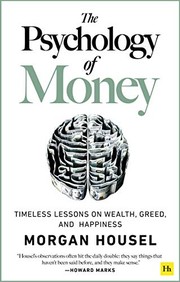
About The Psychology of Money
Morgan Housel's "The Psychology of Money" delves into the often-overlooked behavioral aspects of personal finance, arguing that financial success is less about what you know (intelligence, data, formulas) and more about how you behave. The book posits that people's financial decisions are heavily influenced by their unique experiences, emotions, and biases, rather than purely rational calculations. Housel illustrates that even highly intelligent individuals can struggle with money if their behavior isn't aligned with sound financial principles, while ordinary people can achieve extraordinary results through consistent, disciplined habits.
The core argument revolves around several counter-intuitive truths: luck and risk play a far greater role than acknowledged, the ability to stay wealthy is more crucial than getting wealthy, and true wealth often manifests as unseen savings and freedom rather than visible consumption. Housel emphasizes that understanding one's own psychology and the psychology of others is paramount to navigating the complexities of investing, saving, and spending. He encourages readers to adopt a long-term perspective, embrace humility, and prioritize financial independence over chasing ever-increasing material possessions, ultimately advocating for a more reasonable, rather than purely rational, approach to money.
Key takeaways
- Financial success is more about consistent behavior and psychology than intelligence or technical knowledge.
- Understanding the role of luck and risk is crucial; not all success is due to skill, nor all failure due to error.
- The most powerful financial force is compounding, which requires patience and a long-term perspective.
- Getting rich often involves taking risks, but staying rich requires a different mindset centered on survival and humility.
- True wealth is what you don't see and don't spend, providing freedom and control over your time.
- Defining 'enough' is vital to avoid the endless pursuit of more, which can lead to regret and risk.
- Building a margin of safety or 'room for error' in your financial plans is essential because the future is unpredictable.
- Your personal financial history profoundly shapes your views on money, making everyone's perspective unique and valid to them.
Key ideas at a glance
Behavioral finance
- Financial success is more about consistent behavior and psychology than intelligence or technical knowledge.
- Building a margin of safety or 'room for error' in your financial plans is essential because the future is…
Financial independence
- Your personal financial history profoundly shapes your views on money, making everyone's perspective unique and valid…
Compounding power
- The most powerful financial force is compounding, which requires patience and a long-term perspective.
Risk and luck
- Understanding the role of luck and risk is crucial; not all success is due to skill, nor all failure due to error.
- Defining 'enough' is vital to avoid the endless pursuit of more, which can lead to regret and risk.
Mindset over math
- Getting rich often involves taking risks, but staying rich requires a different mindset centered on survival and…
Chapter summaries
No One's Crazy
People make financial decisions that seem irrational to others but are perfectly logical within their own unique experiences and perspectives. These perspectives are deeply shaped by their upbringing, the economic conditions they lived through, and their personal history with money. For instance, someone who grew up during a depression might be extremely frugal, while someone who experienced a boom might be more prone to risk. Housel argues that financial advice often fails because it doesn't account for these diverse psychological frameworks. He emphasizes that what is "rational" in finance is often a statistical ideal, whereas "reasonable" behavior, driven by personal history and emotions, is what most people actually do and should be understood, not judged.
Luck & Risk
Success and failure in finance are often attributed solely to skill or effort, but luck and risk play significant, often underestimated, roles. Housel illustrates that extreme outcomes, whether positive or negative, are rarely due to skill alone. He cites examples like Bill Gates's unique access to computers in his youth, which was a stroke of luck, and the story of Ronald Read, a janitor who accumulated an $8 million fortune through simple, consistent investing, highlighting that his success wasn't about complex strategies but about time and avoiding ruin. Acknowledging the influence of luck and risk helps in making more humble, realistic financial plans and avoiding the trap of believing one's success is entirely self-made or one's failure entirely deserved.
Never Enough
This chapter explores the dangers of greed and the critical importance of knowing when to stop. Housel discusses the concept of "enough" and the perils of constantly chasing more, which can lead to taking excessive risks, compromising integrity, and ultimately losing everything. He uses the cautionary tale of Rajat Gupta, a highly successful businessman who went to prison for insider trading despite already possessing immense wealth, to illustrate how an insatiable desire for more can destroy a career and reputation. The chapter argues that the hardest financial skill is stopping the goalpost from moving and accepting that true wealth lies in knowing your limits and being content with what you have, protecting what's most valuable.
Confounding Compounding
Housel explains the extraordinary, yet often underestimated, power of compounding. He illustrates how small, consistent gains over very long periods can lead to astonishing wealth accumulation, but also how difficult it is for the human mind to intuitively grasp exponential growth. The chapter highlights that most of Warren Buffett's immense fortune was amassed in his later years, not through spectacular annual returns, but through decades of consistent, uninterrupted compounding. Housel emphasizes that the key to leveraging compounding is patience and simply staying invested for as long as possible, allowing time to work its magic, rather than seeking high, short-term returns.
Getting Wealthy vs. Staying Wealthy
This chapter differentiates between the mindsets required for accumulating wealth and preserving it. Getting wealthy often involves taking risks, being optimistic, and seeking growth opportunities. However, staying wealthy demands a completely different approach—one focused on paranoia, humility, and survival. Housel argues that what worked to get rich might not work to stay rich, as the latter requires understanding that the market is unpredictable and that avoiding ruin is paramount. He stresses the importance of a "margin of safety," conservative planning, and recognizing that the goal isn't just to achieve high returns, but to ensure you remain in the game long enough for compounding to work its magic, even through inevitable downturns.
Tails, You Win
Housel explains that in investing, a small number of events or decisions, the "tails" of a distribution, account for the vast majority of outcomes. He illustrates that most investments will be mediocre or even fail, but the few exceptional successes drive all the returns. For example, in venture capital, a handful of successful startups generate the bulk of fund returns, and in the stock market, a small percentage of companies account for most of the market's long-term gains. This insight implies that investors should focus on staying in the game long enough, diversifying, and having the patience to allow these rare, powerful tail events to benefit them, rather than trying to pick every winner.
Freedom
This chapter argues that the highest form of wealth is the ability to control your time. Housel posits that money's greatest intrinsic value is its capacity to give you autonomy and independence, allowing you to do what you want, when you want, with whom you want. He suggests that financial independence, which grants control over one's schedule and choices, is a far more valuable and fulfilling outcome of accumulating wealth than acquiring lavish possessions. The chapter emphasizes that true wealth provides the flexibility to pursue passions, spend time with loved ones, or simply avoid undesirable work, thereby enhancing overall life satisfaction.
Man in the Car Paradox
Housel explores the common desire for wealth as a means to gain respect and admiration from others, and the paradox that often arises. People frequently buy expensive items like luxury cars, homes, or watches to signal their success, hoping to impress. However, he argues that observers often admire the object or the idea of wealth it represents, not the person who owns it. The chapter highlights the disconnect between the intention and the actual outcome, suggesting that displaying wealth rarely earns the personal respect one seeks. Instead, humility, kindness, and genuine connection are more effective ways to earn admiration, while true wealth often goes unnoticed because it's what you don't spend.
Wealth is What You Don't See
This chapter emphasizes that true wealth is not about what you spend, but what you save. Housel argues that flashy displays of wealth, such as luxury cars or large homes, are often just money that used to be wealth, now converted into depreciating assets. He contrasts this with the invisible nature of actual wealth, which resides in savings, investments, and assets that are not consumed. The chapter suggests that the person driving a modest car but with a substantial savings account is wealthier than the person driving a luxury car with significant debt or minimal savings. It reinforces the idea that humility and deferred gratification are key to building lasting financial security.
Save Money
Housel stresses the profound importance of saving money, even without a specific, immediate goal. He argues that saving is not just for a down payment, retirement, or a specific purchase, but primarily for optionality, flexibility, and the ability to adapt to unforeseen circumstances. The chapter highlights that financial success is less about high income or spectacular investment returns and more about a consistent savings rate. Saving provides a buffer against life's inevitable surprises, grants independence, and offers the freedom to seize opportunities. It's about building a safety net that allows you to weather storms and maintain control over your financial future.
Reasonable > Rational
This chapter argues that financial decisions don't always need to be perfectly "rational" in a purely economic sense; they just need to be "reasonable" enough for you to stick with them consistently over time. Housel suggests that emotional comfort and behavioral consistency are often more important than optimizing every single financial decision for maximum theoretical return. He uses the example of someone paying off a low-interest mortgage early for peace of mind, even if investing that money might yield a higher return. The key is finding a strategy that aligns with your personality and allows you to maintain discipline, avoiding actions that might lead to regret or abandonment of the plan.
Surprise!
Housel warns against relying too heavily on historical data to predict future market behavior, emphasizing that the biggest and most impactful events are always surprises. He argues that truly transformative events—like pandemics, major technological shifts, or unprecedented economic crises—are inherently unpredictable and cannot be accurately forecasted by studying the past. The chapter highlights that history is useful for understanding general patterns of human behavior and risk, but not for predicting specific outcomes. It advocates for building resilience, flexibility, and a margin of safety into financial plans, rather than trying to forecast the unknowable future or optimize for a specific, expected scenario.
Room for Error
This chapter underscores the critical importance of building a "margin of safety" into all financial plans. Housel argues that things will inevitably go wrong, and having a buffer—whether it's extra cash, diversified investments, conservative estimates, or flexible timelines—is crucial for survival and long-term success. He contrasts this approach with optimizing for the best-case scenario, which leaves no room for unexpected setbacks, market downturns, or personal emergencies. The chapter emphasizes that the purpose of a margin of safety isn't to avoid all risk, but to ensure that when risks materialize, they don't lead to ruin, allowing you to stay in the game and continue compounding.
You'll Change
Housel explores the challenge that people's goals, desires, and priorities change significantly over time, making long-term financial planning difficult. He advises against making extreme long-term financial commitments or rigidly adhering to plans formulated by a younger self, because your future self might have entirely different values. The chapter suggests leaving room for flexibility and avoiding "anchor points" that might become irrelevant or undesirable later in life. It encourages a dynamic approach to financial planning, where one regularly reassesses goals and adapts strategies to align with evolving personal circumstances and values, rather than being trapped by past decisions.
Nothing is Free
This chapter explains that everything in finance has a price, including investment returns. Housel argues that market returns are not a gift; they are the compensation for enduring volatility, uncertainty, and occasional losses. He likens the emotional toll of market fluctuations—fear, doubt, regret—to a "fee" that investors must be willing to pay to earn long-term returns. The chapter emphasizes that trying to avoid this fee by timing the market or chasing risk-free returns often leads to underperformance. Accepting that market volatility is the price of admission for long-term growth is crucial for maintaining discipline and achieving financial success.
You & Me
Housel highlights that different people have vastly different financial goals, time horizons, risk tolerances, and personal circumstances, making comparison to others a losing game. He emphasizes that what works for one investor might be entirely inappropriate for another. The chapter warns against taking financial cues from investors with different objectives, especially short-term traders or those with significantly different wealth levels. It encourages individuals to define their own financial goals and develop a strategy that aligns with their unique situation, rather than falling into the trap of social comparison, which often leads to poor decisions and dissatisfaction.
The Seduction of Pessimism
This chapter explores why pessimism often sounds smarter, more sophisticated, and more convincing than optimism, even though optimism tends to win in the long run. Housel explains that bad news gets more attention, seems more urgent, and often appears more insightful because it focuses on specific, dramatic threats. In contrast, progress is usually gradual, less dramatic, and harder to articulate. He argues that while short-term crises and setbacks are inevitable, long-term economic growth, human ingenuity, and adaptability tend to overcome these challenges. The chapter encourages a default optimistic stance on the future, balanced with a realistic understanding of risk, as a more effective long-term financial mindset.
When You'll Believe Anything
Housel discusses the powerful influence of stories over statistics and how people often believe what they want to believe, especially when emotions are involved. He explains that narratives, even flawed or incomplete ones, can override factual data in financial decision-making. The chapter highlights the human tendency to seek out information that confirms existing beliefs and to rationalize past decisions, rather than objectively evaluating evidence. This cognitive bias can lead investors to cling to losing strategies or ignore warning signs. Housel encourages critical thinking and a willingness to challenge one's own assumptions, recognizing the emotional and narrative traps that can distort financial judgment.
All Together Now
This chapter serves as a summary, tying together the preceding lessons and reinforcing the central theme that effective money management is more about psychology and behavior than about intellect or complex financial models. Housel reiterates the importance of humility, flexibility, patience, and understanding one's own biases. He emphasizes that financial success is not about being the smartest or having the most information, but about consistently applying a few timeless behavioral principles. The chapter encourages readers to focus on what they can control—their savings rate, their temperament, and their time horizon—rather than trying to predict or react to market fluctuations.
The Sane Things That Never Change
This concluding chapter distills the timeless financial principles that remain true regardless of market conditions or economic cycles. Housel reiterates core ideas such as the importance of saving consistently, exercising patience, avoiding excessive debt, maintaining a long-term perspective, and understanding the enduring aspects of human behavior. He emphasizes that while the world changes, the fundamental psychological drivers of financial success and failure do not. The chapter serves as a final reminder that simple, consistent, and behaviorally sound financial habits are the most powerful tools for building lasting wealth and achieving financial peace of mind.
Full summary
Book Overview
"The Psychology of Money" by Morgan Housel explores the complex relationship individuals have with money, emphasizing how psychological factors influence financial decisions more than mere mathematical calculations. Through a series of engaging narratives and relatable anecdotes, Housel delves into various perspectives on wealth, savings, and financial behavior, offering insights that challenge conventional financial wisdom.
Main Content/Plot
The book is structured into twenty chapters, each focusing on different aspects of money management and mindset. Housel illustrates how people's backgrounds, experiences, and emotions shape their financial choices. He discusses the importance of patience and long-term thinking in investing, the impact of luck and risk, and the significance of personal values in financial decision-making. The narrative covers historical events, personal stories, and psychological studies, making the content relatable and thought-provoking. Housel argues that financial success is often less about knowledge and more about behavior.
Key Themes
1. Behavior Over Knowledge: The book emphasizes that financial success is more about how individuals behave with money than what they know. People's emotions and biases often dictate their financial decisions, leading to irrational choices.
2. The Role of Luck and Risk: Housel underscores the unpredictable nature of luck and risk in financial endeavors. He highlights that many successful investors owe part of their success to fortunate circumstances, reminding readers to approach their financial journeys with humility.
3. The Importance of Time: Time is a crucial factor in wealth accumulation. Housel illustrates the power of compound interest and the necessity of patience in building wealth over the long term, often contrasting short-term thinking with long-term strategies.
4. Personal Values and Definitions of Success: The book argues that financial decisions should align with individual values and personal definitions of success. Housel encourages readers to articulate what wealth means to them personally, rather than conforming to societal standards.
5. Mental Accounting: Housel discusses how people categorize their money and the mental frameworks they use to justify spending and saving. This approach can lead to irrational financial behaviors, as people treat money differently based on its source or intended use.
Important Takeaways
- Mindset Matters: A positive and patient mindset is essential in personal finance. Understanding one's own psychological biases can lead to better financial decisions.
- Recognize the Role of Luck: Acknowledging the influence of luck can foster gratitude and humility, reducing the tendency to blame others for financial challenges.
- Invest for the Long Haul:
Memorable quotes
“The highest form of wealth is the ability to wake up every morning and say, 'I can do whatever I want today.'”
“Savings is the gap between your ego and your income.”
“The hardest financial skill is getting the goalpost to stop moving.”
“Good investing is not necessarily about earning the highest returns, because the highest returns tend to be one-off hits that can't be repeated. It's about earning pretty good returns that you can stick with and which can be repeated for the longest period of time. That's when compounding works its magic.”
“Risk is what's left over when you think you've thought of everything.”
Themes
- Behavioral finance
- Financial independence
- Compounding power
- Risk and luck
- Mindset over math
About Morgan Houdel
Morgan Housel is a partner at The Collaborative Fund and a former columnist at The Wall Street Journal and The Motley Fool. He is known for his insightful writing on finance and investing, often blending historical context with behavioral psychology. Housel wrote "The Psychology of Money" to address the gap between the technical aspects of finance and the real-world human behaviors that drive financial outcomes. His work emphasizes storytelling and accessible explanations to make complex financial concepts understandable to a broad audience, encouraging a more thoughtful approach to wealth.
FAQ
What is The Psychology of Money about?
The Psychology of Money explores the idea that financial success is less about intelligence or technical knowledge and more about behavior. Morgan Housel argues that people's unique experiences, emotions, and biases heavily influence their money decisions, often leading to irrational choices. The book offers insights into how understanding human psychology can lead to better financial outcomes, emphasizing concepts like compounding, saving, and managing risk.
Is The Psychology of Money worth reading?
Yes, it is widely considered worth reading for anyone interested in personal finance, investing, or behavioral economics. Housel presents complex financial concepts in an accessible, engaging manner using stories and anecdotes. It offers a fresh perspective beyond traditional financial advice, focusing on the human element of money, which many readers find profoundly impactful and actionable for improving their financial habits and mindset.
Who should read The Psychology of Money?
This book is highly recommended for anyone who deals with money, which is essentially everyone. It's particularly beneficial for individuals looking to improve their financial decision-making, investors seeking a deeper understanding of market psychology, and young adults starting their financial journey. It offers valuable insights for both beginners and experienced professionals by shifting focus from 'what to do' to 'how to think' about money.
How long does it take to read The Psychology of Money?
On average, it takes approximately 3 to 4 hours to read The Psychology of Money. The book is relatively concise, with around 200-250 pages, and is written in an engaging, easy-to-understand style with short, impactful chapters. This makes it a quick and accessible read for most people.