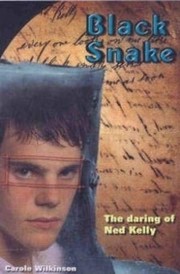
About Black Snake
Carole Wilkinson's "Black Snake" offers a compelling and meticulously researched biography of Australia's most infamous bushranger, Ned Kelly. The book delves into the life of Kelly, from his impoverished childhood in colonial Victoria to his transformation into an outlaw and his eventual capture and execution. Wilkinson navigates the complex and often mythologized narrative surrounding Kelly, presenting a balanced perspective that acknowledges both his criminal acts and the socio-economic injustices that contributed to his rebellion against authority. The title itself, "Black Snake," alludes to the perception of Kelly by the police as a dangerous, elusive threat, and by some of the public as a symbol of resistance.
The book meticulously reconstructs the events of Kelly's life, drawing on historical documents, police reports, and personal accounts to provide a vivid picture of 19th-century Australia. Wilkinson explores the Stringybark Creek murders, the daring bank robberies at Euroa and Jerilderie, and the dramatic final siege at Glenrowan. Beyond recounting the facts, "Black Snake" examines the motivations behind Kelly's actions, the deep-seated grievances of the Irish Catholic selectors against the perceived corruption and bias of the police and landowning class, and the enduring legacy of the Kelly gang in Australian folklore. It challenges readers to look beyond the simple labels of 'hero' or 'villain' and understand the historical context that shaped Ned Kelly's controversial life.
Key takeaways
- Ned Kelly's life as an outlaw was deeply influenced by the social and economic conditions faced by Irish Catholic selectors in colonial Victoria.
- The conflict between the Kelly family and the police was a long-standing feud rooted in perceived injustices and class divisions.
- The Stringybark Creek incident, where police officers were killed, was a pivotal moment that escalated Ned Kelly's status from petty criminal to declared outlaw.
- Ned Kelly's 'Jerilderie Letter' serves as a crucial primary source, articulating his grievances and justifying his actions from his own perspective.
- The legend of Ned Kelly is complex, reflecting both his criminal acts and his role as a symbol of resistance against an oppressive system.
- Carole Wilkinson's work encourages a critical examination of historical figures, moving beyond simplistic hero-villain narratives.
- The book highlights the lasting impact of the Kelly gang on Australian identity and the ongoing debate surrounding their legacy.
- Understanding the historical context of the 1870s in Victoria is essential to comprehending the motivations and actions of the Kelly gang.
Key ideas at a glance
Justice and injustice
- The conflict between the Kelly family and the police was a long-standing feud rooted in perceived injustices and class…
- Ned Kelly's 'Jerilderie Letter' serves as a crucial primary source, articulating his grievances and justifying his…
Colonial oppression
- Ned Kelly's life as an outlaw was deeply influenced by the social and economic conditions faced by Irish Catholic…
- The legend of Ned Kelly is complex, reflecting both his criminal acts and his role as a symbol of resistance against an…
Rebellion and resistance
- The Stringybark Creek incident, where police officers were killed, was a pivotal moment that escalated Ned Kelly's…
Myth and history
- Carole Wilkinson's work encourages a critical examination of historical figures, moving beyond simplistic hero-villain…
- Understanding the historical context of the 1870s in Victoria is essential to comprehending the motivations and actions…
Family loyalty
- The book highlights the lasting impact of the Kelly gang on Australian identity and the ongoing debate surrounding…
Chapter summaries
Part 1: The Kelly Gang
This part introduces Ned Kelly as a young boy growing up in the harsh Australian bush. It details his family's struggles after his father, John 'Red' Kelly, dies, leaving his mother, Ellen, to raise a large family in poverty. The Kellys move to Eleven Mile Creek, near Greta, and face constant suspicion and harassment from the police, particularly Sergeant Kennedy. Ned's early life is marked by hard work, loyalty to his family, and a growing sense of injustice as he witnesses the unfair treatment of Irish selectors by the authorities. He learns bush skills and develops a strong bond with his siblings, particularly his younger brother Dan. This section establishes the socio-economic and political context that shaped Ned's future.
Part 2: The Bushranger
Ned's first significant brushes with the law are detailed here. He is falsely accused of horse stealing and serves a short prison sentence, which hardens him. Upon his release, he falls under the influence of the notorious bushranger Harry Power, acting as his apprentice for a period. Ned learns the ways of the bush and the tactics of evading police, though he eventually distances himself from Power's more violent methods. He attempts to live a legitimate life, working as a timber cutter and horse breaker, but the constant police surveillance and the family's reputation make it difficult. This part highlights Ned's internal conflict between wanting to live honestly and being drawn into a life of crime by circumstance and perceived injustice.
Part 3: The Outlaw
This section describes the escalating conflict between the Kelly family and the police, culminating in the events that force Ned and his brother Dan into outlawry. A dispute involving Constable Fitzpatrick at the Kelly homestead leads to accusations of assault and attempted murder against Ned and Dan, despite conflicting accounts. With warrants issued for their arrest, Ned, Dan, Joe Byrne, and Steve Hart form the Kelly Gang and go into hiding in the Wombat Ranges. The pursuit by police leads to the Stringybark Creek incident, where the gang ambushes and kills three policemen – Sergeant Kennedy, Constable Scanlon, and Constable Lonigan – marking their transformation from fugitives to declared outlaws with a bounty on their heads.
Part 4: The Legend
Following the Stringybark Creek murders, the Kelly Gang becomes the most wanted men in Victoria, but also gains significant public sympathy, particularly among the poor Irish selectors. This part details their audacious bank robberies in Euroa and Jerilderie, where they hold entire towns captive, destroy mortgage documents, and explain their grievances to the public. During the Jerilderie raid, Ned dictates the famous Jerilderie Letter, a lengthy document outlining the injustices faced by his family and the Irish community, justifying their actions, and challenging the corrupt police and government. These acts solidify their status as folk heroes to some and dangerous criminals to others, further fueling the legend of the Kelly Gang.
Part 5: Glenrowan
This part builds towards the climactic final stand at Glenrowan. The gang, increasingly desperate and cornered, plans a final, ambitious act: to derail a police train carrying reinforcements to capture them, then take hostages and negotiate. They construct their iconic bulletproof armour from ploughshares, believing it will give them an advantage. The plan goes awry when a schoolmaster, Thomas Curnow, escapes and warns the approaching train. The gang takes hostages in the Glenrowan Inn, leading to a prolonged siege with the police. The inn is eventually set on fire, and in the ensuing chaos, Joe Byrne, Dan Kelly, and Steve Hart are killed. Ned, wearing his armour, attempts a final charge but is wounded and captured.
Part 6: The Trial
The final section covers Ned Kelly's capture, his subsequent trial, and execution. Severely wounded, Ned is taken to Melbourne, where he is tried for the murder of Constable Lonigan at Stringybark Creek. Despite his eloquent and defiant speeches in court, where he attempts to justify his actions and expose the corruption of the police and legal system, he is found guilty. Justice Barry, the presiding judge, sentences him to death. Ned Kelly maintains his innocence and defiance to the end. The book concludes with his execution at Melbourne Gaol on November 11, 1880, solidifying his place in Australian history as a complex figure – a criminal to some, a rebel and hero to others.
Full summary
Book Overview
"Black Snake" by Carole Wilkinson is a historical fiction novel that takes readers back to the early days of Australia, specifically during the time of the European colonization. The story is centered around the life of a young Indigenous boy named Bindi, who is caught in the midst of cultural upheaval and the clash between Indigenous Australians and British settlers. Wilkinson's storytelling combines engaging characters with rich historical details, making it a poignant exploration of identity, resilience, and the impact of colonization.
Main Content/Plot
The narrative unfolds through Bindi’s eyes as he navigates his world, filled with the traditions of his Aboriginal community. His life takes a dramatic turn when British settlers arrive, bringing with them not only new opportunities but also significant challenges and threats to his way of life. As Bindi witnesses the encroachment of settlers on his land, he grapples with the loss of his heritage and the changes to his family and community.
Bindi’s journey is marked by personal growth as he learns to reconcile his identity with the harsh realities of a changing world. Along the way, he encounters a variety of characters, including both Indigenous people and settlers, each representing different perspectives on the conflict. The story builds to a climax as Bindi must make choices that will determine his future and the future of his people, illustrating the resilience and strength of Indigenous culture in the face of adversity.
Key Themes
1. Cultural Identity: The novel delves into the significance of cultural heritage and the struggles faced by Indigenous people in maintaining their identity amidst colonization.
2. Colonial Impact: Wilkinson highlights the devastating effects of European settlement on Indigenous communities, showcasing both the physical and emotional toll of this historical event.
3. Resilience and Resistance: Bindi’s character embodies the strength and determination of his people to resist oppression and fight for their rights and land.
4. Friendship and Loyalty: The relationships Bindi forms throughout his journey emphasize the importance of community and support in overcoming challenges.
Important Takeaways
"Black Snake" serves as a powerful reminder of the complexities of history and the ongoing impact of colonization on Indigenous cultures. Readers are encouraged to reflect on the importance of understanding and respecting diverse perspectives. The novel not only tells a compelling story but also educates about a critical period in Australian history, making it a valuable read for anyone interested in social justice and cultural identity. Ultimately, it calls for empathy and awareness in recognizing the struggles
Memorable quotes
“Such is life.”
“I am a widow's son, outlawed and my orders must be obeyed.”
“If my lips teach the public that a poor man is not to be trampled upon, then I have not lived in vain.”
“I have been a prey to the police for years.”
Themes
- Justice and injustice
- Colonial oppression
- Rebellion and resistance
- Myth and history
- Family loyalty
About Carole Wilkinson
Carole Wilkinson is an award-winning Australian author known for her historical fiction and non-fiction, particularly for young adults. She has written numerous books, including the popular Dragonkeeper series. Wilkinson's interest in Ned Kelly stemmed from a desire to present a factual, balanced account of his life, moving beyond the sensationalism and myths. She meticulously researched primary sources to offer readers a deeper understanding of the man and his times, aiming to make complex historical narratives accessible and engaging for a broad audience.
FAQ
What is Black Snake about?
"Black Snake" by Carole Wilkinson is a non-fiction biography of Ned Kelly, Australia's most famous bushranger. It explores his life from a challenging childhood in colonial Victoria to his transformation into an outlaw, detailing his conflicts with the police, the Stringybark Creek murders, bank robberies, and his final stand at Glenrowan, offering a balanced historical perspective.
Is Black Snake worth reading?
Yes, "Black Snake" is highly recommended for anyone interested in Australian history, particularly the Ned Kelly legend. Wilkinson provides a well-researched and engaging account that moves beyond simple hero-villain narratives, offering valuable insights into the social and political climate of 19th-century colonial Victoria. It's particularly praised for its accessibility and balanced viewpoint.
How does Black Snake end?
Spoiler: "Black Snake" ends with the dramatic capture of Ned Kelly after the Glenrowan siege, where most of his gang members were killed. It then details his subsequent trial in Melbourne, his defiant speech from the dock, and his execution by hanging at the Melbourne Gaol. The book concludes by reflecting on his enduring legacy and the complex historical debates surrounding his life.
Who should read Black Snake?
"Black Snake" is ideal for young adults and general readers interested in Australian history, biography, or true crime. It's often used in schools due to its clear, engaging narrative and its ability to present complex historical events and figures in an accessible manner. Readers looking for a nuanced understanding of Ned Kelly will find it particularly rewarding.
How long does it take to read Black Snake?
On average, "Black Snake" takes approximately 3 to 4 hours to read. This estimate is based on an average reading speed of 250 words per minute and the book's typical length for a young adult non-fiction title, which is usually around 45,000 to 60,000 words.