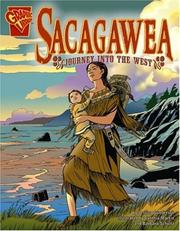
About Sacagawea
Jessica Gunderson's "Sacagawea" provides a concise and accessible biography of the remarkable Shoshone woman who played a crucial role in the success of the Lewis and Clark Expedition. The book chronicles Sacagawea's life from her early years as a member of the Shoshone tribe, her capture by the Hidatsa, and her subsequent marriage to French-Canadian fur trader Toussaint Charbonneau. It details how she came to join Meriwether Lewis and William Clark's Corps of Discovery at the Mandan villages in present-day North Dakota, serving as an invaluable interpreter, guide, and symbol of peace during their arduous journey to the Pacific Ocean and back.
The narrative highlights Sacagawea's indispensable contributions, including her ability to communicate with various Native American tribes, her knowledge of edible plants and local geography, and her calming presence, especially with her infant son, Jean Baptiste, carried on her back. The book emphasizes her pivotal role in securing horses from her long-lost Shoshone people, a moment of profound personal reunion and strategic importance for the expedition. Gunderson's work aims to introduce young readers to this significant historical figure, illustrating her resilience, resourcefulness, and enduring legacy in American history and exploration.
Key takeaways
- Sacagawea's early life was marked by displacement, being captured from her Shoshone tribe by the Hidatsa at a young age.
- Her ability to speak multiple Native American languages, particularly Shoshone and Hidatsa, made her an invaluable interpreter for the Lewis and Clark Expedition.
- Sacagawea's presence, especially with her infant son, helped signal peaceful intentions to many Native American tribes encountered by the Corps of Discovery.
- She possessed extensive knowledge of edible plants and local geography, which proved critical for the expedition's survival in unfamiliar territories.
- Sacagawea's reunion with her brother, Cameahwait, who was a Shoshone chief, was instrumental in securing horses and guidance for the expedition to cross the Rocky Mountains.
- Her contributions were essential to the success of the Lewis and Clark Expedition, demonstrating the vital role Native Americans played in early American exploration.
- Sacagawea's story is a testament to resilience and adaptability in the face of challenging circumstances and cultural shifts.
Key ideas at a glance
Survival and Resilience
- She possessed extensive knowledge of edible plants and local geography, which proved critical for the expedition's…
- Sacagawea's story is a testament to resilience and adaptability in the face of challenging circumstances and cultural…
Exploration and Discovery
- Sacagawea's presence, especially with her infant son, helped signal peaceful intentions to many Native American tribes…
- Her contributions were essential to the success of the Lewis and Clark Expedition, demonstrating the vital role Native…
Cultural Exchange
- Sacagawea's early life was marked by displacement, being captured from her Shoshone tribe by the Hidatsa at a young age.
Adaptability
- Her ability to speak multiple Native American languages, particularly Shoshone and Hidatsa, made her an invaluable…
Indigenous Contributions
- Sacagawea's reunion with her brother, Cameahwait, who was a Shoshone chief, was instrumental in securing horses and…
Chapter summaries
Chapter 1: A Shoshone Girl's Early Life
This chapter introduces Sacagawea as a young girl living with her Shoshone people in the Rocky Mountains. It describes her childhood, daily life, and the strong bonds within her tribe. The narrative then shifts to the tragic event of her capture by a rival tribe, the Hidatsa, during a raid. Separated from her family and homeland, Sacagawea is taken far from her Shoshone village to live among the Hidatsa in what is now North Dakota. This period marks a significant change in her life, forcing her to adapt to a new culture and language, which would later prove invaluable.
Chapter 2: A New Home and a New Husband
Following her capture, Sacagawea's life among the Hidatsa is detailed. The chapter explains her integration into their community and her eventual encounter with Toussaint Charbonneau, a French-Canadian fur trader. It describes how Sacagawea became one of Charbonneau's wives, likely through purchase or trade, and settled with him near the Hidatsa villages along the Knife River. This period is crucial as it places her in the precise location where she would soon meet the American explorers, Meriwether Lewis and William Clark, setting the stage for her pivotal role in the Corps of Discovery.
Chapter 3: Meeting Lewis and Clark
This chapter focuses on the arrival of the Corps of Discovery, led by Captains Meriwether Lewis and William Clark, at Fort Mandan in late 1804. It explains the expedition's mission to explore the Louisiana Purchase and find a water route to the Pacific Ocean. The captains recognized their need for interpreters and guides, especially those familiar with the Shoshone people, who possessed the horses vital for crossing the formidable Rocky Mountains. Charbonneau was hired as an interpreter, and Sacagawea, then pregnant, was brought along due to her knowledge of the Shoshone language and the western lands, making her an unexpected but crucial addition.
Chapter 4: Birth of Pomp and the Journey Begins
The narrative details the early stages of the Lewis and Clark expedition as it departed Fort Mandan in the spring of 1805, heading up the Missouri River. This chapter highlights the challenging conditions of river travel and the rugged wilderness. A significant event is the birth of Sacagawea's son, Jean Baptiste Charbonneau, whom William Clark affectionately nicknamed "Pomp." The birth occurred during the expedition's stay at Fort Mandan, and Sacagawea, with her newborn baby, immediately rejoined the arduous journey. Her resilience and the presence of her infant son underscored her unique and challenging role as the only woman on the expedition.
Chapter 5: A Crucial Interpreter
This chapter emphasizes Sacagawea's indispensable contributions as the Corps of Discovery ventured further west. Her presence, particularly with her baby, played a vital role in signaling peaceful intentions to the various Native American tribes encountered along the way, often calming initial fears. Beyond her symbolic value, Sacagawea proved invaluable in identifying edible plants, roots, and berries, supplementing the expedition's dwindling food supplies. Most critically, her linguistic skills, translating Hidatsa to Shoshone, were essential for communication, especially as the expedition sought to negotiate with the Shoshone for horses, a key to their continued progress.
Chapter 6: Reunion with Her People
This chapter recounts one of the most pivotal and emotional moments of the expedition: the Corps of Discovery's encounter with the Shoshone tribe. Sacagawea's long-awaited reunion with her people is detailed, culminating in her recognizing her brother, Cameahwait, who had become the chief. The tearful and joyous reunion was instrumental in establishing trust between the Shoshone and the American explorers. Her presence and ability to interpret facilitated peaceful negotiations, allowing the expedition to acquire the horses desperately needed to traverse the formidable Rocky Mountains, a critical turning point for their journey.
Chapter 7: Crossing the Rocky Mountains
This chapter describes the extreme hardships faced by the Corps of Discovery as they embarked on the perilous journey across the Rocky Mountains. It details the brutal weather conditions, including early snows, the treacherous and rugged terrain, and the severe scarcity of food that pushed the expedition members to their physical and mental limits. Sacagawea's resilience and her knowledge of the land continued to be vital, as she helped identify edible plants and navigate the difficult passes. Her unwavering determination, despite carrying her infant son, underscored her critical role in the expedition's survival through this challenging phase.
Chapter 8: To the Pacific Ocean
This chapter details the final leg of the expedition's westward journey to the Pacific Coast. After enduring the Rocky Mountains, the Corps descended, traveling along the Clearwater and Columbia Rivers. The narrative captures the immense excitement and relief of the explorers, including Sacagawea, upon finally reaching the Pacific Ocean in November 1805. It describes their winter encampment at Fort Clatsop, near modern-day Astoria, Oregon, where they prepared for the return journey. Sacagawea's experience of seeing the vast ocean for the first time is highlighted, marking the successful completion of a major objective.
Chapter 9: The Long Journey Home
This chapter recounts the Corps of Discovery's arduous return journey in 1806. The expedition split into smaller groups for efficiency, with Sacagawea, Charbonneau, and Pomp traveling with William Clark's party. The narrative details the challenges of retracing their steps, including encounters with various Native American tribes and navigating familiar but still difficult terrain. Sacagawea continued to provide assistance, guiding Clark through areas she knew and helping with interpretation. The chapter culminates with the eventual reunion of the full Corps and their return to the Mandan villages, marking the successful completion of the entire expedition.
Chapter 10: Life After the Expedition
This final chapter explores Sacagawea's life after the triumphant return of the Lewis and Clark expedition. It describes her return to the Mandan villages with Toussaint Charbonneau and their son, Jean Baptiste. William Clark, having grown fond of Pomp, offered to educate him in St. Louis, an offer Sacagawea accepted. The chapter then discusses her later years, acknowledging the historical ambiguities surrounding her exact fate. While some accounts suggest she died around 1812 at Fort Manuel, others propose she lived much longer, eventually returning to her Shoshone people. The book typically presents a simplified version of her later life and eventual passing.
Full summary
Book Overview
"Sacagawea" by Jessica Gunderson is a children's biography that tells the fascinating story of Sacagawea, a Shoshone woman who played a crucial role in the Lewis and Clark expedition. This book is aimed at young readers and presents Sacagawea's life in an engaging way, highlighting her bravery and intelligence.
Main Content/Plot
The book begins by introducing Sacagawea as a young girl living with her tribe in what is now Idaho. It tells how she was captured by a rival tribe and later married to a French fur trader named Toussaint Charbonneau. When the famous explorers Meriwether Lewis and William Clark were preparing to journey across America, they needed someone who knew the land and could help them communicate with Native American tribes. Sacagawea, with her skills and knowledge, became an essential member of the team.
As the expedition traveled through the wilderness, Sacagawea showed her courage and resourcefulness. She helped find food, guided the group through tough terrain, and even saved important supplies when a boat capsized. The book describes the challenges the team faced, such as rough weather and dangerous animals, and how Sacagawea's presence brought peace to encounters with different tribes.
Key Themes
1. Courage and Resilience: Sacagawea's bravery in the face of danger showcases the importance of being strong and persistent.
2. Cultural Importance: The book emphasizes how Sacagawea's Native American heritage was vital in helping Lewis and Clark understand and navigate the land.
3. Teamwork: Sacagawea's ability to work alongside the explorers illustrates how collaboration can lead to success.
4. Women’s Contributions: The story highlights the often-overlooked contributions of women in history, showcasing Sacagawea as a key figure in American exploration.
Important Takeaways
- Sacagawea was not just a guide; she was a vital member of the Lewis and Clark expedition, demonstrating intelligence and leadership.
- Her story is an important reminder of the role Native Americans played in American history, particularly in exploration.
- The book encourages readers to appreciate diversity and understand different cultures and backgrounds.
- Sacagawea's life teaches that anyone, regardless of gender or background, can make a significant impact on history through courage and teamwork.
In conclusion, Jessica Gunderson's "Sacagawea" is an inspiring account of
Themes
- Survival and Resilience
- Exploration and Discovery
- Cultural Exchange
- Adaptability
- Indigenous Contributions
About Jessica Gunderson
Jessica Gunderson is a prolific author of non-fiction books for children, specializing in historical biographies and educational topics. She has written numerous titles across various series, making complex subjects accessible and engaging for young readers. Gunderson's work often focuses on significant figures and events in American history, aiming to educate and inspire. Her book "Sacagawea" is part of her effort to bring the stories of important historical women to a younger audience, emphasizing their contributions and impact on the world.
FAQ
What is Sacagawea about?
Jessica Gunderson's "Sacagawea" is a non-fiction biography for young readers about the life of Sacagawea, the Shoshone woman who accompanied the Lewis and Clark Expedition. It covers her early life, her capture, her marriage to Toussaint Charbonneau, and her indispensable role as an interpreter, guide, and symbol of peace for the Corps of Discovery from 1804 to 1806.
Is Sacagawea worth reading?
Yes, "Sacagawea" is worth reading, especially for young readers and those new to American history. It offers an accessible and engaging account of a pivotal historical figure, highlighting her resilience, intelligence, and crucial contributions to one of America's most famous expeditions. It provides valuable insight into the challenges of early American exploration and the vital role of Native Americans.
How does Sacagawea end?
Spoiler: The book concludes with Sacagawea's return to the Mandan villages with the Lewis and Clark Expedition. It then briefly describes her later life, including her move to St. Louis with Charbonneau and her children, and her eventual death around 1812 at Fort Manuel. The book emphasizes her enduring legacy as a significant figure in American history.
Who should read Sacagawea?
This book is ideal for elementary and middle school students, or anyone seeking a straightforward and informative introduction to Sacagawea's life and her role in the Lewis and Clark Expedition. It's suitable for history enthusiasts, students working on projects, or general readers interested in American exploration and Native American history.
How long does it take to read Sacagawea?
Given its concise nature and target audience, "Sacagawea" by Jessica Gunderson can typically be read in about 30 to 45 minutes. It is designed to be a quick and informative read, perfect for a single sitting or as part of a classroom lesson.