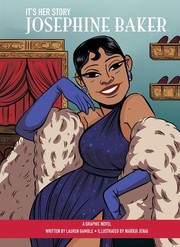
It's Her Story Josephine Baker
In 60 seconds
Josephine Baker was born into poverty in St. Louis, worked as an abused live-in maid, and clawed her way into show business through vaudeville and Broadway chorus lines. Paris made her a legend in 1925, first with the Danse Sauvage, then with a banana skirt at the Folies Bergère. When the Nazis occupied France, she spied for the Resistance, smuggling messages written in invisible ink on her sheet music. She spent her later life fighting segregation in America, raising her Rainbow Tribe of twelve adopted children, and speaking at the March on Washington. She died in Paris in 1975, honored with a state funeral, and in 2021 entered the Panthéon.
Before you start
Why it matters
This is a life that refuses a single category: comic dancer, war spy, civil rights firebrand, mother of twelve adopted children from around the world. Gamble traces how a girl punished with scalded hands for using too much soap became the first American woman buried with French military honors. Read it if you love stories of performers who turned stardom into leverage, or if you want a biography that shows courage working behind the glitter.
11 ideas, in the book's order
The big ideas
- 1Chapter 1
The maid who watched vaudeville through the door
Freda Josephine McDonald is born June 3, 1906, in a poor St. Louis neighborhood near the Mississippi River. Her mother Carrie works as a washerwoman, and some weeks there is no money for food or rent. Young Josephine is sent out to work as a live-in maid for a white woman who scalds her hands as punishment for using too much soap in the laundry. Josephine first watched performers and dreamed of performing at the Booker T. Washington Theater, a Black vaudeville house in St. Louis.
The idea
Ambition often starts in the worst room in the house. Josephine's childhood gave her two things at once: a body that remembered being punished for small mistakes, and eyes fixed on a stage where nobody could scald her. The theater wasn't an escape from poverty so much as a rival economy, one that paid in applause instead of wages. What surprises readers is how early the plan formed, a child studying performers the way other children study homework.
Try this: Identify the place nearest you where the life you want is on display, and go watch it in person this week.
- 2Chapter 2
Too skinny, too dark, so she made them laugh
At fifteen, Josephine leaves St. Louis to tour with the Dixie Steppers, a traveling vaudeville troupe. By 1921 she is in New York, in the chorus line of Shuffle Along, the groundbreaking all-Black Broadway musical. The powers around the show tell her she is too skinny and too dark-skinned to be a star. During a 'Shuffle Along' performance, Josephine deliberately stumbled and crossed her eyes in the chorus line, making the audience laugh and notice her, which earned her a featured comic role.
The idea
When the door is guarded by people who have already decided you don't fit, the winning move is rarely to fit harder. Josephine couldn't argue her way past the chorus line's beauty standards, so she weaponized the one thing they hadn't priced: her comic timing. Turning a flaw into a signature is older than show business, but few people do it on purpose, mid-performance, with their career on the line. The stumble worked because it was chosen.
Try this: Take the trait you've been hiding in professional settings and put it in your next pitch, email, or introduction on purpose.
- 3Chapter 3
A feather skirt and the Black Venus
In 1925, at nineteen, Josephine sails to Paris to perform in La Revue Nègre at the Théâtre des Champs-Élysées. In 'La Revue Nègre' Josephine performed the 'Danse Sauvage' wearing only a feather skirt (often dancing with partner Joe Alex), and the Parisian audience went wild. Overnight she is a sensation. One newspaper called her 'the Black Venus'; she received thousands of marriage proposals and gifts, including jewels, from admirers. The girl who was told she was too dark for Broadway becomes the most talked-about woman in Paris.
The idea
Rejection in one market can be a passport to another. The qualities New York dismissed were exactly what Paris wanted to celebrate, which says as much about the audiences as about the performer. Josephine didn't change between 1921 and 1925; the judges did. That's the uncomfortable surprise here: stardom is often less about becoming good enough and more about finding the room where your particular self is the missing piece.
Try this: If one audience keeps rejecting what you offer, pitch the same work to a completely different audience this week.
- 4Chapter 3
Sixteen bananas and a cheetah in diamonds
Josephine moved to the Folies Bergère, one of Paris's most famous music halls, where she famously danced in a skirt made of 16 bananas. The banana dance becomes her signature image, reproduced everywhere her fame travels. She pushes the spectacle further with her pet cheetah Chiquita, who wears a diamond-studded collar and leash. Chiquita sometimes escaped during performances, frightening the orchestra and other performers.
The idea
A signature image is worth more than a thousand competent performances. The banana skirt gave audiences something they could describe to friends the next day, which is how fame actually spreads, mouth to mouth. The cheetah worked the same trick with risk: an animal that might bolt kept every show slightly dangerous. Josephine understood that being memorable requires giving people a story, and a story needs a detail they can't forget, even if the detail is sixteen bananas.
Try this: Design one visual or verbal signature for your work that someone could repeat to a friend after seeing it once.
- 5Chapters 4-6
Invisible ink on the sheet music
When Germany occupied France during World War II, Josephine worked as a spy for the French Resistance, gathering intelligence at parties and embassies where she was welcome as a star. Josephine smuggled secret messages, written in invisible ink on her sheet music, and carried information about German troop movements across borders to resistance contacts. For her wartime work Josephine received the Croix de Guerre and the Rosette de la Résistance from French leader Charles de Gaulle.
The idea
Fame is a uniform some people can wear through checkpoints that stop everyone else. Josephine's celebrity gave her access, and access is the raw material of intelligence work. The detail that startles readers is the medium: sheet music, the very pages she performed from, carrying invisible ink across borders. She had spent her life being underestimated, first for her skin, then for being 'just' a dancer, and she turned every one of those underestimations into cover.
Try this: Ask yourself what access your ordinary routine gives you that someone in a uniform would never get, and use it for someone who needs it.
- 6Chapters 5-7
No show until the seats are open to everyone
Back in the United States, Josephine refused to perform for segregated audiences, insisting that clubs and theaters integrate before she would appear. In 1951 Josephine was refused service at the Stork Club in New York because she was Black; she publicly accused the club of racism, leading to a national controversy and media storm, and columnist Walter Winchell, who was present, attacked her in his column, which led to a public feud and her being branded a communist by some newspapers.
The idea
A star who won't perform is a lever no club owner can ignore, because empty seats cost money every night. Josephine converted her drawing power into a civil rights demand, one venue at a time. The Stork Club episode shows the price: a powerful columnist's revenge, a red-baiting press, a reputation under fire. Speaking up cost her America's goodwill at the height of her fame, and she spoke up anyway, which is the whole point of leverage.
Try this: Name one purchase or subscription you keep out of habit that conflicts with your values, and cancel it this week.
- 7Chapter 5
Twelve children, one estate, one argument
Josephine adopted twelve children from around the world — her 'Rainbow Tribe' — to show that people of different races, ethnicities, and religions could live together as brothers and sisters; she raised them at her estate, Les Milandes, in the French countryside.
The idea
Some people write manifestos; Josephine raised one. The Rainbow Tribe took her stage philosophy — different people sharing one spotlight — and applied it to a household. What surprises readers is the scale of the commitment: twelve children is not a gesture, it's a decades-long operation with laundry and school forms. Living your values is slower and more expensive than announcing them, and it's also the only version anyone can actually see.
Try this: Pick one value you talk about and design a small recurring practice, not a statement, that makes it visible to others.
- 8Chapter 5
The microphone before the dream
In 1963 Josephine spoke at the March on Washington, just before Dr. Martin Luther King Jr.'s 'I Have a Dream' speech, wearing her Free French uniform with her medals; she was the only woman to give an official speech that day.
The idea
Wearing the uniform was the speech before the speech. Josephine chose to stand before the crowd decorated by France, a visual argument that a Black woman from St. Louis had already served and been honored, and deserved the rights America was still withholding. Being the only woman on the official program that day is a fact worth sitting with: even the movement's greatest stage had room for exactly one of her.
Try this: When you get a platform, decide in advance what one thing you will be seen standing for, and wear it literally or figuratively.
- 9Chapters 6-7
Losing the château, gaining a princess
Josephine lost Les Milandes, her beloved estate, to creditors; she was evicted in 1968 despite public appeals. Princess Grace of Monaco offered her and her family a home in Monaco.
The idea
Generosity on the scale Josephine practiced it is expensive, and the bill eventually arrives. She spent for twelve children, for causes, for the image of herself as a provider, and the estate paid the price. The eviction is the book's quiet rebuke to the fantasy that fame insulates you from debt. What remains striking is who caught her: not the industries she enriched, but a princess who understood what she had given.
Try this: Do a quick audit of what your generosity, in money or time, actually costs annually, and decide if it's sustainable.
- 10Chapters 6-8
Fifty years on stage, one last triumph
In 1975 Josephine starred in a retrospective show at the Bobino Theater in Paris, celebrating her fifty years in show business; the show was a smash success, attended by celebrities including Princess Grace of Monaco. Josephine Baker died in Paris on April 12, 1975, at age sixty-eight, of a cerebral hemorrhage, shortly after the opening of her Bobino show.
The idea
Most careers end in a slow fade; Josephine's ended on a hit. The retrospective show forced Paris to see the whole arc at once, the banana skirt and the war medals and the sixty-eight-year-old voice, and the city answered with a smash success. Dying days later froze that verdict in place. There's something fierce in the timing: she got to hear the applause for the entire life, not just the latest act.
Try this: Plan the celebration of a milestone now, while you can enjoy the people showing up for it, not after.
- 11Chapters 6-8
Twenty thousand in the streets, a place in the Panthéon
Josephine received a full state funeral in Paris — the first American woman to receive that honor — and more than twenty thousand people lined the streets; she was buried in Monaco. In 2021 Josephine Baker was inducted into the Panthéon in Paris, the first American woman and the first Black woman to receive France's highest honor; her body was reinterred there.
The idea
France decided that the girl America's clubs turned away was one of its own greats. The Panthéon induction, forty-six years after her death, completes a strange and moving circle: the country that made her a star in 1925 ultimately claimed her for eternity. Honors arriving decades late still land, because they correct the public record.
Try this: Write the tribute sentence you'd want read about you at a funeral, then check this week whether your calendar matches it.
Worth remembering
Best lines
“the Black Venus”
“I Have a Dream”
A fair critique
Where it falls short
The book compresses a seventy-year life into short chapters, so complicated stretches, like the Stork Club feud's aftermath or the finances that cost her Les Milandes, get less depth than a full biography would give them. Readers wanting detailed accounts of her films, marriages beyond what's needed for citizenship, or the day-to-day raising of twelve children will need longer books. The graphic format, aimed at younger readers, also softens some of the harsher edges of her story.
In one sentence
The girl punished for using too much soap grew up to dance in bananas, spy on Nazis, integrate American clubs, and become the first American woman in France's Panthéon.
Is it for you?
Who should read it
Readers who love performer biographies with real stakes, and young readers who need proof that being underestimated is survivable. Also anyone curious about how celebrity can be spent on justice rather than comfort.
4 questions
Quick quiz: how well do you know It's Her Story Josephine Baker?
0 of 4 answered
FAQ
What is It's Her Story Josephine Baker about?
It's Her Story Josephine Baker is a non-fiction book for young readers that chronicles the life of Josephine Baker. It covers her journey from a difficult childhood in St. Louis to becoming a celebrated entertainer in Paris, her courageous work as a spy during WWII, and her lifelong dedication to fighting for civil rights and equality.
Is It's Her Story Josephine Baker worth reading?
Yes, it is worth reading, especially for young readers. The book offers an inspiring and accessible introduction to Josephine Baker's remarkable life, highlighting her resilience, talent, and unwavering commitment to justice. It's an engaging way to learn about an important historical figure who made significant contributions to entertainment and social change.
How does It's Her Story Josephine Baker end?
Spoiler: The book ends by reflecting on Josephine Baker's lasting legacy as a groundbreaking entertainer, a decorated war hero, and a passionate civil rights activist. It emphasizes how her life, particularly her creation of the "Rainbow Tribe" and her advocacy for equality, continues to inspire people to fight for a more just and inclusive world.
Who should read It's Her Story Josephine Baker?
This book is ideal for young readers, particularly those aged 6-9, who are interested in history, biographies, and stories of inspiring women. It's also suitable for parents and educators looking for engaging non-fiction that introduces themes of overcoming adversity, social justice, and the performing arts in an age-appropriate manner.
How long does it take to read It's Her Story Josephine Baker?
Given its target audience and typical length for the "It's Her Story" series, it would likely take a reader approximately 20-30 minutes to read "It's Her Story Josephine Baker" from start to finish.
Who wrote It's Her Story Josephine Baker?
It's Her Story Josephine Baker was written by Lauren Gamble and first published in 2022.
What genre is It's Her Story Josephine Baker?
It's Her Story Josephine Baker is listed under Children & Young Adult.
More Children & Young Adult summaries