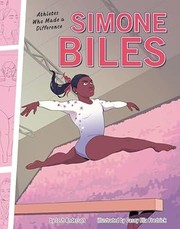
Simone Biles
In 60 seconds
A six-year-old girl on a daycare field trip copies other kids' routines and gets a note sent home: put her in gymnastics. Twelve years later she wins four golds in Rio, then walks away from most of the Tokyo Olympics when her body and mind stop communicating mid-air. She comes back at 26, wins again in Paris, and retires the argument about who's the greatest. This is the story of the girl from Columbus, Ohio, who out-flew everyone.
Before you start
Why it matters
This isn't just a highlight reel — it's a story about what happens when the person everyone expects to be invincible admits she isn't. Biles's Tokyo withdrawal reframed what strength looks like in sports, and her comeback proved it wasn't an ending. Read it if you care about gymnastics, mental health in elite sport, or how a family's decision in 2001 changed everything.
11 ideas, in the book's order
The big ideas
- 1Chapters 2-3
The note that started it all
Simone Biles is born March 14, 1997, in Columbus, Ohio, to Shanon Biles, whose drug and alcohol addiction leaves Simone and her siblings without consistent care. In 2001, her maternal grandfather Ron Biles and his second wife Nellie fly to Ohio and take custody of Simone and her younger sister Adria, eventually adopting them; older siblings Tevin and Ashley are adopted by Ron's great-aunt Harriet in Ohio. At six, on a daycare field trip to Bannon's Gymnastix, Simone copies other gymnasts' routines, and a trainer sends a note home recommending classes. Ron and Nellie enroll her, and by eight she's training with coach Aimee Boorman.
The idea
Talent doesn't announce itself with a trophy — it announces itself with a note home. What's striking is how ordinary the discovery was: a kid imitating other kids, a trainer paying attention, grandparents acting on it. The Biles story starts with adults noticing something and doing something about it, twice over — once when they took her in, once when they signed her up. Remove either decision and there's no gymnast.
Try this: If someone shows unusual aptitude at something this week — a kid, a coworker — write the note. Say it out loud and point them somewhere concrete.
- 2Chapters 4-5
Fourteen and already winning
Huntsville, Texas, 2011. A fourteen-year-old Simone Biles walks into the American Classic and finishes third in the all-around — good, not great. Then, later that same year, she shows up at the U.S. Classic in Chicago and wins the whole thing. Two years later she's standing at the 2013 World Championships in Antwerp, Belgium, where she scores 59.590 to take all-around gold, plus silver on floor and bronze on balance beam. No American woman had held that world all-around title since Jordyn Wieber in 2011.
The idea
The gap between 'promising junior' and 'world champion' is usually years. For Biles it was basically one competitive season. What that shows is that her trajectory wasn't a slow build — it was a launch. And the Antwerp result carried extra weight: American women hadn't held that all-around crown since 2011, so she wasn't just winning, she was restoring a streak.
Try this: Track one skill you're building for 90 days and note the date you go from 'decent' to 'better than expected' — the jump is usually shorter than you think.
- 3Chapters 6, 8
Nanning and the sweep
At the 2014 World Championships in Nanning, China, Biles wins the all-around with 60.231, helps the U.S. take team gold, and adds gold on balance beam and floor plus silver on vault. Two years later in Rio, at 19, she wins four golds — team, all-around, vault, floor — and bronze on beam, making her the most decorated American gymnast at a single Olympic Games. Her all-around score of 62.198 leaves her more than two points clear of silver medalist Aly Raisman at 60.613.
The idea
Biles wasn't edging out rivals; she was competing on a different plane. The Rio haul also set a benchmark: no American gymnast had ever collected that many medals at one Games. The interesting part is that the bronze on beam is the only blemish, and even that's a medal most gymnasts would build a career around.
Try this: Pick your strongest skill and ask what a 'two-point margin' version of it looks like — then name the one thing keeping you at 60.6 instead of 62.1.
- 4Chapter 7
The Final Five
At the 2016 Olympic Trials in San Jose, California, Biles wins the all-around competition and is named to the five-woman U.S. Olympic team alongside Aly Raisman, Gabby Douglas, Laurie Hernandez, and Madison Kocian — a squad nicknamed the 'Final Five.'
The idea
Making an Olympic team in the deepest gymnastics country on earth might be harder than the Olympics themselves. Biles didn't just make it — she won the trials outright, which meant she arrived in Rio as the confirmed head of the team, not a co-leader.
Try this: Before your next big selection or audition, treat the qualifying round as the main event — win it, and the pressure on the other side shrinks.
- 5Chapter 9
Life after gold
Rio is over, and the spotlight follows Biles home. She lands on Dancing with the Stars, dancing with partner Sasha Farber, and finishes fourth. Her autobiography, Courage to Soar, climbs onto the New York Times bestseller list. Then 2018 brings a different kind of announcement: on Twitter, she reveals she is one of the victims of Larry Nassar, the former USA Gymnastics team doctor convicted of sexual abuse. She credits her survival to her faith and her family.
The idea
The post-Olympics glow is usually a blur of TV appearances — Biles had that too. What she didn't have was silence about Nassar. Coming forward on Twitter in 2018 put the most famous gymnast in the world on the list of survivors, and it mattered because institutional abuse thrives on victims feeling isolated. She named what kept her standing: faith and family, the same two things that got her to Bannon's Gymnastix in the first place.
Try this: If you've been carrying something alone, say it to one person this week — the first telling is the hardest and the most freeing.
- 6Chapter 10
Doha's six-medal haul
At the 2018 World Championships in Doha, Qatar, Biles wins six medals: gold in team, all-around, vault, and floor exercise, silver on uneven bars, and bronze on balance beam — bringing her World Championship total to fourteen.
The idea
She'd become so dominant everywhere else that even her 'bad' apparatus produced a world silver medal.
Try this: Find your weakest relevant skill and spend one focused session on it — sometimes the gap between 'bad' and 'medalist' is smaller than you fear.
- 7Chapter 11
Twenty-five golds and counting
At the 2019 World Championships in Stuttgart, Germany, Biles wins five gold medals — team, all-around, vault, floor, and balance beam — bringing her World Championship gold medal count to a record twenty-five.
The idea
At the 2019 World Championships in Stuttgart, Germany, Biles won five gold medals — team, all-around, vault, floor, and balance beam.
Try this: When you're on a winning streak, write down what the streak costs you — sleep, rest, pressure — before the next big test.
- 8Chapter 12
The twisties
At the 2020 Tokyo Olympics, held in 2021, Biles withdraws from the team final after one rotation due to 'the twisties' — a mental block where a gymnast loses sense of where they are in the air. She performs only the vault in the team final, scoring 13.766, and the U.S. takes silver behind the Russian Olympic Committee. She later withdraws from the all-around, vault, uneven bars, and floor finals, then returns for the balance beam final and wins bronze, receiving widespread support for prioritizing her mental health.
The idea
The twisties are a mental block where a gymnast loses sense of where they are in the air. She said out loud what athletes usually hide, and the bronze on beam became the proof that stepping back wasn't quitting.
Try this: Name the condition under which you'd allow yourself to stop — decide it now, in writing, so it's a policy and not a panic decision.
- 9Chapter 13
The comeback at 26
In 2023, at 26, Biles returns to elite competition at the U.S. Classic, then wins her record eighth U.S. national all-around title at the U.S. National Championships in San Jose, California. At the 2023 World Championships in Antwerp — the same Belgian city where she won her first world title — she takes four golds (team, all-around, vault, floor) and silver on balance beam, becoming the oldest U.S. woman to win a World all-around title.
The idea
Biles came back at 26 and immediately set records — an eighth national title, the oldest American world all-around champion.
Try this: Pick one thing you 'retired' from too early and give it one structured month — not to return, just to find out what's actually still there.
- 10Chapter 14
Golden Girls in Paris
At the 2024 Paris Olympics, the U.S. women's team — nicknamed the 'Golden Girls' — is the oldest U.S. women's Olympic gymnastics team ever, with Biles, at 27, the oldest woman on it. She wins three golds (team, all-around, vault) and silver on floor, bringing her Olympic total to eleven, the most of any American gymnast. In the all-around final she scores 59.131, beating Brazil's Rebeca Andrade, who takes silver at 57.432.
The idea
The oldest U.S. women's Olympic gymnastics team ever assembled won anyway, and Biles beat the current field.
Try this: Audit your team's age assumptions — list who you've written off as 'too old' and check whether their results actually agree.
- 11Chapter 15
Medal of Freedom and a full life
In 2022, President Joe Biden awards Biles the Presidential Medal of Freedom, making her the youngest recipient of the award at the time. In 2014, she and her family adopted two cats, and she speaks publicly about her love of animals; in April 2023 she marries NFL player Jonathan Owens.
The idea
The domestic details matter too: the cats adopted in 2014, the April 2023 marriage to Jonathan Owens.
Try this: Write down what your 'medal of freedom' version of success looks like outside work — pets, people, a home — and protect one hour for it this week.
Worth remembering
Best lines
“the twisties”
“Final Five”
“Golden Girls”
“Courage to Soar”
A fair critique
Where it falls short
The book is a fast, chronological sports biography aimed at younger or general readers, so it moves event to event without deep exploration of training methods, coaching philosophy, or the institutional failures around Nassar beyond Biles's own disclosure. Rivals like Rebeca Andrade appear mainly as results, not characters. Readers wanting technical breakdowns of Biles's skills or a critical look at USA Gymnastics will need other books. The strength is momentum; the cost is depth.
In one sentence
The girl a trainer noticed copying routines at six became the most decorated gymnast in history — and the athlete who taught the world that stepping back can be the strongest move of all.
Is it for you?
Who should read it
Gymnastics fans who want the full arc from Columbus, Ohio, to Paris, and anyone interested in how elite athletes handle pressure and mental health. Also a strong pick for young readers who need proof that a rough start doesn't decide the ending.
4 questions
Quick quiz: how well do you know Simone Biles?
0 of 4 answered
FAQ
What is Simone Biles about?
Josh Anderson's "Simone Biles" is a biography detailing the life and career of the legendary gymnast. It covers her challenging childhood, her rise to Olympic stardom, her record-breaking achievements, and her courageous advocacy for mental health and athlete well-being, particularly during the Tokyo 2020 Olympics.
Is Simone Biles worth reading?
Yes, the book is highly recommended for anyone seeking inspiration from a story of perseverance, dedication, and courage. It offers insights into the world of elite gymnastics and provides a powerful narrative about prioritizing mental health and speaking out against adversity.
How does Simone Biles end?
Spoiler: The book concludes by highlighting Simone Biles' ongoing legacy as a transformative figure in sports. It emphasizes her continued influence as an advocate for mental health, her role in inspiring future generations, and her enduring impact on gymnastics, rather than a definitive end to her personal story.
Who should read Simone Biles?
This book is ideal for young adult readers, aspiring athletes, gymnastics fans, and anyone interested in biographies of inspiring public figures. It also appeals to those interested in mental health awareness and stories of overcoming adversity.
How long does it take to read Simone Biles?
Based on its typical length for a young adult biography (around 120-150 pages), it would likely take approximately 2 to 3 hours to read "Simone Biles" by Josh Anderson at an average reading speed.
Who wrote Simone Biles?
Simone Biles was written by Josh Anderson and first published in 2024.
What genre is Simone Biles?
Simone Biles is listed under Biography & Memoir.
More Biography & Memoir summariesHow many pages is Simone Biles?
Simone Biles is about 32 pages long (the median page count across its editions, per Open Library).