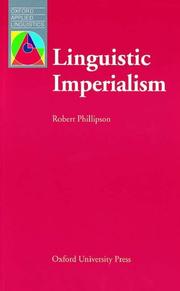
About Linguistic Imperialism
Robert Phillipson's seminal work, "Linguistic Imperialism," critically examines the global dominance of the English language, arguing that its widespread adoption is not merely a natural phenomenon but a result of deliberate policies, practices, and power structures. Phillipson introduces the concept of linguistic imperialism as the dominance of one language over others, often through the establishment and continuous reconstitution of structural and cultural inequalities. He contends that the global spread of English serves the economic, political, and cultural interests of English-speaking nations and elites, particularly the UK and USA, often at the expense of local languages and cultures.
The book meticulously dissects the mechanisms through which this imperialism operates, including the role of the English Language Teaching (ELT) profession, international aid organizations (like the British Council and USIA), and prevailing ideologies that promote English as a neutral, superior, or indispensable language for modernization and development. Phillipson draws on critical theory, dependency theory, and postcolonial studies to expose how language policies and educational systems can perpetuate inequalities, undermine linguistic diversity, and reinforce a form of linguistic dependency. "Linguistic Imperialism" is a foundational text in sociolinguistics and critical applied linguistics, challenging conventional wisdom about language spread and advocating for greater linguistic justice and the recognition of linguistic human rights.
Key takeaways
- Linguistic imperialism describes the dominance of one language over others, often through power structures and institutional support.
- The global spread of English is not a neutral process but often serves the economic and political interests of dominant nations.
- Educational policies, aid programs, and the English Language Teaching (ELT) industry can act as agents of linguistic imperialism.
- The concept challenges the idea that English is a universally beneficial lingua franca, highlighting its potential to create inequalities.
- Critical awareness of language policy and practice is essential to understand and counter linguistic dominance.
- Promoting linguistic diversity and supporting local languages is crucial for cultural autonomy and intellectual development.
Key ideas at a glance
Linguistic dominance
- Linguistic imperialism describes the dominance of one language over others, often through power structures and…
- The global spread of English is not a neutral process but often serves the economic and political interests of dominant…
Power and language
- Promoting linguistic diversity and supporting local languages is crucial for cultural autonomy and intellectual…
Postcolonial linguistics
- The concept challenges the idea that English is a universally beneficial lingua franca, highlighting its potential to…
Language policy critique
- Educational policies, aid programs, and the English Language Teaching (ELT) industry can act as agents of linguistic…
- Critical awareness of language policy and practice is essential to understand and counter linguistic dominance.
Chapter summaries
Chapter 1: Introduction: The English Language and Imperialism
Phillipson introduces the concept of linguistic imperialism, defining it as the dominance asserted and maintained by the establishment and continuous reconstitution of structural and cultural inequalities between English and other languages. He argues that the global spread of English is not a neutral phenomenon but is deeply intertwined with power relations, historical colonialism, and economic forces. He outlines the book's purpose: to analyze the mechanisms and ideologies that perpetuate English's hegemonic status, particularly through the English Language Teaching (ELT) industry, and to challenge the prevailing myths of English as a neutral, beneficial, and inevitable global language. This chapter sets the stage for a critical examination of language policy and power.
Chapter 2: Historical Background: The Spread of English
This chapter traces the historical trajectory of English from its origins to its current global status, linking its expansion directly to British and later American imperialism. Phillipson details how the language followed colonial expansion, becoming entrenched in administration, education, and commerce in colonized territories. He discusses the role of missionaries, educators, and colonial administrators in establishing English as a language of power and prestige, often at the expense of indigenous languages. The chapter highlights how historical processes laid the groundwork for the structural and cultural dominance of English, setting the precedent for its continued spread post-colonialism through new forms of influence, particularly economic and cultural.
Chapter 3: Theoretical Framework: Imperialism and Language
Phillipson develops a theoretical framework for understanding linguistic imperialism, drawing heavily on Johan Galtung's theory of imperialism, particularly the "center-periphery" model. He adapts Galtung's concepts of structural and cultural imperialism to the linguistic domain, arguing that English acts as a "center" language dominating "periphery" languages. He identifies key mechanisms of linguistic imperialism, including Anglicization (the process of making things English), professionalization (the control of ELT by native speakers and Western institutions), and the "aid" industry (where language aid often promotes English). This chapter provides the analytical tools to dissect the various facets of English's global dominance, moving beyond simplistic notions of language spread.
Chapter 4: The Role of ELT: English Language Teaching and its Ideologies
This chapter critically examines the English Language Teaching (ELT) industry as a primary vehicle for linguistic imperialism. Phillipson argues that ELT institutions, methodologies, and materials often implicitly or explicitly promote ideologies that favor English and marginalize other languages. He discusses the "professionalization" of ELT, where native English speakers and Western academic institutions dictate standards, curricula, and teacher training globally, often disempowering local educators and perpetuating a dependency on the "center." He critiques the "monolingual fallacy" inherent in many ELT approaches and highlights how the industry's economic interests align with the continued global expansion of English, reinforcing its hegemonic status.
Chapter 5: Arguments for English: The Justifications of Dominance
Phillipson dissects and critiques the common arguments used to justify the global spread and dominance of English. He categorizes these justifications into several myths: the myth of English as a neutral, apolitical language; the myth of its inherent superiority (e.g., its vocabulary size, flexibility); the myth of its inevitability as a global lingua franca; and the myth of its universal benefits for individuals and nations (e.g., access to science, technology, economic development). He argues that these justifications serve to naturalize and legitimize the existing power imbalances, masking the underlying imperialistic dynamics and discouraging critical reflection on the consequences of English's hegemony for linguistic diversity and equity.
Chapter 6: Arguments Against English: The Costs of Dominance
This chapter presents the counter-arguments to the justifications for English's dominance, focusing on the negative consequences of linguistic imperialism. Phillipson details how the global spread of English contributes to the erosion and death of other languages, leading to a loss of cultural diversity and indigenous knowledge. He discusses the educational disadvantages faced by non-native English speakers, the economic disparities created by the need for English proficiency, and the psychological impacts of linguistic subordination. He also addresses the political implications, where English can become a tool for maintaining elite power structures and hindering genuine democratic participation in multilingual societies, advocating for a recognition of the real costs involved.
Chapter 7: Linguistic Human Rights: A Counter-Hegemonic Discourse
Phillipson introduces and elaborates on the concept of linguistic human rights as a crucial framework for challenging linguistic imperialism. He argues that the right to use, learn, and develop one's mother tongue, and to access education and public services in it, is a fundamental human right. He discusses international declarations and conventions that support linguistic diversity and rights, contrasting them with the realities of language policy that often prioritize dominant languages. This chapter posits linguistic human rights as a powerful tool for advocacy, empowering marginalized language communities to resist Anglicization and demand equitable language policies that protect and promote linguistic diversity, fostering a more just linguistic order.
Chapter 8: Resistance and Alternatives: Towards Linguistic Equity
This concluding chapter explores various forms of resistance to linguistic imperialism and proposes alternative paths towards linguistic equity. Phillipson discusses efforts by individuals, communities, and organizations to promote and revitalize indigenous languages, challenge English-only policies, and advocate for multilingual education. He highlights examples of successful language planning and policy initiatives that prioritize linguistic diversity and empower local languages. The chapter emphasizes the need for critical awareness, political will, and concerted action to dismantle the structures of linguistic imperialism. It calls for a shift from a monolingual mindset to one that values and supports linguistic pluralism, advocating for policies that foster genuine linguistic justice and sustainable multilingualism globally.
Full summary
Book Overview
"Linguistic Imperialism," authored by Robert Phillipson and first published in 1992, critically examines the global dominance of the English language and its implications for linguistic diversity and cultural identity. Phillipson argues that the spread of English is not merely a natural phenomenon but rather a form of imperialism that reinforces power dynamics and inequalities between English-speaking and non-English-speaking nations.
Main Content/Plot
Phillipson outlines how the English language has become a global lingua franca, primarily due to historical, political, and economic factors. He explores the historical context of English's rise, linking it to colonialism and the expansion of British and American influence across the globe. The book is structured into several chapters that address specific aspects of linguistic imperialism, including:
1. Historical Background: An exploration of the historical roots of English as a global language, emphasizing colonialism and its legacies.
2. Language Policy and Education: Analysis of language policies in various countries that prioritize English, often at the expense of local languages.
3. Cultural and Linguistic Hegemony: Discussion on how English is portrayed as superior, leading to the marginalization of other languages and cultures.
4. Resistance and Alternatives: An examination of movements and policies aimed at resisting linguistic imperialism and promoting linguistic diversity.
Key Themes
1. Power Dynamics: The book highlights how language is intertwined with power, illustrating how English serves as a tool for asserting dominance over non-English-speaking cultures.
2. Cultural Identity: Phillipson delves into the impact of linguistic imperialism on cultural identity, emphasizing the threat it poses to indigenous languages and traditions.
3. Education and Policy: The role of educational systems in perpetuating linguistic imperialism is critically assessed, spotlighting how language instruction often favors English over native languages.
4. Globalization: The book connects the rise of English to the broader context of globalization, suggesting that economic policies favoring English can lead to cultural homogenization.
Important Takeaways
- Linguistic Hegemony: Phillipson's concept of linguistic hegemony underscores the idea that the spread of English is not a neutral process but one that entails significant cultural and social ramifications.
- Cultural Loss: The dominance of English threatens linguistic diversity and can lead to the extinction of many languages, which are crucial for cultural heritage.
- Advocacy for Diversity: The
Memorable quotes
“Linguistic imperialism is defined as the dominance of English by establishment and continuous reconstitution of structural and cultural inequalities between English and other languages.”
“The spread of English can be understood as a form of linguistic imperialism, involving the imposition of English on other speech communities.”
“English is not merely a language but a carrier of specific cultural and ideological values.”
“The professionalization of English Language Teaching has often served to legitimize and perpetuate the dominance of English.”
“The hegemony of English is maintained not only through structural power but also through the internalization of Anglocentric ideologies.”
Themes
- Linguistic dominance
- Power and language
- Postcolonial linguistics
- Language policy critique
- Linguistic human rights
- Cultural imperialism
About Robert Phillipson
Robert Phillipson is a distinguished Danish linguist and scholar, renowned for his pioneering work in critical applied linguistics and sociolinguistics. He is a Professor Emeritus at the Copenhagen Business School. Phillipson has authored several influential books and articles, including "English-Only Europe? Challenging Language Policy" and "Linguistic Imperialism Continued." He wrote "Linguistic Imperialism" to challenge the uncritical acceptance of English's global dominance and to expose the underlying power dynamics and ideological mechanisms that perpetuate linguistic inequalities worldwide, advocating for greater linguistic justice.
FAQ
What is Linguistic Imperialism about?
Robert Phillipson's "Linguistic Imperialism" argues that the global spread and dominance of English is not a natural phenomenon but a form of imperialism. It is sustained by deliberate policies, institutional support, and prevailing ideologies that perpetuate inequalities between English and other languages, often at the expense of local linguistic diversity and cultural autonomy.
Is Linguistic Imperialism worth reading?
Yes, it is a highly influential and foundational text in sociolinguistics and critical applied linguistics. It offers a powerful and well-researched critique of language policy and challenges conventional views on the global role of English. It is essential reading for anyone interested in the intersection of language, power, education, and globalization.
How does Linguistic Imperialism end?
Spoiler: The book concludes by advocating for greater linguistic justice and the recognition of linguistic human rights. Phillipson calls for critical awareness of language policies and practices, urging resistance to the homogenizing forces of linguistic imperialism and promoting the value of linguistic diversity and multilingualism globally.
Who should read Linguistic Imperialism?
This book is essential for scholars and students in linguistics, sociolinguistics, education, postcolonial studies, and international relations. It is also highly relevant for language educators, policymakers, and anyone interested in understanding the social, political, and economic dimensions of language dominance and its impact on global communities.
How long does it take to read Linguistic Imperialism?
Given its academic nature and dense arguments, reading "Linguistic Imperialism" typically takes approximately 450 minutes (about 7.5 hours) for a focused reader. This estimate allows for careful engagement with the complex theoretical frameworks and detailed analyses presented throughout the book.