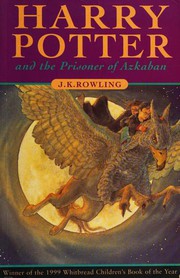
Harry Potter and the Prisoner of Azkaban
In 60 seconds
Harry blows up his awful Aunt Marge and flees, learning that Sirius Black — a supposed Voldemort loyalist — has escaped Azkaban and is coming for him. A year of dread follows: Dementors drain Harry at every turn, a black dog haunts him, and his Firebolt arrives with suspicion attached. Then the truth detonates in the Shrieking Shack: Black is innocent, Harry's godfather, and the real traitor is Ron's pet rat, Peter Pettigrew. With Hermione's Time-Turner, Harry saves Black and Buckbeak, and flies off toward a family he barely dares hope for.
Before you start
Why it matters
This is where the series grows up: the villain isn't a dark lord but a betrayal by someone trusted, and the rescue requires breaking time itself. Readers who want fantasy with real stakes — grief, injustice, a justice system that executes without evidence — will find it here. It's essential for anyone following Harry's arc, because it rewrites his past and hands him a future: a godfather, a home, a reason to hope.
Spoilers ahead
The story
- 1
Act 1
Aunt Marge Floats, and the Wizarding World Closes In
Harry does his summer homework in the middle of the night, working by wandlight under his covers — an essay for Professor Binns' History of Magic class on 'Witch-burning in the fourteenth century was completely pointless.' He receives birthday cards and presents from his friends: a Pocket Sneakoscope from Ron and a Broomstick Servicing Kit from Hermione. Then Aunt Marge visits. Marge insults Harry's parents, calling them 'drunkards' and 'good-for-nothings.' Harry, unable to control his anger, accidentally inflates her like a balloon, and she floats up to the ceiling and out of the house. Certain he'll be expelled, Harry runs — and the Knight Bus, a triple-decker purple bus that can appear instantly anywhere, picks him up. Stan Shunpike, the conductor, tells him about Sirius Black's escape from Azkaban. At the Leaky Cauldron, Minister for Magic Cornelius Fudge meets Harry and assures him, 'We don't send people to Azkaban for blowing up their aunts.' Harry learns he will not be punished or expelled for using magic outside school, though he is puzzled by Fudge's unusual solicitude. On the Hogwarts Express, a Dementor enters Harry's compartment, causing him to hear his mother's dying screams and faint. Professor Lupin, the new Defense Against the Dark Arts teacher, repels it with a Patronus Charm and gives Harry chocolate to recover. Harry learns the Dementors are searching for Sirius Black.
- 2
Act 2
An Omen of Death, a Slashed Portrait, a Broken Broom
Hogwarts wraps itself in dread. In Divination class, Professor Trelawney examines Harry's tea leaves and sees the Grim, a spectral dog that is an omen of death. Harry is troubled because he already saw a large black dog before boarding the Knight Bus. Hagrid's first Care of Magical Creatures lesson introduces Buckbeak the hippogriff. Harry successfully approaches and rides Buckbeak, but Draco Malfoy insults the creature, calling it a 'great ugly brute,' and is slashed on the arm, leading to Buckbeak's death sentence. In Lupin's first Defense Against the Dark Arts class, he teaches students to fight a boggart, a shape-shifting creature that takes the shape of one's worst fear. Neville Longbottom's boggart turns into Professor Snape, and Lupin helps Neville make it look like his grandmother's clothes. Harry's boggart turns into a Dementor. The Fat Lady's portrait is found slashed and empty. She later returns, terrified, and reports that Sirius Black broke into the castle and tried to enter Gryffindor Tower, saying, 'He's got a knife!' She refused to let him in without a password. The castle goes on high alert. During a rainy Quidditch match against Hufflepuff, Dementors swarm the pitch. Harry faints and falls from his broom; Dumbledore saves him, but his Nimbus Two Thousand is blown into the Whomping Willow and destroyed. Fred and George Weasley give Harry the Marauder's Map, a magical parchment that shows every person's location in Hogwarts and all its secret passages. It was created by Messrs. Moony, Wormtail, Padfoot, and Prongs (later revealed to be Lupin, Pettigrew, Black, and James Potter). Fred teaches Harry the activation phrase: 'Just tap it and say, "I solemnly swear that I am up to no good."' Using the map's secret passage, Harry sneaks into Hogsmeade. In the Three Broomsticks, he overhears McGonagall, Fudge, and Madam Rosmerta reveal that Sirius Black was James Potter's best friend, is Harry's godfather, and betrayed the Potters to Voldemort before killing Peter Pettigrew along with twelve Muggle bystanders.
- 3
Act 3
The Shrieking Shack: The Rat in the Bed
Harry receives an anonymous, top-of-the-line Firebolt broomstick as a Christmas present. Hermione, suspecting it may be cursed and was sent by Sirius Black, reports it to Professor McGonagall, who confiscates it for safety checks, causing a rift between Harry and Hermione. Harry begins private lessons with Lupin to learn the Patronus Charm, a powerful defensive spell against Dementors. Using a Boggart that takes the form of a Dementor, Harry practices producing a silvery shield; his first attempts produce only a wisp of silver smoke, though he eventually conjures a full Patronus in the form of a stag. The incantation is 'Expecto Patronum,' and casting it requires concentrating on a happy memory. Snape substitutes for Lupin's Defense Against the Dark Arts class and assigns an essay on how to recognize and kill werewolves, which Hermione correctly identifies as a pointed attack on Lupin. He pointedly asks Hermione to explain the difference between an Animagus and a werewolf, hinting at Lupin's secret. In the Quidditch final against Slytherin, Harry catches the Snitch, winning the Cup for Gryffindor for the first time in seven years, despite the Dementors being barred from the match by Dumbledore. Meanwhile, Ron's rat Scabbers appears to have been killed by Crookshanks, Hermione's cat, deepening the rift between Ron and Hermione. While hiding near Hagrid's hut during Buckbeak's execution, Scabbers bites Ron and escapes, and a large black dog suddenly appears, attacks Ron, and drags him and Scabbers into a tunnel beneath the Whomping Willow. Harry and Hermione follow, discovering a passage to the Shrieking Shack. In the Shrieking Shack, the black dog transforms into Sirius Black. Lupin arrives and embraces Black. Together they reveal that Ron's rat Scabbers is actually Peter Pettigrew, an Animagus who faked his death after framing Black. Lupin is revealed to be a werewolf, and he, Black, James Potter, and Pettigrew became Animagi to keep him company during his transformations. Their nicknames were Moony (Lupin), Wormtail (Pettigrew), Padfoot (Black), and Prongs (James Potter, whose Patronus was a stag). They also reveal that Pettigrew was the Secret-Keeper for the Potters, not Black, and that Pettigrew betrayed them to Voldemort. Pettigrew is forced back into human form. He confesses to betraying Harry's parents to Voldemort and framing Sirius Black for his own murder, whimpering, 'The Dark Lord... you have no idea the weapons he possesses... What would you have done?' Harry stops Ron and Hermione from killing him, wanting to hand him over to the authorities.
- 4
Act 4
The Lake, the Stag, and Three Hours Back
As the group leaves the Shrieking Shack for the castle, the full moon rises and Lupin transforms into a werewolf. In the chaos, Pettigrew escapes back into rat form, and Black, in dog form, fights Lupin to protect the others and is seriously injured. By the lake, a hundred Dementors close in on Harry and an unconscious Black. Harry tries to produce a Patronus but fails; he sees a figure across the lake cast a powerful stag Patronus that drives the Dementors away. He believes the figure was his father, then falls unconscious, and Black is recaptured. Harry wakes in the hospital wing and learns Black has been sentenced to the Dementor's Kiss, which will suck out his soul. Then Hermione reveals she has been using a Time-Turner, a small hourglass on a chain loaned by the Ministry of Magic, to attend multiple classes all year. Dumbledore subtly suggests they can save more than one innocent life if they use it, telling Hermione, 'You will be going back three hours. That should be time enough. I suggest you take the Invisibility Cloak. You will find me if you need me.' He winks at her. Harry and Hermione use the Time-Turner to travel back three hours. They rescue Buckbeak from execution and watch their past selves from hiding. When the Dementors attack their past selves by the lake, Harry realizes the mysterious savior he saw was himself. He steps forward and conjures a full corporeal Patronus in the form of a stag, shouting 'Expecto Patronum!', driving away the Dementors and saving himself and Black. Harry and Hermione free Sirius Black from the tower cell, and he escapes on Buckbeak, flying away into the night. Lupin resigns as Defense Against the Dark Arts teacher after Snape deliberately lets slip to the staff that he is a werewolf. Harry finds Lupin packing, and Lupin returns the Marauder's Map, saying he no longer needs it. Black later sends Harry a letter, signed 'Padfoot,' along with permission to visit Hogsmeade, and gives him a Firebolt broomstick as a gift. Harry receives a tiny owl from Sirius, which Ron offers to keep, as his old owl Errol is aging. Ginny names the owl Pigwidgeon, or 'Pig' for short. Sirius writes that the Firebolt was indeed from him, and Harry feels hopeful about a future away from the Dursleys.
Who's who
Characters
- Harry PotterAn orphaned thirteen-year-old convinced a mass murderer is hunting him — and furious enough to want revenge. By the end he has spared his parents' true betrayer, saved his godfather, and learned his own Patronus wears his father's shape.
- Sirius BlackAzkaban's most feared escapee, presumed Voldemort's loyalist — actually an innocent godfather who spent twelve years wrongly imprisoned. He escapes on a hippogriff, offering Harry the family he never had.
- Remus LupinThe kind Defense Against the Dark Arts teacher hiding a werewolf's secret, and the last link to Harry's parents. Snape's exposure forces him to resign, map returned, gone again.
- Peter PettigrewRon's pet rat Scabbers — and the coward who betrayed the Potters, framed Black, and faked his own death. Exposed in the Shrieking Shack, he wriggles back into rat form and escapes.
- Hermione GrangerThe friend who reports the Firebolt out of caution and carries a Time-Turner in secret all year. Her hourglass is what makes the rescue possible.
- Ron WeasleyHarry's loyal best friend, whose pet rat turns out to be the story's true villain. He loses Scabbers, gains a tiny owl named Pigwidgeon.
- Rubeus HagridNew Care of Magical Creatures teacher whose first lesson — Buckbeak the hippogriff — costs the creature its life sentence. His innocence condemned becomes part of what Harry must undo.
- Severus SnapeThe potions master who never stops suspecting Lupin, substituting into his class with werewolf essays and finally letting the secret slip. His vindictiveness costs Lupin his job.
- Professor DumbledoreThe headmaster who shields Harry from the Dementors and, with a wink, points Hermione toward the one loophole that can save two innocent lives.
What it's really about
Themes
The failure of justice
Sirius Black is imprisoned for twelve years without trial for murders he didn't commit, while the actual killer sleeps on Ron's bed as a pet rat. Buckbeak is sentenced to death because a boy with a grudge got slashed after insulting a hippogriff. The Ministry's answer to every crisis is punishment: Dementors patrolling a school, a Dementor's Kiss administered without testimony heard. The book's point is bitter and clear — institutions punish the convenient suspect, and real justice has to be stolen back, three hours at a time, by teenagers breaking the rules.
Betrayal wears a familiar face
The year's terror is aimed at the wrong man. Everyone — Harry included — believes Sirius Black sold out the Potters, while the traitor is Peter Pettigrew, hidden in plain sight as Scabbers, missing a toe to match his faked death. Pettigrew's whimper — 'What would you have done?' — is the book's most uncomfortable question: he chose survival over loyalty and let his best friend rot for it. The lesson lands hard: the danger to the people you love is rarely the stranger at the gate; it's the friend at the table.
Fear and how you fight it
Dementors feed on despair, and Harry is hit harder than anyone because his worst memories include his mother's dying screams. The counter isn't courage in the abstract — it's a single happy memory, held tight, spoken as 'Expecto Patronum.' Harry's first attempts produce only a wisp of smoke; mastery comes slowly, through practice with a Boggart-Dementor. When he finally casts the stag by the lake, he is saving himself — the protector he wished for was in him all along. Fear shrinks to the size of what you can hold onto.
Found family
Harry starts the book as a burden the Dursleys resent, provoked until his magic explodes. He ends it with a godfather who writes letters signed 'Padfoot,' a Firebolt as a gift, permission slips for Hogsmeade, and a tiny owl named Pigwidgeon — Ron's offer to keep it a small, ordinary kindness. Lupin and Black knew his parents; their stories give Harry back pieces of James and Lily. The book's point: family is not the house you're stuck in, but the people who choose you and stay.
Growing up means gray areas
The earlier books drew clean lines: good students and bullies, heroes and Voldemort. Here the lines blur. Lupin is the best teacher Harry has had and also a werewolf; Hermione's rule-following breaks to save a life; Harry stops his friends from killing Pettigrew, choosing the harder path of handing him to justice. Even time gets bent for mercy. The book's point: maturity is discovering that the people you trust have secrets, the people you fear may be innocent, and doing right is a decision, not a trait.
Look closer
Symbols
- The Grim / the black dog
- A spectral omen of death in Trelawney's tea leaves — and the shape Sirius Black takes as an Animagus. What reads as a death sentence is actually a godfather coming to find his family. The book's cruelest misreading, reversed.
- The Dementors
- Guards that feed on happiness and leave despair — the embodiment of a justice system that punishes without distinguishing guilt. They attack the innocent (Harry, Black) as readily as the guilty, and only a happy memory can drive them off.
- The Marauder's Map
- A parchment made by four friends — Moony, Wormtail, Padfoot, Prongs — that shows everyone's true location. It literally reveals what's hidden: secret passages, and eventually the rat on Ron's bed. Friendship's record outlasting betrayal.
- The Time-Turner
- Hermione's hourglass, worn all year to attend overlapping classes, becomes the instrument of mercy — saving Buckbeak and Black in a single borrowed afternoon. Time as something you can act within, not just endure.
- The stag Patronus
- Harry's Patronus takes the form of a stag — his father Prongs's Animagus shape. The protection Harry wished came from his father turns out to be his own; inheritance and identity fused into one silver animal.
Spoilers
Ending explained
The ending refuses triumph. Pettigrew escapes, which means Voldemort's return is seeded — Harry's mercy, the morally right choice, becomes the plot's engine for books to come. Black flies free but is still a fugitive; Lupin, the one adult who truly knew Harry's parents, is driven out by Snape's spite. What Harry gains is quieter: proof that his father's circle loved him, a godfather alive and hoping, and the knowledge that the protector he longed for was himself. Two readings compete. One says the ending is about agency — Harry saves himself with his own Patronus, and the father-figure he imagined was his own hand. The other says it's about hope deferred: the family Harry wins exists only in letters and stolen flights, not yet a home. Both land because the book earns its hope through loss — Buckbeak saved but condemned in the record, justice done but never acknowledged. It's the first ending in the series where winning doesn't mean everything is fixed.
For class or book club
Discussion questions
- 1.Harry spares Pettigrew's life, and that mercy enables Voldemort's return. Is the book arguing that mercy is right even when it costs the world — or that Harry's choice, wanting justice over revenge, is what separates him from the Dark Lord he'll have to face?
Worth remembering
Best lines
“We don't send people to Azkaban for blowing up their aunts.”
“He's got a knife!”
“I solemnly swear that I am up to no good.”
“The Dark Lord... you have no idea the weapons he possesses... What would you have done?”
“You will be going back three hours. That should be time enough. I suggest you take the Invisibility Cloak. You will find me if you need me.”
“Expecto Patronum!”
A fair critique
Where it falls short
The machinery shows its seams. The Time-Turner is a solution so powerful it threatens every future plot, which is presumably why it vanishes from the series — and Hermione keeping it secret all year strains belief. Pettigrew's twelve-year disguise as a family pet asks for enormous coincidence: a rat missing a toe, living with the best friend of the man he framed. Snape's vendetta against Lupin reads more like authorial necessity than character logic. And the Ministry's incompetence — no trial for Black, a Kiss ordered on the spot — is convenient villainy rather than examined institutions. The emotional payoffs are earned; the logistics sometimes aren't.
In one sentence
The prisoner everyone fears is innocent, the rat on Ron's bed is the traitor, and only a stolen afternoon can save them both.
Is it for you?
Who should read it
Anyone who thought the first two books were children's stories — this is where the series earns its darkness, with betrayal, injustice, and time itself bent for mercy. Readers who love a mystery that rewrites everything they assumed, and anyone craving a found-family ending with teeth.
4 questions
Quick quiz: how well do you know Harry Potter and the Prisoner of Azkaban?
0 of 4 answered
FAQ
What is Harry Potter and the Prisoner of Azkaban about?
The book follows Harry Potter in his third year at Hogwarts, where he learns that a dangerous mass murderer, Sirius Black, has escaped Azkaban prison and is believed to be after him. Harry must confront the terrifying Dementors, learn about his parents' past, and uncover the truth behind Black's escape and his alleged betrayal.
Is Harry Potter and the Prisoner of Azkaban worth reading?
Yes, it is highly worth reading. It's often cited as a fan favorite for its darker tone, introduction of complex characters like Remus Lupin and Sirius Black, and the intricate mystery that unfolds. It deepens the wizarding world lore and is crucial for understanding the overarching story.
How does Harry Potter and the Prisoner of Azkaban end?
Spoiler: Harry and Hermione use a Time-Turner to go back in time, saving the Hippogriff Buckbeak from execution and helping Sirius Black escape from Hogwarts on Buckbeak's back, preventing him from being subjected to the Dementor's Kiss. Peter Pettigrew, the true betrayer, escapes capture.
Who should read Harry Potter and the Prisoner of Azkaban?
This book is ideal for readers aged 9 and up who enjoy fantasy, mystery, and coming-of-age stories. It's a must-read for fans of the Harry Potter series, as it significantly advances the plot and character development, introducing darker themes suitable for a slightly older audience than the first two books.
How long does it take to read Harry Potter and the Prisoner of Azkaban?
On average, it takes approximately 6-8 hours to read Harry Potter and the Prisoner of Azkaban. This can vary based on individual reading speed and whether the reader takes breaks or rereads sections.
Who wrote Harry Potter and the Prisoner of Azkaban?
Harry Potter and the Prisoner of Azkaban was written by J. K. Rowling and first published in 1999.
What genre is Harry Potter and the Prisoner of Azkaban?
Harry Potter and the Prisoner of Azkaban is listed under Fantasy.
More Fantasy summariesWhere is Harry Potter and the Prisoner of Azkaban set?
Harry Potter and the Prisoner of Azkaban is set in England, Azkaban and Hogwarts School of Witchcraft and Wizardry (Imaginary place).
How many pages is Harry Potter and the Prisoner of Azkaban?
Harry Potter and the Prisoner of Azkaban is about 416 pages long (the median page count across its editions, per Open Library).