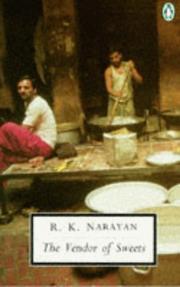
About Vendor of sweets
The Vendor of Sweets" by R.K. Narayan tells the story of Jagan, a devout Gandhian follower and successful sweet-shop owner in the fictional South Indian town of Malgudi. Jagan lives a life of strict principles, advocating for natural foods, simple living, and traditional values, often reminiscing about his late wife and his past involvement in the independence movement. His world is turned upside down when his estranged son, Mali, returns from America after three years, not with a degree as expected, but with a half-American, half-Korean woman named Grace, whom he introduces as his wife. Mali also brings with him ambitious, modern business ideas, specifically a plan to manufacture a machine that writes novels.
The core of the novel explores the profound generational and cultural clash between Jagan and Mali. Jagan, rooted in tradition, frugality, and spiritual contemplation, finds himself increasingly bewildered and alienated by Mali's Westernized lifestyle, his demand for money to fund his dubious business venture, and his casual disregard for Indian customs. Mali views his father's ways as outdated and restrictive, while Jagan struggles to reconcile his paternal love with his deep-seated moral objections to Mali's choices, particularly his relationship with Grace and his materialistic pursuits. The narrative beautifully captures Jagan's internal conflict, his attempts to understand and accommodate his son, and his eventual realization that their paths are irreconcilable.
Ultimately, the novel is a poignant exploration of detachment, the challenges of parenthood, and the inevitable tension between tradition and modernity. Jagan's journey culminates in a spiritual awakening, leading him to contemplate renouncing his worldly possessions and responsibilities. He seeks solace and a new purpose away from the complexities of his son's life, finding peace in a simpler existence connected to nature and spiritual pursuits, even as he leaves a small sum for Grace, acknowledging her difficult position. The story is a classic Narayan tale, rich in gentle irony, keen observation of human nature, and a deep understanding of Indian society.
Key takeaways
- Generational gaps often lead to profound misunderstandings and conflicts within families.
- True detachment can be a path to inner peace when faced with insoluble worldly problems.
- Materialistic pursuits, when unchecked by ethical considerations, can lead to disillusionment.
- Parental love, though strong, cannot always bridge fundamental differences in values and lifestyles.
- Embracing simplicity and traditional values can offer a refuge from the complexities of modern life.
- Cultural assimilation can create identity crises and complicate family dynamics.
- Sometimes, letting go is the only way to find your own path and inner harmony.
Key ideas at a glance
Generational conflict
- Generational gaps often lead to profound misunderstandings and conflicts within families.
Tradition vs
- Embracing simplicity and traditional values can offer a refuge from the complexities of modern life.
Detachment and renunciation
- True detachment can be a path to inner peace when faced with insoluble worldly problems.
Parenthood and duty
- Parental love, though strong, cannot always bridge fundamental differences in values and lifestyles.
Materialism vs
- Materialistic pursuits, when unchecked by ethical considerations, can lead to disillusionment.
Chapter summaries
Chapter 1: The Vendor's Routine
The chapter introduces Jagan, a successful sweet vendor in Malgudi, known for his Gandhian principles, simple living, and strict dietary habits. He meticulously weighs his food, avoids sugar in his tea, and believes in natural remedies. Jagan is a widower, constantly reminiscing about his late wife, Ambika, and her gentle nature. His son, Mali, is away in America, supposedly studying journalism, and Jagan often daydreams about Mali's return and their future together. He runs his sweet shop with a mix of traditional values and a shrewd business sense, often lecturing his customers and employees on health and spirituality. His cousin acts as his confidant and business manager, often bearing the brunt of Jagan's philosophical musings.
Chapter 2: Mali's Return and Grace
Mali returns from America, much to Jagan's surprise, as he had not informed his father of his impending arrival. Mali is accompanied by a young, foreign woman named Grace. Jagan, initially overjoyed by his son's return, is bewildered by Grace's presence and assumes she is Mali's wife. He struggles to understand their modern ways and the cultural differences. Grace, a Korean-American, tries to be polite and adapt to the new environment, but the language barrier and Jagan's traditional household create an immediate sense of awkwardness and misunderstanding. Jagan attempts to make Grace comfortable, offering her traditional Indian food and trying to communicate through gestures and broken English.
Chapter 3: The Novel-Writing Machine
Mali reveals the true purpose of his return: he has dropped out of college and has a grand business idea for a novel-writing machine. He explains the concept to a bewildered Jagan, who struggles to grasp the technological advancements and the commercial potential. Mali needs a substantial sum of money from his father to import the machines and set up the business. Jagan, deeply rooted in traditional values and suspicious of modern technology, is hesitant and confused. He tries to understand Mali's vision but finds it alien to his own philosophy of simple living and manual labor. The generation gap and cultural clash become increasingly evident in their conversations.
Chapter 4: Grace's Adaptation
Grace attempts to integrate into Jagan's household, trying to learn Indian customs and cooking. Jagan, in turn, tries to teach her about traditional Indian life, offering her vegetarian food and explaining his principles. However, Grace finds it challenging to adapt to the strict vegetarian diet and the lack of privacy. She also struggles with Mali's detached and often indifferent attitude towards her. Jagan observes her efforts with a mix of sympathy and bewilderment, often feeling a paternal affection for her that he struggles to express to his own son. The cultural differences create humorous and poignant moments as Grace navigates her new surroundings.
Chapter 5: Jagan's Growing Discomfort
Jagan's discomfort with Mali and Grace's lifestyle intensifies. He disapproves of their non-vegetarian food, their late-night habits, and their general disregard for his traditional ways. He finds evidence of meat and alcohol in the house, which deeply offends his Gandhian principles. Jagan feels increasingly alienated in his own home, retreating into his memories and his spiritual practices. He tries to subtly influence Mali and Grace towards his way of life, but his efforts are met with indifference or polite resistance. The gap between father and son widens, fueled by their contrasting worldviews and expectations.
Chapter 6: Financial Demands and Conflict
Mali's demands for money for the novel-writing machine business become more insistent. He pressures Jagan to sell some property or withdraw his savings. Jagan is torn between his paternal duty to support his son and his deep-seated reluctance to invest in a venture he neither understands nor approves of. He consults his cousin, who tries to mediate but finds Mali unyielding. The financial discussions become a source of significant tension, highlighting the clash between Mali's materialistic ambitions and Jagan's spiritual detachment and simple values. Jagan feels his control over his life and finances slipping away.
Chapter 7: Seeking Solace and the Sculptor
Feeling increasingly isolated and distressed by Mali's demands and lifestyle, Jagan seeks solace outside his home. He spends more time at the temple, where he encounters a sculptor carving an idol of the goddess Gayatri. Jagan is fascinated by the sculptor's dedication, detachment, and spiritual focus. He finds peace in the sculptor's presence and begins to contemplate a life of renunciation, inspired by the artist's simple existence and devotion. The sculptor becomes a silent mentor, offering Jagan an alternative path to escape his domestic woes and the pressures of the material world.
Chapter 8: Grace's Confession
A pivotal moment occurs when Grace confides in Jagan, revealing the truth about her relationship with Mali. She tearfully admits that they are not legally married, and that Mali had simply brought her along from America. Grace expresses her unhappiness, her loneliness, and her feeling of being trapped in a foreign land with a man who has grown distant. This revelation deeply shocks Jagan, shattering his illusions about his son and intensifying his disillusionment. He feels a profound sense of betrayal and pity for Grace, who he had come to view with a certain paternal affection. The truth forces Jagan to confront the reality of Mali's deceit.
Chapter 9: Jagan's Decision to Renounce
Overwhelmed by Mali's deceit, Grace's plight, and his own growing detachment from worldly affairs, Jagan makes a profound decision. He resolves to renounce his home, his business, and his responsibilities. Inspired by the sculptor's example and his own Gandhian ideals of simplicity, he decides to embrace a life of spiritual contemplation. He informs his cousin of his intention to leave the sweet shop and his home, entrusting the business to him. Jagan begins to prepare for his new life, shedding his material possessions and mentally distancing himself from the chaos of his domestic situation.
Chapter 10: The Garden House
Jagan begins his transition to a life of renunciation by moving to a small, dilapidated garden house near the temple, which he owns. He starts spending his days there, away from the constant friction with Mali and Grace. He finds peace in the solitude and the natural surroundings, dedicating his time to meditation and simple living. The garden house becomes his sanctuary, a symbolic step towards complete detachment. He continues to visit the temple and observe the sculptor, solidifying his resolve to follow a spiritual path, even as the affairs of his sweet shop and his son's business continue to unfold in the background.
Chapter 11: Mali's Downfall
While Jagan is settling into his new life of renunciation at the garden house, news reaches him through his cousin about Mali. Mali's novel-writing machine business has failed, and he has gotten into serious trouble with the law. He is arrested, possibly for smuggling or alcohol-related offenses, bringing shame and scandal to the family. Jagan, despite his attempts at detachment, feels a pang of paternal concern upon hearing the news. The cousin, who has been managing Jagan's affairs, is left to deal with the immediate fallout of Mali's predicament and inform Jagan of the unfortunate developments.
Chapter 12: Jagan's Final Act of Detachment
In the final chapter, Jagan, though committed to his path of renunciation, performs one last act of paternal responsibility and compassion. He instructs his cousin to arrange for Mali's bail, offering to pay the necessary amount, but makes it clear that he will not personally intervene or return to his former life. He also gives his cousin money to buy Grace a one-way ticket back to America, acknowledging her innocence and her desire to return home. Jagan then fully embraces his new life of detachment, joining the sculptor at the garden house, leaving the complexities of the world behind him, having made his final peace with his past and his family.
Full summary
Book Overview
"Vendor of Sweets," written by R.K. Narayan, is a poignant exploration of tradition versus modernity set in the fictional Indian town of Malgudi. The novel, published in 1975, centers around the life of Jagan, a sweet vendor who grapples with the cultural changes affecting his life and his son, Mali. Through Narayan's vivid storytelling, readers are introduced to a rich tapestry of characters and societal norms, showcasing the nuances of Indian life.
Main Content/Plot
The story follows Jagan, a widowed sweet-maker who prides himself on his traditional methods of preparing sweets. His life revolves around his shop, where he serves the local community, and his son, Mali, who embodies the aspirations of a new generation. Unlike his father, Mali is enamored with modernity, seeking to pursue a career as a writer and, later, diving into a business venture that Jagan finds questionable.
As the narrative unfolds, Jagan's deep-rooted values clash with Mali’s modern ideas. The tension escalates when Mali falls in love with a Westernized woman, leading him to abandon traditional paths. Jagan's attempts to understand his son’s choices and reconcile their differing worldviews form the crux of the plot. The story ultimately illustrates the generational divide and the inevitable evolution of societal values amidst personal and familial conflicts.
Key Themes
1. Tradition vs. Modernity: The central theme of the novel is the tension between traditional values and the encroaching influence of modernity. Jagan represents the old ways, while Mali symbolizes the new generation's aspirations. This conflict reflects broader societal changes occurring in India.
2. Parental Relationships: The father-son dynamic is pivotal in the narrative. Jagan's love for Mali is evident, yet his inability to understand his son's choices leads to a poignant exploration of generational gaps and parental expectations.
3. Cultural Identity: The novel delves into the complexities of cultural identity, particularly how globalization and modernization affect individual and collective identities within a traditional society.
4. The Role of Commerce: Jagan’s sweet shop serves as a microcosm of the local economy and social interactions, highlighting the importance of commerce in community life and the way it shapes personal relationships.
Important Takeaways
- Navigating Change: The novel illustrates the challenges of adapting to change while valuing one's heritage. Jagan’s struggle reflects
Memorable quotes
“A man who has a hundred rupees will want a thousand, and the man who has a thousand will want a lakh. It's a disease.”
“Conquer taste, and you will have conquered the self.”
“The essence of a happy life was to be found in not wanting anything.”
“A son is a son until he gets a wife; a daughter is a daughter all her life.”
“He felt like a fly caught in a spider's web, struggling to get free, but only getting more entangled.”
Characters
- JaganThe protagonist, a traditional sweet vendor and devout Gandhian.
- MaliJagan's son, who returns from America with Westernized ideas and a business venture.
- GraceThe American-Korean woman Mali brings back, introduced as his wife.
- The CousinJagan's practical and worldly relative who often acts as an intermediary.
- The SculptorA craftsman Jagan befriends, who represents traditional art and spiritual focus.
Themes
- Generational conflict
- Tradition vs. modernity
- Detachment and renunciation
- Parenthood and duty
- Materialism vs. spirituality
About RK Narayan
R.K. Narayan (1906-2001) was one of India's greatest English-language novelists, known for his simple yet profound storytelling set in the fictional South Indian town of Malgudi. He was a recipient of the Sahitya Akademi Award and the Padma Vibhushan. His notable works include "Swami and Friends," "The Guide," and "The Financial Expert." Narayan often explored themes of tradition versus modernity, family dynamics, and the search for meaning in ordinary lives, drawing inspiration from Indian culture and everyday experiences. He wrote "The Vendor of Sweets" as a continuation of his exploration of Malgudi's inhabitants and their struggles with changing times.
FAQ
What is Vendor of sweets about?
"The Vendor of Sweets" tells the story of Jagan, a traditional sweet-shop owner in Malgudi, whose life is disrupted by the return of his Westernized son, Mali. The novel explores the clash between Jagan's Gandhian values and Mali's materialistic ambitions, leading Jagan to a path of spiritual detachment and renunciation.
Is Vendor of sweets worth reading?
Yes, it is highly worth reading for its insightful portrayal of generational conflict, cultural clashes, and the search for spiritual peace. R.K. Narayan's gentle humor, keen observations of human nature, and vivid depiction of Indian life make it a compelling and thought-provoking read.
How does Vendor of sweets end?
Spoiler: Jagan decides to renounce his worldly possessions and responsibilities. He hands over his sweet shop to his cousin and retreats to a secluded grove with a sculptor, seeking a life of spiritual contemplation. He leaves a sum of money for Grace, Mali's abandoned partner, but leaves Mali to face his own consequences.
Who should read Vendor of sweets?
Readers interested in classic Indian literature, stories about family dynamics, generational conflict, and the clash between tradition and modernity will enjoy this book. It's also suitable for those who appreciate R.K. Narayan's characteristic gentle irony and philosophical depth.
How long does it take to read Vendor of sweets?
"The Vendor of Sweets" is a relatively short novel, typically taking about 3 to 5 hours to read, depending on your reading speed. At an average of 250 words per minute, it can be completed in approximately 4 hours.