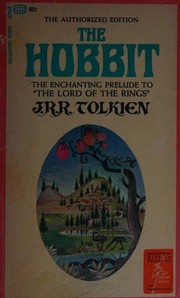
About The Hobbit
The Hobbit, or There and Back Again, chronicles the unexpected journey of Bilbo Baggins, a respectable, comfort-loving hobbit, who is swept into an epic adventure by the wizard Gandalf and a company of thirteen dwarves led by Thorin Oakenshield. Their quest is to reclaim the dwarves' ancestral treasure and homeland, the Lonely Mountain, from the fearsome dragon Smaug. Bilbo, initially reluctant and ill-suited for adventure, gradually discovers hidden depths of courage, cunning, and resourcefulness as he faces trolls, goblins, wargs, spiders, and the enigmatic creature Gollum, from whom he acquires a magical ring.
Bilbo's transformation from a timid, domestic hobbit into a hero capable of independent thought and action is central to the narrative. The book explores themes of heroism, greed, and the comforts of home versus the allure of the unknown. It serves as a foundational work for J.R.R. Tolkien's larger mythology of Middle-earth, introducing readers to its rich history, diverse races, and moral complexities, while maintaining a lighter, more whimsical tone than its sequel, The Lord of the Rings. The Hobbit is a timeless tale that celebrates the potential for greatness in the most unlikely of individuals and the profound impact of small acts of bravery.
Key takeaways
- Even the most ordinary individuals possess untapped courage and resourcefulness when faced with extraordinary circumstances.
- True heroism often involves acts of cunning and compassion, not just brute strength or martial prowess.
- The allure of wealth and power can corrupt, leading to conflict and suffering, even among allies.
- Home, comfort, and simple pleasures are valuable and worth returning to, but adventure can enrich one's understanding of them.
- Unexpected friendships and alliances can form in the face of common dangers, bridging divides between different peoples.
- Greed can lead to isolation and destruction, as exemplified by Smaug and later by Thorin's 'dragon-sickness'.
- The world is full of wonders and dangers beyond one's familiar surroundings, making exploration a path to self-discovery.
Key ideas at a glance
Heroism of the ordinary
- Even the most ordinary individuals possess untapped courage and resourcefulness when faced with extraordinary…
- True heroism often involves acts of cunning and compassion, not just brute strength or martial prowess.
Greed and its consequences
- Greed can lead to isolation and destruction, as exemplified by Smaug and later by Thorin's 'dragon-sickness'.
The comforts of home
- Home, comfort, and simple pleasures are valuable and worth returning to, but adventure can enrich one's understanding…
Adventure and self-discovery
- The world is full of wonders and dangers beyond one's familiar surroundings, making exploration a path to…
Good versus evil
- The allure of wealth and power can corrupt, leading to conflict and suffering, even among allies.
Friendship and loyalty
- Unexpected friendships and alliances can form in the face of common dangers, bridging divides between different peoples.
Chapter summaries
An Unexpected Party
Bilbo Baggins, a respectable hobbit, is reluctantly drawn into an adventure when the wizard Gandalf and thirteen dwarves, led by Thorin Oakenshield, arrive at his home. They plan to reclaim the dwarves' ancestral treasure and the Lonely Mountain from the dragon Smaug. Bilbo is appointed as the company's 'burglar,' much to his dismay and initial protest. The dwarves sing of their lost home and treasure, stirring a sense of adventure in Bilbo, despite his comfortable hobbit-hole life. Gandalf presents Thorin with a map and a key to the mountain's secret door, setting the stage for their perilous journey.
Roast Mutton
The company begins its journey, but Bilbo quickly proves to be an inexperienced adventurer. Sent to investigate a light, he stumbles upon three large, crude trolls: William, Bert, and Tom. Bilbo attempts to pickpocket William but is caught, leading to the capture of the dwarves one by one. Gandalf, arriving just in time, uses his voice to mimic the trolls, making them argue until the sun rises. Exposed to daylight, the trolls turn to stone. The company then discovers the trolls' cave, filled with treasure, and acquires useful swords and a dagger for Bilbo.
A Short Rest
After their encounter with the trolls, the company continues their journey towards the Misty Mountains. They seek refuge and guidance at Rivendell, the Last Homely House, home of the Elf-lord Elrond. Elrond provides them with food, rest, and identifies their newly acquired swords, Glamdring and Orcrist, as ancient elvish blades. He also deciphers the moon-letters on Thorin's map, revealing a crucial clue: the secret door to the Lonely Mountain can only be opened on Durin's Day, when the thrush knocks and the setting sun shines on the key-hole.
Over Hill and Under Hill
The company leaves Rivendell and begins to cross the treacherous Misty Mountains. During a fierce thunderstorm, they take shelter in what appears to be a dry cave. However, the cave turns out to be the front entrance to a vast goblin-town. The goblins capture the entire company, taking their ponies and supplies. They are brought before the Great Goblin, who interrogates them. Gandalf, having briefly disappeared, reappears in a flash of light and slays the Great Goblin, initiating a chaotic escape through the goblin tunnels.
Riddles in the Dark
During the frantic escape from the goblins, Bilbo is knocked unconscious and separated from the company. He awakens in the dark tunnels, disoriented, and discovers a mysterious gold ring. He then encounters Gollum, a creature living in the depths of the mountain, who challenges him to a game of riddles. If Bilbo wins, Gollum will show him the way out; if he loses, Gollum will eat him. Bilbo, by chance, asks 'What have I got in my pocket?', which Gollum cannot answer. Bilbo uses the invisibility granted by the ring to escape Gollum and the pursuing goblins.
Out of the Frying-Pan into the Fire
Bilbo, now invisible, manages to slip past the goblins and eventually reunites with the company. They are pursued by goblins and their allies, the Wargs (evil wolves). The company is forced to climb trees for safety, but the Wargs set the trees on fire, trapping them. Gandalf summons the Great Eagles of the Misty Mountains, who rescue the company from the burning forest, carrying them away from the immediate danger and further along their journey.
Queer Lodgings
The Eagles drop the company near the house of Beorn, a powerful skin-changer who can transform into a giant bear. Gandalf, using a clever strategy, introduces the dwarves to Beorn two at a time, to avoid overwhelming him. Beorn, initially suspicious, becomes a valuable ally after verifying their story. He provides them with food, shelter, and ponies for their journey to Mirkwood, warning them sternly about the dangers of the forest and the importance of staying on the path.
Flies and Spiders
The company enters the dark and enchanted Mirkwood Forest, where Gandalf leaves them. They are strictly warned not to stray from the narrow path. The journey through Mirkwood is long, oppressive, and disorienting. They run low on supplies and repeatedly try to leave the path, only to be thwarted by illusions and the forest's magic. Eventually, they are attacked by giant spiders. Bilbo, using his invisibility ring and his elvish dagger Sting, bravely saves the dwarves from the spiders, but they are subsequently captured by the Wood-elves.
Barrels Out of Bond
The Wood-elves imprison the dwarves in their king's dungeons, but Thorin refuses to reveal his quest or his reasons for being in the forest. Bilbo, invisible with the Ring, remains free and eventually discovers the elves' plan to transport empty wine barrels down the Forest River to Lake-town. He devises a daring escape plan: he hides each dwarf inside an empty barrel, seals them, and then pushes them into the river, floating them out of the Elvenking's realm and continuing their journey towards the Lonely Mountain.
A Warm Welcome
The company, still inside their barrels, floats down the Forest River and eventually reaches Lake-town, a settlement of Men built on stilts in Long Lake. The people of Lake-town, especially the Master, are excited by the arrival of Thorin, heir under the Mountain, believing his return signals the fulfillment of ancient prophecies and the return of prosperity. They provide the dwarves with a warm welcome, food, new clothes, and a boat, aiding them in their final approach to the Lonely Mountain.
On the Doorstep
The company finally reaches the Lonely Mountain. They spend days searching for the secret door described on Thorin's map, but their efforts are fruitless, and despair begins to set in. Bilbo, remembering Elrond's words about Durin's Day, waits patiently. As the last light of the setting sun on Durin's Day strikes a specific rock face, a keyhole is revealed. Thorin uses his key to open the hidden door, granting them access to the mountain's interior and Smaug's lair.
Inside Information
Bilbo, as the designated burglar, is sent alone into the dark tunnels of the Lonely Mountain. He descends into Smaug's vast lair, a cavern filled with immense piles of gold and treasure, with the dragon Smaug sleeping atop it. Bilbo bravely steals a large golden cup, which enrages Smaug upon awakening. The dragon emerges from the mountain in a fiery rage, searching for the thief. Bilbo returns to the dwarves, describing Smaug and, crucially, noticing a small, unprotected patch on the dragon's underside.
Not at Home
Smaug's rage traps the dwarves inside the mountain. Bilbo, showing increasing courage, returns to Smaug's lair to gather more information. He engages Smaug in a clever conversation, flattering the dragon while subtly trying to learn more about his weaknesses. Smaug, in his arrogance, boasts about his impenetrable scales, inadvertently revealing the bare patch on his underside that Bilbo had previously noticed. Smaug, suspecting the Lake-men's involvement, then flies off to attack Lake-town.
Fire and Water
Smaug descends upon Lake-town, unleashing his fiery wrath and causing widespread destruction. The people of Lake-town bravely fight back, but their arrows are useless against the dragon's scales. Bard the Bowman, a descendant of the ancient lords of Dale, rallies the remaining defenders. An old thrush, who overheard Bilbo's conversation with Smaug, relays the information about the dragon's weak spot to Bard. Bard, using his last black arrow, shoots Smaug directly in the bare patch, killing the dragon. Lake-town is destroyed, but its people survive.
The Gathering of the Clouds
With Smaug dead, the dwarves begin to reclaim their vast treasure within the Lonely Mountain. They fortify the main gate, anticipating visitors. Bard and the surviving Lake-men, along with the Elvenking's army (who had been tracking Smaug), arrive at the mountain to claim a share of the treasure as compensation for their losses and their aid. Thorin, consumed by dragon-sickness and greed, refuses to share the treasure, leading to a tense standoff and the threat of war.
A Thief in the Night
Bilbo, distressed by the impending conflict between dwarves, men, and elves, takes matters into his own hands. He secretly takes the Arkenstone, the most prized jewel of Thorin's house, and gives it to Bard and the Elvenking as a bargaining chip. He hopes this act will force Thorin to negotiate and prevent bloodshed. Gandalf reappears, approving of Bilbo's courageous and selfless action, which further enrages Thorin when he discovers the 'betrayal.'
The Clouds Burst
Thorin discovers Bilbo's 'betrayal' regarding the Arkenstone and is furious, threatening to throw Bilbo from the mountain. Just as the battle between the dwarves, men, and elves is about to commence, a vast army of Goblins and Wargs, led by Bolg (son of the Great Goblin), arrives, seeking revenge for the Great Goblin's death. Faced with a common, greater enemy, the three armies unite in the Battle of Five Armies, fighting fiercely against the goblins and Wargs.
The Return Journey
The Battle of Five Armies rages. Thorin, Fili, and Kili are mortally wounded in the fighting. The timely arrival of the Eagles and Beorn, who transforms into a giant bear, turns the tide, leading to the defeat of the goblin army. Before his death, Thorin reconciles with Bilbo, acknowledging his courage and friendship. Bilbo, having received a small but significant share of the treasure, begins his long journey home with Gandalf and Beorn, stopping for a period of rest and recovery in Rivendell.
The Last Stage
Bilbo and Gandalf continue their journey back to the Shire. They revisit the Trollshaws, where they unearth the gold buried by the trolls. Upon returning to the Shire, Bilbo finds his home, Bag End, being auctioned off, as he was presumed dead. He manages to reclaim his property and settles back into his quiet life, though he is forever changed by his adventures. He remains a respected, if eccentric, figure in the Shire, maintaining friendships with Gandalf and the Elves, and cherishing his memories and the Ring.
Full summary
Book Overview
"The Hobbit," written by J.R.R. Tolkien and published in 1937, is a fantasy novel that serves as a prelude to Tolkien's more extensive "The Lord of the Rings" trilogy. The story follows Bilbo Baggins, a hobbit who enjoys a quiet life in the Shire, as he embarks on an unexpected adventure that leads him to discover courage, friendship, and the complexities of good and evil.
Main Content/Plot
The novel begins with Bilbo Baggins, a comfortable and unadventurous hobbit, enjoying his peaceful life at Bag End. His world is turned upside down when the wizard Gandalf and thirteen dwarves, led by Thorin Oakenshield, arrive unannounced. They recruit Bilbo to be their "burglar" on a quest to reclaim the Lonely Mountain and its treasure from the dragon Smaug.
Initially reluctant, Bilbo is swept away on a journey that takes them through treacherous lands. They encounter trolls who capture them, elves in the woodland realms, giant spiders in Mirkwood, and eventually reach the Lonely Mountain. Along the way, Bilbo finds a magic ring that grants him invisibility, which proves invaluable during their escapades.
As the group confronts Smaug, Bilbo's cleverness and bravery shine through. He manages to steal a cup from the dragon, awakening its wrath. Smaug flies out to seek revenge on the nearby town of Lake-town, which he believes aided the dwarves. In the aftermath, the town's people rally to defend their home, leading to Smaug's defeat.
With the treasure now in their possession, tensions rise among the dwarves, elves, and men over the rightful claim to the gold. Thorin, now king under the mountain, becomes increasingly obsessed with the treasure. The situation escalates to the brink of war, but the arrival of goblins and wargs forces the factions to unite against a common enemy.
The story culminates in the Battle of the Five Armies, where Bilbo plays a crucial albeit understated role. In the end, Thorin is mortally wounded, and he reconciles with Bilbo before his death. Bilbo returns home to the Shire, forever changed by his experiences.
Key Themes
1. Courage and Personal Growth: Bilbo's journey from a reluctant participant to a courageous hero underscores the theme of personal transformation. His character
Memorable quotes
“In a hole in the ground there lived a hobbit. Not a nasty, dirty, wet hole, filled with the ends of worms and an oozy smell, nor yet a dry, bare, sandy hole with nothing in it to sit down on or to eat: it was a hobbit-hole, and that means comfort.”
“Go back to your books and your cooking! Make yourself comfortable and let us do the fighting!”
“I am looking for someone to share in an adventure that I am arranging, and it's very difficult to find anyone.”
“There is more in you of good than you know, child of the kindly West. Some courage and some wisdom, blended in measure. If more of us valued food and cheer and song above hoarded gold, it would be a merrier world.”
“Never laugh at live dragons, you fools!”
“It does not do to leave a live dragon out of your calculations, if you live near him.”
Characters
- Bilbo BagginsThe protagonist, a respectable hobbit who reluctantly embarks on an adventure and discovers his inner courage.
- GandalfA powerful wizard who orchestrates the quest, guiding and assisting Bilbo and the dwarves.
- Thorin OakenshieldThe proud and determined leader of the company of dwarves, seeking to reclaim his ancestral home and treasure.
- SmaugThe fearsome dragon who guards the vast treasure in the Lonely Mountain, the primary antagonist.
- GollumA wretched, cave-dwelling creature from whom Bilbo acquires the One Ring during a game of riddles.
- Bard the BowmanA grim but courageous archer from Lake-town, a descendant of Dale's lords, who ultimately slays Smaug.
- BeornA skin-changer who can transform into a great bear, offering aid and shelter to the company.
- ElrondThe wise and ancient Half-elven master of Rivendell, who provides refuge and counsel to the adventurers.
Themes
- Heroism of the ordinary
- Greed and its consequences
- The comforts of home
- Adventure and self-discovery
- Good versus evil
- Friendship and loyalty
About J.R.R Tolkien
J.R.R. Tolkien (John Ronald Reuel Tolkien) was an English writer, poet, philologist, and university professor, best known as the author of the classic high fantasy works The Hobbit and The Lord of the Rings. He was a professor of Anglo-Saxon at Oxford University and is widely regarded as the 'father' of modern fantasy literature. Tolkien initially wrote The Hobbit for his children, creating a rich mythology and world (Middle-earth) that would later be expanded upon in his more epic works. His deep knowledge of linguistics, mythology, and ancient literature profoundly influenced his creations.
FAQ
What is The Hobbit about?
The Hobbit is about Bilbo Baggins, a home-loving hobbit, who is recruited by the wizard Gandalf and a company of dwarves to reclaim their ancestral treasure and home in the Lonely Mountain from the dragon Smaug. It chronicles Bilbo's transformation from a timid individual into a resourceful hero as he faces various dangers and ultimately plays a pivotal role in the quest.
Is The Hobbit worth reading?
Yes, The Hobbit is highly worth reading. It's a foundational work of fantasy literature, offering a captivating adventure story with memorable characters, rich world-building, and enduring themes of courage, greed, and the importance of home. Its accessible style makes it enjoyable for readers of all ages, and it serves as an excellent introduction to Tolkien's Middle-earth.
How does The Hobbit end?
Spoiler: The Hobbit ends with the dragon Smaug being slain by Bard the Bowman. This leads to a conflict, the Battle of the Five Armies, where dwarves, elves, and men unite against goblins and wargs. Thorin Oakenshield is mortally wounded but reconciles with Bilbo before dying. Bilbo returns to the Shire, a changed hobbit, having gained wisdom, courage, and a small share of treasure, content to be home.
Who should read The Hobbit?
The Hobbit is suitable for a wide range of readers. It's an excellent choice for young adults and children due to its engaging narrative and clear moral lessons. Adults who enjoy fantasy, adventure, or classic literature will also find it deeply rewarding. It's also a perfect starting point for anyone interested in J.R.R. Tolkien's Middle-earth before delving into The Lord of the Rings.
How long does it take to read The Hobbit?
On average, it takes approximately 6-7 hours to read The Hobbit. This estimate is based on an average reading speed of 250 words per minute and the book's typical length of around 95,000 words. Individual reading times may vary depending on reading speed and engagement with the text.