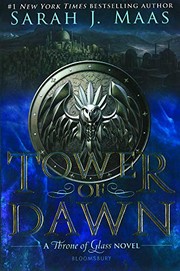
Tower of Dawn
In 60 seconds
Chaol Westfall arrives in Antica in a wheelchair, sent by Dorian to buy an army and beg the Torre Cesme's healers to fix his shattered spine. Healer Yrene Towers, who hates Adarlan, is forced to take his case and finds Valg poison laced through his spinal cord. While Chaol fights for the khagan's armies and Yrene burns the darkness out of him inch by inch, Nesryn Faliq soars with Prince Sartaq and uncovers Valg infiltration in the Southern Continent. A possessed princess nearly opens the door to invasion; Yrene exorcises her, and the grateful khagan pledges his armies. Chaol walks again, marries Yrene, and sails north to the war.
Before you start
Why it matters
This is the book that gives Chaol Westfall his due: a man defined by duty learns he is allowed to be broken, and a healer taught to hate Adarlan learns the enemy is the Valg, not every soldier. It matters for readers who want fantasy where healing is as hard-fought as any battle, and where romance grows out of pain honestly examined. If you loved Aelin's world but craved the ground-level cost of the war, this is your entry point.
Spoilers ahead
The story
- 1
Act 1
The God-City
Chaol Westfall, former Captain of the Guard of Adarlan, arrives by ship at Antica, the capital of the Southern Continent, carried in a wheeled chair due to his spinal injury. He is accompanied by Nesryn Faliq and a healer named Yrene Towers, whom he does not yet recognize from their past encounter. They are greeted by the khagan's soldiers and taken to the Torre Cesme. In the Torre Cesme infirmary, Yrene Towers examines Chaol and declares his injury beyond her current skill, stating, 'I cannot heal this. I am sorry.' She does not reveal that she knows him from Innish. Yrene, a healer from Fenharrow, harbors deep hatred for Adarlan and its soldiers due to her mother's murder by one during the conquest of Fenharrow. Yrene initially refuses to heal Chaol. The Healer-on-Duty, Hafiza, compels her to take it, seeing a test and a chance to heal old wounds. Chaol meets Hasar, a princess of the khaganate, who mocks his wheelchair by calling it 'a little throne' and challenges him to a game of chess. He accepts, using the game to begin political maneuvering. Yrene begins the first healing session on Chaol's spine in the Torre library. She uses her magic to sense the injury and tells him, 'The damage is ... considerable. The spinal cord was severed, but not cleanly.' The sessions are tense, cold, clinical, often painful. During a healing session, Yrene demands Chaol tell her how he was injured. He reveals he was fighting the King of Adarlan when the glass castle shattered, and he was struck by falling debris while protecting someone. Yrene uses magic to enter his body and finds that his spine is not just broken but also laced with a dark, oily substance—the same Valg-infused poison that came from the wyrdkey in the glass castle.
- 2
Act 2
The Mountain
Nesryn Faliq explores Antica and meets Sartaq, a khaganate prince and commander of the rukhin. He takes her to his aerie and introduces her to his ruk, Kadara. 'She likes you. She says you have a warrior's heart,' he tells her, and a bond forms between rider and rider-to-be. Sartaq takes Nesryn on a long flight over the Tavan Mountains to a hidden aerie of the rukhin. He reveals he suspects a traitor among his siblings and asks for her help investigating. Nesryn and Sartaq fly on his ruk, Kadara, to the remote mountain home of the rukshin, the Aerie, to investigate rumors of dark creatures in the mountains. In the Torre, Yrene discovers the depth of Chaol's spinal injury is intertwined with a dark, lingering magic from the Valg. 'There is a darkness in you, Lord Westfall,' she whispers, and begins the brutal work: the poison is sentient, it attacks her magic, and she must burn it out layer by layer. Yrene uses a powerful healing to pull the Valg darkness from Chaol's spine. During the process, she sees his memories and he sees hers, including the night she met Aelin Galathynius in Innish. Yrene shares her past with Chaol: she fled Fenharrow, was saved by a stranger in a desert who gave her money and told her to go to the Torre, and she later discovered that stranger was Aelin Galathynius. 'She gave me a purse of gold and told me to go to Antica. To learn to heal.' Chaol regains feeling in his legs and takes his first steps with Yrene's support. He says, 'I can feel my toes. I can feel ... everything.' Chaol and Yrene share their first kiss in the Torre library after a healing session. He pulls back, conflicted, and she says, 'I am not afraid of you, Chaol Westfall.' Chaol and Yrene make love for the first time in his chambers. Afterward, she traces the scars on his back and he tells her, 'I love you. I have loved you from the moment I saw you in Innish.'
- 3
Act 3
Spiders and Courts
Nesryn and Sartaq investigate a ruined watchtower in the mountains and find evidence that the Valg have already infiltrated the Southern Continent. They discover a dead rukhin scout with a black ring on his finger. At the Aerie, Nesryn and Sartaq discover a nest of corpse-like creatures called kharankui, or stygian spiders, which are ancient, intelligent creatures that live in mountain nests and are servants of the Valg. The khagan's court holds a grand dinner where Chaol formally requests military aid against Erawan. The khagan refuses, stating, 'The wars of the north are not our wars.' Chaol offers the khagan a trade agreement and military alliance in exchange for the Southern Continent's aid against the Valg in Erilea. Duva, the pregnant khaganate princess, collapses at the dinner. Yrene examines her and discovers a Valg demon is possessing the unborn child, whispering to Duva and controlling her. Duva is revealed to be Princess Duva, the Khagan's daughter, now a host for a Valg princess, working with the Valg, having been secretly compromised and used to open the way for a Valg invasion of the Southern Continent. Yrene performs an exorcism on Duva in the Torre Cesme, drawing the Valg demon out of her womb. Chaol holds Duva down while Yrene chants the words of banishment, and the demon emerges as a black, writhing mass. Chaol, using his wheelchair and sword, saves Yrene from the Valg princess, fighting her off in the library. The khagan, grateful for saving his daughter, agrees to send his armies north. He tells Chaol, 'You have given me back my child. I will give you my armies.' The Khagan agrees to send his armies north to aid the war, fulfilling Chaol's diplomatic mission.
- 4
Act 4
Vows and the Voyage North
Chaol proposes marriage to Yrene in the Torre gardens. He says, 'Marry me. Not because of the war, or because we might die, but because I want to spend every day of my life with you.' She accepts. Chaol and Yrene marry in a small ceremony in the Torre Cesme, witnessed by Nesryn, Sartaq, and the healers. Yrene wears a crown of white flowers, and Chaol stands without aid for the entire ceremony. Nesryn and Sartaq declare their love for each other atop the Tavan Mountains. Sartaq says, 'I would fly to the ends of the earth for you, Nesryn Faliq.' She replies, 'Then let's fly together.' Nesryn accepts Sartaq's proposal and agrees to remain with him in the Southern Continent as his bride, though she plans to continue fighting alongside him. Sartaq volunteers to lead the southern forces to war, with Nesryn at his side. The khaganate army begins its march north, with Sartaq leading the rukhin and Hasar commanding the ground forces. Chaol, Yrene, Nesryn, Sartaq, and the Khagan's armies depart Antica on a fleet of ships, sailing north to join the war in Erilea. Chaol rides with Yrene in a wagon, his legs still too weak for long marches. Yrene reveals she is pregnant to Chaol as they travel north. She says, 'I am carrying our child. A little life, born of all this darkness.' Chaol weeps with joy. The army reaches the northern edge of the continent and sees the smoke of war on the horizon. The fleet sails through the narrow Strait of the Red Desert, with Chaol standing on the deck, no longer in his wheelchair, looking toward the coming war. Chaol tells Yrene, 'We are coming, Aelin. Hold on.' The book ends with them preparing to join the battle in the north.
Who's who
Characters
- Chaol WestfallAdarlan's former Captain of the Guard, paralyzed and sent south to buy an army. He must trade pride for help, learn he is 'allowed to be broken,' and walks out of Antica a husband, an ambassador, and a man again.
- Yrene TowersA healer from Fenharrow whose mother was murdered by Adarlan's soldiers, forced to treat the enemy she hates. She burns sentient Valg poison from Chaol's spine, exorcises a princess, and finds love where she expected only bitterness.
- Nesryn FaliqChaol's companion and a soldier who finds her own path in Antica. She bonds with Prince Sartaq and his ruk Kadara, uncovers the Valg infiltration, and chooses a new life in the south without giving up the fight.
- SartaqA prince of the khaganate and commander of the rukhin, who suspects a traitor among his siblings. He investigates the mountains with Nesryn, falls in love, and volunteers to lead the southern forces to war.
- HasarA sharp-tongued princess who mocks Chaol's 'little throne' of a wheelchair before becoming an ally against the Valg. She commands the khaganate's ground forces on the march north.
- HafizaThe Healer-on-Duty who compels Yrene to take Chaol's case, seeing a test and a chance to heal old wounds alongside the spine.
- DuvaThe pregnant khaganate princess whose collapse at a grand dinner reveals a Valg demon possessing her unborn child. Saved by Yrene's exorcism, she becomes the reason her father pledges his armies.
- The KhaganRuler of the Southern Continent, who first refuses Chaol's plea with 'The wars of the north are not our wars' and then, his daughter saved, gives Chaol his armies.
What it's really about
Themes
Brokenness is not monstrosity
Chaol arrives believing his ruined spine makes him useless, even monstrous, and Yrene's sessions are as much argument as medicine. She tells him plainly, 'You are not a burden. You are not a monster. You are a man, and you are allowed to be broken.' The healing that follows is slow, painful, and paid for layer by layer, because the poison in him is real and so is the shame. The book's point: recovery is not a return to who you were but the harder work of deciding who you are allowed to become.
Hate inherited, hate unlearned
Yrene's mother was murdered by an Adarlan soldier during the conquest of Fenharrow, so she refuses to heal Adarlan's Captain of the Guard. Hafiza forces the case on her, and the memories Yrene shares with Chaol, including the stranger who saved her in the desert and turned out to be Aelin Galathynius, complicate every easy category of enemy and ally. The book's point: inherited hatred is a wound like any other, and healing it requires touching the person you swore never to touch.
Healing as warfare
The most dangerous battles in this book happen in an infirmary and a library. Yrene's magic finds a sentient Valg poison that attacks her as she works, and the exorcism of Duva ends with Chaol defending Yrene with his wheelchair and sword. The book's point: in this world, mending a body can demand more courage than any battlefield, and the healer is a combatant.
Diplomacy bought with deeds
Chaol's mission fails the conventional way: the khagan refuses, saying 'The wars of the north are not our wars.' What changes the ruler's mind is not a treaty but an exorcism that saves his daughter and exposes the invasion being opened from within. Nesryn and Sartaq's discovery of the dead scout with the black ring proves the threat is already southern. The book's point: alliances are earned by proving the danger is shared, not by asking for favors.
Love chosen in full knowledge
Both couples commit knowing exactly what war awaits. Chaol insists his proposal is 'not because of the war, or because we might die,' and Nesryn answers Sartaq's vow with 'Then let's fly together,' keeping her sword even as she accepts being his bride. The book's point: love declared on the edge of catastrophe counts double, because it is chosen with eyes open.
Look closer
Symbols
- The wheelchair
- It begins as Chaol's prison and Hasar's joke, 'a little throne,' a symbol of everything he has lost. By the wedding he stands without aid for the whole ceremony, and on the deck of the ship north the chair is gone entirely. Its disappearance tracks his reclamation of himself.
- The Valg poison in the spine
- The dark, oily substance lacing Chaol's severed cord is corruption hidden inside injury, sentient and attacking. Burning it out layer by layer mirrors the book's deeper argument: you cannot heal a person by treating only the visible wound.
- The black ring
- Found on a dead rukhin scout in a ruined watchtower, the ring is quiet proof that the Valg war has crossed into the Southern Continent. It turns a distant northern war into a local emergency and flips the khagan's calculus.
- The stygian spiders' nest
- The kharankui nesting at the Aerie itself, ancient servants of the Valg, stand for corruption nesting inside a trusted stronghold. The rukhin's own mountain home is compromised, just as Duva, a princess of the blood, hosts a Valg princess.
- Yrene's purse of gold
- The money Aelin Galathynius gave a desperate refugee in the desert, with the instruction to go to Antica and learn to heal, becomes the chain that saves Chaol, Duva, and an empire's army. One small kindness, years later, turns the war.
Spoilers
Ending explained
The ending is a door opening, not a door closing. Chaol left Adarlan broken in body and spirit; he leaves Antica standing on a ship's deck through the Strait of the Red Desert, a husband, a father-to-be, and the man who secured an entire continent's armies for Aelin's war. Some readers will read the final line, 'We are coming, Aelin. Hold on,' as pure setup, a bridge to the series finale rather than a resolution in itself. Others will argue the real resolution is internal: the man who once measured himself by duty and control has learned to accept help, love, and limitation, and the wheelchair left behind is the proof. The pregnancy, 'a little life, born of all this darkness,' lands because it insists that something new and good can grow out of the worst year of their lives. It works because the book never cheapens the cost; the healing was slow, the exorcism nearly killed them, and the armies were earned, not gifted.
For class or book club
Discussion questions
- 1.Yrene is compelled to heal a man she has every reason to hate; does the book earn her change of heart, or does romance soften a political and moral problem it should keep sharp?
- 2.The novel treats healing as combat, with sentient poison that attacks the healer. What does it mean for a fantasy series to make its climax an infirmary scene rather than a battlefield?
- 3.The khagan refuses aid until his own daughter is saved. Is the book endorsing enlightened self-interest as the only reliable basis for alliance, and what does that say about Chaol's original diplomatic mission?
Worth remembering
Best lines
“I cannot heal this. I am sorry.”
“You are not a burden. You are not a monster. You are a man, and you are allowed to be broken.”
“There is a darkness in you, Lord Westfall.”
“Marry me. Not because of the war, or because we might die, but because I want to spend every day of my life with you.”
A fair critique
Where it falls short
The pacing splits its attention: Chaol and Yrene's healing arc and Nesryn and Sartaq's mountain investigation run on separate tracks, and readers invested in one may find the other a detour. The central romance resolves a deep political hatred, a Fenharrow healer loving Adarlan's Captain of the Guard, with relative speed once the memories start flowing, which can feel too neat for the wound involved. The khagan's refusal flips to total commitment after a single rescue, and the Valg infiltration is discovered largely through convenient finds like the ringed corpse. Readers wanting Aelin on the page will find her present only in memory and mention.
In one sentence
A paralyzed soldier and a healer raised on hatred burn the darkness out of each other, and the empire that owed them nothing marches north to fight.
Is it for you?
Who should read it
Readers of the Throne of Glass series who need Chaol's story between Empire of Storms and Kingdom of Ash, especially anyone drawn to healing arcs and slow-burn romance. Also for fantasy fans who like their battles fought in infirmaries as well as on mountains.
4 questions
Quick quiz: how well do you know Tower of Dawn?
0 of 4 answered
FAQ
What is Tower of Dawn about?
Tower of Dawn follows Chaol Westfall, who travels to the Southern Continent to seek healing for his paralyzed legs. There, he meets Yrene Towers, a powerful healer, and together they uncover a Valg threat within the Khagan's court. The book also details Nesryn Faliq's mission to secure an alliance with the legendary ruk riders, all while navigating political intrigue and preparing for a continent-wide war.
Is Tower of Dawn worth reading?
Yes, Tower of Dawn is crucial for understanding the full scope of the Throne of Glass series. While it focuses on side characters, it provides essential world-building, introduces vital allies, and reveals key information about the Valg and Maeve that are critical for the final book. It's a journey of healing, self-discovery, and alliance-building that enriches the overall narrative.
How does Tower of Dawn end?
Spoiler: Tower of Dawn ends with Yrene fully healing Chaol's legs, allowing him to walk again, and their subsequent marriage. The Southern Continent, led by the Khagan and his children, forms a crucial alliance with Terrasen against Erawan. Nesryn and Sartaq also solidify their relationship and prepare to lead the ruk riders into battle. A significant revelation about Maeve's true nature and her connection to the Valg is also made.
Who should read Tower of Dawn?
Readers who are invested in the Throne of Glass series should definitely read Tower of Dawn. It's essential for understanding the full context of 'Kingdom of Ash' and provides closure and development for Chaol Westfall's character. Fans of character-driven stories, political intrigue, and slow-burn romance within a high-fantasy setting will also enjoy it.
How long does it take to read Tower of Dawn?
Tower of Dawn is a substantial book, typically taking around 13-15 hours to read for an average reader. At a pace of approximately 250 words per minute, and with an estimated word count of over 200,000 words, it requires a dedicated reading commitment to complete.
Who wrote Tower of Dawn?
Tower of Dawn was written by Sarah J Maas and first published in 2017.
What genre is Tower of Dawn?
Tower of Dawn is listed under Fantasy.
More Fantasy summariesWhere is Tower of Dawn set?
Tower of Dawn is set in Antica.
How many pages is Tower of Dawn?
Tower of Dawn is about 680 pages long (the median page count across its editions, per Open Library).