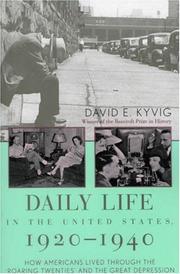
About Daily Life in the United States, 1920–1940
Daily Life in the United States, 1920–1940" by David E. Kyvig offers a comprehensive social history of a pivotal two decades in American life, spanning the economic exuberance of the Roaring Twenties and the profound hardship of the Great Depression. Kyvig meticulously details how ordinary Americans experienced the rapid technological advancements, shifting social mores, and dramatic economic fluctuations of the period. The book explores the rise of consumer culture, the impact of new inventions like the automobile and radio on daily routines, the challenges and adaptations brought by Prohibition, and the evolving roles of women and families. It paints a vivid picture of a nation grappling with modernity, prosperity, and ultimately, unprecedented economic collapse.
Kyvig's main argument centers on the resilience and adaptability of the American populace in the face of immense change. He illustrates how the seemingly disparate experiences of the 1920s boom and the 1930s bust were interconnected, shaping a distinct American identity and laying the groundwork for future social and governmental structures. The book matters because it moves beyond grand political narratives to illuminate the lived experiences of individuals, providing insight into how economic forces, cultural trends, and government policies translated into tangible changes in homes, workplaces, and communities across the country. It serves as a crucial resource for understanding the foundations of modern American society and the enduring legacy of this transformative era.
Key takeaways
- The 1920s saw a dramatic rise in consumer culture, fueled by new technologies and advertising, fundamentally altering American daily life.
- Prohibition significantly impacted social customs and daily routines, leading to widespread illicit activities and a shift in public entertainment.
- The Great Depression forced profound adaptations in family life, work habits, and community support systems across all social strata.
- New technologies like radio and automobiles reshaped communication, leisure, and transportation, connecting Americans in unprecedented ways.
- Government intervention, particularly through the New Deal, began to play a much larger role in the daily lives and economic security of citizens.
- Despite economic hardship, Americans demonstrated remarkable resilience and creativity in adapting to the challenges of the 1930s.
- The period laid the groundwork for many aspects of modern American society, from consumer expectations to the role of government.
Key ideas at a glance
Consumer Culture Rise
- The 1920s saw a dramatic rise in consumer culture, fueled by new technologies and advertising, fundamentally altering…
Social Modernization
- Prohibition significantly impacted social customs and daily routines, leading to widespread illicit activities and a…
- The Great Depression forced profound adaptations in family life, work habits, and community support systems across all…
Government's Expanding Role
- Government intervention, particularly through the New Deal, began to play a much larger role in the daily lives and…
- The period laid the groundwork for many aspects of modern American society, from consumer expectations to the role of…
Technological Transformation
- New technologies like radio and automobiles reshaped communication, leisure, and transportation, connecting Americans…
American Resilience
- Despite economic hardship, Americans demonstrated remarkable resilience and creativity in adapting to the challenges of…
Chapter summaries
Introduction: The American Standard of Living
This introductory chapter sets the stage for understanding daily life in the United States between 1920 and 1940. Kyvig introduces the concept of the 'American standard of living' and how it evolved, was pursued, and was challenged during this tumultuous period. He outlines the major themes that will be explored, including the rise of consumer culture, technological advancements, the impact of the Great Depression, and the changing role of government. The chapter establishes the framework for analyzing the profound social, economic, and cultural transformations that reshaped the lives of ordinary Americans, from the prosperity of the Roaring Twenties to the hardships of the 1930s.
The New Economy and the Consumer
Kyvig delves into the economic boom of the 1920s, focusing on the emergence of a mass consumer society. This chapter details the rise of new industries, mass production techniques like the assembly line, and the proliferation of new consumer goods such as automobiles, radios, refrigerators, and washing machines. It explores the role of advertising in shaping desires and the widespread adoption of installment buying, which allowed more Americans to acquire these products. The chapter highlights how these economic changes fundamentally altered daily routines, leisure activities, and aspirations, creating a culture centered on acquisition and modern conveniences.
Work and Leisure
This chapter examines the significant changes in the American workplace and the growing importance of leisure time. Kyvig discusses the decline of agricultural labor and the rise of industrial and white-collar jobs, particularly for women in clerical and service roles. He explores the impact of scientific management and efficiency on factory work, as well as the increasing standardization of the workweek. Concurrently, the chapter details the expansion of leisure activities, from spectator sports like baseball and boxing to the burgeoning popularity of motion pictures, dance halls, and amusement parks, illustrating how Americans sought entertainment and escape from daily routines.
Family and Home
Kyvig explores the transformations within the American family unit and domestic life during this period. The chapter discusses changing gender roles, particularly the 'new woman' and her increasing presence in public life and the workforce, alongside evolving expectations for marriage and parenting. It examines the impact of new household technologies, such as electric appliances, on domestic labor and the ideal of the modern home. The chapter also touches upon shifts in family size, living arrangements, and the challenges faced by families adapting to rapid social and economic changes, including the stresses of urbanization and consumer pressures.
Community and Mobility
This chapter focuses on how American communities were reshaped by increased mobility and urbanization. Kyvig details the profound impact of the automobile, which not only facilitated personal travel but also led to the growth of suburbs, the decline of small-town isolation, and the development of new infrastructure like highways and gas stations. He discusses internal migration patterns, including the Great Migration of African Americans to northern cities and the movement from rural areas to urban centers. The chapter illustrates how these shifts altered social interactions, local economies, and the very fabric of community life across the nation.
Culture and Communication
Kyvig examines the explosion of mass media and its role in shaping a national culture. This chapter details the rise of radio as a dominant form of entertainment and information, connecting disparate communities and fostering a shared cultural experience through programs, news, and music. It also covers the continued influence of newspapers and magazines, which expanded their reach and content, contributing to national trends and public discourse. The chapter explores how these communication technologies disseminated popular culture, fads, and ideas, creating a more interconnected and culturally unified American society, despite regional differences.
The Great Depression and Daily Life
This pivotal chapter shifts focus to the devastating impact of the Great Depression on the daily lives of Americans. Kyvig vividly describes the widespread unemployment, poverty, and economic insecurity that gripped the nation. He details the struggles of families facing eviction, hunger, and the psychological toll of joblessness. The chapter covers the rise of Hoovervilles, breadlines, and the desperate measures people took to survive, such as migration in search of work. It illustrates how the economic crisis shattered the 'American standard of living' for millions and forced a reevaluation of individual responsibility versus collective welfare.
Government and Society in the Thirties
Kyvig explores the transformative role of the federal government in response to the Great Depression, particularly through Franklin D. Roosevelt's New Deal. This chapter details the implementation of various relief, recovery, and reform programs and their direct impact on daily life. It discusses initiatives like the Civilian Conservation Corps (CCC), the Works Progress Administration (WPA), and the Social Security Act, explaining how these programs provided jobs, income, and a new safety net for millions. The chapter highlights the changing relationship between citizens and the state, as government intervention became an accepted and often necessary part of American society.
Leisure and Culture in the Thirties
Despite the economic hardships of the Great Depression, this chapter reveals how Americans continued to seek and find forms of leisure and cultural expression. Kyvig discusses the enduring popularity of movies as an escape from reality, with Hollywood producing musicals, comedies, and dramas that offered temporary relief. Radio remained a vital source of entertainment and news, with popular shows and fireside chats. The chapter also covers the growth of public recreation, government-sponsored arts projects (like the Federal Art Project), and the development of new forms of music and literature that often reflected the era's struggles and hopes, demonstrating resilience and creativity amidst adversity.
Conclusion: A New America
In the concluding chapter, Kyvig synthesizes the profound changes that occurred in American daily life between 1920 and 1940. He summarizes how the period began with an optimistic embrace of consumerism and technological progress, only to be dramatically reshaped by the economic catastrophe of the Great Depression and the subsequent expansion of government's role. The chapter emphasizes the shift from an era of individualistic pursuit of the 'American standard of living' to one where collective action and federal intervention became crucial. It reflects on how these two decades fundamentally altered American society, setting the stage for the nation's entry into World War II and the post-war era.
Full summary
"Daily Life in the United States, 1920–1940" by David E. Kyvig explores the transformative social, economic, and cultural landscape of America between the World Wars. This period was marked by significant change, including the rise of consumerism, shifts in gender roles, and the impact of the Great Depression.
Kyvig delves into the everyday experiences of Americans, highlighting how the Roaring Twenties fostered a spirit of optimism, while the 1930s ushered in hardship. Themes of technological advancement, urbanization, and the struggle for social justice are prevalent, as families grapple with evolving dynamics.
Key elements include the influences of jazz music, the emergence of radio, and the proliferation of automobiles, which reshaped American life. Kyvig also examines relationships across class and race, emphasizing how these dynamics influenced societal structures.
The book offers critical insights into resilience and adaptation in face of adversity, revealing how daily lif...
Themes
- Consumer Culture Rise
- Economic Boom and Bust
- Social Modernization
- Government's Expanding Role
- Technological Transformation
- American Resilience
About David E. Kyvig
David E. Kyvig is an esteemed American historian, known for his expertise in 20th-century U.S. history and constitutional law. He served as a Professor of History at the University of Akron and has authored several influential books, including "Repealing National Prohibition" and "Explicit and Authentic Acts: Amending the U.S. Constitution, 1776-1995." Kyvig wrote "Daily Life in the United States, 1920–1940" to provide a comprehensive social history, illuminating the everyday experiences of Americans during a period of dramatic economic and cultural transformation, moving beyond traditional political narratives.
FAQ
What is Daily Life in the United States, 1920–1940 about?
"Daily Life in the United States, 1920–1940" by David E. Kyvig is a social history exploring how ordinary Americans experienced the two decades between the world wars. It covers the economic prosperity of the 1920s, the cultural shifts of the Jazz Age, the impact of Prohibition, and the profound challenges brought by the Great Depression and the New Deal. The book details changes in work, family life, leisure, and technology.
Is Daily Life in the United States, 1920–1940 worth reading?
Yes, it is highly recommended for anyone interested in American social history. Kyvig provides a detailed and accessible account of a transformative era, moving beyond political narratives to focus on the lived experiences of people. It offers valuable insights into the origins of modern American consumer culture, the resilience during economic crisis, and the evolving role of government.
How does Daily Life in the United States, 1920–1940 end?
Spoiler: The book concludes by summarizing the lasting legacies of the 1920s and 1930s on American society. It emphasizes how the experiences of prosperity, hardship, and government intervention fundamentally reshaped the nation, setting the stage for the challenges of World War II and the post-war era. It highlights the resilience and adaptability of the American people.
Who should read Daily Life in the United States, 1920–1940?
This book is ideal for students of American history, general readers interested in the interwar period, and anyone curious about the social and cultural changes that shaped 20th-century America. It offers a rich understanding of how economic and political events translated into daily realities for individuals and families.
How long does it take to read Daily Life in the United States, 1920–1940?
Given its typical length for an academic history book (around 300-350 pages), it would likely take an average reader approximately 6-8 hours to read "Daily Life in the United States, 1920–1940" at a comfortable pace.