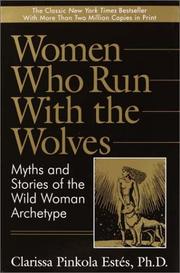
About Women who run with wolves
Clarissa Pinkola Estés's "Women Who Run With Wolves" is a seminal work of Jungian psychology and mythology, exploring the archetype of the "Wild Woman" within the female psyche. Estés argues that modern women have become disconnected from their innate, instinctual, and untamed selves due to societal conditioning, cultural pressures, and trauma. Through a rich tapestry of ancient myths, fairy tales, folk tales, and cross-cultural stories—including "Bluebeard," "The Handless Maiden," and "Vasalisa the Wise"—she provides psychoanalytic interpretations that illuminate the path back to this powerful, intuitive, and creative inner self.
The book serves as a guide for women to reclaim their primal essence, which Estés describes as the source of vitality, creativity, and deep knowing. Each story is dissected to reveal its symbolic meaning, offering insights into various aspects of the female experience, such as initiation, loss, survival, transformation, and the cycles of life and death. Estés emphasizes the importance of listening to one's inner voice, honoring one's instincts, and nurturing the wild, untamed spirit that resides within every woman. It matters because it offers a profound framework for psychological and spiritual healing, empowering women to navigate the challenges of life with resilience, authenticity, and a renewed sense of purpose.
Key takeaways
- Reconnect with your instinctual nature to access deeper wisdom and creativity.
- Understand that societal conditioning can suppress the innate "Wild Woman" archetype.
- Utilize ancient myths and fairy tales as maps for psychological and spiritual healing.
- Embrace the cycles of life, death, and rebirth as essential for personal transformation.
- Cultivate a strong inner voice and trust your intuition to guide your decisions.
- Recognize and integrate the shadow aspects of the self for wholeness and empowerment.
- Find strength and resilience in the face of adversity by drawing on your primal self.
Key ideas at a glance
Wild Woman Archetype
- Understand that societal conditioning can suppress the innate "Wild Woman" archetype.
Instinctual Nature
- Reconnect with your instinctual nature to access deeper wisdom and creativity.
Psychological Healing
- Utilize ancient myths and fairy tales as maps for psychological and spiritual healing.
Mythology & Storytelling
- Embrace the cycles of life, death, and rebirth as essential for personal transformation.
Female Empowerment
- Recognize and integrate the shadow aspects of the self for wholeness and empowerment.
Shadow Work
- Cultivate a strong inner voice and trust your intuition to guide your decisions.
Chapter summaries
The Howl: Resurrection of the Wild Woman
This introductory chapter sets the stage for the entire book, introducing the concept of the Wild Woman archetype. Estes explains that the Wild Woman represents the instinctual, soulful, and ancient nature of women, which has been suppressed by societal pressures and cultural conditioning. She emphasizes the importance of reconnecting with this primal self for psychological and spiritual well-being, asserting that this connection is vital for creativity, intuition, and authentic living. The chapter outlines the book's purpose: to guide women back to their innate wildness through myths, fairy tales, and cross-cultural stories.
Stalking the Intruder: The Beginning Initiation
Through the tale of 'Bluebeard,' Estes explores the theme of the naive psyche encountering destructive forces, both external and internal. The story illustrates how women, often conditioned to be compliant, can fall prey to predatory figures or internal complexes that seek to silence their intuition and creativity. The forbidden room symbolizes the unexamined aspects of the psyche and the secrets that, when uncovered, can lead to profound self-knowledge and the ability to reclaim one's power. This chapter emphasizes the importance of listening to one's gut feelings and confronting the 'intruder' to prevent psychological harm.
The Quest for Union: Reunion with the Self
This chapter delves into the Mexican myth of 'La Loba,' the Wolf Woman, who collects dry bones and sings them back to life. Estes uses this powerful image to symbolize the process of resurrecting the fragmented or forgotten aspects of the feminine psyche. It teaches that even when parts of the self feel dead or lost, they can be gathered, nurtured, and brought back to vibrant life through creative expression, deep listening, and soulful attention. The chapter highlights the cyclical nature of life, death, and rebirth, and the inherent power of the instinctual self to regenerate.
Unearthing the Wild Woman: Initiation into the Underworld
Estes analyzes the Russian fairy tale of 'Vasalisa the Wise' and her encounter with Baba Yaga. This story represents the journey into the psychological underworld, confronting the shadow aspects of the self and the unconscious. Vasalisa's tasks, guided by her magical doll (representing intuition), teach women to discern truth from falsehood, to endure hardship, and to gather inner resources and wisdom. The chapter emphasizes the necessity of facing fears, developing inner sight, and integrating the dark, powerful aspects of the feminine to achieve wholeness and self-illumination.
Hunting: When the Heart is a Lonely Hunter
Part one of the analysis of 'The Handless Maiden' focuses on the initial trauma and loss of innocence. The maiden's hands are cut off by her father (representing patriarchal or oppressive forces), symbolizing the loss of her creative and productive capacities, her ability to act, and her connection to her natural self. Estes explores the themes of sacrifice, betrayal, and the initial journey into exile. This chapter highlights the profound pain of psychological dismemberment and the beginning of a long, arduous path toward healing and reclamation of one's essential nature.
Finding the Treasure: The River Underwater
Continuing with 'The Handless Maiden,' this chapter explores the maiden's journey through the wilderness, her resilience, and eventual finding of a new life and love. Her hands are miraculously restored, symbolizing the regeneration of her creative and active self. Estes emphasizes that even after profound loss and suffering, the instinctual psyche possesses an innate capacity for healing and renewal. The story illustrates the importance of perseverance, trusting the natural cycles of life, and the eventual return to wholeness and the reclamation of one's lost gifts.
Full summary
"Women Who Run with Wolves" by Clarissa Pinkola Estés delves into the wild feminine archetype, exploring the instincts and creativity inherent in women. Through myths, fairy tales, and stories from various cultures, Estés illuminates the importance of connecting with one's inner nature.
The book emphasizes reclaiming the 'wild woman' within, encouraging women to embrace their intuition and instincts. Key themes include the journey of self-discovery, empowerment, and healing from societal constraints. Estés discusses various archetypes, such as the Wolf, representing freedom and instinct, and highlights stories like "The Handless Maiden," illustrating trauma and recovery.
Important concepts include the transformative power of storytelling and the significance of community among women. Estés portrays relationships among women as vital for growth and support.
Critically, the text challenges traditional narratives, advocating for a return to one's primal roots and authenticity.
...
Memorable quotes
“Go out into the woods, go out. If you don't go out in the woods, nothing will ever happen and your life will never begin.”
“The Wild Woman is not a label, but a state of being.”
“When women reassert their relationship with the wildish nature, they are gifted with a permanent and inner vision.”
“Our souls are not meant to be tamed.”
“Though we may be wounded, we are not broken.”
Themes
- Wild Woman Archetype
- Instinctual Nature
- Psychological Healing
- Mythology & Storytelling
- Female Empowerment
- Shadow Work
About Clarrisa Pinkola Estes
Clarissa Pinkola Estés, Ph.D., is an American Jungian psychoanalyst, poet, and post-trauma specialist. She is an award-winning author and has taught at universities and worked with traumatized individuals and communities for decades. Estés is known for her work in archetypal psychology and for using myths and traditional stories to illuminate the human psyche. She wrote "Women Who Run With Wolves" to help women reclaim their innate, instinctual wisdom and power, believing that these qualities have been suppressed by modern culture and societal expectations.
FAQ
What is Women who run with wolves about?
Clarissa Pinkola Estés's "Women Who Run With Wolves" is about reclaiming the innate, instinctual, and wild nature of women, which she calls the "Wild Woman" archetype. Through the analysis of myths, fairy tales, and folk stories from various cultures, the book guides women to reconnect with their primal selves, heal psychological wounds, and live authentically and powerfully.
Is Women who run with wolves worth reading?
Yes, "Women Who Run With Wolves" is widely considered a profoundly impactful and transformative read. It offers deep psychological insights, spiritual guidance, and a unique perspective on female empowerment through the lens of archetypal psychology and mythology. Many readers find it life-changing for its wisdom and encouragement to embrace one's authentic self.
How does Women who run with wolves end?
Spoiler: "Women Who Run With Wolves" does not have a traditional narrative ending but concludes by emphasizing the ongoing journey of reclaiming and integrating the Wild Woman archetype. It encourages readers to continue their personal exploration, to listen to their inner voices, and to live in alignment with their instinctual wisdom, seeing this as a lifelong process of growth and self-discovery.
Who should read Women who run with wolves?
This book is highly recommended for women seeking deeper self-understanding, psychological and spiritual growth, and a connection to their innate power and intuition. It also appeals to those interested in Jungian psychology, mythology, folklore, and feminist literature. Anyone feeling disconnected from their authentic self or seeking empowerment will find value in its pages.
How long does it take to read Women who run with wolves?
Given its length of over 500 pages and its dense, interpretive content, reading "Women Who Run With Wolves" typically takes between 15 to 20 hours. Many readers prefer to read it slowly, allowing time for reflection and integration of its profound concepts.