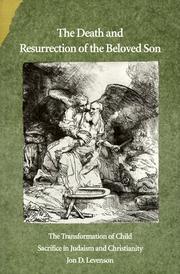
About The Death and Resurrection of the Beloved Son
Jon D. Levenson's "The Death and Resurrection of the Beloved Son" is a groundbreaking work of comparative religious studies that explores a pervasive ancient Near Eastern mythological pattern: the divine or royal son who undergoes death or near-death, often involving sacrifice, and subsequently experiences a form of resurrection or restoration. Levenson meticulously traces this pattern through various ancient myths, including the Ugaritic Baal cycle, the Egyptian Osiris myth, and the Mesopotamian Tammuz narratives, demonstrating their shared structural and thematic elements related to fertility, kingship, and divine favor.
The core of Levenson's argument lies in his controversial yet compelling assertion that this ancient pattern profoundly informs, and is simultaneously transformed by, key narratives within the Hebrew Bible and the New Testament. He re-examines biblical stories such as the binding of Isaac (Akedah), the narratives of Jacob and Joseph, the suffering of David, and ultimately the passion and resurrection of Jesus, showing how these accounts engage with, adapt, and ultimately subvert the older mythological framework. The book challenges traditional historical-critical approaches by highlighting the deep theological continuities and radical discontinuities between Israelite religion and its ancient Near Eastern context, offering a richer understanding of biblical theology and its development.
Key takeaways
- Recognize the widespread ancient Near Eastern mythological pattern of a beloved son's death and resurrection, often linked to cosmic order and fertility.
- Understand how biblical narratives, while distinct, engage with and transform motifs present in surrounding cultures, rather than existing in isolation.
- Appreciate the theological significance of the Akedah (binding of Isaac) as a pivotal moment that redefines sacrifice and divine sonship within Israelite tradition.
- Consider the narratives of Jacob and Joseph through the lens of the beloved son motif, noting their near-death experiences and subsequent exaltation.
- Examine Davidic kingship as embodying aspects of divine sonship and suffering, prefiguring later messianic expectations.
- Grasp how the New Testament presents Jesus as the ultimate fulfillment and radical reinterpretation of the beloved son pattern, culminating in his death and resurrection.
- Challenge purely historical-critical readings of the Bible by integrating a deeper awareness of mythological and theological patterns.
- Reflect on the interplay between continuity and discontinuity in religious traditions, particularly how new revelations build upon and diverge from older forms.
Key ideas at a glance
Divine sonship
- Appreciate the theological significance of the Akedah (binding of Isaac) as a pivotal moment that redefines sacrifice…
- Examine Davidic kingship as embodying aspects of divine sonship and suffering, prefiguring later messianic expectations.
Sacrifice and substitution
- Consider the narratives of Jacob and Joseph through the lens of the beloved son motif, noting their near-death…
Death and resurrection
- Recognize the widespread ancient Near Eastern mythological pattern of a beloved son's death and resurrection, often…
- Grasp how the New Testament presents Jesus as the ultimate fulfillment and radical reinterpretation of the beloved son…
Comparative mythology
- Challenge purely historical-critical readings of the Bible by integrating a deeper awareness of mythological and…
Biblical theology
- Understand how biblical narratives, while distinct, engage with and transform motifs present in surrounding cultures…
Continuity and discontinuity
- Reflect on the interplay between continuity and discontinuity in religious traditions, particularly how new revelations…
Chapter summaries
Introduction
Levenson introduces the central motif of the "beloved son" who undergoes a near-death experience or actual death, followed by a form of "resurrection" or restoration. He outlines his methodology, which involves a comparative study of key biblical narratives and their reception in Jewish and Christian traditions. He emphasizes that "resurrection" is used broadly to include restoration from a state of being lost or presumed dead, not exclusively physical resuscitation. The introduction sets the stage for examining how this pattern illuminates the relationship between God and humanity, and the nature of divine testing and redemption. Levenson argues that this recurring pattern is not merely coincidental but reflects deep theological concerns about sacrifice, covenant, and the nature of divine intervention in human history, laying the groundwork for the subsequent detailed analyses of specific biblical figures.
Part One: Isaac
This section focuses on the Akedah (the binding of Isaac) in Genesis 22. Levenson analyzes Isaac as the archetypal "beloved son" whom God commands Abraham to sacrifice. He explores the narrative's theological complexities, including divine testing, Abraham's obedience, and the substitutionary ram. Levenson discusses the various interpretations of the Akedah in Jewish tradition, highlighting its significance for themes of atonement, merit, and the covenant. He argues that Isaac's deliverance from death constitutes a form of "resurrection" or restoration, establishing a foundational pattern for subsequent narratives. This part delves into the profound implications of this near-sacrifice for both Abraham's faith and the identity of Israel.
Part Two: Joseph
Levenson turns to the story of Joseph in Genesis, presenting him as another "beloved son" figure. He details how Joseph's brothers conspire against him, leading to his being sold into slavery and presumed dead by Jacob. This "death" is followed by Joseph's dramatic "resurrection" through his rise to power in Egypt and eventual reunion with his family. Levenson draws parallels between Joseph's narrative and Isaac's, noting themes of divine providence, suffering leading to exaltation, and the preservation of the family/nation. He emphasizes how Joseph's story illustrates a pattern of descent into suffering followed by ascent to glory, ultimately benefiting his people and ensuring their survival.
Part Three: The Suffering Servant
This part examines the "Suffering Servant" passages, particularly Isaiah 53. Levenson analyzes the Servant's "death" through humiliation, suffering, and being "cut off from the land of the living," bearing the iniquities of others. He then explores the Servant's "resurrection" or vindication, where he "sees offspring," "prolongs his days," and is exalted. Levenson discusses the diverse interpretations of the Servant's identity in Jewish and Christian traditions, highlighting the theme of vicarious suffering and the idea that the Servant's suffering leads to the redemption of many. He connects this to the broader pattern of the beloved son who suffers and is restored, emphasizing its unique contribution to the motif.
Part Four: Jesus
Levenson dedicates this section to Jesus as the ultimate "beloved son" in the New Testament. He demonstrates how the narratives of Isaac, Joseph, and the Suffering Servant provide crucial background for understanding Jesus' identity, mission, and fate. Levenson explores how Jesus' crucifixion represents his "death" as the beloved son, and his resurrection from the dead fulfills and transcends the earlier patterns. He discusses the New Testament's explicit and implicit connections to the Akedah, Joseph's story, and Isaiah 53, showing how these Old Testament motifs are reinterpreted and brought to their culmination in Christology, establishing Jesus as the definitive beloved son whose death and resurrection bring salvation.
Conclusion
In the concluding section, Levenson synthesizes his findings, reiterating the pervasive and profound theological significance of the "death and resurrection of the beloved son" motif across Jewish and Christian traditions. He reflects on the enduring power of these narratives to address fundamental questions about divine justice, human suffering, obedience, and redemption. Levenson emphasizes the distinct yet interconnected ways each tradition interprets and applies this pattern, highlighting both continuity and divergence. He underscores the motif's role in shaping understandings of covenant, atonement, and the relationship between God and humanity, offering a comprehensive overview of its enduring theological impact.
Full summary
In "The Death and Resurrection of the Beloved Son," Jon Levenson examines the profound biblical themes of sacrifice and resurrection. He analyzes how the narratives of beloved sons, like Isaac and Jesus, reflect deep cultural and theological significance, particularly within Judaism and Christianity. The book delves into the stories of Abraham and Isaac, Joseph, and Jesus, emphasizing how these figures symbolize profound loss and renewal. Levenson explores the themes of divine testing, familial bonds, and the transformative power of grief and hope. Key concepts include the role of sacrifice in religious identity and the intertextual relationships between the Hebrew Bible and the New Testament. He articulates the complexities of faith, questioning the meaning of divine love amid suffering. Ultimately, the book reveals how these narratives shape our understanding of life, death, and resurrection, highlighting their enduring relevance in contemporary spiritual discourse. Levenson’s wor...
Memorable quotes
“The binding of Isaac is not simply a story about faith, but a profound theological statement about the nature of God's demands and the unique character of Israelite worship.”
“The pattern of the beloved son who dies and rises is not merely a literary motif but a deep theological structure that pervades ancient Near Eastern religious thought.”
“The biblical narratives, far from being isolated, are in constant, if often polemical, dialogue with the surrounding cultures.”
“The New Testament's portrayal of Jesus as the beloved son who dies and is resurrected represents both the culmination and the radical transformation of this ancient pattern.”
Themes
- Divine sonship
- Sacrifice and substitution
- Death and resurrection
- Comparative mythology
- Biblical theology
- Continuity and discontinuity
About jon levenson
Jon D. Levenson is a distinguished American scholar of the Hebrew Bible and Jewish studies. He served as the Albert A. List Professor of Jewish Studies at Harvard Divinity School. Levenson is renowned for his rigorous textual analysis and his willingness to challenge established scholarly consensus, particularly in the realm of historical-critical biblical interpretation. His other notable works include "Sinai and Zion: An Entry into the Jewish Bible" and "Creation and the Persistence of Evil: The Jewish Drama of Divine Omnipotence." He wrote "The Death and Resurrection of the Beloved Son" to explore the deep theological continuities and transformations between ancient Near Eastern mythology and biblical narratives.
FAQ
What is The Death and Resurrection of the Beloved Son about?
The book explores a recurring mythological pattern in the ancient Near East: a divine or royal son who dies or faces near-death, often through sacrifice, and is subsequently resurrected or restored. Author Jon Levenson traces this pattern in myths like Baal, Osiris, and Tammuz, and then analyzes how it is both reflected and radically transformed in biblical narratives concerning figures such as Isaac, Jacob, Joseph, David, and ultimately Jesus.
Is The Death and Resurrection of the Beloved Son worth reading?
Yes, it is highly regarded as a significant work in biblical and comparative religious studies. It offers profound insights into the theological connections between ancient Near Eastern myths and biblical narratives, challenging conventional interpretations. Readers interested in the deeper mythological and theological underpinnings of the Bible will find it intellectually stimulating and rewarding.
Who should read The Death and Resurrection of the Beloved Son?
This book is essential reading for scholars and students of biblical studies, religious studies, comparative mythology, and ancient Near Eastern cultures. Theologians, historians of religion, and anyone with a serious interest in the origins and development of Judeo-Christian thought will find its arguments compelling and insightful.
How long does it take to read The Death and Resurrection of the Beloved Son?
Given its academic nature and depth, reading "The Death and Resurrection of the Beloved Son" typically takes between 8 to 12 hours for a focused reader. Its dense arguments and detailed analyses require careful attention, making it a book to be savored rather than rushed.