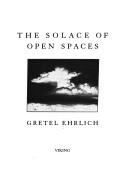
About The Solace of Open Spaces
Gretel Ehrlich's "The Solace of Open Spaces" is a collection of lyrical essays chronicling her experiences living and working as a sheep herder and ranch hand in rural Wyoming. After a personal tragedy, Ehrlich left her urban life as a filmmaker to immerse herself in the stark beauty and demanding rhythms of the American West. The book explores her profound connection to the land, its harsh weather, and the stoic, resilient people who inhabit it.
Through vivid prose, Ehrlich observes the nuances of ranching life, the cycles of seasons, and the intimate relationship between humans, animals, and the vast, unyielding landscape. She delves into themes of solitude, community, grief, and the search for meaning in a world stripped of urban complexities. The essays are not merely descriptive; they are deeply reflective meditations on the nature of work, the passage of time, and the quiet dignity found in confronting life's fundamental challenges. Ehrlich's work stands as a testament to the transformative power of nature and the solace one can find in open, untamed spaces.
Key takeaways
- Embrace the quietude and vastness of natural landscapes to find a profound sense of peace and belonging.
- Observe the rhythms of nature and the demands of the land to understand resilience and the interconnectedness of life.
- Recognize that true strength and character are often forged through enduring hardship and confronting elemental forces.
- Appreciate the stoicism and deep wisdom found in those who live closely with the land and its challenges.
- Seek solace not in escape, but in full immersion with the realities, both beautiful and brutal, of the natural world.
- Understand that community can be built on shared labor and mutual respect, even among reserved and independent individuals.
Key ideas at a glance
Nature's power
- Embrace the quietude and vastness of natural landscapes to find a profound sense of peace and belonging.
- Observe the rhythms of nature and the demands of the land to understand resilience and the interconnectedness of life.
Rural life
- Recognize that true strength and character are often forged through enduring hardship and confronting elemental forces.
Solitude and community
- Understand that community can be built on shared labor and mutual respect, even among reserved and independent…
Resilience and stoicism
- Appreciate the stoicism and deep wisdom found in those who live closely with the land and its challenges.
Grief and healing
- Seek solace not in escape, but in full immersion with the realities, both beautiful and brutal, of the natural world.
Chapter summaries
About Men
In this essay, Gretel Ehrlich challenges the romanticized image of the American cowboy, delving into the true character of men in the Wyoming West. She portrays them as stoic, quiet, and deeply connected to the land and their work, often misread as emotionally distant. Ehrlich reveals a hidden tenderness beneath their rough exterior, emphasizing their resilience in the face of harsh weather, demanding physical labor, and isolation. She describes how their lives are shaped by the cycles of ranching, their profound respect for animals, and a unique sense of community built on shared hardship and unspoken understanding. The essay highlights their quiet strength and the dignity found in their demanding way of life.
The Solace of Open Spaces
The titular essay explores the profound sense of peace and clarity Ehrlich discovers in the vast, seemingly empty landscapes of Wyoming. She contrasts the perceived desolation with a rich inner life and a deep connection to nature, arguing that the immense scale of the land diminishes human anxieties and offers a unique perspective. Ehrlich describes the constant presence of the wind, the endless horizon, and the feeling of being small yet intimately connected to the expansive environment. This solace comes from the land's indifference, which paradoxically allows for a deeper introspection and a grounding in the elemental realities of existence, fostering a sense of belonging.
The Smooth Skull of Winter
Ehrlich vividly portrays the stark beauty and formidable challenges of winter in Wyoming. She describes the landscape transformed by snow and ice, the biting cold that permeates everything, and the profound quietude that settles over the land. The essay delves into the physical demands of surviving winter for both humans and animals, detailing the constant struggle for warmth and sustenance. She explores the unique quality of light during the short winter days and the long, dark nights, and how this extreme environment fosters introspection, resilience, and a deep appreciation for the cycles of nature and the promise of spring.
The Wyoming Blizzard
This essay recounts the terrifying and isolating experience of a severe blizzard in Wyoming. Ehrlich details the relentless force of the storm, the struggle to keep livestock alive against overwhelming odds, and the dangers of being stranded and disoriented in the whiteout conditions. She describes the physical and emotional toll of the blizzard, the desperate efforts of ranchers to protect their animals, and the profound sense of vulnerability in the face of nature's raw power. The essay highlights the community's efforts to help one another and the stark realities of life and death on the ranch during such an extreme event.
The Garden of the World
Ehrlich explores the concept of the American West as a 'garden,' not in the traditional sense of lush cultivation, but in its wild, untamed cycles of growth, decay, and renewal. She contrasts the romanticized view of the West with the harsh realities of its ecology and the demanding work of ranching. The essay reflects on the delicate balance of nature, the impact of human intervention, and the inherent beauty found in its rugged, often unforgiving landscapes. She delves into how the land, despite its challenges, provides sustenance and a profound sense of place for those who understand its rhythms and respect its power.
The Eroticism of Landscape
This essay delves into the deep, almost sensual connection Ehrlich feels to the land. She describes the landscape not merely as scenery but as a living, breathing entity that evokes powerful emotions, a sense of intimacy, and a profound belonging. It's about the physical and emotional immersion in the environment, the way the textures, smells, and sights of the land can stir a primal response, transcending mere aesthetic appreciation to become a vital part of one's identity. Ehrlich explores how the land shapes one's inner world, offering comfort, challenge, and a deep, almost spiritual fulfillment.
The Rancher's Wife
Ehrlich examines the often-overlooked strength, resilience, and multifaceted roles of women living on ranches in the West. She portrays their demanding lives, which often involve managing households, raising children, and actively participating in strenuous ranch work, all while facing isolation and harsh conditions. The essay highlights their practical skills, emotional fortitude, and their essential, though sometimes unacknowledged, contributions to the survival and success of the ranching lifestyle. Ehrlich emphasizes their quiet determination and the deep connection they forge with both their families and the land they help to sustain.
On Ranching
This essay provides a detailed look into the practicalities, philosophy, and daily realities of ranching in Wyoming. Ehrlich discusses the demanding physical labor, the intricate cycles of animal husbandry, and the deep respect ranchers cultivate for their livestock and the land. She explores the economic challenges, the ethical considerations of raising animals, and the profound connection ranchers feel to their way of life, which is often passed down through generations. The essay reveals the blend of tradition, hard work, and an intimate understanding of nature required to sustain a ranching operation in the American West.
From a Sheepherder's Notebook
Ehrlich offers an intimate glimpse into the solitary and arduous life of a sheepherder. She describes the constant vigilance required to protect the flock from predators and the elements, the profound bond between the herder and their dogs, and the deep isolation experienced on the vast, open range. The essay highlights the unique perspective gained from such an existence, the deep connection to nature's rhythms, and the mental and physical fortitude needed for this demanding profession. It's a meditation on solitude, responsibility, and the quiet dignity of a life lived in close communion with animals and the land.
Obituary
This poignant essay reflects on the death of a local rancher, using his passing as a lens to explore themes of life, death, community, and legacy in the West. Ehrlich meditates on the rancher's deep connection to the land he worked, the impact he had on his community, and the quiet dignity of a life lived in harmony with nature's cycles. She considers how a person's life is etched into the landscape and the memories of those around them, and how the passing of such individuals marks the slow, inevitable changes in the fabric of the Western way of life.
The New West
Ehrlich reflects on the evolving landscape and culture of the American West, grappling with the tensions between tradition and modernity. She discusses the influx of new populations, the changing economic and environmental pressures, and the challenges of preserving the region's unique character amidst development and tourism. The essay explores how the West is adapting, sometimes uneasily, to these shifts, while also acknowledging the resilience and adaptability of its long-time inhabitants. It's a meditation on the future of a place defined by both its enduring wildness and its susceptibility to change.
The Language of Place
This essay explores how the specific environment and culture of the West profoundly shape language, thought, and identity. Ehrlich discusses the unique vocabulary and expressions that emerge from a life lived close to the land, reflecting its specific challenges, beauties, and rhythms. She argues that language is not merely descriptive but actively constructs our understanding and experience of a place, revealing the deep connection between words and the landscape. The essay highlights how the precision of language can capture the essence of a place, allowing for a deeper, more nuanced appreciation of its particularities.
The Lonesome Polecat
In this essay, Ehrlich recounts an encounter with a skunk (a 'polecat') and uses it as a springboard for reflections on wildness, solitude, and the unexpected dignity found in creatures often considered pests. She observes the skunk's self-possession and independence, contrasting it with human anxieties and social complexities. The essay is a meditation on coexistence, the inherent value of all living things, and the lessons that can be learned from observing the natural world's less glamorous inhabitants. It underscores the idea that even the most solitary and misunderstood creatures hold a vital place in the ecosystem and offer unique insights into life in the open spaces.
The Solace of Fact
This concluding essay serves as a profound reflection on the nature of truth, observation, and the act of writing itself. Ehrlich explores how concrete facts and precise descriptions of the natural world and human experience can offer a unique kind of solace, grounding one in reality. She argues that a commitment to factual detail and honest portrayal, rather than romanticized notions, leads to a deeper understanding and appreciation of the world. The essay ties together the book's themes of landscape, work, and the search for meaning, suggesting that truth, in its unvarnished form, provides a powerful and enduring comfort.
Full summary
Gretel Ehrlich's "The Solace of Open Spaces" is a poignant exploration of life in Wyoming, reflecting on nature, solitude, and human resilience. The text reveals Ehrlich's experiences in the harsh yet beautiful landscapes of the American West, where she grapples with themes of isolation and connection to the land.
Ehrlich weaves personal anecdotes with observations of the region's wildlife and weather, focusing on the stark realities of ranch life. She delves into the interplay between humans and their environment, highlighting the deep emotional ties to the land. Key themes include the healing power of nature and the struggle for identity amidst vastness.
The author is both narrator and guide, drawing readers into her relationships with ranchers, animals, and the land itself. Her reflections on loss and renewal resonate throughout, emphasizing a profound bond with the open spaces.
Ehrlich's prose fosters appreciation for nature's beauty and complexity, inviting contemplation on ...
Memorable quotes
“The truest art I would strive for in any work would be to make the page as wide as the world.”
“Space is the central fact of the Wyoming landscape.”
“It's a place where the wind blows a good deal of the time, and the wind is what makes you feel alive.”
“The solace of open spaces, the peace of the vast, unpeopled land, is not a simple thing.”
“What you see is what you get, and what you get is a lot of sky and a lot of land.”
Themes
- Nature's power
- Rural life
- Solitude and community
- Resilience and stoicism
- Grief and healing
- Connection to land
About Gretel Ehrlich
Gretel Ehrlich is an American essayist, poet, and nature writer, born in 1946. Originally a documentary filmmaker, she moved to Wyoming in 1978 after a personal tragedy, a move that profoundly shaped her writing career. Her experiences working on ranches and immersing herself in the landscape of the American West became the foundation for her acclaimed essays. "The Solace of Open Spaces" (1985) is her most well-known work, establishing her as a significant voice in contemporary nature writing. She is known for her precise, lyrical prose and her deep philosophical engagement with the natural world and human existence.
FAQ
What is The Solace of Open Spaces about?
The Solace of Open Spaces is a collection of essays by Gretel Ehrlich detailing her experiences living and working on ranches in Wyoming. It explores her immersion in the harsh yet beautiful landscape, the lives of the people there, and her personal reflections on nature, solitude, and belonging after a period of personal loss.
Is The Solace of Open Spaces worth reading?
Yes, it is highly regarded for its lyrical prose, profound insights into nature, and honest portrayal of rural life in the American West. Readers interested in nature writing, memoirs, or essays on the human connection to the land will find it deeply rewarding and thought-provoking.
How does The Solace of Open Spaces end?
Spoiler: The book does not have a traditional narrative ending but concludes with Ehrlich's continued, deep immersion in and appreciation for the Wyoming landscape and its rhythms. The essays collectively suggest an ongoing journey of observation, belonging, and finding solace in the elemental realities of life in open spaces, rather than a definitive resolution.
Who should read The Solace of Open Spaces?
This book is ideal for readers who appreciate nature writing, literary essays, and memoirs. It will appeal to those interested in the American West, ranching life, themes of solitude and community, and the transformative power of landscape. It's also for anyone seeking beautifully crafted prose and deep reflection.
How long does it take to read The Solace of Open Spaces?
On average, it takes approximately 2.5 to 3 hours to read The Solace of Open Spaces. This estimate is based on an average reading speed of 250 words per minute and the book's typical length of around 140-160 pages.