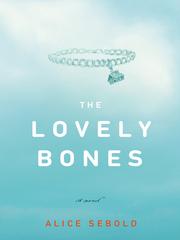
the lovely bones
In 60 seconds
On December 6, 1973, fourteen-year-old Susie Salmon is raped and murdered by her neighbor George Harvey, who hides her body in a safe in a sinkhole. From her personal heaven, Susie watches her family fracture under grief: her father Jack obsessively hunts for her killer, her mother Abigail flees to California, and her sister Lindsey grows up too fast. Harvey, a serial killer of girls, escapes justice for years. Susie briefly returns to earth through Ruth Connors's body to finally experience love with Ray Singh, the boy who kissed her. When Harvey dies falling down a snowy ravine, Susie's family has rebuilt itself around her absence, and she wishes the reader a long and happy life.
Before you start
Why it matters
This novel turns a brutal crime story inside out: the victim narrates, and the mystery isn't whodunit but whether the living can survive the knowing. It's for anyone who has lost someone and felt the world keep spinning anyway, and for readers who want grief rendered with tenderness rather than shock. Sebold makes heaven feel like a hometown and murder feel like weather—inevitable, devastating, survivable.
Spoilers ahead
The story
- 1
Act 1
The Cornfield
December 6, 1973. Susie Salmon, fourteen, cuts through a cornfield in Norristown, Pennsylvania, on her way home from school. Her neighbor, thirty-six-year-old George Harvey, is waiting. He's built an underground hideout in the field, and he coaxes her down to look at it. Once she's inside, he rapes and murders her. He dismembers her body, seals the remains in a safe, and dumps it in a sinkhole. Her charm bracelet goes into a pond. Susie's spirit flees upward toward her personal heaven, and on the way it brushes past Ruth Connors, a classmate who sees the ghost and never forgets it. Susie arrives in a heaven shaped like what she needed: a wide, open place where she can see the sky from every direction. She meets Holly, a girl who took her name from Holly Golightly in Breakfast at Tiffany's, and Franny, a former social worker who becomes their mentor. Below, the Salmon family refuses to believe she's dead—until a neighbor's dog finds her elbow. Ray Singh, the boy from India who was the first and only boy to kiss Susie, becomes the police's initial suspect. He proves his alibi. The killer walks free, and Susie watches it all from above.
- 2
Act 2
The Father Who Wouldn't Stop
Detective Len Fenerman, a widower whose wife killed herself, tells the Salmons the police have exhausted every lead. They're dropping the case. Jack Salmon can't accept it. He works for an insurance agency in Chadds Ford, but he takes an extended leave to hunt Harvey on his own, and Lindsey, a year younger than Susie, comes to share his suspicion. One night Jack sees a flashlight moving in the cornfield. He grabs a baseball bat, certain Harvey is destroying evidence, and charges out. The figure isn't Harvey—it's Clarissa, Susie's best friend, meeting her boyfriend Brian Nelson. Brian sees a man with a bat near a frightened girl and nearly beats Jack to death. Clarissa breaks his knee. Jack survives on a knee replacement, and while he's recovering, Abigail begins an affair with Fenerman. Lindsey sneaks into Harvey's house and finds a diagram of the underground den. Harvey comes home unexpectedly; she slips out. The police don't arrest her, but Harvey flees Norristown. Evidence eventually ties him to Susie's murder and the murders of several other girls. In heaven, Susie meets his other victims and sees into his traumatic childhood.
- 3
Act 3
The Family That Broke
Abigail leaves Jack and takes a job at a winery in California. Grandma Lynn, Abigail's eccentric alcoholic mother, moves in to help Jack raise Lindsey and Buckley, telling him, 'You have to let her go.' Buckley, ten years younger than Susie, sometimes sees his sister watching him from heaven. Eight years pass. Lindsey finishes college, and her boyfriend Samuel Heckler proposes. They find an old house in the woods and decide to fix it up and live there. Hal Heckler, Samuel's older brother who runs a motorcycle repair shop, is there when they celebrate. Then Jack collapses. During an argument with Buckley, he has a heart attack. Abigail rushes back from California, but Buckley won't forgive her for abandoning the family through most of his childhood. Meanwhile Harvey returns to Norristown, now more developed. The school is expanding into the cornfield where he killed Susie. He drives past the sinkhole where her body rests and sees Ruth Connors and Ray Singh standing there. Ruth senses the dead women Harvey killed and is physically overcome. Susie, watching from heaven, is overwhelmed too—and her spirit enters Ruth's body.
- 4
Act 4
The Lovely Bones
Inside Ruth's body, Susie finds Ray waiting. He senses her presence, and they have sex—the physical love Susie was murdered before she could have. Afterward she returns to heaven and Ruth to her own body. Susie moves to a larger part of heaven but keeps watching earthbound events. Lindsey and Samuel have a daughter and name her Abigail Suzanne. Harvey, still hunting, stalks a young woman in New Hampshire. An icicle hits his shoulder, he loses his balance, and he falls to his death down a snow-covered slope into a ravine. No trial, no arrest—just gravity and ice. At the end, a Norristown couple finds Susie's charm bracelet in the pond without knowing what it is. Susie reflects on what grew in her absence: 'These were the lovely bones that had grown around my absence: the connections—sometimes tenuous, sometimes made at great cost, but often magnificent—that happened after I was gone.' She closes the novel wishing the reader: 'I wish you all a long and happy life.'
Who's who
Characters
- Susie SalmonFourteen when Harvey murders her; she narrates from heaven, watching her family grieve and longing for the life she lost. She briefly borrows Ruth's body to finally know love.
- Jack SalmonSusie's father, an insurance worker in Chadds Ford consumed by guilt. He investigates Harvey alone, gets beaten nearly to death for it, and later survives a heart attack.
- Abigail SalmonSusie's mother, whose dreams drowned in family life. After the murder she has an affair with the detective, then leaves for a California winery, returning only when Jack nearly dies.
- Lindsey SalmonSusie's younger sister by one year, who shares her father's suspicion and breaks into Harvey's house. She grows up, marries Samuel, and names her daughter after her mother.
- Buckley SalmonSusie's brother, ten years younger, who sometimes sees her watching from heaven. He never forgives Abigail for leaving.
- George HarveyThe Salmons' neighbor, a dollhouse builder and serial killer of girls. He murders Susie, evades justice for years, and dies falling into a ravine in New Hampshire.
- Ruth ConnorsThe outcast classmate Susie's spirit brushed past on its way to heaven. She becomes obsessed with the dead and lends her body to Susie for one night.
- Ray SinghThe boy from India, first and only boy to kiss Susie, initially suspected in her death. Years later he senses her in Ruth's body and loves her once.
- Len FenermanThe widowed detective on Susie's case who drops the investigation and sleeps with Abigail.
- Grandma LynnAbigail's eccentric alcoholic mother who moves in to raise Lindsey and Buckley after Abigail leaves.
- HollySusie's best friend in heaven, implied Vietnamese American, named for Holly Golightly in Breakfast at Tiffany's.
- FrannyA former social worker who mentors Susie and Holly in heaven.
- Samuel HecklerLindsey's boyfriend and later husband; they fix up an old house in the woods and have a daughter.
- Hal HecklerSamuel's older brother, who runs a motorcycle repair shop and attends the engagement celebration.
- ClarissaSusie's best friend, admired for her freedom to smoke and wear platform shoes. Her secret cornfield meeting with Brian gets Jack beaten.
- Brian NelsonClarissa's boyfriend, who nearly beats Jack to death after mistaking him for an attacker.
What it's really about
Themes
Grief as a whole-family event
Susie's murder doesn't just end a life; it detonates a household. Jack abandons his job to chase a killer and gets his knee broken by the wrong person. Abigail sleeps with the detective and then vanishes to California. Buckley grows up motherless and furious about it. Grandma Lynn moves in to hold the pieces. Each family member grieves in a way that costs the others something, and the novel refuses to rank their pain or excuse anyone. The point: a death doesn't break one heart—it rearranges every relationship in a house, and some of those rearrangements never fully reverse.
Watching without power
Susie sees everything—her father charging into the cornfield with a bat, her sister sneaking into a killer's house, her mother's affair—and can do nothing. Heaven in this book isn't reward or punishment; it's a viewing gallery with no door to the field. That helplessness is the novel's engine: the reader knows what Susie knows, including Harvey's guilt, and shares her frustration as the police drop the case and the family doubts Jack. The book's point is that love persists even when it can't intervene, and that watching someone you love suffer, unable to help, is its own afterlife.
Justice denied, not justice served
Harvey is never arrested, tried, or convicted. He flees after Lindsey's break-in, evidence surfaces too late to matter legally, and he dies by icicle and gravity while stalking another girl. The novel offers no courtroom catharsis. Instead, justice arrives as accident—unglamorous, unrecorded, witnessed only by Susie from above. Sebold's point seems to be that the world doesn't guarantee reckoning, and that survivors must build meaning without it. The absence of formal justice is what makes the family's slow reconstruction, not punishment, the real resolution.
The body and the soul's unfinished business
Susie dies before she's ever been loved physically. Ray was the first and only boy to kiss her, and that's where her story stops. When her spirit enters Ruth's body, she and Ray finally have sex—fulfilling a longing that death interrupted. The scene is strange and tender, not titillating: a dead girl borrowing a living body to finish a sentence she never got to start. The book argues that the dead carry unfinished wants, and that the living can, sometimes unknowingly, help complete them. It's Sebold's boldest gamble with the afterlife premise.
The connections that grow around absence
The title's meaning arrives late: 'These were the lovely bones that had grown around my absence: the connections—sometimes tenuous, sometimes made at great cost, but often magnificent—that happened after I was gone.' Lindsey's engagement, the old house in the woods, baby Abigail Suzanne, Ruth and Ray's friendship—all of it grows in the space Susie left. The novel's point is that loss doesn't just subtract; it creates structure. A family rebuilds itself around a missing person the way bone grows around a fracture, and that new shape, however painful, is real and worth naming.
Look closer
Symbols
- The charm bracelet
- Harvey throws Susie's charm bracelet into a pond after killing her, a small glittering thing discarded with a life. At the novel's end, a Norristown couple finds it without realizing what it is. Its fate mirrors Susie's: lost, submerged, surfacing years later into hands that can't read it. The world moves on and keeps her traces without knowing them.
- The sinkhole
- The sinkhole holds Susie's remains in a safe, a grave no one official ever finds. It becomes a site Ruth and Ray are drawn to, sensing the dead beneath. It stands for the buried truth of the murder—present, weighted, and unspoken—shaping the ground above it even as the town develops around it.
- The underground den
- Harvey's hideout in the cornfield is where he lures and kills Susie, a child's space turned into a trap. It represents corrupted innocence: a place built for play used for predation. Lindsey later finds its diagram in Harvey's house, proof of what happened hidden in plain sight.
- Heaven
- Susie's heaven is 'a wide, open place' where she can see the sky from every direction—personal, unjudged, God-free. It stands for the afterlife as a mirror of what each soul needed on earth. Susie eventually moves to a larger part of it, mirroring her family's slow expansion around her absence.
- The icicle
- Harvey dies when an icicle hits his shoulder and he falls down a snowy slope into a ravine—killed by winter itself while stalking another girl. It stands for impersonal justice: nature, not law, ends him. The weapon is fragile, temporary, and utterly indifferent, which is exactly how the novel's universe treats moral accounting.
Spoilers
Ending explained
The ending refuses both revenge and reunion. Harvey dies by accident, not by the family's hand or the law's, which means the Salmons never get the confrontation they might have wanted—and the novel suggests they didn't need it to heal. The charm bracelet surfacing to strangers who don't know its significance is the final, quiet cruelty and mercy at once: Susie's story becomes anonymous, absorbed into ordinary life. What's left is the 'lovely bones'—the connections that grew around her absence, from Lindsey's daughter to Ruth and Ray's bond. Some readers find this resolution too gentle for the crime; others see it as the book's honest thesis that the dead don't get justice, only witness. Susie's closing wish for the reader's long and happy life lands because it comes from the one person who can't have one, turning the whole novel into a gift from the grave.
For class or book club
Discussion questions
- 1.Is Susie's heaven a genuine afterlife, a coping mechanism, or a narrative device—and does the novel's refusal to be religious strengthen or weaken its emotional claims?
- 2.Abigail's abandonment of her family is the novel's most divisive choice: is she a sympathetic casualty of grief or a mother who fails her surviving children, and does the book judge her?
- 3.The novel gives Susie justice only through accident and lets her experience love only through another girl's body—what does this suggest about the limits of both revenge and desire after death?
Worth remembering
Best lines
“My heaven was a wide, open place. I could see the sky from every direction.”
“You have to let her go.”
“These were the lovely bones that had grown around my absence: the connections—sometimes tenuous, sometimes made at great cost, but often magnificent—that happened after I was gone.”
“I wish you all a long and happy life.”
A fair critique
Where it falls short
The heaven premise divides readers: Philip Hensher in The Observer called the book 'ultimately... a slick, overpoweringly saccharine and unfeeling exercise in sentiment and whimsy,' and the God-free, judgment-free afterlife can feel like a dodge for readers wanting moral weight. Susie's omniscient narration flattens suspense—she knows everything, so the plot's tension depends on the family, not the mystery. Abigail's affair with the detective and her long absence can read as melodrama rather than character. And Harvey's icicle death strikes some as too convenient, denying the confrontation the story seems to promise.
In one sentence
A murdered girl watches from heaven as her family breaks and rebuilds around her absence, while her killer walks free until the earth itself kills him.
Is it for you?
Who should read it
Readers who want grief fiction that doesn't flinch but also doesn't wallow—especially anyone processing loss or family fracture. Also for book clubs: the heaven premise and Abigail's choices guarantee argument.
4 questions
Quick quiz: how well do you know the lovely bones?
0 of 4 answered
FAQ
What is the lovely bones about?
"The Lovely Bones" tells the story of fourteen-year-old Susie Salmon, who is raped and murdered by her neighbor. From her personal heaven, Susie watches her family cope with their grief, her father's relentless search for her killer, and the ripple effects of her death on their lives. It's a unique exploration of loss, justice, and the enduring power of love.
Is the lovely bones worth reading?
Yes, "The Lovely Bones" is widely considered a powerful and unique novel. It offers a fresh perspective on grief and the afterlife, blending the horrific with the beautiful. Readers appreciate its emotional depth, compelling narrative, and the way it explores difficult themes with sensitivity and hope.
How does the lovely bones end?
Spoiler: George Harvey, Susie's killer, eventually dies accidentally by falling into a sinkhole, with an icicle falling on his head. Susie, having witnessed her family begin to heal and move on, finally achieves a sense of peace and moves further into her heaven, letting go of her earthly ties. Her family finds a measure of closure and continues their lives.
Who should read the lovely bones?
Readers who appreciate literary fiction that explores complex emotional themes, especially those dealing with grief, loss, and the aftermath of trauma, will find this book compelling. It's also suitable for those interested in unique narrative perspectives and stories about family dynamics.
How long does it take to read the lovely bones?
Based on an average reading speed of 250 words per minute, "The Lovely Bones" typically takes around 5 to 7 hours to read. The exact time will vary depending on individual reading speed and engagement with the story.
Who wrote the lovely bones?
the lovely bones was written by alice sebold and first published in 2000.
What genre is the lovely bones?
the lovely bones is listed under Mystery & Thriller.
More Mystery & Thriller summariesHow many pages is the lovely bones?
the lovely bones is about 349 pages long (the median page count across its editions, per Open Library).