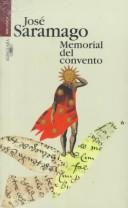
About Memorial do Convento
Memorial do Convento, known in English as 'Baltasar and Blimunda,' is a historical novel by Nobel laureate José Saramago that intertwines the epic construction of the Mafra Convent in 18th-century Portugal with a fantastical love story and a pioneering attempt at flight. The narrative unfolds against the backdrop of King João V's vow to build a magnificent convent if Queen Maria Ana of Austria bore him an heir. This royal decree sets in motion a monumental undertaking, demanding immense resources, labor, and human suffering from the Portuguese people, all meticulously documented by Saramago's critical eye.
Parallel to this grand historical project, Saramago introduces a more intimate, magical, and human story: the love between Baltasar Sete-Sóis, a one-handed soldier returning from war, and Blimunda Sete-Luas, a young woman with extraordinary clairvoyant abilities. They become collaborators with Father Bartolomeu Lourenço, a visionary priest obsessed with building a flying machine, the 'Passarola.' This contraption, powered by collected human wills, represents a counter-narrative of individual ingenuity and spiritual aspiration against the backdrop of institutional power and enforced labor. The novel is a profound meditation on power, faith, love, and the often-overlooked lives of ordinary people, critiquing the extravagance of monarchy and church while celebrating the resilience of the human spirit.
Key takeaways
- Grand projects often come at an immense human cost, with the suffering of the common people frequently overlooked by those in power.
- Love and human connection can provide solace and meaning even amidst widespread hardship and oppression.
- The pursuit of knowledge and innovation, even when deemed heretical, can challenge established norms and inspire hope.
- Saramago's unique narrative voice, characterized by long sentences and a lack of traditional punctuation, encourages a more immersive and reflective reading experience.
- The novel serves as a powerful critique of absolute monarchy and the intertwined power of the church, exposing their extravagance and indifference to human suffering.
- Individual will and collective human spirit possess an unquantifiable power, capable of both monumental construction and fantastical flight.
- The story highlights the contrast between the visible, tangible achievements of power and the invisible, often forgotten sacrifices of the many.
Key ideas at a glance
Power and Oppression
- Love and human connection can provide solace and meaning even amidst widespread hardship and oppression.
- Individual will and collective human spirit possess an unquantifiable power, capable of both monumental construction…
Love and Sacrifice
- The story highlights the contrast between the visible, tangible achievements of power and the invisible, often…
Faith and Reason
- The pursuit of knowledge and innovation, even when deemed heretical, can challenge established norms and inspire hope.
Human Suffering
- Grand projects often come at an immense human cost, with the suffering of the common people frequently overlooked by…
- The novel serves as a powerful critique of absolute monarchy and the intertwined power of the church, exposing their…
Individual Will
- Saramago's unique narrative voice, characterized by long sentences and a lack of traditional punctuation, encourages a…
Chapter summaries
The King's Vow and the Barren Queen
The novel opens in 1711, introducing King João V of Portugal, a monarch obsessed with power, piety, and procreation. His wife, Queen Maria Ana of Austria, has not yet conceived an heir, causing anxiety for the succession. Desperate, the King makes a solemn vow to God: if the Queen bears him a son, he will build a magnificent convent in Mafra. This vow sets in motion the central historical event of the novel, highlighting the absolute power of the monarchy and the intertwined roles of state and church in 18th-century Portugal. The narrative immediately establishes the social hierarchy, where the fate of thousands of common people is dictated by the whims and desires of the ruling class. The Queen's eventual pregnancy is announced, sealing the fate of the future convent and the lives of those who will build it.
Baltasar's Return and Blimunda's Gift
Baltasar Mateus, a soldier who lost his left hand in the War of the Spanish Succession, returns to Lisbon in 1711. Discharged and disfigured, he struggles to find his place in society. He encounters Blimunda Sete-Luas (Seven Moons), a young woman with extraordinary, almost mystical abilities. Blimunda possesses the unique power to see inside people's bodies, perceiving their internal organs and, most importantly, their "volitions" – a kind of ethereal energy or will. She is the daughter of a woman exiled to Angola for witchcraft, and her own nature is marked by a blend of the mundane and the miraculous. Baltasar and Blimunda are drawn to each other, forming an immediate and profound bond that transcends conventional understanding, rooted in their shared marginalization and Blimunda's unusual perception of the world.
Father Bartolomeu de Gusmão and the Flying Machine
The narrative introduces Father Bartolomeu Lourenço de Gusmão, a visionary Jesuit priest known as "the Flying Priest." He is a brilliant inventor, obsessed with the idea of building a machine that can fly, a concept considered heretical and impossible by most. Father Bartolomeu seeks to harness the power of human will, or "volitions," as the fuel for his aerial device. He is a figure of both scientific ambition and spiritual conviction, navigating the dangers of the Inquisition while pursuing his radical ideas. His quest for flight represents a clash between nascent scientific inquiry and entrenched religious dogma, embodying the spirit of Enlightenment thought struggling against the constraints of the era.
The Conception of the Passarola
Father Bartolomeu de Gusmão, having secured a royal patent for his "Passarola" (Big Bird) flying machine, enlists Baltasar and Blimunda in his ambitious project. He recognizes Blimunda's unique ability to see and collect human volitions, which he believes are essential for powering the machine. Baltasar, with his practical skills and unwavering loyalty, becomes the priest's assistant, helping to construct the intricate device. The three form an unlikely trio, united by their shared secret and their pursuit of the impossible. They begin the clandestine work of building the Passarola, gathering the necessary materials and preparing for the audacious attempt to defy gravity, all while under the constant threat of discovery and the Inquisition.
The Gathering of Volitions
Blimunda's extraordinary ability becomes central to the Passarola's construction. She collects human volitions, the ethereal essence of human will, from dying individuals. These volitions are stored in amber spheres, which will serve as the machine's energy source. This process is depicted with a blend of the mystical and the mundane, as Blimunda silently performs her task, witnessing the final moments of life and absorbing the invisible energy. The act of gathering volitions highlights the novel's exploration of the human spirit, life, and death, and the unseen forces that drive existence. Baltasar assists her, providing practical support and a silent, understanding presence, reinforcing their deep, unconventional bond.
The First Flight and Disappearance
The Passarola is finally completed, a marvel of engineering and mystical energy. In a clandestine test flight, the machine successfully takes to the skies, carrying Father Bartolomeu, Baltasar, and Blimunda. This moment is a triumph of human ingenuity and a defiance of natural laws, a fleeting glimpse of freedom and possibility. However, the flight is short-lived. Father Bartolomeu, overwhelmed by fear or perhaps a premonition of danger, abandons the machine and disappears, leaving Baltasar and Blimunda to land it safely. The Passarola, now a secret burden, is hidden by the couple, marking the end of their direct collaboration with the priest and the beginning of their solitary guardianship of the impossible dream.
The Convent of Mafra Begins
With the Queen having given birth to an heir, King João V's vow must be fulfilled. The construction of the Convent of Mafra begins, a monumental undertaking that will drain the nation's resources and demand immense human sacrifice. Thousands of workers, many of them forced laborers, are conscripted from across Portugal. The narrative shifts focus to the brutal reality of the construction site, depicting the harsh conditions, the back-breaking labor, and the constant threat of injury and death. This section vividly portrays the stark contrast between the King's grand vision and the suffering of the common people whose lives are consumed by the project, emphasizing the human cost of royal ambition and religious piety.
Life in Mafra and Lisbon
Baltasar and Blimunda settle into a quiet life in Mafra, living among the workers and observing the relentless progress of the convent's construction. Baltasar, despite his missing hand, finds work as a laborer, contributing to the very monument that symbolizes the King's power. Blimunda continues to use her unique vision, though discreetly, often helping those in need or simply observing the world with her extraordinary perception. Their life is one of quiet resilience, marked by their deep love and their shared secret of the hidden Passarola. The narrative contrasts their humble existence with the opulence of the Lisbon court and the grandeur of the church, highlighting the social disparities of the era.
The King's Obsession and the Church's Power
King João V's obsession with the Convent of Mafra grows, becoming a consuming passion that overshadows all other affairs of state. He spares no expense, importing materials and skilled artisans from across Europe, determined to build a monument that rivals the greatest churches of Rome. The Church, particularly the Inquisition, maintains a powerful presence, influencing daily life and instilling fear. Religious processions, sermons, and the constant threat of heresy trials are part of the social fabric. The King's piety is intertwined with his desire for power and legacy, and the convent becomes a symbol of both his devotion and his absolute authority, further entrenching the Church's influence over the populace.
The Growing Scale of the Convent
As the years pass, the scale of the Convent of Mafra expands far beyond its initial plans, becoming an increasingly ambitious and demanding project. The need for more stone, more wood, and more labor intensifies, leading to greater exploitation of the workers. The narrative details the logistical challenges and the immense human effort involved, from quarrying stone to transporting massive blocks across difficult terrain. The suffering of the laborers, many of whom die from exhaustion, accidents, or disease, is a constant backdrop to the King's grand vision. The convent transforms from a simple vow into a colossal undertaking, a testament to both human endurance and the oppressive power of the monarchy.
Baltasar's Dedication to the Machine
Despite the passage of time and the demands of his daily life, Baltasar remains dedicated to the hidden Passarola. He periodically visits its secret location, maintaining it and ensuring its preservation. The machine represents not just a memory of Father Bartolomeu's dream, but also a symbol of freedom and defiance against the rigid social order. For Baltasar, it is a personal responsibility, a link to a moment of shared wonder and possibility with Blimunda and the priest. His quiet devotion to the machine underscores his character as a man of integrity and loyalty, holding onto a secret that could easily lead to his demise if discovered by the authorities.
Blimunda's Visions and the Human Condition
Blimunda's unique ability to see inside people's bodies and perceive their volitions continues to shape her understanding of the world. She witnesses the raw truth of human existence – the physical ailments, the emotional turmoil, the hidden desires, and the inevitable decay. Her visions make her acutely aware of the suffering and fragility of humanity, particularly among the workers toiling at Mafra. She often provides quiet comfort or subtle assistance, her presence a source of solace for those around her. Her perception offers a profound commentary on the human condition, revealing the inner lives that remain hidden to ordinary sight, and emphasizing the novel's themes of empathy and the unseen forces of life.
The King's Legacy and the Workers' Fate
King João V, now older and increasingly frail, remains steadfast in his determination to complete the Convent of Mafra. His legacy becomes inextricably linked to this colossal monument, a testament to his reign and his piety. Meanwhile, the workers continue their arduous labor, their lives defined by the rhythm of construction, their bodies broken by the demands of the project. The narrative highlights the stark contrast between the King's enduring ambition and the ephemeral lives of the common people, whose individual stories are largely lost to history, subsumed by the grand narrative of the convent. The completion of the convent draws near, but the human cost remains immense and largely unacknowledged.
The Passarola's Rediscovery and Baltasar's Last Flight
Years later, the hidden Passarola is accidentally discovered by a group of shepherds. Baltasar, alerted to its exposure, feels compelled to reclaim and protect the machine. In a desperate attempt to move it to safety, he decides to fly it once more. This final, solitary flight is a poignant and tragic moment, a last assertion of freedom and a testament to his enduring loyalty to the dream. However, Baltasar is no longer the young man who first flew the machine; his attempt is fraught with danger. The flight is observed, and his defiance of gravity and the authorities marks him as a target.
Baltasar's Capture and Execution
Baltasar's final flight leads to his capture by the Inquisition. Accused of witchcraft and heresy for his association with the flying machine, he is subjected to the brutal justice of the Holy Office. Despite his innocence and the purity of his intentions, he is condemned. The narrative culminates in his public execution at an auto-da-fé, where he is burned at the stake. This tragic event underscores the oppressive power of the Church and the state, and the dangers faced by those who dare to challenge conventional wisdom or possess extraordinary secrets. Baltasar's death is a profound loss, leaving Blimunda to bear the weight of their shared memories and the unfulfilled dream.
Blimunda's Decades-Long Search
Following Baltasar's execution, Blimunda embarks on a decades-long quest to find his soul. Her unique ability to perceive volitions guides her, as she travels across Portugal, searching among the countless souls of the dead for the specific essence of her beloved. This long pilgrimage is a testament to her unwavering love and her profound connection to Baltasar. Her journey is solitary and arduous, a spiritual odyssey that transcends the boundaries of life and death, highlighting the novel's exploration of love, memory, and the enduring power of the human spirit beyond physical existence. She becomes a wanderer, her life defined by this singular, poignant mission.
The Completion and Inauguration of Mafra
The Convent of Mafra is finally completed, a colossal monument to King João V's vow and his reign. The grand inauguration is a spectacle of royal and ecclesiastical power, attended by dignitaries and celebrated with immense pomp and ceremony. The King, now an old man, presides over his triumph, the convent standing as a physical embodiment of his legacy. The narrative contrasts the grandeur of the finished structure with the forgotten suffering of the thousands of workers who built it. The convent stands as a symbol of both human achievement and the immense human cost of such ambitions, a silent witness to the history it embodies.
The Reunion of Souls
After nearly thirty years of searching, Blimunda finally finds Baltasar's soul. In a deeply moving and mystical moment, she perceives his volition rising from the smoke of a burning pyre, a faint but unmistakable essence. She reaches out and grasps it, bringing his soul back to her. This reunion is not a physical one, but a spiritual culmination of their extraordinary love story, transcending death and time. The novel ends with this poignant act of remembrance and connection, affirming the enduring power of love and the human spirit, even in the face of immense suffering and loss. Blimunda's quest concludes, bringing a sense of closure to their intertwined destinies.
Full summary
Book Overview
"Memorial do Convento," also known as "Baltasar and Blimunda," is a novel by Portuguese author José Saramago, published in 1982. The book is set in 18th-century Portugal against the backdrop of the construction of the Mafra Convent, a monumental Baroque structure commissioned by King João V. The narrative combines historical events with elements of magical realism, exploring themes of love, power, and the human condition.
Main Content/Plot
The story begins with the introduction of Baltasar, a soldier who loses his left hand in the war and returns home to a life of disillusionment. He meets Blimunda, a young woman endowed with the ability to see inside people's souls. Their connection deepens as they navigate the complexities of life under an oppressive monarchy and the societal constraints of the era.
As the construction of the Mafra Convent progresses, the narrative shifts to the interplay between the laborers, the church, and the monarchy. Central to this is the character of Father Bartolomeu de Gusmão, who dreams of building a flying machine. The intertwining lives of Baltasar, Blimunda, and Father Bartolomeu illustrate the struggles against the limitations imposed by their society.
The first sixty pages establish the characters and their motivations, showcasing Saramago's signature style, which features long sentences and minimal punctuation, creating a fluid and immersive reading experience. The early chapters set the tone for a narrative rich in philosophical inquiry and social commentary.
Key Themes
1. Love and Human Connection: The relationship between Baltasar and Blimunda serves as a testament to love's resilience amidst adversity. Their bond transcends the hardships they face in a repressive society.
2. Power and Oppression: The novel critiques the absolute power of the monarchy and the Catholic Church, illustrating how these institutions manipulate the masses and control individual lives.
3. The Search for Freedom: Through the characters' dreams and aspirations, Saramago explores the human desire for liberation, both physically and spiritually. Father Bartolomeu's invention symbolizes the quest for transcendence.
4. The Intersection of History and Myth: Saramago blurs the lines between historical fact and fiction, suggesting that myth and reality coexist in shaping human experience.
Important Takeaways
"Memorial do Convento" is a profound exploration of the human spirit in the face of societal constraints.
Memorable quotes
“What kind of world is this, where a man has to be a king to build a convent, and a woman has to be a queen to give birth to a child?”
“The only possible meaning of life is to fight to give life a meaning.”
“It is not enough to look at the world, one must also see it.”
“Man is the only animal that knows he will die, and that is why he invents God.”
“The history of humanity is the history of its dreams, and its dreams are the history of its nightmares.”
Characters
- Baltasar Sete-SóisA one-handed soldier, returned from war, who becomes Blimunda's lover and Father Bartolomeu's assistant in building the Passarola.
- Blimunda Sete-LuasA young woman with the mystical ability to see inside people's bodies and collect their 'volitions,' Baltasar's lover and a crucial part of the flying machine project.
- Father Bartolomeu LourençoAn eccentric and visionary priest, known as the 'flying priest,' who dreams of building a machine that can fly and enlists Baltasar and Blimunda in his project.
- King João VThe King of Portugal, who vows to build a magnificent convent in Mafra if his wife bears him an heir, representing absolute power and extravagance.
- Queen Maria Ana of AustriaThe Queen of Portugal, whose inability to conceive an heir prompts King João V's vow to build the Mafra Convent.
- Domenico ScarlattiA historical figure, a renowned Italian composer who serves as the Queen's music master and occasionally interacts with the main characters, observing events.
Themes
- Power and Oppression
- Love and Sacrifice
- Faith and Reason
- Human Suffering
- Individual Will
- Critique of Monarchy
About José Saramago
José Saramago (1922-2010) was a Portuguese writer who received the Nobel Prize in Literature in 1998. Known for his unique narrative style, characterized by long sentences, minimal punctuation, and a blend of realism and magical realism, he often explored themes of history, power, and human nature. His other acclaimed works include 'Blindness,' 'The Gospel According to Jesus Christ,' and 'The Stone Raft.' Saramago was a vocal critic of authoritarianism and religious dogma, often embedding his political and philosophical views within his narratives, making 'Memorial do Convento' a quintessential example of his literary and ideological concerns.
FAQ
What is Memorial do Convento about?
Memorial do Convento, or 'Baltasar and Blimunda,' tells two interwoven stories: the grand, oppressive construction of the Mafra Convent by King João V in 18th-century Portugal, and the intimate, magical love story of Baltasar and Blimunda, who assist a visionary priest in building a fantastical flying machine. It's a critique of power and a celebration of human spirit.
Is Memorial do Convento worth reading?
Yes, it is highly worth reading for its unique narrative style, profound philosophical insights, and rich historical detail. Saramago's distinctive voice, long sentences, and lack of traditional punctuation offer a challenging yet deeply rewarding experience, making it a masterpiece of 20th-century literature and a powerful social commentary.
How does Memorial do Convento end?
Spoiler: The book ends with the completion of the Mafra Convent and the disappearance of Baltasar, who accidentally takes flight in the Passarola alone. Blimunda spends years searching for him. She finally finds him at the convent's inauguration, not physically, but as his spirit ascends into the sun, a final, ethereal 'will' collected by her, symbolizing their eternal connection and the ultimate freedom of the human spirit.
Who should read Memorial do Convento?
Readers who appreciate literary fiction, historical novels with a magical realist bent, and social commentary will enjoy this book. It's particularly suited for those interested in Portuguese history, the critique of power structures, and authors with a unique narrative voice like José Saramago, Umberto Eco, or Gabriel García Márquez.
How long does it take to read Memorial do Convento?
Given its length of approximately 350-400 pages and Saramago's dense, distinctive prose style, it would likely take an average reader around 10 to 14 hours to read 'Memorial do Convento' carefully. His unique punctuation and long sentences can slow down the reading pace.