Left Behind
In 60 seconds
On a red-eye from Chicago to London, passengers vanish mid-air, leaving clothes in their seats. Pilot Rayford Steele lands to find his wife and son gone, only his daughter Chloe left. A videotape from a dead pastor explains the Rapture and warns of a seven-year Tribulation under an Antichrist. That Antichrist is Nicolae Carpathia, a rising world leader who murders his own staff and hypnotizes witnesses into forgetting. Rayford, Chloe, Buck, and Bruce form the Tribulation Force to resist him.
Before you start
Why it matters
This is the book that turned dispensationalist end-times theology into a publishing phenomenon, selling tens of millions of copies and spawning films and games. Read it for the cultural history: it captures evangelical anxieties about the UN, globalism, and one-world religion at the turn of the millennium. It matters for anyone curious about American apocalypticism, rapture fiction, or the theology behind a franchise that shaped a movement.
Spoilers ahead
The story
- 1
Act 1
Forty Million Empty Seats
Rayford Steele is flying a Pan-Continental 747 from Chicago to London when passengers suddenly vanish from their seats. Their clothes, shoes, glasses, and personal items sit in the seats as if the people dissolved out of them. Rayford, flying the plane alone with his thoughts, has a terrible private suspicion about what this means, because his wife Irene had been begging him for months about a God he wanted nothing to do with. On the same flight sits Buck Williams, a senior writer for Global Weekly, on assignment to meet Dr. Chaim Rosenzweig in Israel, the botanist whose formula turned the desert fertile and made Israel wealthy and self-sufficient. Buck keeps replaying Rosenzweig's cryptic remark that Israel is safe because of God's promise.
- 2
Act 2
The Empty House
Rayford drives home to find Irene, Raymie, and his parents gone; only Chloe, a Stanford student who was home visiting, remains. Rayford and Chloe attend their church, now nearly empty. Associate pastor Bruce Barnes, who was left behind, is there. Bruce Barnes confesses that he was a 'fake' believer, a church worker who never truly accepted Christ, which is why he was left behind. He shows a videotape recorded by Pastor Billings before the Rapture. In the videotape, Pastor Billings explains the Rapture, the Tribulation, and the rise of the Antichrist, and urges those left behind to trust Christ.
- 3
Act 3
The Man with the Plan
Buck witnesses Nicolae Carpathia murder two of his own staff members in his hotel suite. Then Carpathia uses his hypnotic power to make Buck and others believe. Buck realizes Carpathia is the Antichrist foretold in Scripture. He shares his suspicion with Bruce, Rayford, and Chloe. Bruce names them the Tribulation Force, a group of believers who will resist the Antichrist during the coming seven years.
- 4
Act 4
Seven Years to Hold On
The Tribulation Force forms with no army, no press, and no proof, only the knowledge that Carpathia's charm is a weapon and the seven years of Tribulation have already started.
Who's who
Characters
- Rayford SteeleA 747 pilot for Pan-Continental who was flying the plane when the Rapture hit. He ignored his wife Irene's faith until her disappearance proved her right; now he leads the Tribulation Force with guilt as fuel.
- Cameron "Buck" WilliamsA senior writer for Global Weekly chasing the story of the millennium. He witnesses Carpathia's murders and keeps the memory the hypnotist wants erased, making him the first to name the Antichrist.
- Chloe SteeleRayford's Stanford-student daughter, left behind only because she was home visiting. She loses her mother, brother, and grandparents in one afternoon and must choose faith with her eyes open.
- Bruce BarnesThe associate pastor left behind, a self-confessed 'fake' believer who ran a church he never joined. He inherits Pastor Billings's videotape and becomes the Tribulation Force's teacher.
- Nicolae CarpathiaThe charismatic rising world leader who murders his own staff and hypnotizes witnesses to forget. He is the Antichrist of Scripture, adored by the world he is deceiving.
- Irene SteeleRayford's wife, whose faith he dismissed until the Rapture took her, their son Raymie, and his parents. Her absence is the book's loudest sermon.
- Dr. Chaim RosenzweigThe Israeli botanist whose desert-blooming formula made Israel wealthy and self-sufficient. His cryptic remark that Israel is safe because of God's promise lingers with Buck.
What it's really about
Themes
Left behind by your own unbelief
The Rapture's cruelty is precise: it takes Irene, Raymie, and Rayford's parents, and leaves Rayford and Chloe because of what they chose or failed to choose. Bruce Barnes is the sharpest version of this, a church worker who confesses he was a 'fake' believer, left behind from his own congregation. The book's engine is the terror that proximity to religion is not the same as faith, and that the moment of sorting comes without warning. Its point: belief delayed is belief that costs everyone you love.
Deception as political power
Carpathia's signature weapon is not armies but hypnosis: he kills two staff members in his hotel suite and makes the witnesses, including Buck, believe a different story. The world's most powerful man rises by charm, and the only evidence against him lives in the memory of one reporter he thinks he erased. The book frames global politics as a stage managed by a liar, with the UN-style new order as his instrument. Its point: evil in this story wins by making people disbelieve their own eyes.
Faith with proof you can't use
Buck holds the scoop of the millennium and cannot publish it; Rayford knows the future from a videotape recorded by a dead pastor; Bruce teaches from a recording because the living church is gone. The believers' knowledge is real but unusable, which is the Tribulation Force's whole predicament. They must act on what they know while the world applauds the man they know is evil. Its point: this faith demands conviction without corroboration, exactly the trial the seven years are designed to be.
The end times as a countdown
Pastor Billings's videotape lays out the schedule before any of it happens: the Rapture, the seven-year Tribulation, the rise of the Antichrist, and the urgent invitation to trust Christ. The book runs on that revealed timeline, turning prophecy into plot mechanics where every news event confirms the tape. Bruce names the Tribulation Force for the period it must survive. Its point: in dispensationalist reading, history is not open; it is a script the left behind must race to join.
Look closer
Symbols
- The empty clothes
- Pastor Billings's videotape
- Rosenzweig's blooming desert
- The nearly empty church
Spoilers
Ending explained
The book closes not on a battle but on a formation: four people agreeing to resist. That choice is the point, because the novel reads the Rapture as a sorting event that turns belief from a private habit into a combat assignment. One reading is straightforwardly evangelical: the ending is an altar call in narrative form, telling the reader that the door Bruce missed stays open for a while, but the seven-year clock is running. Another reading is darker: Buck's erased memory and Carpathia's hypnotic charm suggest that from here on, the believers will be the only people in the world who know the truth, which is less a victory than a sentence to isolation. The ending lands because it costs everything up front, Irene and Raymie and the parents, and promises no rescue for seven years. It converts grief into mission, which is both the book's emotional payoff and the hook that pulls readers into the next volume.
For class or book club
Discussion questions
- 1.Bruce Barnes's confession that he was a 'fake' believer is the book's harshest idea: can church work itself count as unbelief? What does the novel say separates real faith from religious routine?
- 2.Carpathia rules by hypnosis, erasing witnesses to his own murders. How does the novel use unverifiable knowledge, Buck's memory, Billings's tape, as both the believers' only asset and their isolation from the world?
- 3.The Rapture takes Irene, Raymie, and Rayford's parents and leaves Rayford and Chloe. Is the book's God just, or is the family-splitting premise the price of its urgency?
Worth remembering
Best lines
“a 'fake' believer, a church worker who never truly accepted Christ”
A fair critique
Where it falls short
The prose is workmanlike and the characterization thin: Rayford, Buck, and Chloe are often types, the skeptic, the reporter, the daughter, rather than people, and the theology arrives as lecture, most literally in a dead pastor's videotape. Critics have long charged the series with a triumphalist streak, a contemptuous view of those left behind, and sensational appetite for the coming destruction, and the seeds are visible here in the Manichaean split between believers and everyone else. The plot also leans on coincidence and on villains who monologue. Readers outside the dispensationalist tradition may find the timeline asserted rather than argued.
In one sentence
A pilot, a reporter, a fake pastor, and a student form a resistance cell against the newly risen Antichrist after the Rapture empties the world of everyone they love.
Is it for you?
Who should read it
Anyone curious about the book that defined rapture fiction and shaped American evangelical imagination at the millennium. Also ideal for readers of apocalyptic thrillers who want the source of a phenomenon they've seen referenced everywhere.
4 questions
Quick quiz: how well do you know Left Behind?
0 of 4 answered
FAQ
What is Left Behind about?
Left Behind is about the immediate aftermath of the Rapture, where millions of people vanish globally. A group of survivors, including an airline pilot, his daughter, a journalist, and a repentant pastor, form the 'Tribulation Force' to understand the event and resist the rise of the Antichrist, Nicolae Carpathia.
Is Left Behind worth reading?
It's worth reading for those interested in Christian apocalyptic fiction or dispensationalist eschatology. It offers a fast-paced, dramatic interpretation of end-times prophecies, though its theological interpretations are specific and not universally accepted. It became a cultural phenomenon for its genre.
How does Left Behind end?
Spoiler: The book ends with Nicolae Carpathia consolidating global power, establishing a new world order, and brokering a seven-year peace treaty with Israel. This act fulfills a key prophecy, signaling the beginning of the Great Tribulation. The Tribulation Force has formed and committed to resisting him.
Who should read Left Behind?
Readers interested in Christian prophecy, end-times scenarios, or action-adventure stories with a strong religious theme will likely enjoy Left Behind. It particularly appeals to those who appreciate speculative fiction grounded in biblical interpretation and a clear narrative of good versus evil.
How long does it take to read Left Behind?
It typically takes an average reader approximately 6 to 7 hours to read Left Behind, depending on their individual reading speed. The book is around 400 pages long.
Who wrote Left Behind?
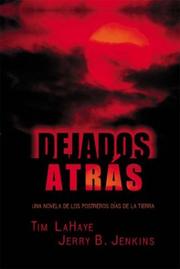
Left Behind was written by Tim LaHaye and Jerry B. Jenkins and first published in 1995.
What genre is Left Behind?
Left Behind is listed under Mystery & Thriller.
More Mystery & Thriller summariesWhere is Left Behind set?
Left Behind is set in Illinois.
How many pages is Left Behind?
Left Behind is about 383 pages long (the median page count across its editions, per Open Library).