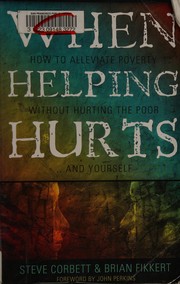
About when helping hurts
When Helping Hurts: How to Alleviate Poverty Without Hurting the Poor . . . and Yourself is a foundational text that challenges conventional approaches to poverty alleviation, particularly within Christian contexts. Authored by Steve Corbett and Brian Fikkert, the book argues that many well-intentioned efforts to help the poor often do more harm than good by fostering dependency, undermining dignity, and failing to address the root causes of poverty. It redefines poverty not merely as a lack of material resources, but as a complex web of broken relationships—with God, self, others, and creation.
The authors propose a holistic, biblically-informed framework for effective poverty alleviation that prioritizes the dignity and empowerment of the poor. They introduce a 'relief, rehabilitation, and development' continuum, advocating for context-specific strategies that move beyond immediate material aid to long-term, sustainable solutions. The core message emphasizes a shift from 'doing for' the poor to 'doing with' them, recognizing their inherent assets and involving them as active participants in their own transformation. The book provides practical principles and case studies for individuals, churches, and organizations seeking to engage in genuinely helpful and transformative ministry.
Key takeaways
- Recognize that poverty is fundamentally a brokenness in four key relationships: with God, self, others, and creation, not just a lack of material resources.
- Always prioritize the dignity and empowerment of the poor, ensuring that helping efforts do not inadvertently foster dependency or shame.
- Understand the critical distinction between relief, rehabilitation, and development, applying the appropriate strategy based on the specific context and needs.
- Adopt a 'learner' posture when engaging with the poor, listening to their perspectives and identifying their existing assets rather than assuming what they need.
- Shift from 'doing for' the poor to 'doing with' them, fostering mutual participation and recognizing their capacity to contribute to their own solutions.
- Implement asset-based community development, focusing on leveraging the strengths and resources already present within a community.
- Ensure that all helping efforts are holistic, addressing spiritual, social, psychological, and physical dimensions of poverty.
- Evaluate the long-term impact of aid, striving for sustainable solutions that build capacity and self-sufficiency rather than creating ongoing reliance.
Key ideas at a glance
Poverty alleviation
- Ensure that all helping efforts are holistic, addressing spiritual, social, psychological, and physical dimensions of…
Dignity of the poor
- Always prioritize the dignity and empowerment of the poor, ensuring that helping efforts do not inadvertently foster…
- Adopt a 'learner' posture when engaging with the poor, listening to their perspectives and identifying their existing…
Dependency vs
- Shift from 'doing for' the poor to 'doing with' them, fostering mutual participation and recognizing their capacity to…
Holistic development
- Understand the critical distinction between relief, rehabilitation, and development, applying the appropriate strategy…
- Implement asset-based community development, focusing on leveraging the strengths and resources already present within…
Relational poverty
- Recognize that poverty is fundamentally a brokenness in four key relationships: with God, self, others, and creation…
Chapter summaries
Introduction: The Problem with Helping
The introduction sets the stage by highlighting the common pitfalls and unintended negative consequences of traditional poverty alleviation efforts. It introduces the central premise that good intentions are not enough and often lead to dependency, disempowerment, and damage to the dignity of the poor. The authors argue for a paradigm shift in how individuals and organizations approach helping, emphasizing that many well-meaning efforts inadvertently cause more harm than good by failing to understand the complex nature of poverty and the dynamics of aid. It challenges readers to critically examine their own assumptions and motivations before engaging in helping activities.
Chapter 1: The Problem: Well-Intentioned Efforts Often Hurt
This chapter delves into specific examples and common mistakes made by well-meaning helpers, such as creating dependency, fostering paternalism, and undermining local economies. It illustrates how providing material aid without understanding the underlying causes of poverty can lead to a cycle of reliance and erode the self-worth of the materially poor. The authors discuss the concept of 'poverty tourism' and the negative impacts of short-term missions that lack long-term strategy or cultural sensitivity. It emphasizes that poverty is more complex than just a lack of material resources and that a superficial understanding can exacerbate problems rather than solve them.
Chapter 2: The Solution: A New Way of Thinking About Poverty
This chapter introduces the book's core framework for understanding poverty: relational brokenness. It posits that poverty is fundamentally a result of four broken relationships: with God, with self, with others, and with creation. The authors argue that true poverty alleviation must address these relational dimensions, aiming for reconciliation and restoration rather than merely providing material aid. This holistic perspective challenges the common Western view of poverty as solely a material issue, setting the stage for an asset-based, dignifying approach that seeks to restore individuals and communities to their God-given design.
Chapter 3: What Is Poverty?
Expanding on the relational definition, this chapter details how broken relationships manifest in spiritual, psychological, social, and physical dimensions. It distinguishes between the 'poverty of being' (loss of identity, dignity, and purpose) and the 'poverty of doing' (lack of skills, resources, and opportunities). The authors stress that the materially poor often suffer from a profound 'poverty of dignity' and a feeling of shame, which must be addressed for effective intervention. They emphasize that material poverty is often a symptom of deeper relational issues, and that sustainable change requires addressing these root causes.
Chapter 4: The Poverty of the Non-Poor
This chapter turns the lens on the materially non-poor, arguing that they too experience poverty, often in spiritual, relational, and psychological forms like pride, paternalism, and a savior complex. It highlights how these 'non-poor' poverties can hinder effective helping by creating power imbalances and preventing genuine partnership. The authors discuss how a sense of superiority or a desire to be seen as a 'hero' can lead to disempowering actions. The chapter calls for humility, self-awareness, and a recognition that both the materially poor and non-poor are broken and in need of reconciliation.
Chapter 5: The Importance of Worldviews
This chapter explores how differing worldviews between helpers and the helped can lead to misunderstandings and ineffective interventions. It emphasizes the need for helpers to understand the cultural context and perspectives of the materially poor, rather than imposing their own Western, individualistic, and often materialistic worldview. The authors explain how Western individualism often clashes with communal worldviews prevalent in many impoverished communities, leading to misinterpretations of needs and solutions. The chapter advocates for deep listening, cultural humility, and learning from the community being served to ensure interventions are appropriate and effective.
Chapter 6: Relief, Rehabilitation, and Development
This chapter differentiates between three distinct types of interventions: relief (short-term aid in crisis), rehabilitation (restoring functionality after crisis), and development (long-term, sustainable change addressing root causes). The authors argue that misapplying these interventions (e.g., using relief when development is needed) is a major cause of harm and dependency. They provide clear criteria for discerning which approach is appropriate based on the specific context and the nature of the poverty. The chapter stresses that applying the wrong intervention can perpetuate poverty and undermine local capacity, emphasizing the importance of careful assessment.
Chapter 7: The First Principle: Do No Harm
This foundational principle emphasizes the ethical imperative to avoid causing further damage, dependency, or disempowerment. It discusses how well-intentioned actions, such as donating used clothing or sending unsolicited goods, can inadvertently undermine local markets, destroy dignity, or create a sense of inferiority among recipients. The authors urge careful assessment of potential negative impacts before implementing any program, advocating for a thorough understanding of the local economy and social dynamics. This principle serves as a critical filter for all poverty alleviation efforts, prioritizing the well-being and dignity of the materially poor.
Chapter 8: The Second Principle: Embrace a Ministry of Reconciliation
This chapter reaffirms the core idea that poverty is relational brokenness and that true alleviation involves reconciliation—with God, self, others, and creation. It argues that interventions should aim to restore these relationships, fostering spiritual growth, self-worth, community cohesion, and environmental stewardship. The authors emphasize that the gospel message is inherently holistic, addressing both spiritual and material needs. This principle underscores that effective poverty alleviation is not just about fixing material problems but about restoring people to their intended design and fostering flourishing in all dimensions of life.
Chapter 9: The Third Principle: Focus on Assets
This chapter advocates for an asset-based approach, encouraging helpers to identify and build upon the existing strengths, resources, and capacities within a community, rather than focusing solely on its deficits. It challenges the common practice of needs-based assessments that can reinforce a narrative of lack and helplessness. By identifying and mobilizing local assets—such as skills, social networks, natural resources, and cultural wisdom—this principle promotes empowerment, fosters self-reliance, and encourages local ownership of solutions, recognizing the inherent dignity and abilities of the materially poor.
Chapter 10: The Fourth Principle: Work with the Poor, Not for Them
This principle stresses the importance of genuine partnership and participation. It argues against top-down, paternalistic approaches where helpers dictate solutions, which often leads to dependency and a lack of ownership. Instead, it promotes collaborative efforts where the materially poor are active agents in identifying problems, designing solutions, and implementing programs. The authors emphasize that true partnership involves mutual respect, shared decision-making, and a recognition that both the helper and the helped bring valuable contributions to the process, ensuring relevance and sustainability of interventions.
Chapter 11: The Fifth Principle: Empower the Poor
This chapter focuses on fostering self-efficacy and agency among the materially poor. It involves providing tools, training, and opportunities that enable individuals and communities to take control of their own development, rather than being passive recipients of aid. The authors caution against actions that inadvertently disempower by creating dependency, reinforcing a victim mentality, or undermining local leadership. Empowerment means helping people discover and utilize their God-given potential, fostering a sense of dignity, purpose, and the ability to drive their own flourishing and contribute to their communities.
Chapter 12: The Sixth Principle: Long-Term, Sustainable Change
This chapter highlights the need for interventions that lead to lasting transformation rather than temporary fixes. It emphasizes addressing the root causes of poverty, building local capacity, and ensuring that solutions are environmentally, economically, and socially sustainable. The authors stress that true development takes time and requires a commitment to enduring impact, moving beyond quick fixes or short-term projects. This principle encourages patience, strategic planning, and a focus on creating systems and structures that can continue to function and benefit the community long after external support has diminished.
Chapter 13: Local Church and Community Development
This chapter explores the vital role of the local church as a primary agent of holistic community development. It discusses how churches can effectively engage in poverty alleviation by leveraging their unique assets, fostering spiritual transformation, and mobilizing their members to serve their communities in culturally appropriate and empowering ways. The authors emphasize that the church, when functioning as God intended, is uniquely positioned to address both the spiritual and material dimensions of poverty, fostering reconciliation and holistic flourishing within its local context. It encourages churches to move beyond charity to genuine development.
Chapter 14: Short-Term Missions
This chapter provides a critical examination of short-term mission trips, often highlighting their potential for harm if not executed thoughtfully. It offers guidelines for making short-term missions more effective and less detrimental, emphasizing thorough preparation, cultural sensitivity, genuine partnership with local communities, and focusing on activities that truly serve the long-term goals of the host community. The authors caution against 'poverty tourism' and projects that create dependency or undermine local capacity, advocating instead for trips that involve mutual learning, skill transfer, and support for existing local initiatives.
Chapter 15: Microfinance and Business Development
This chapter discusses the potential and pitfalls of microfinance and other business development initiatives as tools for poverty alleviation. It emphasizes the importance of responsible lending, financial literacy training, and creating supportive ecosystems for entrepreneurs, while cautioning against approaches that can lead to debt traps or unsustainable ventures. The authors stress that microfinance is not a panacea and must be implemented carefully, with a focus on empowering individuals to build sustainable livelihoods rather than simply providing loans. It highlights the need for contextual understanding and ethical practices in economic development.
Chapter 16: Education and Health
This chapter examines effective strategies for improving education and health outcomes in impoverished communities. It advocates for culturally relevant curricula, community-led health initiatives, and addressing systemic barriers to access. The authors stress that these interventions should be integrated into a broader development strategy, not treated in isolation. They emphasize the importance of empowering local educators and health workers, building local capacity, and ensuring that programs are sustainable and responsive to the community's specific needs and priorities, rather than imposing external models.
Chapter 17: Advocacy and Justice
This chapter addresses the role of advocacy in challenging systemic injustices and policies that perpetuate poverty. It encourages helpers to speak out on behalf of the marginalized, work for structural change, and engage in efforts that promote justice and equity, recognizing that poverty often has roots in oppressive systems. The authors argue that while individual interventions are important, true poverty alleviation also requires addressing the broader social, economic, and political structures that create and maintain poverty, calling for a commitment to seeking justice for the oppressed.
Chapter 18: Measuring Impact
This chapter focuses on the importance of evaluating the effectiveness of poverty alleviation programs. It discusses various methods for measuring impact, emphasizing both quantitative and qualitative data, and the need for ongoing learning and adaptation. The authors encourage organizations to be accountable for their results, to continuously improve their approaches based on evidence, and to avoid simply reporting activities without demonstrating actual change. It highlights the importance of setting clear objectives, collecting relevant data, and using evaluation as a tool for reflection and improvement, ensuring resources are used wisely and effectively.
Conclusion: Moving Forward
The conclusion reaffirms the book's central message about the need for a paradigm shift in poverty alleviation, moving from a charity-based model to one rooted in reconciliation and empowerment. It calls readers to action, encouraging them to apply the principles learned, foster genuine relationships, and commit to long-term, holistic transformation. The authors offer a hopeful vision for effective and dignifying service to the materially poor, emphasizing that true helping involves walking alongside people, recognizing their dignity, and working towards a world where all relationships are restored and all people can flourish in their God-given potential.
Full summary
Book Overview
"When Helping Hurts: How to Alleviate Poverty Without Hurting the Poor and Yourself" is a thought-provoking book co-authored by Steve Corbett and Brian Fikkert. It challenges conventional notions of charity and aid, urging readers to reconsider how they approach poverty alleviation. The book serves as both a critique of traditional methods of helping the poor and a guide to more effective, sustainable practices.
Main Content/Plot
The authors begin by sharing personal anecdotes and case studies that illustrate the unintended consequences of well-meaning charity. They highlight a range of scenarios—from disaster relief to long-term missions—demonstrating how traditional aid can sometimes perpetuate dependency rather than foster empowerment.
Corbett and Fikkert introduce the concept of "asset-based community development," which focuses on recognizing and leveraging the strengths of impoverished communities instead of merely addressing their needs. They advocate for a model that encourages collaboration, respect, and dignity in interactions between aid providers and recipients.
The book is divided into clear sections that cover the roots of poverty, the complexities of aid, and practical recommendations for effective engagement. The authors emphasize the importance of understanding the broader context of poverty, which includes spiritual, emotional, and social dimensions, rather than viewing it solely through an economic lens.
Key Themes
1. Dependency vs. Empowerment: The book underscores the danger of creating dependency through handouts and instead advocates for empowering individuals and communities to take charge of their own development.
2. Community Strengths: Fikkert and Corbett stress recognizing the existing strengths within impoverished communities, which can lead to more sustainable and effective solutions.
3. Holistic Understanding of Poverty: The authors argue that poverty is not merely a lack of material resources; it also encompasses spiritual and relational poverty, requiring a comprehensive approach to alleviation.
4. The Role of the Church: The book discusses the potential of faith-based organizations and communities in addressing poverty, urging them to adopt more effective strategies that align with biblical principles of stewardship and justice.
Important Takeaways
- Rethink Aid: Traditional charity methods can be counterproductive. A more thoughtful, community-driven approach is necessary for sustainable change.
- Engagement over Assistance: Building relationships and fostering collaboration is crucial in working with impoverished communities. This creates a sense of ownership and dignity.
- Education and Training: Investing in education and skills training is essential for empowering individuals, enabling them to
Memorable quotes
“Poverty is not merely a lack of material things but a condition rooted in broken relationships: with God, self, others, and creation.”
“We have been created to worship God, to steward creation, to love our neighbors as ourselves, and to have a healthy sense of self-worth.”
“The materially poor are often wounded in their souls, and the materially non-poor are often wounded in their souls.”
“Good intentions are not enough. We must also understand the complexities of poverty and how to help without hurting.”
“The materially poor are not objects of our pity, but rather fellow image-bearers of God, full of dignity and potential.”
Themes
- Poverty alleviation
- Dignity of the poor
- Dependency vs. empowerment
- Holistic development
- Relational poverty
About Steve Corbett
Steve Corbett, along with co-author Brian Fikkert, wrote When Helping Hurts. Corbett serves as the Community Development Specialist for the Chalmers Center for Economic Development at Covenant College, where Fikkert is a professor of economics and the founder and executive director of the Chalmers Center. They co-authored this book out of their extensive experience in poverty alleviation, both domestically and internationally, and their desire to equip Christians and organizations to help the poor in ways that are truly transformative and honor the dignity of all involved.
FAQ
What is when helping hurts about?
When Helping Hurts critiques traditional approaches to poverty alleviation, arguing that many well-intentioned efforts inadvertently harm the poor. It redefines poverty as a relational issue—brokenness in relationships with God, self, others, and creation—and provides a biblically-based framework for effective, dignified, and sustainable helping that empowers the poor rather than creating dependency.
Is when helping hurts worth reading?
Yes, When Helping Hurts is highly recommended for anyone involved in poverty alleviation, missions, or social justice, especially within Christian contexts. It offers a paradigm-shifting perspective that challenges assumptions and provides practical, actionable principles for more effective and ethical engagement with the poor, fostering genuine transformation for all involved.
How does when helping hurts end?
Spoiler: The book concludes by offering practical guidance for applying its principles in various real-world scenarios, including short-term missions, microfinance, and local church ministries. It emphasizes the importance of long-term commitment, asset-based community development, and fostering mutual relationships where both the helper and the helped are transformed, ultimately aiming for sustainable, dignified solutions to poverty.
Who should read when helping hurts?
This book is essential reading for church leaders, missionaries, non-profit staff, volunteers, and anyone interested in engaging with poverty alleviation in a thoughtful and effective manner. It's particularly valuable for those who have experienced frustration with traditional aid models or who seek a deeper, more biblically-informed understanding of helping the poor.
How long does it take to read when helping hurts?
Given its length of approximately 250 pages, most readers can expect to complete When Helping Hurts in about 5 to 7 hours, depending on their reading speed and how much time they spend reflecting on its concepts and case studies.