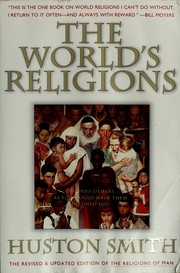
About The Worlds Religions
Huston Smith's "The Worlds Religions" is a seminal work that offers a profound and accessible introduction to the major religious traditions of humanity. Rather than merely cataloging historical facts or sociological observations, Smith delves into the spiritual heart of each faith, seeking to articulate the core beliefs, practices, and mystical experiences that define them from the perspective of their most devout adherents. The book covers Hinduism, Buddhism, Confucianism, Taoism, Islam, Judaism, and Christianity, along with a chapter on primal religions, presenting each tradition with empathy and intellectual rigor.
Smith's main argument revolves around the concept of the "perennial philosophy," suggesting that beneath the diverse outward forms of different religions lies a shared, universal spiritual truth or ultimate reality. He aims to foster interfaith understanding and appreciation by illuminating the wisdom and beauty inherent in each tradition, encouraging readers to move beyond superficial differences to grasp their common quest for meaning and transcendence. The book challenges readers to engage with these faiths not as mere academic subjects but as living paths to spiritual insight.
The book matters significantly because it provides a foundational text for comparative religion, influencing generations of students and general readers. It promotes a respectful and appreciative approach to religious diversity, advocating for a worldview that recognizes the validity and depth of multiple spiritual paths. By presenting each religion at its best, Smith invites readers to encounter the profound wisdom traditions that have shaped human civilization, fostering a deeper understanding of both the world's cultures and the human spiritual impulse.
Key takeaways
- Approach world religions with empathy, seeking to understand them from the perspective of their most devout practitioners.
- Recognize the "perennial philosophy," which suggests a shared core of spiritual truth underlying diverse religious expressions.
- Engage with religious traditions not just intellectually, but also with an openness to their spiritual and experiential dimensions.
- Understand that each major religion offers a unique and valid path to ultimate reality and human flourishing.
- Cultivate interfaith understanding by appreciating the wisdom and beauty inherent in traditions beyond one's own.
- Be aware that religious practices and beliefs are often symbolic expressions pointing to deeper, ineffable truths.
Key ideas at a glance
Perennial Philosophy
- Recognize the "perennial philosophy," which suggests a shared core of spiritual truth underlying diverse religious…
Interfaith Understanding
- Approach world religions with empathy, seeking to understand them from the perspective of their most devout…
- Cultivate interfaith understanding by appreciating the wisdom and beauty inherent in traditions beyond one's own.
Spiritual Essence
- Engage with religious traditions not just intellectually, but also with an openness to their spiritual and experiential…
Religious Pluralism
- Understand that each major religion offers a unique and valid path to ultimate reality and human flourishing.
- Be aware that religious practices and beliefs are often symbolic expressions pointing to deeper, ineffable truths.
Chapter summaries
Introduction: The Human Predicament
This introductory section sets the stage for the comparative study of the world's major religions. Smith argues for the importance of understanding these traditions not merely as historical phenomena or cultural artifacts, but as living paths to ultimate meaning and truth. He emphasizes the need for empathy and an open mind when approaching different spiritual perspectives, urging readers to look beyond superficial differences to grasp the profound insights each tradition offers regarding the human condition, the nature of reality, and the path to liberation or salvation. Smith introduces the concept of "the perennial philosophy," suggesting underlying commonalities in the deepest mystical experiences across diverse faiths, while also respecting their unique expressions and historical contexts.
Hinduism
Smith delves into Hinduism, presenting it as a vast and ancient tradition characterized by its incredible diversity and tolerance. Key concepts explored include Brahman, the ultimate reality, and Atman, the individual soul, often understood as identical (Tat Tvam Asi). The cycle of samsara (reincarnation) and the law of karma are central, along with the goal of moksha (liberation). Smith discusses the various yogas (paths to union with the divine): Jnana (knowledge), Bhakti (devotion), Karma (action), and Raja (psychophysical exercises). He introduces prominent deities like Vishnu (the Preserver), Shiva (the Destroyer/Creator), and Devi (the Divine Mother), and touches upon sacred texts such as the Vedas, Upanishads, and the Bhagavad Gita, highlighting their philosophical depth and spiritual guidance.
Buddhism
This section introduces Buddhism through the life and teachings of Siddhartha Gautama, the Buddha. Smith meticulously explains the Four Noble Truths: suffering (dukkha), the origin of suffering (tanha or craving), the cessation of suffering (nirvana), and the path to the cessation of suffering (the Eightfold Path). He elaborates on the components of the Eightfold Path, emphasizing right understanding, thought, speech, action, livelihood, effort, mindfulness, and concentration. The concepts of anatta (no-self) and anicca (impermanence) are central to understanding Buddhist metaphysics. Smith also differentiates between the major schools of Buddhism: Theravada (the Way of the Elders), Mahayana (the Great Raft), and Zen, highlighting their distinct practices, ideals (arhat vs. bodhisattva), and geographical distributions.
Confucianism
Smith presents Confucianism not primarily as a religion in the Western sense, but as a profound ethical and philosophical system focused on human flourishing and social harmony. He introduces Confucius as a teacher whose primary concern was the cultivation of jen (human-heartedness or benevolence) and li (propriety or ritual). The Five Relationships (ruler-subject, father-son, husband-wife, elder brother-younger brother, friend-friend) are central to its social structure, emphasizing mutual respect and responsibility. The ideal person, the chun-tzu (superior person), embodies these virtues. Smith discusses the importance of te (power of moral example) and wen (arts of peace), illustrating how Confucianism sought to create a just and harmonious society through education, self-cultivation, and ethical governance, rather than through supernatural deities or an afterlife.
Taoism
In this section, Smith explores Taoism, contrasting its emphasis on naturalness and spontaneity with Confucianism's focus on social order. The central concept is the Tao, the ineffable, ultimate reality and the way of the universe. He explains wu wei (non-action or effortless action), advocating for living in harmony with the Tao rather than striving against it. The principles of yin and yang are introduced as complementary forces underlying all existence. Smith discusses the foundational texts, the Tao Te Ching attributed to Lao Tzu, and the writings of Chuang Tzu, which use parables and paradoxes to convey the elusive nature of the Tao. The pursuit of chi (vital energy) and the ideal of living simply, close to nature, are also highlighted as core tenets of Taoist philosophy and practice.
Islam
Smith introduces Islam as a monotheistic religion centered on the absolute oneness of God (Allah) and submission to His will. He recounts the life of Prophet Muhammad, emphasizing his role as the final prophet who received God's revelations, compiled in the Quran. The Five Pillars of Islam are detailed: the Shahada (declaration of faith), Salat (ritual prayer five times daily), Zakat (charity), Sawm (fasting during Ramadan), and Hajj (pilgrimage to Mecca). Smith explains the concept of the umma (global Muslim community) and the importance of sharia (Islamic law). He also touches upon Sufism, the mystical dimension of Islam, which seeks direct experience of God through asceticism, devotion, and ecstatic practices, highlighting figures like Rumi and their poetic expressions of divine love.
Judaism
Smith explores Judaism as a covenantal religion, emphasizing the unique relationship between God and the Jewish people. He traces its origins from Abraham, through Moses and the giving of the Torah at Mount Sinai, which forms the core of Jewish law and ethics. The importance of the Prophets, who continually called the people back to righteousness and justice, is highlighted. Smith discusses the significance of the Talmud, the vast body of rabbinic commentary and law, and the centrality of halakha (Jewish law) in daily life. Key practices and beliefs, such as the observance of Shabbat, dietary laws (kashrut), and major festivals like Passover and Yom Kippur, are explained. The concept of chosenness, not as superiority but as a responsibility to be a light unto the nations, is also addressed.
Christianity
This section focuses on Christianity, centered on the life, teachings, death, and resurrection of Jesus Christ. Smith draws from the Gospels to present Jesus's message of radical love, forgiveness, and the Kingdom of God. He discusses core Christian doctrines such as the Trinity (God as Father, Son, and Holy Spirit), the Incarnation (God becoming human in Jesus), and the Atonement (Jesus's sacrifice for the redemption of humanity). The role of the Church as the body of Christ and the importance of sacraments like baptism and communion are explained. Smith also touches upon the historical development of Christianity, its various denominations (Catholicism, Protestantism, Orthodoxy), and its global impact, emphasizing its emphasis on faith, grace, and the hope of eternal life.
Primal Religions
Smith dedicates a section to Primal Religions, often referred to as indigenous or tribal traditions, emphasizing their deep connection to nature and the sacredness of the cosmos. He highlights their oral traditions, rich mythologies, and the pervasive presence of the sacred in everyday life, often through animism or totemism. Key characteristics include the importance of rituals, ceremonies, and rites of passage that mark significant life events and maintain cosmic balance. The role of shamans, medicine people, and elders as spiritual guides and healers is discussed. Smith underscores their holistic worldview, where humans are intricately woven into the web of life, and the land itself holds spiritual significance, contrasting this with more anthropocentric views found in some other traditions.
A Final Word: The Perennial Philosophy
In his concluding section, Smith reflects on the overarching themes and insights gleaned from the study of the world's religions. He revisits the concept of the "perennial philosophy," suggesting that despite their diverse forms, all major spiritual traditions point towards a common ultimate reality and offer paths to transcend the ego and experience a deeper, more unified existence. Smith emphasizes the shared human quest for meaning, purpose, and liberation, and the common ethical injunctions found across faiths. He encourages readers to appreciate the unique contributions of each tradition while also recognizing their underlying unity, advocating for interfaith understanding and a deeper engagement with the spiritual dimensions of human experience in a complex world.
Full summary
Book Overview
"The World's Religions" by Huston Smith is a seminal work in the field of religious studies, first published in 1958. Smith, a renowned scholar and philosopher, provides an accessible yet profound exploration of various world religions, including Hinduism, Buddhism, Confucianism, Christianity, Islam, and Judaism. His aim is to foster understanding and appreciation of the rich tapestry of religious beliefs and practices that shape human experience.
Main Content/Plot
The book is structured into chapters, each dedicated to a specific religion. Smith begins with a historical context, discussing the origins and developments of each faith. He delves into core beliefs, rituals, sacred texts, and the lives of significant figures associated with each tradition.
1. Hinduism: Smith explores the concept of Brahman (the ultimate reality) and Atman (the individual soul), emphasizing the significance of karma and reincarnation.
2. Buddhism: He outlines the life of Siddhartha Gautama (the Buddha), the Four Noble Truths, and the Eightfold Path, highlighting the path toward enlightenment.
3. Confucianism: Smith discusses Confucius's teachings on ethics, social harmony, and the importance of filial piety in Chinese culture.
4. Christianity: He provides insights into the life of Jesus, the significance of love and grace, and the diversity within Christian thought.
5. Islam: Smith examines the life of the Prophet Muhammad, the Five Pillars of Islam, and the concept of submission to Allah.
6. Judaism: He reflects on the covenant between God and the Jewish people, the importance of the Torah, and the ongoing relevance of Jewish traditions.
Throughout the book, Smith intersperses personal reflections and anecdotes, making the material relatable and engaging.
Key Themes
1. Religious Pluralism: Smith advocates for an understanding of religions as distinct yet interconnected pathways to the divine, promoting respect and tolerance among different faiths.
2. Spiritual Experience: He emphasizes the transformative nature of religious experience, asserting that faith is not merely a set of beliefs but a profound encounter with the sacred.
3. Ethical Living: Each religion, while unique in its doctrine, offers ethical frameworks for living a moral life, underscoring the universal quest for meaning and purpose.
4. The Role of Tradition: Smith highlights the importance of tradition
Memorable quotes
“The great religions are not so much competing systems as they are complementary perspectives on the same ultimate reality.”
“Religion is the human response to the Ultimate Mystery.”
“The world's religions are not so much systems of belief as ways of life.”
“To understand a religion, one must understand it at its best, not at its worst or in its most distorted forms.”
Themes
- Perennial Philosophy
- Interfaith Understanding
- Spiritual Essence
- Mystical Experience
- Religious Pluralism
About Huston Smith
Huston Smith (1919-2017) was a renowned religious scholar and philosopher, best known for his empathetic and accessible approach to the study of world religions. A professor at MIT, Syracuse University, and UC Berkeley, he dedicated his life to understanding and articulating the spiritual essence of diverse faiths. His other notable works include "Forgotten Truth: The Common Vision of the World's Religions" and "Why Religion Matters." Smith wrote "The Worlds Religions" (originally "The Religions of Man") to move beyond superficial descriptions of religious traditions, aiming instead to convey their inner spirit and wisdom from the perspective of their most devout adherents, fostering interfaith understanding.
FAQ
What is The Worlds Religions about?
Huston Smith's "The Worlds Religions" is about the core spiritual teachings and practices of the major world religions, including Hinduism, Buddhism, Islam, Judaism, and Christianity. It presents these faiths with empathy, focusing on their inner spirit and shared pursuit of ultimate reality rather than just historical facts.
Is The Worlds Religions worth reading?
Yes, it is widely considered a classic and an essential introduction to comparative religion. It offers profound insights into diverse spiritual paths, fostering understanding and appreciation for different wisdom traditions, and has influenced generations of readers.
How does The Worlds Religions end?
Spoiler: The book concludes by exploring the "Perennial Philosophy," arguing for a shared mystical core underlying all major religious traditions. Smith emphasizes their common quest for ultimate truth and spiritual realization, highlighting the unifying themes across diverse human spiritual experiences.
Who should read The Worlds Religions?
Anyone interested in understanding the spiritual dimensions of humanity, comparative religion, interfaith dialogue, or seeking a deeper appreciation for diverse wisdom traditions will find this book invaluable. It's suitable for both students and general readers.
How long does it take to read The Worlds Religions?
It typically takes around 6-8 hours to read, depending on individual reading speed. The book is approximately 400 pages long, offering a comprehensive yet accessible overview of the world's major faiths.