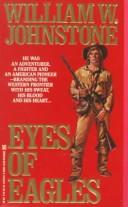
Eyes of Eagles
In 60 seconds
Born to a Scottish father and a Native American mother in a remote Rocky Mountain valley, Jamie Ian MacCallister watches outlaws murder his parents and is raised by the mountain man Preacher. He exacts his first vengeance as a boy, fights and survives the Alamo, and helps Sam Houston win Texas its independence at San Jacinto. Comanches kill his first wife and son, sending him on a years-long hunt that ends in single combat with the war chief and no peace. He finds love again with Sarah, builds a valley homestead, and destroys land baron Victor Van Horne in a range war before walking into the mountains one last time.
Before you start
Why it matters
This is frontier storytelling at full gallop: one life stretched across the whole sweep of the early American West, from mountain wilderness to the Alamo to the settling of the plains. Johnstone writes big, bloody, direct prose for readers who want a hero with a code and a body count to match. Pick it up if you love Louis L'Amour-style sagas, historical epics with real battles, or a single character you can follow for decades.
Spoilers ahead
The story
- 1
Act 1
The Boy the Wilderness Made
A remote valley in the Rocky Mountains, early 1800s. Jamie Ian MacCallister is born here, son of a Scottish father and a Native American mother, and grows up learning frontier survival alongside the ways of the wild. The valley gives him everything until the day it takes it: a band of renegade outlaws murders his parents before his eyes, leaving the boy orphaned and alone. A mountain man named Preacher finds him and takes him in, teaching him to track, to hunt, and to fight. Preacher hands down a code with one sentence: 'A man's got to do what a man's got to do.' Jamie absorbs it as gospel, self-reliance and justice in a single breath. When he is ready, he turns the skills back on the men who broke his life. He tracks the outlaws across the wilderness and kills them one by one, each death a payment on the debt that made him an orphan. His first act of vengeance is complete, and it costs him whatever childhood the mountains had left to give. What remains is a frontiersman in the making, shaped by loss, armed with Preacher's lessons, and pointed at a world that keeps demanding more from him.
- 2
Act 2
The Alamo and the Birth of Texas
As a young man, Jamie rides to Texas and joins the fight for independence, arriving at the Alamo in 1836 alongside Davy Crockett and Jim Bowie. The siege closes around the old mission, and Jamie fights fiercely on its walls beside legends. He watches Crockett and Bowie die as the end approaches, and he is one of the few who escapes before the final massacre. His survival comes by order: Colonel William Travis entrusts him with a message, and Jamie carries it through enemy lines on a harrowing ride that saves his life while the Alamo falls behind him. Grief and duty point him to Sam Houston's army. There he fights at the Battle of San Jacinto, where Santa Anna is defeated and Texas wins its independence. The cost is written in the friends buried at the Alamo; the reward is a new republic and a reputation that will follow Jamie for the rest of his life. He leaves the battlefield a survivor of the two most famous moments of the revolution, a young man with a warrior's name and no idea how high the price of living will climb.
- 3
Act 3
The Wanderer and the Mountain Man
Jamie marries a woman named Kate and they have a son, a stretch of happiness that ends while he is away from the homestead. A band of Comanches raids it and kills Kate and the boy. Consumed by grief, Jamie embarks on a years-long quest to find the specific warriors responsible, tracking them across plains and deserts. He finally confronts the war chief who led the raid and kills him in single combat, and the vengeance buys him nothing. No peace comes with the chief's death, only the empty space where his family used to be. So Jamie retreats to the high Rockies and lives as a solitary trapper and mountain man. There he survives a near-fatal encounter with a grizzly and, remarkably, befriends the bear, naming him Ole Ephraim. At a remote trading post he meets Sarah, a settler's daughter, and slowly begins to heal from his past losses. They marry in a simple ceremony conducted by a traveling preacher, with Ole Ephraim watching from the edge of the clearing. The wanderer has found a reason to stop moving.
- 4
Act 4
The Settler's War and the Legend
Jamie and Sarah build a cabin in a fertile valley and start a new family; Sarah gives birth to a daughter they name Kathleen. The valley's peace attracts a predator of a different kind: Victor Van Horne, a wealthy land baron, decides to force Jamie off his land and sends hired gunmen to intimidate the family. Jamie answers with a nighttime shootout at his cabin, killing three of Van Horne's men using only a knife and his bare hands so the rest of the gang is not alerted. Van Horne escalates, burning Jamie's barn and running off his livestock, and the feud swells into a full-scale range war. Jamie rides into the town of Eagle's Nest and confronts Van Horne in the saloon: 'You made a mistake when you burned my barn. Now I'm coming for you.' With old mountain man friends at his side, he ambushes Van Horne's gang in a canyon, killing most of them and sending the survivors fleeing. Then he tracks Van Horne to his ranch and kills him in a final gunfight, ending the range war and securing his family's future. Years later, an aging Jamie sits on his porch with Sarah watching their grandchildren play, reflecting that the frontier is changing as more settlers arrive. A young journalist from back East arrives to write his story, and Jamie tells him, 'I ain't no hero. I just did what needed doin' to protect what was mine.' The novel closes with Jamie walking into the mountains one last time to visit Ole Ephraim's grave, knowing his own time is near, while the eagle that has watched over him throughout his life circles overhead.
Who's who
Characters
- Jamie Ian MacCallisterOrphaned son of a Scottish father and Native American mother, he survives the Alamo, buries two families, and burns down anyone who threatens the third. He wants only to protect what is his, and the frontier keeps testing that vow with outlaws, war, and land barons.
- PreacherThe mountain man who takes in the orphaned Jamie and forges him into a frontiersman. His one-line code of self-reliance becomes the spine of Jamie's entire life.
- KateJamie's first wife, killed alongside their son in a Comanche raid while he is away. Her death drives his years-long hunt across the plains.
- SarahA settler's daughter Jamie meets at a remote trading post, the woman who heals him. She marries him in a mountain clearing, bears his daughter Kathleen, and shares his porch in old age.
- Victor Van HorneA wealthy land baron who tries to seize Jamie's valley homestead with hired guns, fire, and stolen livestock. His greed ignites the range war that ends with Jamie's gun at his own ranch.
- Ole EphraimThe grizzly bear Jamie befriends in the high Rockies after a near-fatal first meeting. The bear becomes his silent companion, witness at his wedding, and the last friend he visits.
- Davy Crockett and Jim BowieThe Alamo legends Jamie fights beside on the walls in 1836. Both die in the siege, and their deaths mark Jamie as one of the few who escapes.
What it's really about
Themes
Vengeance That Doesn't Heal
Jamie kills his parents' murderers as a boy and feels the code hold. He hunts the Comanche war chief who killed Kate and their son across plains and deserts, kills him in single combat, and finds nothing there. The second vengeance is the book's quiet confession: paying back evil in kind settles the score but not the soul. What finally restores Jamie is not another kill but Sarah's patience at a trading post and a wedding in a clearing. The book's point is that a man can do what a man's got to do and still need someone to come home to.
The Code of Self-Reliance
Preacher's line, 'A man's got to do what a man's got to do,' is handed to Jamie as a boy and governs every stage of his life. He tracks his parents' killers alone, carries Travis's message through enemy lines alone, and clears three of Van Horne's gunmen from his cabin with a knife and his bare hands to avoid alerting the gang. Even the range war is fought with old mountain man friends rather than lawmen or armies. The code demands self-reliance, but the story shows its limit: Jamie's greatest victories come when self-reliance is joined by chosen allies.
The Passing Frontier
The book moves from a wilderness valley where a boy can be orphaned by outlaws, through the Alamo and San Jacinto, to a settled valley where the enemy is a land baron with lawyers' appetites and hired guns. By the end, Jamie sits on a porch watching grandchildren while more settlers arrive, and he reflects that the frontier is changing. The wild world that made him is being fenced, plowed, and claimed by men like Van Horne. The legend survives precisely because the world that required it is disappearing.
Home as the Prize and the Battlefield
Every act of Jamie's life turns on a home: the valley where he is born and orphaned, the homestead where Kate and his son die, the cabin he builds with Sarah, the land Van Horne tries to steal. Jamie tells the journalist he is no hero, that he just did what needed doing to protect what was mine. The book takes that claim seriously. Its battles are not fought for glory or gold but for a roof, a family, and a stretch of ground, and every loss in the story is measured in empty chairs at a table.
Mentorship and Inheritance
Jamie is made by what he is given: survival skills from both his parents' worlds, then tracking, hunting, and fighting from Preacher, then a code in a single sentence. He carries these gifts through the Alamo, the plains, and the range war, and the novel treats them as an inheritance more valuable than land. By the final pages he is the old man on the porch, the one with a story a young journalist has ridden from back East to take down. The taught becomes the teacher, and the legend passes on the way Preacher's did.
Look closer
Symbols
- The Eagle
- The eagle watches over Jamie throughout his life and circles overhead in the final scene as he walks to Ole Ephraim's grave. It is the book's title image: keen-eyed, solitary, at home in the high empty places. Its presence at the end suggests his spirit remains untamed even as the frontier closes around the settled valley.
- Ole Ephraim the Grizzly
- The bear Jamie nearly dies fighting and then befriends stands for the wilderness itself: lethal to strangers, loyal to the man who understands it. He watches from the clearing's edge at Jamie's wedding, a wild witness to domestic peace, and his grave is the last place Jamie visits, the story ending where the wild and the man made peace.
- The Alamo
- The falling mission is the crucible where Jamie's private code meets public history. He watches Crockett and Bowie die and escapes only because Travis's message sends him through enemy lines. It stands for the price of independence and the burden of being the one who lives to tell it.
- The Burned Barn
- Van Horne's fire is the moment intimidation becomes war. Smoke over a homestead marks the line a man of Jamie's code cannot uncross, and his saloon warning turns the arson into a countdown. The barn stands for how the settled West's greed destroys with property what the wild West destroyed with bullets.
Spoilers
Ending explained
The ending refuses a triumphant death and gives Jamie something rarer: a quiet exit on his own terms. Having secured his family's future by killing Van Horne, he ages on a porch with Sarah, denies heroism to a journalist, and walks into the mountains to visit Ole Ephraim's grave, knowing his time is near, the eagle circling overhead. One reading is elegy: the man who lived by the dying frontier returns to it as it vanishes, choosing the bear's grave over the settled valley because the wild was his first and truest home. Another reading is that the walk is Jamie's final act of self-reliance, facing his own end the way he faced every enemy, alone and unafraid. The circling eagle invites a third reading, that the legend itself outlives the man, watching over the land he helped open. It lands because the book has spent six parts earning this stillness: after orphaning, massacre, and range war, the last image is not a gunfight but an old man, a grave, and a bird.
For class or book club
Discussion questions
- 1.Preacher's code, 'A man's got to do what a man's got to do,' drives Jamie's vengeance twice, yet only the first killing leaves him whole. Where exactly does the code stop working, and what replaces it?
Worth remembering
Best lines
“A man's got to do what a man's got to do.”
“You made a mistake when you burned my barn. Now I'm coming for you.”
“I ain't no hero. I just did what needed doin' to protect what was mine.”
A fair critique
Where it falls short
The novel bends history to serve its hero: Jamie stands beside Crockett and Bowie at the Alamo, survives the massacre by carrying a message, and rides with Houston at San Jacinto, a schedule of famous moments that can feel engineered. Characters beyond Jamie stay thin, with Kate, Sarah, and Van Horne defined mostly by what they do to or for him. The vengeance plot repeats its shape, parents then family then barn, so the middle can feel familiar. Readers wanting moral complexity or period texture beyond battles will find the prose direct and the politics simple.
In one sentence
A boy forged by the wilderness survives the Alamo, avenges two families, and defends a third, learning that a man's code can win every fight except the one against grief.
Is it for you?
Who should read it
Readers who want their Westerns big, bloody, and fast, in the tradition of Louis L'Amour and classic frontier sagas. Also for history buffs who enjoy famous battles filtered through one larger-than-life survivor.
4 questions
Quick quiz: how well do you know Eyes of Eagles?
0 of 4 answered
FAQ
What is Eyes of Eagles about?
"Eyes of Eagles" is a Western novel by William W. Johnstone, featuring the iconic character Smoke Jensen. It tells the story of Smoke defending his ranch and community from a ruthless gang of outlaws and their corrupt backers who are terrorizing settlers and attempting to seize land. It's a classic tale of frontier justice and survival.
Is Eyes of Eagles worth reading?
For fans of traditional Westerns, "Eyes of Eagles" is definitely worth reading. It delivers fast-paced action, clear-cut heroes and villains, and a strong sense of frontier justice. Readers who enjoy William W. Johnstone's other works or authors like Louis L'Amour will find it a satisfying entry in the genre.
How does Eyes of Eagles end?
Spoiler: The book culminates in a decisive and violent showdown where Smoke Jensen, using his legendary gunfighting skills and tactical prowess, confronts and defeats the main outlaw gang and their leader. He ensures that justice is served, restoring peace to the troubled region before returning to his ranch.
Who should read Eyes of Eagles?
This book is ideal for readers who enjoy classic Western fiction, particularly those who appreciate stories of individual heroes fighting for justice against overwhelming odds. Fans of William W. Johnstone's "Eagles" series and other traditional Western authors will find it highly engaging.
How long does it take to read Eyes of Eagles?
On average, it takes approximately 5 to 6 hours to read "Eyes of Eagles." This estimate is based on an average reading speed of 250 words per minute and the typical length of a William W. Johnstone Western novel.
Who wrote Eyes of Eagles?
Eyes of Eagles was written by William W. Johnstone and first published in 1993.
What genre is Eyes of Eagles?
Eyes of Eagles is listed under History.
More History summariesWhere is Eyes of Eagles set?
Eyes of Eagles is set in Alamo (San Antonio, Tex.) and Texas.
How many pages is Eyes of Eagles?
Eyes of Eagles is about 478 pages long (the median page count across its editions, per Open Library).