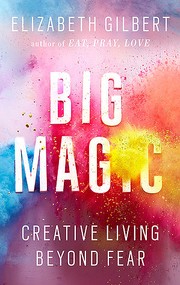
About Big magic
Elizabeth Gilbert's "Big Magic: Creative Living Beyond Fear" is a profound and encouraging exploration of creativity, urging readers to embrace a life driven by curiosity rather than fear. Gilbert posits that creativity is not solely the domain of a select few geniuses, but rather an inherent human trait accessible to everyone. She challenges conventional notions of the tortured artist, advocating for a more joyful, playful, and persistent approach to creative pursuits.
The book's central argument revolves around the idea that creative ideas are living entities, independent of human will, that seek out collaborators to bring them into existence. Gilbert encourages readers to be receptive to these ideas, to pursue them with courage and commitment, and to understand that fear is an inevitable companion on the creative journey, but should never be allowed to take the driver's seat. "Big Magic" is a call to action for anyone who has ever felt a creative impulse but hesitated due to self-doubt, perfectionism, or the pressure to make their art profitable. It champions the idea of living a "big magic" life—one filled with wonder, passion, and the consistent pursuit of what lights you up, regardless of the outcome.
Key takeaways
- Embrace curiosity as your primary guide in creative endeavors, letting it lead you to new discoveries and passions.
- Acknowledge fear as a natural companion on the creative journey, but never allow it to dictate your actions or stop you from creating.
- Give yourself explicit permission to create, understanding that you don't need external validation or a perfect plan to begin.
- Cultivate persistence and a strong work ethic, showing up consistently for your creative work even when inspiration wanes.
- Trust in the mysterious process of creativity, believing that ideas are independent entities seeking human collaboration.
- Unburden your creativity from the pressure of financial success, allowing yourself to pursue projects purely for the joy and fulfillment they bring.
- Don't wait for perfection or genius; start creating now with what you have, where you are.
- Understand that a creative life is a process of continuous learning, experimenting, and adapting, not a destination.
Key ideas at a glance
Creative living
- Embrace curiosity as your primary guide in creative endeavors, letting it lead you to new discoveries and passions.
- Acknowledge fear as a natural companion on the creative journey, but never allow it to dictate your actions or stop you…
Overcoming fear
- Trust in the mysterious process of creativity, believing that ideas are independent entities seeking human…
Divine inspiration
- Cultivate persistence and a strong work ethic, showing up consistently for your creative work even when inspiration…
Persistence and discipline
- Unburden your creativity from the pressure of financial success, allowing yourself to pursue projects purely for the…
Curiosity and wonder
- Don't wait for perfection or genius; start creating now with what you have, where you are.
Self-permission
- Give yourself explicit permission to create, understanding that you don't need external validation or a perfect plan to…
Chapter summaries
Courage
Gilbert begins by asserting that a creative life is an amplified life, but it requires courage, not fearlessness. She argues that fear is a natural, ancient companion to creativity, but it should never be allowed to drive the creative process. Instead, one must learn to coexist with fear, acknowledging its presence but choosing to act despite it. She encourages readers to pursue their curiosity and passion, emphasizing that the biggest risk is not taking any risks at all. The chapter highlights the importance of showing up and doing the work, even when fear is present, and reframes the relationship with fear as a necessary, but not controlling, part of the creative journey. She stresses that a creative life is about living more fully, not just about producing art, and that the rewards are intrinsic.
Enchantment
This section delves into Gilbert's mystical view of ideas. She proposes that ideas are living, disembodied entities that float around the universe, seeking human collaborators to bring them into reality. She describes how an idea will 'visit' a person, presenting itself as a flash of inspiration or a persistent nudge. If the person doesn't act on the idea, or if they abandon it, the idea will eventually leave them and move on to find another, more willing collaborator. Gilbert shares personal anecdotes, including the idea for Eat, Pray, Love and another novel idea that she believes left her to find Ann Patchett. This concept encourages creators to be open, receptive, and diligent in capturing and developing ideas, treating them with respect as if they have a life of their own, independent of the creator.
Permission
Gilbert argues that creators do not need external permission from anyone—parents, teachers, critics, institutions, or even themselves—to pursue their creative endeavors. She advocates for radical self-authorization, encouraging individuals to give themselves the full right to create whatever they wish, simply because they are curious or interested. She challenges the notion that one must be a genius or have a formal education to be a legitimate artist. Instead, she champions the 'amateur' spirit, emphasizing the joy and freedom that come from creating for love, not for profit or validation. This part liberates creators from the burden of seeking approval, urging them to bypass gatekeepers and trust their own inner drive and curiosity as sufficient justification for their work.
Persistence
This chapter emphasizes the critical importance of showing up consistently and doing the work, even when inspiration is absent or the work feels difficult. Gilbert likens creativity to a job, stressing the need for discipline, routine, and a strong work ethic. She introduces the concept of the 'shit sandwich,' explaining that every creative pursuit comes with its own unique set of unpleasantries, and true persistence means being willing to eat that sandwich. She encourages creators to embrace the grind, to finish projects even if they are imperfect, and to understand that the act of creation itself is the reward, not necessarily the outcome. Persistence is presented as the antidote to procrastination and the key to transforming fleeting inspiration into tangible results.
Trust
Gilbert explores the concept of trusting the creative process, oneself, and the mysterious forces that guide inspiration. She encourages creators to let go of the need for guaranteed outcomes or external validation, and instead, to find joy and fulfillment in the act of creation itself. This involves trusting that one's curiosity and passion are valid guides, and that the universe will support one's efforts. She introduces the idea of 'creative entitlement,' not as arrogance, but as the inherent right to create and to believe that one's voice and ideas matter. Trust also means accepting that not every project will be a masterpiece, and that failure is a natural part of the learning and growth process, fostering resilience and a deeper connection to one's creative spirit.
Divinity
In the final section, Gilbert delves into the more mystical and spiritual aspects of creativity. She suggests that creativity can be a pathway to connecting with something larger than oneself, a divine or transcendent force. She discusses the idea of the 'trickster' nature of creativity, where ideas can be playful, elusive, and sometimes lead to unexpected places. This chapter encourages creators to approach their work with a sense of wonder, humility, and a willingness to be surprised. It's about finding the sacred in the everyday act of making, recognizing that creative expression is a fundamental human impulse, and that by engaging with it, we connect to a deeper sense of purpose and meaning in our lives, embracing the mystery and magic inherent in the creative journey.
Full summary
Book Overview
"Big Magic: Creative Living Beyond Fear" is a non-fiction work by Elizabeth Gilbert, known for her bestselling memoir "Eat, Pray, Love." In "Big Magic," Gilbert explores the nature of creativity, offering insights and encouragement for anyone seeking to live a more imaginative life. The book combines personal anecdotes, philosophical musings, and practical advice, making it an inspiring guide for artists, writers, and anyone interested in embracing their creative potential.
Main Content/Plot
"Big Magic" is divided into six sections: Courage, Enchantment, Permission, Persistence, Trust, and Divinity. Each section delves into different aspects of the creative process, drawing on Gilbert's own experiences and the lives of other artists.
1. Courage: Gilbert emphasizes the importance of facing fears and the emotional challenges that come with creativity. She encourages readers to take risks and embrace uncertainty.
2. Enchantment: The author explains that ideas exist independently and can be "caught" by individuals who are open to them. This section illustrates the magical aspect of creativity and the serendipitous moments that lead to inspiration.
3. Permission: Gilbert stresses that creativity is for everyone, not just the "chosen" few. She advocates for self-authorization to pursue creative endeavors without waiting for external validation.
4. Persistence: Here, she discusses the necessity of hard work, dedication, and perseverance in the creative journey, acknowledging that failure is often a part of success.
5. Trust: Gilbert highlights the importance of trusting oneself and the creative process. This section encourages readers to have faith in their abilities and the value of their contributions.
6. Divinity: The final section reflects on the spiritual connection to creativity, suggesting that engaging with one's creative self can lead to profound personal fulfillment.
Key Themes
- Fear and Courage: A central theme is the relationship between creativity and fear, where Gilbert emphasizes that fear is a natural part of the creative process, but it should not dictate one's actions.
- The Nature of Ideas: Gilbert presents the concept of ideas as living entities that seek human collaboration, suggesting that creativity is a partnership between the artist and the idea.
- Inclusivity of Creativity: The book argues that creativity is accessible to all, encouraging readers to pursue their passions irrespective of talent or external approval.
- Resilience: The importance of persistence and resilience
Memorable quotes
“A creative life is an amplified life. It's a bigger life, a more expansive life, a fatter life, a happier life, a more interesting life. And to choose a creative life is to choose a life of glorious torment. But it's also to choose a life of glorious wonder.”
“You do not need anybody's permission to live a creative life.”
“I believe that curiosity is our friend, our guide, our teacher, and our most reliable source of creative inspiration.”
“Fear is a babysitter, not a driver.”
“The universe buries strange jewels deep within us all, and then stands back to see if we can find them.”
Themes
- Creative living
- Overcoming fear
- Divine inspiration
- Persistence and discipline
- Curiosity and wonder
- Self-permission
About Elizabeth Gilbert
Elizabeth Gilbert is an acclaimed American author, best known for her memoir "Eat Pray Love," which chronicled her journey of self-discovery. She has also written several other works, including the novels "The Signature of All Things" and "City of Girls," and the short story collection "Pilgrims." Gilbert wrote "Big Magic" to share her philosophy on creativity, drawing from her own experiences as a successful writer and her observations of the creative process. She aims to demystify creativity and empower individuals to pursue their passions without the burden of fear or perfectionism.
FAQ
What is Big magic about?
Big Magic by Elizabeth Gilbert is about embracing a creative life beyond fear. It argues that creativity is accessible to everyone, not just artists, and encourages readers to pursue their passions with curiosity, persistence, and joy, rather than waiting for perfection or external validation. It's a guide to living a more engaged and fulfilling life through creative expression.
Is Big magic worth reading?
Yes, Big Magic is widely considered worth reading, especially for anyone struggling with creative blocks, self-doubt, or the pressure to make their art profitable. Gilbert's encouraging, practical, and often humorous advice offers a refreshing perspective on creativity, making it an inspiring read for both seasoned artists and those just beginning to explore their creative impulses.
Who should read Big magic?
Big Magic is ideal for anyone who feels a creative calling, whether they identify as an artist or not. It's particularly beneficial for writers, painters, musicians, or anyone in a creative field, but also for individuals in any profession who want to infuse more curiosity, passion, and innovation into their lives. It's for those who want to overcome fear and embrace a more vibrant existence.
How long does it take to read Big magic?
Big Magic is a relatively short and engaging read. Most readers can finish it in about 3 to 5 hours, depending on their reading speed and how much they pause to reflect on its ideas. It's designed to be digestible and inspiring, making it a quick yet impactful experience.