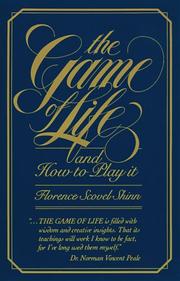
The game of life and how to play it
In 60 seconds
Florence Scovel Shinn says life isn't a battle but a game governed by spiritual law, with the Bible as the rulebook. Whatever you send out in word or deed comes back to you, so your words and imagination are literally building your future. Her fix is practical: deny fear, affirm your good, forgive fast, and stop resisting people and situations. Each chapter pairs a law with a real client's turnaround—debts paid, husbands home, careers launched. Speak the outcome you want, and watch the outer world catch up.
Before you start
Why it matters
This 1925 classic is the grandmother of every affirmations-and-manifestation book on your shelf, and it's still the most charming of the bunch. Shinn writes like a wise friend with Bible verses and street-level stories, not like a guru. Read it if you catch yourself talking doom about money, love, or health—and want a concrete way to change the script.
10 ideas, in the book's order
The big ideas
- 1Chapter 1: The Game
Life Is a Game, Not a Fight
A woman came to the author in great distress. Her husband had left her, and she said she wanted him back. The author found she was continually picturing him with another woman. Shinn tells her to drop that image and instead say, 'He is Divinely protected, and his heart is in the hands of God,' and to see him as God sees him—perfect. She follows the instruction. Soon her husband returns, admitting he was unhappy and wanted to come home.
The idea
Shinn opens with a reframe: life is a game which cannot be played successfully without the knowledge of spiritual law. The Old and New Testaments give the rules of the game with wonderful clearness. Jesus taught giving and receiving—'Whatsoever a man soweth that shall he also reap'—so whatever you send out in word or deed returns to you. The imagination, 'the scissors of the mind,' cuts day by day the pictures you hold, and sooner or later you meet your creations in the outer world. The Greeks said: 'Know Thyself.'
Try this: Catch one mental picture you replay about a person or problem, and deliberately swap it for a scene of that situation going right.
- 2Chapter 2: The Law of Prosperity
Buy the Suit: Acting Rich Before You Are
A man came to the author asking for treatment for prosperity. He was wearing a shabby suit and looked very poor. He said he had been out of work for a long time. The author told him to go out and buy a new suit of clothes, for he was dishonoring God with his shabby appearance. He protested he had no money. She told him to buy it on credit, expecting his supply. He did so, and within a week he received a position paying $60 a week. Meanwhile, a woman in financial straits has been tithing and giving to charity while her money dwindles. Shinn asks what she's been saying: 'I am not afraid, I am trusting God.' The author told her to change her statement to, 'I am rich, and my supply comes from God.' She did this, and soon after, a relative sent her a check for $1,000.
The idea
Prosperity, for Shinn, is a matter of what you voice and how you carry yourself. She points to an old saying—'Man's extremity is God's opportunity'—the turning point where you surrender your will to God's will.
Try this: Replace one 'I can't afford' or 'I'm broke' sentence this week with 'My supply comes from God'—and make one purchase that signals you expect plenty.
- 3Chapter 3: The Power of the Word
Your Words Are Boomerangs
A woman was in great fear of a certain disease. The author told her to say, 'There is no power in disease, for God is my health.' She did this, and the fear left her. She was healed. A man was in great debt and could not see any way out. The author told him to say, 'I owe no man anything but love; God is my supply, and all my debts are paid.' He did this, and soon after, a relative sent him a check for $2,000, which paid all his debts.
The idea
She also reframes other people: 'Every man is a Golden Link in the chain of my good, for all men are God in manifestation, awaiting the opportunity given by man, himself, to serve the divine plan of his life.'
Try this: Pick your most-repeated complaint and write a one-sentence denial of it plus a one-sentence affirmation of its opposite; say both daily.
- 4Chapter 4: The Law of Nonresistance
Water Wins: The Law of Nonresistance
A woman was in great trouble with her husband, who was a drunkard. She had tried everything to reform him, but failed. The author told her to stop resisting the situation and say, 'I see the Christ in you, and you are perfect.' She did this, and her husband stopped drinking and became a devoted husband.
The idea
Shinn quotes the Chinese view that water is the most powerful element because it is perfectly nonresistant—it wears away rock and sweeps all before it. Nothing on earth can resist an absolutely nonresistant person. Jesus said 'Resist not evil,' and Shinn reads that literally: in reality there is no evil, only a picture in the mind that disappears when the thought changes.
Try this: Choose one person who irritates you and, for a week, silently name one thing about them that's right instead of rehearsing what's wrong.
- 5Chapter 5: The Law of Karma and the Law of Forgiveness
Forgive the Debt, Collect the Money
A woman had been wronged by a relative who had taken money from her. She was very bitter. The author told her to forgive and say, 'I forgive you, and I am forgiven.' She did this, and soon after, the relative returned the money, and they were reconciled.
The idea
Karma, in Shinn's telling, is mechanical: 'Man receives only that which he gives. The Game of Life is a game of boomerangs. Man's thoughts, deeds and words, return to him sooner or later, with astounding accuracy.'
Try this: Name one person you're still charging interest on emotionally, and say 'I forgive you, and I am forgiven' until you mean it.
- 6Chapter 6: Casting the Burden
Cast the Burden, Then Go Free
A woman was in great fear about her son, who was in the war. The author told her to say, 'I cast this burden on the Christ within, and I go free.' She did this, and her fear left her. Her son returned home safely.
The idea
The subconscious operates by substitution—you cannot think two thoughts at the same time, so when a negative thought enters, you replace it with a positive one. Casting the burden is the deliberate act of handing the worry over and refusing to pick it back up.
Try this: When a worry loops tonight, say once, 'I cast this burden on the Christ within, and I go free,' then think of something you're grateful for.
- 7Chapter 7: Love
Stop Criticizing Men If You Want a Husband
A woman came to the author saying she wanted a husband, but she had never had a proposal. The author found she was always criticizing men and finding fault with them. The author told her to say, 'I see the Christ in every man, and I am surrounded by love.' She did this, and within a year she was happily married.
The idea
Shinn leans on the verse 'Perfect love casteth out fear': if you fear a loss, you attract that loss. Love is the law of the universe and the fulfilling of the law.
Try this: For one week, cancel every complaint about the opposite sex—out loud or in your head—and replace it with 'I am surrounded by love.'
- 8Chapter 8: Intuition or Guidance
The Hunch That Saved a Life
A woman was trying to decide whether to go on a trip. She asked for guidance. The author told her to say, 'Infinite Intelligence, reveal to me the way.' She received a strong hunch not to go. She followed it, and later learned the ship she would have taken sank.
The idea
Intuition is 'the still small voice,' the voice of God within—'It is always right, and it never fails.'
Try this: Before one decision this week, ask quietly, 'Infinite Intelligence, reveal to me the way,' and follow the first calm hunch you get.
- 9Chapter 9: Perfect Self-Expression or the Divine Design
Sing Anyway: Your Divine Design
A woman had a beautiful voice and wanted to sing, but she was always held back by fear. The author told her to say, 'I have perfect self-expression, and the Divine Design of my life is now made manifest.' She did this, and soon after, she was given a chance to sing in a large church, and her career began.
The idea
Every life has a Divine Design—a perfect plan—and 'No man can fail, if he is on the path of his Divine Design.' That path is the path of least resistance, always accompanied by health, wealth, love and perfect self-expression.
Try this: Name the thing fear keeps you from doing, and say daily, 'I have perfect self-expression, and the Divine Design of my life is now made manifest.'
- 10Chapter 10: Denials and Affirmations
Deny the Loss, Affirm the Gain
The author states: 'Man must build his consciousness of health, wealth and happiness, by making affirmations. An affirmation is a statement of Truth. It is the word of God, and it cannot fail.' She offers a denial for anyone afraid of losing something: 'There is no loss in Divine Mind, therefore I cannot lose anything that is rightfully mine. I am one with the universal supply, and I am now receiving my own.' And an affirmation for anyone seeking direction: 'I am now on the pathway of my Divine Design. All doors now open for me. All channels now free. I am now receiving my own.'
The idea
The method Shinn has been demonstrating all book gets its instruction manual here.
Try this: Write Shinn's denial and affirmation on a card and read both aloud each morning this week.
Worth remembering
Best lines
“Whatsoever a man soweth that shall he also reap.”
“Man's extremity is God's opportunity.”
“Every man is a Golden Link in the chain of my good, for all men are God in manifestation, awaiting the opportunity given by man, himself, to serve the divine plan of his life.”
“The still small voice is the voice of intuition. It is the voice of God within. It is always right, and it never fails.”
A fair critique
Where it falls short
Shinn offers anecdotes, not evidence—every story ends in a returned husband, a paid debt, or a check in the mail, and no failures or timelines are shown. The logic can slide into blaming the victim: if you're sick or poor, the book implies your words did it. Her reliance on buying things on credit as a faith move reads differently a century later. And the Christian framing assumes a God who rewards correct phrasing, which won't fit every reader's beliefs. Take it as a practical mental discipline, not a guarantee.
In one sentence
Say the outcome you want, see it as already true, and stop resisting—because whatever you send out comes back.
Is it for you?
Who should read it
Anyone whose inner monologue sounds like a doom forecast about money, love, or health. Also readers curious where modern manifestation books got their blueprint.
4 questions
Quick quiz: how well do you know The game of life and how to play it?
0 of 4 answered
FAQ
What is The game of life and how to play it about?
The book is about understanding and applying spiritual laws to achieve success, happiness, and prosperity in life. It teaches that life is a game, and by mastering the power of thought, spoken words, and faith, individuals can manifest their desires and overcome challenges.
Is The game of life and how to play it worth reading?
Yes, it is considered a foundational text in the New Thought movement and self-help genre. Its clear, concise teachings on manifestation, positive thinking, and spiritual principles have influenced millions and remain relevant for those seeking personal empowerment and spiritual growth.
How does The game of life and how to play it end?
Spoiler: The book does not have a narrative ending. Instead, it concludes by summarizing its core spiritual principles and offering practical affirmations and denials. It encourages readers to continuously apply these teachings to master the "game of life" in all its aspects.
Who should read The game of life and how to play it?
This book is ideal for anyone interested in New Thought philosophy, the law of attraction, positive thinking, or spiritual self-help. It appeals to those looking for practical methods to improve their circumstances through mental and spiritual discipline.
How long does it take to read The game of life and how to play it?
Given its concise nature, most readers can complete "The Game of Life and How to Play It" in about 1 to 2 hours. It's a relatively short book, often read multiple times for deeper understanding and reinforcement of its principles.
Who wrote The game of life and how to play it?
The game of life and how to play it was written by Florence Scovel Shinn and first published in 1925.
What genre is The game of life and how to play it?
The game of life and how to play it is listed under Self-Help.
More Self-Help summariesHow many pages is The game of life and how to play it?
The game of life and how to play it is about 96 pages long (the median page count across its editions, per Open Library).