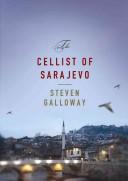
About the cellist of sarajevo
Steven Galloway's "The Cellist of Sarajevo" is a poignant work of historical fiction set during the Siege of Sarajevo in the 1990s. The narrative centers around the true story of Vedran Smailović, a cellist who played Albinoni's Adagio in the ruined streets for twenty-two days, one day for each person killed in a mortar attack on a bread line. The novel explores the profound impact of this act of defiance through the eyes of three fictional characters: Arrow, a young female sniper tasked with protecting the cellist; Kenan, a family man who risks his life daily to fetch water for his family and neighbors; and Dragan, an older baker struggling to navigate the city's dangerous streets and his own fading sense of humanity.
The book delves into the psychological toll of living under constant threat, where ordinary acts like crossing a street or fetching water become life-threatening endeavors. It examines how war strips away civility and identity, forcing individuals to confront their deepest fears and moral boundaries. Through the interwoven stories of Arrow, Kenan, and Dragan, Galloway illustrates the resilience of the human spirit and the enduring power of art and small acts of courage to preserve hope and dignity amidst unimaginable brutality. The cellist's music serves as a powerful symbol, reminding the citizens of Sarajevo of the beauty and humanity that the war attempts to extinguish, ultimately questioning what it means to be human when surrounded by inhumanity.
Key takeaways
- Even in the most dire circumstances, small acts of defiance and beauty can serve as powerful symbols of hope and resistance.
- War not only destroys infrastructure but also deeply erodes the human spirit, challenging individuals' sense of identity and morality.
- The struggle to maintain one's humanity and compassion is a constant battle when surrounded by senseless violence and fear.
- Ordinary people are capable of extraordinary courage when faced with extreme adversity, often for the sake of others.
- Art, like music, possesses a unique ability to transcend physical suffering and remind people of their shared humanity and the value of life.
- The burden of survival can lead to a profound sense of isolation, even among those enduring the same hardships.
Key ideas at a glance
Humanity in wartime
- War not only destroys infrastructure but also deeply erodes the human spirit, challenging individuals' sense of…
- The struggle to maintain one's humanity and compassion is a constant battle when surrounded by senseless violence and…
Resilience and hope
- Even in the most dire circumstances, small acts of defiance and beauty can serve as powerful symbols of hope and…
The power of art
- Ordinary people are capable of extraordinary courage when faced with extreme adversity, often for the sake of others.
Fear and apathy
- Art, like music, possesses a unique ability to transcend physical suffering and remind people of their shared humanity…
Moral choices
- The burden of survival can lead to a profound sense of isolation, even among those enduring the same hardships.
Chapter summaries
Part 1: The Cellist's Resolve
The novel opens in Sarajevo during the siege, focusing on the immediate aftermath of a mortar attack on a bread line that kills twenty-two people. From his apartment window, a cellist witnesses the tragedy. In response, he makes a silent vow to play Albinoni's Adagio in G Minor for twenty-two consecutive days, one day for each victim, at the site of the bombing. This act of defiance and remembrance becomes a central symbol of hope and resistance for the city's inhabitants, even as the constant threat of snipers and shelling looms over their daily lives. The scene establishes the brutal reality of life under siege and introduces the catalyst for the intertwined narratives that follow.
Part 2: Arrow's Assignment
We are introduced to Arrow, a young woman who has become a skilled sniper for the Bosnian army. Her real name is Alisa, but she adopted "Arrow" to distance herself from her past and the atrocities she's forced to commit. Her commander, Nermin, assigns her the task of protecting the Cellist from enemy snipers who might target him during his daily performances. Arrow takes up a position in a nearby building, meticulously scanning rooftops and windows for threats. She grapples with the moral complexities of her role, questioning the line between soldier and murderer, and the true meaning of her actions in a city where humanity is constantly tested.
Part 3: Kenan's Journey for Water
Kenan, a husband and father, embarks on a perilous journey across the city to collect water for his family and his elderly neighbor, Mrs. Ristovski. His route takes him through streets constantly under sniper fire and past destroyed buildings, forcing him to make difficult choices about which paths to take and how to minimize risk. He carries multiple heavy plastic containers, the physical burden mirroring the emotional weight of his responsibility. During his journey, he encounters other citizens, some resigned, some defiant, all struggling to survive. He grapples with his fear, his desire to protect his family, and the constant threat of death that hangs over every step.
Part 4: Dragan's Detachment
Dragan, a man in his sixties, works at a bakery and attempts to maintain a semblance of his former life, though he is deeply scarred by the war. He tries to remain emotionally detached from the suffering around him, believing that acknowledging it too deeply would break him. His daily routine involves navigating dangerous streets to reach the bakery, where he helps with the limited production. He encounters an old friend, Emina, who has lost her husband and is struggling. Dragan's internal monologue reveals his struggle to reconcile the city he once knew with the war-torn reality, and his efforts to avoid eye contact or engagement with the suffering of others.
Part 5: Arrow's Moral Dilemma
Arrow continues her vigilant watch over the Cellist, successfully neutralizing several enemy snipers. However, her resolve is tested when Nermin gives her an order that crosses a moral line: to kill an innocent man, a journalist, who Nermin claims is a collaborator, but Arrow suspects is merely a pawn in a larger, cynical game. This order forces Arrow to confront the true nature of her commander's motives and the corruption that can exist even within her own side. She grapples with the idea of becoming a murderer rather than a protector, leading to a profound crisis of conscience and a decision about her future actions.
Part 6: Kenan's Act of Kindness
Kenan's water-gathering mission becomes increasingly fraught with danger. He witnesses a man being shot by a sniper and is forced to hide, paralyzed by fear. Later, he encounters an elderly man struggling to carry his own water containers. Despite his own exhaustion and fear, Kenan offers to help the man, sharing his burden. This small act of human connection and compassion in the midst of overwhelming brutality highlights Kenan's enduring humanity. He reflects on the arbitrary nature of life and death in Sarajevo, and the importance of holding onto empathy even when survival seems to demand otherwise.
Part 7: Dragan's Re-engagement
Dragan's journey to the bakery is interrupted by a mortar attack on a tram. He witnesses the chaos and injuries, and for the first time, he is unable to maintain his emotional distance. He sees a woman whose husband is severely wounded and, against his usual inclination, steps forward to help. This moment marks a significant turning point for Dragan, as he sheds his protective shell of detachment and re-engages with the suffering of his fellow citizens. He realizes that true survival isn't just about physical safety, but about retaining one's humanity and connection to others, even in the face of overwhelming despair.
Part 8: Arrow's Final Stand
Having decided to defy Nermin's immoral order, Arrow faces a direct confrontation with her commander. She refuses to kill the innocent journalist, asserting her own moral compass. This act of defiance puts her in extreme danger, as Nermin views her as a liability. Arrow understands the consequences of her actions, knowing she can no longer operate under Nermin's command. She makes a final, decisive move to protect her integrity and the memory of who she was before the war, even if it means sacrificing her own safety or her role as a sniper.
Part 9: The Cellist's Legacy
The novel culminates as the Cellist completes his twenty-two days of playing Albinoni's Adagio. His final performance is a powerful symbol of resilience, beauty, and the enduring human spirit in the face of unimaginable horror. The music, though unheard by all characters directly, profoundly impacts the city's atmosphere and the individual journeys of Kenan, Dragan, and Arrow. The book concludes with a reflection on the small, everyday acts of courage and kindness that define life in Sarajevo, and the idea that even in the darkest times, art and humanity can offer a path towards hope and remembrance. The characters have all, in their own ways, found a renewed sense of purpose or connection.
Full summary
"The Cellist of Sarajevo" by Steven Galloway is set during the Siege of Sarajevo in the 1990s, capturing the human spirit amid war. The narrative revolves around a cellist who plays in honor of 22 victims killed by a shell while waiting in line for bread. His music symbolizes hope and resilience against the backdrop of destruction.
The story follows the lives of four individuals: the cellist, a sniper named Arrow, a baker named Kenan, and a woman named Dragan. Each character grapples with the impact of war on their lives, ultimately showcasing themes of survival, sacrifice, and the power of art. The cellist’s performance acts as a beacon of hope, uniting the fragmented lives of the characters who seek meaning amidst chaos.
Key elements include the contrasting experiences of war and beauty, illustrating the struggle for humanity. Relationships evolve as characters confront their fears and moral dilemmas, emphasizing the fragility of life.
Galloway's work offers profound insights o...
Memorable quotes
“They can kill us, but they can't kill the music.”
“My name is Arrow. I am a sniper. And I am not a murderer.”
“He has forgotten what it is to be a human being. He is a man who is afraid to die.”
“The war had changed the city, but it had not changed the people. It had merely revealed them.”
“The music was not a protest, it was a statement. A statement that life, even in the face of death, was still beautiful.”
Characters
- The CellistA musician who plays Albinoni's Adagio for twenty-two days in the street to mourn victims of a mortar attack, symbolizing hope and defiance.
- ArrowA young, skilled female sniper tasked with protecting the cellist, struggling to maintain her humanity while performing violent acts.
- KenanA family man who undertakes dangerous daily journeys across the city to fetch water for his family and neighbors, battling fear and responsibility.
- DraganAn older man, a former baker, who struggles with apathy and fear, trying to navigate the city and his own psychological landscape.
Themes
- Humanity in wartime
- Resilience and hope
- The power of art
- Fear and apathy
- Moral choices
- Identity under duress
About Steven Galloway
Steven Galloway is a Canadian novelist known for his evocative and character-driven works. Born in 1975, he gained significant international recognition for "The Cellist of Sarajevo," which was inspired by the real-life actions of Vedran Smailović during the Bosnian War. His other notable novels include "Finnie Walsh" and "The Confabulist." Galloway's writing often explores themes of memory, identity, and the human response to extraordinary circumstances, earning him critical acclaim and several literary awards. He is celebrated for his ability to craft compelling narratives from historical events.
FAQ
What is the cellist of sarajevo about?
The Cellist of Sarajevo is about the experiences of ordinary people during the 1990s Siege of Sarajevo. It follows three fictional characters—a sniper, a man fetching water, and an older man—whose lives are touched by a cellist who plays in the street for 22 days to mourn victims of a mortar attack, symbolizing defiance and hope amidst brutality.
Is the cellist of sarajevo worth reading?
Yes, it is highly regarded for its powerful depiction of humanity under extreme duress. The novel offers a poignant look at the psychological toll of war, the resilience of the human spirit, and the enduring power of art. It's a thought-provoking read for those interested in historical fiction and moral dilemmas.
How does the cellist of sarajevo end?
Spoiler: The cellist completes his 22-day vigil, his music leaving a profound impact. Arrow, refusing an order to kill an innocent man, fakes the kill and ultimately abandons her sniper identity, disappearing into the city. Kenan continues his water runs, having found a renewed sense of purpose. Dragan, witnessing a small act of kindness, begins to shed his apathy, choosing to engage with others rather than remain isolated in fear.
Who should read the cellist of sarajevo?
This book is recommended for readers interested in historical fiction, particularly stories about war and its human impact. Those who appreciate character-driven narratives exploring themes of resilience, morality, and the power of art will find it compelling. It's suitable for mature young adults and adults.
How long does it take to read the cellist of sarajevo?
The Cellist of Sarajevo is a relatively short novel, typically taking around 3 to 4 hours to read for an average reader. Its concise prose and focused narrative make it a quick yet impactful read.