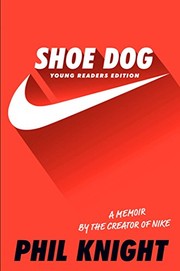
About Shoe Dog
Shoe Dog is the candid and compelling memoir of Phil Knight, the co-founder of Nike, chronicling the company's tumultuous early years from 1962 to 1980. Knight recounts his journey from a restless young man with a "Crazy Idea" – importing high-quality, low-cost running shoes from Japan – to building one of the world's most iconic brands. The narrative begins with his post-college backpacking trip around the world, where he first conceived the vision for what would become Blue Ribbon Sports, the precursor to Nike. He details the initial struggles of selling shoes out of the trunk of his car, the constant financial precarity, and the relentless pursuit of growth against overwhelming odds.
The book vividly portrays the eccentric and dedicated individuals who formed Nike's original "Buttheads" team, including his former track coach Bill Bowerman, who became his co-founder and innovative shoe designer. Knight shares the myriad challenges they faced: fierce competition from established brands, constant battles with Japanese suppliers, relentless pressure from banks, and numerous legal skirmishes. It's a story of bootstrapping, near-bankruptcy experiences, and the sheer willpower required to transform a fledgling startup into a global powerhouse.
Ultimately, "Shoe Dog" is more than just a business history; it's a deeply personal reflection on entrepreneurship, passion, and the meaning of work. Knight reveals the emotional toll and the exhilarating highs of building something from nothing, emphasizing the importance of belief, perseverance, and the human connections that underpin success. It offers an intimate look at the birth of a cultural phenomenon and the enduring spirit of innovation that defined Nike's formative era.
Key takeaways
- A "crazy idea" fueled by passion and a willingness to take risks can lead to extraordinary outcomes.
- Building a successful enterprise often involves constant financial struggle and near-failures, requiring immense perseverance.
- Surround yourself with a dedicated, passionate, and slightly unconventional team who believe in the vision as much as you do.
- Innovation and a relentless focus on product quality are crucial for long-term competitive advantage.
- Embrace the journey, including the setbacks and challenges, as they are integral to growth and learning.
- Don't be afraid to pivot or make difficult decisions when circumstances demand it, even if it means severing long-standing partnerships.
- Success is rarely an overnight phenomenon; it's the result of decades of hard work, sacrifice, and an unwavering belief in your mission.
Key ideas at a glance
Entrepreneurial Spirit
- Embrace the journey, including the setbacks and challenges, as they are integral to growth and learning.
Perseverance and Resilience
- Building a successful enterprise often involves constant financial struggle and near-failures, requiring immense…
Risk-Taking
- Don't be afraid to pivot or make difficult decisions when circumstances demand it, even if it means severing…
Teamwork and Loyalty
- Success is rarely an overnight phenomenon; it's the result of decades of hard work, sacrifice, and an unwavering belief…
Passion for Sport
- A "crazy idea" fueled by passion and a willingness to take risks can lead to extraordinary outcomes.
- Surround yourself with a dedicated, passionate, and slightly unconventional team who believe in the vision as much as…
Innovation
- Innovation and a relentless focus on product quality are crucial for long-term competitive advantage.
Chapter summaries
1962-1963
Phil Knight, a recent Stanford MBA graduate, recounts his "Crazy Idea" to import high-quality, low-cost running shoes from Japan to disrupt the German-dominated American market. In 1962, he embarks on a year-long backpacking trip around the world, culminating in a pivotal meeting with Onitsuka Company in Kobe, Japan. Impulsively, he pitches himself as a distributor for their Tiger brand shoes in the Western U.S. and secures an initial order. Upon returning to Oregon in 1963, he begins selling the first shipment of Tiger shoes from the trunk of his Plymouth Valiant at track meets, slowly building a small customer base while working as an accountant. This period establishes the nascent stages of his entrepreneurial journey, driven by a passion for running and a belief in his unconventional vision.
1964
Knight officially partners with his former track coach, Bill Bowerman, each investing $500 to form Blue Ribbon Sports (BRS). Bowerman, a renowned innovator, begins experimenting with shoe designs, constantly seeking improvements for his athletes. The initial order of Tiger shoes sells out, prompting a larger order from Onitsuka, but BRS faces immediate financial strain and logistical challenges. Knight continues to balance his accounting job with the demands of BRS, often struggling to make payroll and manage inventory. This year marks the formal establishment of the company, laying the groundwork for future growth while highlighting the early, precarious nature of the venture and the complementary, albeit sometimes clashing, partnership between Knight and Bowerman.
1965
BRS experiences its first significant growth spurt, necessitating the hiring of its first full-time employee, Jeff Johnson. Johnson, an eccentric and dedicated former runner, quickly becomes indispensable, managing sales, inventory, and customer relations with an almost obsessive passion. He travels across the country, selling shoes from his van, and develops a deep understanding of the running community. Knight continues to navigate the complexities of importing from Japan, dealing with shipping delays and communication issues with Onitsuka. The company begins to establish a small but loyal following among serious runners, driven by the quality of the Tiger shoes and Johnson's relentless sales efforts, despite ongoing financial tightropes and the constant threat of insolvency.
1966
BRS opens its first dedicated retail store in Santa Monica, California, a small, unassuming space that serves as a hub for the growing running community. The physical presence helps solidify the brand's identity and provides a direct channel for customer feedback. However, tensions begin to mount with Onitsuka. The Japanese company, observing BRS's success, starts to express concerns about exclusivity and distribution rights, hinting at a desire to expand into the U.S. market themselves. Knight and his small team grapple with the challenges of scaling operations, managing inventory, and fending off competitive pressures, all while trying to maintain their precarious relationship with their sole supplier.
1967
The company continues its expansion, hiring more sales representatives and broadening its reach across the U.S. Bill Bowerman intensifies his shoe design experiments, driven by his desire to create lighter, more supportive footwear for his athletes. His innovations, often involving unconventional materials and methods, lead to significant improvements in shoe performance. Knight focuses on securing more favorable terms from Onitsuka, but the relationship remains strained, marked by mistrust and conflicting ambitions. BRS's growth is undeniable, yet its future remains uncertain, heavily dependent on a supplier that increasingly views them as a competitor rather than a partner, setting the stage for an inevitable confrontation.
1968
Phil Knight marries Penny Parks, bringing a degree of personal stability amidst the professional chaos. BRS continues to grow, but the financial struggles persist, with the company often operating on the brink of bankruptcy. Knight constantly seeks loans and lines of credit, relying on the goodwill of banks and suppliers to keep the business afloat. The relationship with Onitsuka deteriorates further, with clear signs that Onitsuka intends to terminate their distribution agreement and enter the U.S. market directly. Knight and his team begin to secretly explore options for manufacturing their own shoes, recognizing the urgent need for independence from their increasingly unreliable Japanese partner.
1969
Phil and Penny welcome their first son, Matthew. Despite this personal joy, the business environment remains fraught with peril. BRS is growing, but the looming legal battle with Onitsuka casts a long shadow over its future. Knight and his small team are forced to confront the reality that their entire business model is at risk. They continue to explore alternative manufacturing sources in Mexico and other countries, a complex and challenging endeavor for a small company with limited resources. The year is marked by a sense of urgency and desperation as BRS prepares for the inevitable showdown with Onitsuka, knowing that their survival depends on their ability to become self-sufficient.
1970
BRS faces its most severe financial crisis yet, teetering on the edge of collapse. The company is deeply in debt, unable to pay its suppliers, and on the verge of defaulting on loans. In a desperate move, Knight secures a crucial lifeline from Nissho Iwai, a Japanese trading company, which provides much-needed capital and credit. This partnership proves instrumental in keeping BRS afloat. Simultaneously, the team intensifies its efforts to develop and manufacture its own line of shoes, recognizing that complete independence from Onitsuka is the only path to long-term survival. This period highlights Knight's resilience and his ability to find unconventional solutions under immense pressure.
1971
This year marks a pivotal turning point. With the Onitsuka relationship irrevocably broken, BRS makes the bold decision to launch its own brand. They commission Carolyn Davidson, a graphic design student, to create a new logo, resulting in the iconic "swoosh." The company is renamed "Nike," after the Greek goddess of victory, a suggestion from Jeff Johnson. The first Nike-branded shoes are produced, initially in Mexico and later in Taiwan, a challenging transition from distributor to manufacturer. This period is characterized by immense risk and uncertainty, as Knight and his team bet everything on their ability to create and market their own footwear, severing ties with their original supplier.
1972
Nike makes its debut at the U.S. Olympic Track & Field Trials in Eugene, Oregon, a crucial moment for gaining visibility. The first Nike shoes are worn by athletes, including some who achieve success, generating early buzz. The legal battle with Onitsuka officially begins, with Onitsuka suing BRS for breach of contract. Knight and his team are forced to defend their actions in court, a draining and expensive process that threatens to derail their nascent company. Despite the legal distractions, Nike focuses on product innovation and marketing, securing early endorsements from promising athletes and slowly building its reputation as a serious contender in the athletic footwear market.
1973
The legal battle with Onitsuka intensifies, consuming significant resources and attention. Knight and his legal team fight vigorously, presenting evidence of Onitsuka's own breaches of contract and attempts to undermine BRS. Despite the ongoing litigation, Nike continues its rapid product development, refining existing models and introducing new ones. The company's focus remains on creating high-performance shoes for runners, leveraging Bowerman's design philosophy and the feedback from athletes. This year is characterized by a dual struggle: fighting for survival in the courtroom while simultaneously striving for excellence and market share in the competitive athletic footwear industry.
1974
Nike achieves its first profitable year, a significant milestone after years of operating on the financial edge. The "Waffle Trainer," a revolutionary shoe designed by Bill Bowerman using a waffle iron to create a unique sole pattern, becomes a massive success, propelling Nike into the mainstream. The company begins to expand internationally, establishing a presence in Europe. This period marks Nike's emergence as a formidable force in the athletic footwear market, demonstrating the power of innovation and aggressive marketing. The profitability provides much-needed stability and allows for further investment in research, development, and global expansion, solidifying Nike's position.
1975
The protracted legal battle with Onitsuka finally concludes, with the court ruling largely in Nike's favor, awarding them a substantial settlement. This victory is a monumental relief, removing a major existential threat and validating Knight's decision to break away. With the legal distractions behind them, Nike accelerates its growth. The company hires Rob Strasser, a charismatic and aggressive executive, who brings a new level of business acumen and marketing prowess to the team. Nike continues to innovate, expand its product lines, and strengthen its brand identity, capitalizing on its newfound financial and legal stability to push aggressively into new markets.
1976
Nike experiences explosive growth, transforming from a scrappy startup into a major player in the athletic footwear industry. This rapid expansion brings new challenges, including managing a larger workforce, scaling production, and maintaining quality control. Knight reflects on the difficulties of leading a fast-growing company, balancing the need for structure with the entrepreneurial spirit that defined Nike's early years. The company's culture, characterized by a blend of intense competition, camaraderie, and a shared passion for running, begins to solidify. Nike's success attracts both admiration and scrutiny, as it navigates the complexities of becoming a prominent global brand.
1977
Nike faces a severe crisis when the U.S. Customs Service imposes crippling tariffs, alleging that Nike's imported shoes are subject to a "dumping" penalty. This unexpected financial blow, amounting to millions of dollars, threatens to bankrupt the company. Knight and his team launch an intense lobbying effort in Washington D.C., fighting to overturn the tariffs and save Nike. This period highlights the unpredictable nature of business and the importance of political engagement. The crisis forces Knight to confront external forces beyond market competition, demonstrating his tenacity and leadership in navigating a complex and potentially devastating regulatory challenge.
1978
After a protracted and arduous battle, the U.S. Customs dispute is finally resolved in Nike's favor, averting financial disaster. With this major threat behind them, Nike resumes its aggressive expansion. The company continues to attract top talent, strengthening its executive team and sales force. Nike's brand recognition grows significantly, fueled by innovative products and successful marketing campaigns featuring prominent athletes. This year marks a period of renewed confidence and accelerated growth, as Nike solidifies its position as a leader in the athletic footwear market, demonstrating its resilience in overcoming significant external obstacles and reaffirming its commitment to innovation.
1979
Nike introduces its groundbreaking Air-Sole technology, first featured in the "Tailwind" running shoe, which revolutionizes cushioning and comfort. This innovation further cements Nike's reputation for technological advancement. The company begins preparations for its initial public offering (IPO), a monumental step that will transform Nike from a privately held company into a publicly traded corporation. Knight grapples with the implications of going public, including the loss of some control and the increased scrutiny that comes with being a public entity. This period represents the culmination of years of hard work and risk-taking, as Nike prepares to enter a new era of corporate existence.
1980
Nike successfully completes its initial public offering (IPO), making many early employees and investors millionaires. This event marks a significant turning point, providing substantial capital for future growth and solidifying Nike's financial foundation. Knight reflects on the journey from selling shoes out of his car to leading a publicly traded global enterprise. While the IPO brings immense success, it also signifies a shift in the company's identity, moving from a tight-knit, family-like startup to a more formal corporate structure. The year concludes the main narrative of the book, capturing the moment Nike officially became a titan of industry.
Epilogue
The Epilogue reflects on Nike's continued growth and global dominance beyond 1980, detailing its evolution into one of the world's most recognizable and influential brands. Knight shares personal reflections on the legacy of Nike, the impact on his family, and the enduring friendships forged during the company's formative years. He discusses the challenges and triumphs of leading a massive corporation, the importance of innovation, and the values that continue to drive Nike. The Epilogue provides a broader perspective on the company's enduring success and Knight's personal journey, offering insights into his philosophy on business, leadership, and life.
Full summary
Book Overview
"Shoe Dog" is a memoir by Phil Knight, the co-founder and former CEO of Nike, Inc. Published in 2016, the book chronicles the journey of Knight from a young entrepreneur with a passion for running to the head of one of the most recognized brands in the world. The narrative provides an insider's perspective on the challenges, triumphs, and personal sacrifices involved in building a global empire.
Main Content/Plot (Pages 305 to 335, Chapters 1977-1979)
In these chapters, Knight reflects on the tumultuous years of 1977 to 1979, a pivotal period for Nike as it transitioned from a small player in the athletic shoe market to a formidable competitor. The narrative highlights several key events:
1. Expansion and Growth: During this time, Nike experiences rapid growth, necessitating a more structured approach to management. Knight and his team work diligently to streamline operations, improve production quality, and expand their product lines. The challenges of scaling the business are evident, with Knight facing issues related to supply chain management and financial pressures.
2. The Launch of the Air Force 1: A significant highlight in this section is the introduction of the Air Force 1, which becomes a cultural phenomenon and a symbol of self-expression in the sneaker community. Knight emphasizes the importance of innovation and staying ahead of market trends, showcasing how Nike’s design philosophy sets it apart from competitors.
3. Legal Challenges: As Nike grows, so do the legal challenges. The company faces lawsuit threats from competitors and issues regarding distribution rights. Knight navigates these turbulent waters with a focus on maintaining Nike’s reputation and integrity in the marketplace.
4. Personal Reflections: Knight intersperses business developments with personal reflections, revealing how the pressures of running a burgeoning company affect his relationships, particularly with family and close friends. His candidness about vulnerability and doubt adds a human dimension to the entrepreneurial journey.
5. Cultural Impact: The chapters also touch on the broader cultural impact of Nike and how the brand begins to resonate with athletes and consumers alike, fostering a community that transcends mere product loyalty.
Key Themes
- Perseverance and Resilience: Knight’s journey underscores the importance of perseverance in the face of adversity. His ability to overcome challenges is a recurring motif, emphasizing that success is rarely linear.
- Innovation: The emphasis on innovation, both in product design
Memorable quotes
“Don't tell people how to do things, tell them what to do and let them surprise you with their results.”
“The cowards never started and the weak died along the way. That leaves us, the strong.”
“It seems wrong to call it work. It was play.”
“I was a shoe dog, and I was going to be a shoe dog for life.”
“Seek a calling. Even if you don't know what that means, seek it. Because if you're not seeking a calling, you're not living.”
Themes
- Entrepreneurial Spirit
- Perseverance and Resilience
- Risk-Taking
- Teamwork and Loyalty
- Passion for Sport
- Innovation
About Phil Knight
Phil Knight is the co-founder and former CEO of Nike, Inc., one of the world's largest suppliers of athletic shoes and apparel. He served as chairman of Nike from 1964 to 2016. 'Shoe Dog' is his first and only memoir, written to share the untold story of Nike's challenging beginnings, offering a personal and candid account of the entrepreneurial journey that led to the creation of a global powerhouse.
FAQ
What is Shoe Dog about?
Shoe Dog is Phil Knight's memoir, detailing the tumultuous early years of Nike, from its inception as Blue Ribbon Sports in 1962 to its IPO in 1980. It chronicles Knight's journey from selling shoes out of his car to building a global athletic footwear empire, highlighting the financial struggles, legal battles, and the dedicated team behind its rise.
Is Shoe Dog worth reading?
Yes, Shoe Dog is widely considered an inspiring and engaging read. It offers a rare, candid look into the realities of entrepreneurship, the importance of perseverance, and the human story behind one of the world's most iconic brands. It's praised for its honesty and narrative style.
How does Shoe Dog end?
Spoiler: The book culminates with Nike's successful initial public offering (IPO) in 1980, which finally provides financial stability and validates the decades of hard work and risk-taking by Phil Knight and his team. Knight reflects on the journey, the sacrifices, and the profound impact of building Nike, acknowledging the bittersweet nature of achieving such a monumental goal.
Who should read Shoe Dog?
This book is ideal for aspiring entrepreneurs, business leaders, and anyone interested in the history of iconic brands or the challenges of building a company from the ground up. Sports enthusiasts and fans of Nike will also find it a fascinating read, offering insight into the brand's origins.
How long does it take to read Shoe Dog?
Based on an average reading speed of 250 words per minute and the book's length, it typically takes about 6 to 7 hours to read Shoe Dog. This can vary depending on individual reading pace and engagement with the content.