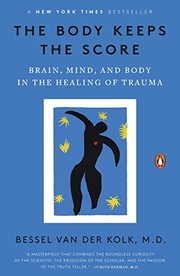
About the body keeps the score
The Body Keeps the Score: Brain, Mind, and Body in the Healing of Trauma by Bessel van der Kolk is a seminal work exploring the profound and lasting impact of psychological trauma on the human brain, mind, and body. Drawing on decades of clinical experience and cutting-edge research in neuroscience, developmental psychology, and attachment theory, van der Kolk argues that trauma is not merely a psychological event but a physiological one, fundamentally altering how individuals perceive themselves, relate to others, and experience the world. He demonstrates how traumatic experiences, especially those occurring in childhood, can disrupt neural pathways, impair emotional regulation, and manifest as a wide range of physical and mental health issues, from anxiety and depression to chronic pain and autoimmune disorders.
The book challenges traditional talk therapy approaches, which often prove insufficient for processing deeply embedded traumatic memories that are stored in non-verbal, somatic forms. Van der Kolk advocates for a paradigm shift in trauma treatment, emphasizing the need for therapies that engage the body and sensory systems directly. He meticulously reviews and champions a variety of innovative therapeutic modalities, including Eye Movement Desensitization and Reprocessing (EMDR), Internal Family Systems (IFS), neurofeedback, yoga, and theater, all of which aim to help individuals regain a sense of safety, re-establish connection with their bodies, and integrate fragmented traumatic memories. Ultimately, the book offers a hopeful vision for healing, asserting that while trauma leaves deep scars, the human capacity for resilience and recovery is immense when supported by informed and holistic interventions.
Key takeaways
- Trauma is stored not just in the mind but also in the body, manifesting as physical symptoms, altered physiological responses, and persistent discomfort.
- Traditional talk therapy alone is often insufficient for healing deep-seated trauma, as traumatic memories are frequently non-verbal and stored somatically.
- Engaging the body through practices like yoga, neurofeedback, EMDR, and sensorimotor psychotherapy is crucial for processing and integrating traumatic experiences.
- Safety and connection, both internally and with others, are fundamental prerequisites for healing trauma and restoring a sense of agency.
- Trauma profoundly impacts brain development and function, affecting emotional regulation, memory processing, and the ability to feel present and secure.
- Understanding the neurobiology of trauma helps destigmatize symptoms and fosters more effective, compassionate, and integrated treatment approaches.
- Reclaiming a sense of self-awareness, present-moment experience, and control over one's body is vital for survivors to move beyond the grip of past trauma.
Key ideas at a glance
Trauma's embodied impact
- Trauma is stored not just in the mind but also in the body, manifesting as physical symptoms, altered physiological…
- Trauma profoundly impacts brain development and function, affecting emotional regulation, memory processing, and the…
Neurobiology of trauma
- Engaging the body through practices like yoga, neurofeedback, EMDR, and sensorimotor psychotherapy is crucial for…
- Understanding the neurobiology of trauma helps destigmatize symptoms and fosters more effective, compassionate, and…
Holistic healing approaches
- Traditional talk therapy alone is often insufficient for healing deep-seated trauma, as traumatic memories are…
Reclaiming self-agency
- Reclaiming a sense of self-awareness, present-moment experience, and control over one's body is vital for survivors to…
Interpersonal connection
- Safety and connection, both internally and with others, are fundamental prerequisites for healing trauma and restoring…
Chapter summaries
Part One: The Roots of Trauma
This section traces the historical understanding of psychological trauma, highlighting how it was often dismissed or misdiagnosed, from early Freudian theories to the Vietnam War era. Van der Kolk introduces the core premise that trauma is not merely a psychological event but profoundly impacts the body and brain, leading to physiological changes. He discusses how traditional talk therapy often fails because trauma memories are stored in non-verbal, sensory forms. The author emphasizes the pioneering work of figures who began to recognize the somatic nature of trauma, laying the groundwork for a more integrated approach to treatment that acknowledges the body's role in storing and expressing traumatic experiences, and the limitations of solely cognitive interventions.
Part Two: This Is Your Brain on Trauma
Part Two delves into the neurobiology of trauma, explaining how traumatic experiences alter brain function. Van der Kolk details the roles of key brain regions like the amygdala (alarm system), prefrontal cortex (executive function), hippocampus (memory), and insula (body awareness). He explains how trauma can lead to a persistent state of hyperarousal or hypoarousal, disrupting the brain's capacity for self-regulation, emotional processing, and the integration of memory. Concepts such as implicit versus explicit memory, the fight/flight/freeze response, and the impact on the brain's default mode network are discussed, illustrating how trauma fundamentally changes how individuals perceive themselves, others, and the world, often leading to a fragmented sense of self and chronic dysregulation.
Part Three: The Ways Back to Self
This part explores various therapeutic modalities that help individuals recover from trauma by addressing its impact on the body and brain. Van der Kolk discusses the efficacy of 'bottom-up' approaches that work with sensory and somatic experiences, contrasting them with 'top-down' cognitive therapies. He provides detailed insights into treatments like Eye Movement Desensitization and Reprocessing (EMDR), Sensorimotor Psychotherapy (developed by Pat Ogden), and Internal Family Systems (IFS) therapy. The section highlights how these methods help trauma survivors process distressing memories, integrate fragmented parts of the self, and restore a sense of safety and coherence within their bodies, moving beyond mere symptom management to genuine healing and integration.
Part Four: Childhood Trauma: The Costs of Abuse and Neglect
Focusing on developmental trauma, this section examines the profound and lasting impact of childhood abuse and neglect. Van der Kolk discusses how early traumatic experiences disrupt the developing brain, attachment systems, and the formation of a stable sense of self. He explores the concept of Complex PTSD (C-PTSD), distinguishing it from single-incident trauma, and details its manifestations, including difficulties with emotional regulation, identity disturbance, relationship problems, and chronic feelings of shame and hopelessness. The author also references the Adverse Childhood Experiences (ACE) study, underscoring the widespread public health implications of early trauma and its correlation with numerous physical and mental health issues in adulthood.
Part Five: Paths to Recovery
The final part presents a diverse array of innovative and holistic approaches to trauma recovery, emphasizing the importance of restoring connection, self-regulation, and agency. Van der Kolk explores the therapeutic benefits of practices such as yoga, mindfulness, neurofeedback, theater, and rhythmic movement. He highlights how these interventions help individuals regain a sense of mastery over their bodies, regulate their nervous systems, and reconnect with their internal experiences and external world. The section underscores the brain's plasticity and capacity for healing, advocating for a comprehensive, individualized approach to treatment that empowers survivors to reclaim their lives, find meaning, and cultivate resilience through embodied experiences and community engagement.
Full summary
Book Overview
"The Body Keeps the Score: Brain, Mind, and Body in the Healing of Trauma" by Bessel van der Kolk is a seminal work in the field of psychology and trauma studies. Published in 2014, the book explores the profound impact of trauma on both mental and physical health, emphasizing the importance of understanding how traumatic experiences can reshape the body and mind. Van der Kolk, a renowned psychiatrist and trauma researcher, draws on decades of clinical experience and a wealth of scientific research to articulate how trauma is stored in the body and how individuals can heal from it.
Main Content/Plot
The book is structured into five parts, each addressing various aspects of trauma:
1. The Nature of Trauma: Van der Kolk begins by defining trauma and discussing its prevalence. He explains how trauma affects the brain, particularly the areas responsible for memory, emotions, and self-regulation.
2. The Impact of Trauma: Through case studies and personal anecdotes, the author illustrates how trauma manifests in individuals' lives, often leading to conditions like PTSD, depression, and anxiety. He discusses how traditional approaches to treatment, such as talk therapy and medication, may not be sufficient for many trauma survivors.
3. Innovative Treatments: Van der Kolk presents a variety of alternative therapies that have shown promise in treating trauma. These include Eye Movement Desensitization and Reprocessing (EMDR), neurofeedback, mindfulness practices, and body-centered therapies like yoga.
4. The Role of Relationships: The author emphasizes the significance of social connections in healing trauma. He argues that supportive relationships can help individuals regain a sense of safety and control, which is crucial for recovery.
5. Moving Forward: In the final section, van der Kolk offers insights into how society can better support trauma survivors and integrate trauma-informed practices into various fields, including education, healthcare, and social work.
Key Themes
- The Somatic Experience of Trauma: One of the central themes is the idea that trauma is not just a psychological issue but also a physical one. Van der Kolk illustrates how traumatic experiences are stored in the body, leading to various physiological responses and conditions.
- Healing Through Connection: The text underscores the importance of relationships in the healing process. Social support and community engagement can significantly enhance recovery efforts.
- Innovative Treatment Modalities: The book advocates for a more holistic approach to trauma treatment, highlighting the need
Memorable quotes
“Trauma is not just an event that took place sometime in the past; it is also the imprint left by that experience on mind, brain, and body.”
“The body keeps the score: If the past is not resolved, the body will continue to relive it.”
“Being able to feel safe with other people is probably the single most important aspect of successful treatment.”
“Neuroscience research shows that the only way we can change the way we feel is by becoming aware of our inner experience and learning to befriend what is going on inside ourselves.”
“Traumatized people chronically feel unsafe inside their bodies: The past is alive in the form of gnawing interior discomfort.”
“As long as you are not aware of the causes, the effects will be your master.”
Themes
- Trauma's embodied impact
- Neurobiology of trauma
- Holistic healing approaches
- Importance of safety
- Reclaiming self-agency
- Interpersonal connection
About bessel van der kolk
Bessel van der Kolk is a Dutch-born American psychiatrist, author, and researcher renowned for his work on post-traumatic stress. He is a professor of psychiatry at Boston University School of Medicine and medical director of the Trauma Center in Brookline, Massachusetts. A leading expert in the field of trauma for over three decades, he has published extensively on the impact of trauma on development, neurobiology, and treatment. "The Body Keeps the Score" distills his vast clinical experience and research, offering a comprehensive understanding of trauma's effects and pioneering new therapeutic pathways for healing.
FAQ
What is the body keeps the score about?
It explores how psychological trauma profoundly affects the brain, mind, and body. It details how traumatic experiences are stored not just as memories but as physical sensations and altered physiological responses, advocating for body-centered therapies to achieve healing and integration.
Is the body keeps the score worth reading?
Yes, it is widely considered a groundbreaking and essential book for anyone interested in trauma, mental health, or human resilience. It offers a comprehensive, compassionate, and scientifically informed understanding of trauma and its treatment, challenging conventional approaches.
How does the body keeps the score end?
Spoiler: The book concludes by emphasizing hope and the human capacity for healing. It advocates for a societal shift towards trauma-informed care, highlighting the importance of connection, community, and diverse therapeutic approaches that integrate mind, brain, and body for lasting recovery and well-being.
Who should read the body keeps the score?
Mental health professionals, trauma survivors, their families, educators, policymakers, and anyone seeking a deeper understanding of how trauma impacts individuals and society. It's particularly valuable for those interested in the neuroscience of trauma and innovative treatment modalities.
How long does it take to read the body keeps the score?
The book is approximately 464 pages long. At an average reading speed of 250 words per minute, it would take roughly 9-10 hours (around 560 minutes) to read the entire book from start to finish.