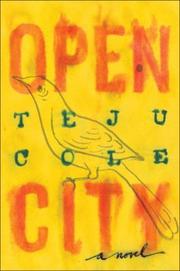
About Open City
Open City" by Teju Cole follows Julius, a young Nigerian psychiatry resident in New York City, as he embarks on long, solitary walks through Manhattan and beyond. These urban peregrinations serve as a backdrop for his profound internal monologues and observations on history, race, identity, and the immigrant experience. Julius, recently separated from his girlfriend, finds solace and intellectual stimulation in his aimless wanderings, encountering a diverse cast of characters—from a Haitian street vendor to a Moroccan immigrant named Farouq—with whom he engages in deep, philosophical conversations about politics, post-colonialism, and the nature of belonging.
The novel is less about a traditional plot and more about the journey of a mind grappling with its place in a complex, multicultural world. Julius's walks take him from the bustling streets of Times Square to the quiet cemeteries of Brooklyn, and eventually to a brief but significant trip to Brussels, where he confronts his family's past and meets Moji, a former professor. Throughout these journeys, Cole masterfully weaves together historical anecdotes, literary allusions, and personal reflections, creating a rich tapestry of thought that explores the fluidity of memory and the construction of self.
Ultimately, "Open City" is a meditation on the human condition, the search for meaning in urban anonymity, and the often-unsettling nature of self-discovery. The novel culminates in a shocking revelation from Julius's past, forcing him—and the reader—to re-evaluate everything that has come before and question the reliability of his narration and self-perception. It is a powerful exploration of trauma, complicity, and the hidden corners of the human psyche, challenging the reader to confront uncomfortable truths about memory and moral responsibility.
Key takeaways
- Urban environments can serve as profound spaces for introspection and unexpected human connection.
- Memory is a fluid and subjective construct, often shaped by present circumstances and personal narratives.
- The immigrant experience is multifaceted, marked by both displacement and the complex search for belonging.
- History, both personal and collective, constantly informs and influences the present moment.
- True self-understanding often requires confronting uncomfortable truths and suppressed past events.
- Solitude can be a powerful catalyst for deep philosophical inquiry and self-examination.
- The perception of a person can be drastically altered by a single, unsettling revelation about their past.
Key ideas at a glance
Isolation
- The immigrant experience is multifaceted, marked by both displacement and the complex search for belonging.
Memory
- Memory is a fluid and subjective construct, often shaped by present circumstances and personal narratives.
Identity
- History, both personal and collective, constantly informs and influences the present moment.
Urbanism
- Urban environments can serve as profound spaces for introspection and unexpected human connection.
Post-colonialism
- True self-understanding often requires confronting uncomfortable truths and suppressed past events.
Trauma
- Solitude can be a powerful catalyst for deep philosophical inquiry and self-examination.
Chapter summaries
Part 1: The Solitary Walker in New York
The novel introduces Julius, a Nigerian-German psychiatry resident in New York City, who finds solace and intellectual stimulation in long, solitary walks through Manhattan. He observes the city's diverse inhabitants, from a Haitian shoe shiner to a homeless man, and reflects on their lives and his own sense of displacement. His internal monologues touch upon the aftermath of 9/11, the complexities of American identity, and the historical layers embedded within the urban landscape. Julius's walks are a form of meditation, a way to process his thoughts on race, memory, and the human condition, often connecting his personal experiences to broader societal issues and historical events he encounters or recalls.
Part 2: Encounters and Urban Reflections
Julius continues his extensive walks, engaging in brief, often profound, interactions with strangers and acquaintances. He meets Professor Maillotte, a former mentor, and discusses literature and philosophy, revealing Julius's intellectual depth. He also interacts with Dr. Sarah, a colleague, and reflects on the nature of their professional and personal boundaries. His observations extend to the city's parks, museums, and diverse neighborhoods, prompting further introspection on his Nigerian heritage, his German upbringing, and the feeling of being an outsider looking in. These encounters and reflections deepen the exploration of loneliness, belonging, and the fragmented nature of modern urban life, all filtered through Julius's detached yet keenly observant perspective.
Part 3: Brussels Interlude and Colonial Histories
Julius travels to Brussels, Belgium, ostensibly to visit his grandmother's former apartment and explore the city. This journey marks a significant shift in the narrative's geographical and thematic focus. In Brussels, he meets Farouq, a Moroccan immigrant, with whom he develops an intense intellectual and personal connection. Their lengthy conversations delve deeply into the legacies of colonialism, the Rwandan genocide, post-colonial identity, and the complexities of historical memory and trauma. Farouq's personal story and his critical perspective on European history profoundly impact Julius, forcing him to confront uncomfortable truths about power, responsibility, and the interconnectedness of global histories, further shaping his understanding of his own identity.
Part 4: Return to New York and Deepening Introspection
Upon returning to New York, Julius resumes his walks, but his perspective is now subtly altered by his experiences in Brussels. His observations of the city become even more layered, as he connects the local to the global, the personal to the political. He reflects on his past relationships, particularly with his ex-girlfriend Moji, and grapples with a growing sense of unease and unresolved guilt. His internal monologues become more introspective, exploring themes of forgiveness, responsibility, and the elusive nature of truth. The city itself becomes a mirror for his internal turmoil, with its constant movement and diverse narratives echoing his own fragmented memories and search for meaning.
Part 5: The Confrontation and Unveiling of the Past
The novel reaches its emotional climax when Julius has a pivotal and deeply unsettling encounter with Moji, his former Nigerian girlfriend, in New York. Moji confronts him about a traumatic event from their shared past, an incident involving an abortion and Julius's subsequent abandonment of her. This confrontation shatters Julius's carefully constructed detachment and forces him to confront a deeply suppressed or forgotten memory. The revelation recontextualizes much of his earlier reflections on guilt, responsibility, and the nature of memory, exposing a profound moral failing he had either consciously or unconsciously avoided. This moment is a turning point, challenging his self-perception as a detached observer.
Part 6: Aftermath and Unresolved Journeys
In the wake of Moji's devastating revelation, Julius continues his walks through New York, but his internal landscape is irrevocably altered. The weight of his newly uncovered past, and his complicity in Moji's suffering, permeates his every thought and observation. He grapples with the implications of his actions and the unreliable nature of his own memory. The novel concludes with Julius still walking, his journey of self-discovery and reconciliation left profoundly open-ended. There are no easy answers or resolutions, only the ongoing process of grappling with a complex past and an uncertain future, as he continues to observe the city and himself with a new, albeit painful, clarity.
Full summary
Book Overview
"Open City," published in 2011, is the debut novel of Nigerian-American author Teju Cole. The narrative unfolds in contemporary New York City and follows Julius, a young Nigerian-German psychiatrist who wanders the city, reflecting on his past, identity, and the world around him. The novel is known for its lyrical prose and deep exploration of themes such as migration, memory, and the complexities of urban life.
Main Content/Plot
The story is primarily set in New York City, where Julius, the protagonist, embarks on long, aimless walks through the streets, engaging with the city’s diverse landscapes and inhabitants. As he roams, he encounters various characters, including a fellow psychiatrist, a young woman named Nadege, and a homeless man, each providing insights into the human condition and societal issues.
Through these encounters, Julius reflects on his experiences as an immigrant, his childhood in Nigeria, and his life in America. The narrative is interspersed with memories of his family, particularly his late mother, and his experiences during the civil war in Nigeria. The novel's structure emphasizes introspection and the fragmented nature of memory, often blurring the lines between past and present.
Key Themes
1. Identity and Migration: Julius grapples with his dual identity as a Nigerian in America. His reflections highlight the challenges immigrants face in reconciling their past with their current reality.
2. Memory and Trauma: The novel delves into how personal and collective memories shape identity. Julius’s recollections of Nigeria and the civil war evoke the lasting impact of trauma on individuals.
3. Urban Experience: "Open City" portrays New York as a living entity. Julius's walks through the city serve as a metaphor for exploration and discovery, revealing the complexities of urban life and the interconnectedness of its inhabitants.
4. Isolation and Connection: Despite his interactions, Julius often feels isolated in a bustling city. The novel explores the paradox of loneliness amidst the crowd and the longing for genuine human connection.
Important Takeaways
"Open City" offers a profound meditation on the nature of urban existence and the intricacies of identity in a globalized world. Teju Cole’s rich, evocative prose invites readers to reflect on their own experiences of place and belonging. The novel serves as a reminder of the importance of understanding one's roots while navigating the complexities of contemporary life. Through Julius's journey, readers gain insight into
Memorable quotes
“The city was a palimpsest, and I was learning to read it, layer by layer.”
“Memory, I thought, is a kind of fiction, a way of telling ourselves stories about our lives, and sometimes those stories are not true.”
“What is a city, after all, but a collection of stories?”
“There are silences that are more eloquent than speech.”
Characters
- JuliusProtagonist, a Nigerian psychiatry resident in New York City.
- FarouqA Moroccan immigrant Julius meets in a cybercafe in New York, with whom he has philosophical discussions.
- MojiJulius's former professor from Nigeria, whom he meets during his trip to Brussels.
- Unnamed WomanA woman from Julius's past who confronts him with a disturbing accusation.
Themes
- Isolation
- Memory
- Identity
- Urbanism
- Post-colonialism
- Trauma
About Teju Cole
Teju Cole is a Nigerian-American writer, photographer, and art historian. Born in Kalamazoo, Michigan, and raised in Nigeria, he is known for his distinctive blend of fiction, essays, and visual art. "Open City," published in 2011, was his debut novel and garnered widespread critical acclaim, establishing his reputation as a significant voice in contemporary literature. His other notable works include "Every Day Is for the Thief" and "Blind Spot." Cole often explores themes of identity, memory, displacement, and the complexities of urban life through a deeply introspective lens.
FAQ
What is Open City about?
"Open City" follows Julius, a Nigerian psychiatry resident in New York, as he takes long walks through the city, reflecting on history, race, and his own identity. It's a meditative novel exploring urban life, memory, and the immigrant experience, culminating in a shocking revelation about his past that challenges his self-perception.
Is Open City worth reading?
Yes, it is highly regarded for its lyrical prose, intellectual depth, and unique narrative style. Readers interested in philosophical introspection, urban exploration, and complex themes of identity, memory, and post-colonialism will find it a rewarding and thought-provoking read that stays with them long after finishing.
How does Open City end?
Spoiler: The book ends with Julius being confronted by an unnamed woman from his past. She accuses him of a past sexual assault, revealing a deeply unsettling and morally ambiguous side to his character that challenges his carefully constructed self-image and the reader's perception of him throughout the novel.
Who should read Open City?
This book is ideal for readers who enjoy literary fiction that prioritizes introspection, philosophical inquiry, and rich prose over plot-driven narratives. It appeals to those interested in themes of memory, identity, urbanism, and the immigrant experience, particularly within a post-colonial context.
How long does it take to read Open City?
On average, it takes approximately 4 to 5 hours to read "Open City," depending on individual reading speed. The book is around 250 pages long, offering a dense yet engaging reading experience.