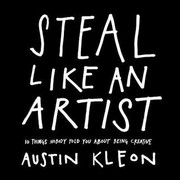
About Steal Like an Artist
Steal Like an Artist by Austin Kleon is a practical guide for creatives, emphasizing that true originality is not about inventing something entirely new, but rather about embracing influence, collecting ideas, and remixing them in unique ways. Kleon argues that all creative work builds upon what came before, and aspiring artists should view themselves as collectors and curators of ideas, rather than striving for an impossible 'pure' originality. The book encourages readers to start creating immediately, without waiting for inspiration or a fully formed identity, and to learn by doing and by studying the work of others.
The book champions a hands-on, process-oriented approach to creativity. It advises artists to use their hands, pursue side projects, and share their work with the world. Kleon also stresses the importance of cultivating a healthy creative environment, both physically and mentally, by being nice to others, embracing routine, and understanding that limitations can foster creativity. Ultimately, 'Steal Like an Artist' demystifies the creative process, making it accessible and actionable for anyone looking to unlock their creative potential by leveraging existing knowledge and inspiration.
Key takeaways
- Embrace the idea that nothing is truly original; all creative work builds upon what came before, so learn to 'steal' good ideas and transform them.
- Don't wait until you know exactly who you are or what your art will be; start making things now, and your identity will emerge through the process.
- Create the kind of work you wish existed in the world; be the audience for your own creations.
- Engage in physical work and use your hands, as this can stimulate different parts of your brain and lead to unexpected creative breakthroughs.
- Cultivate side projects and hobbies, as they often provide a low-pressure environment for experimentation and can feed into your main work.
- Share your work openly and consistently, as putting it out there helps you connect with others and receive valuable feedback.
- Establish a consistent routine and embrace boredom, as discipline and focused time are essential for deep creative work.
- Be nice to people and make connections, because the creative world is smaller than you think and collaboration is key.
Key ideas at a glance
Creative process
- Embrace the idea that nothing is truly original; all creative work builds upon what came before, so learn to 'steal'…
- Don't wait until you know exactly who you are or what your art will be; start making things now, and your identity will…
Embracing influence
- Establish a consistent routine and embrace boredom, as discipline and focused time are essential for deep creative work.
Action over contemplation
- Cultivate side projects and hobbies, as they often provide a low-pressure environment for experimentation and can feed…
Sharing your work
- Create the kind of work you wish existed in the world; be the audience for your own creations.
- Engage in physical work and use your hands, as this can stimulate different parts of your brain and lead to unexpected…
The power of limitations
- Share your work openly and consistently, as putting it out there helps you connect with others and receive valuable…
Chapter summaries
Steal Like an Artist
This foundational chapter introduces the concept that all creative work builds upon existing ideas. Kleon argues that nothing is truly original, and artists should embrace their influences, studying the work of others, dissecting it, and then transforming it into something new. He encourages readers to collect ideas, keep a 'swipe file,' and understand that 'good theft' involves learning from and reinterpreting the masters, rather than mere imitation. He emphasizes that an artist's unique perspective comes from their personal 'family tree' of influences.
Don't Wait Until You Know Who You Are to Get Started
Kleon advises against waiting for a moment of perfect self-knowledge or inspiration before beginning creative work. He posits that identity is discovered through the act of doing. Instead of agonizing over who you are, start making things, and your voice will emerge. He encourages readers to 'fake it till you make it' in the sense of acting like the artist they aspire to be, understanding that the process of creation itself shapes one's artistic identity and direction. The key is to simply begin.
Write the Book You Want to Read
This chapter encourages creators to make the art they wish existed in the world. If you can't find the kind of book, music, or art you love, then it's your job to create it. Kleon suggests that this personal motivation ensures passion and authenticity in the work, as you are filling a void in your own creative landscape. By making things for yourself first, you are more likely to produce something genuine that will resonate with others who share similar tastes and desires.
Use Your Hands
Kleon advocates for the importance of physical work and getting away from digital screens. He suggests that engaging with tangible materials—drawing in a sketchbook, painting, building, or writing on paper—activates different parts of the brain and can lead to unexpected breakthroughs. He encourages artists to maintain both digital and analog workspaces, emphasizing the value of physical tools and the tactile experience in the creative process, which can help in generating ideas and solving problems.
Side Projects and Hobbies Are Important
This chapter highlights the value of pursuing creative interests outside of one's main work. Side projects relieve pressure, provide an outlet for experimentation without commercial constraints, and can often lead to unexpected discoveries or even become the main work later on. Hobbies, distinct from side projects, are purely for fun and help keep the artist sane, providing new perspectives and preventing burnout. Kleon encourages having multiple creative irons in the fire.
The Secret to Doing Good Work Is to Show Up Every Day and Keep Going
Kleon emphasizes the importance of consistency, routine, and perseverance over sporadic bursts of inspiration. He argues that creativity is a habit, not a magical event, and requires showing up daily to put in the effort, even when motivation is low or creative blocks occur. He distinguishes between being a 'noun' (an artist) and a 'verb' (doing art), stressing that the act of doing is what truly defines and sustains a creative practice. It's about building momentum through daily work.
Good Work Is Done When You Share It
This chapter discusses the necessity of sharing one's work with the world, even if it feels vulnerable. Kleon argues that art isn't truly complete until it's seen and engaged with by an audience. Sharing allows for feedback, connection with like-minded individuals, and the potential for new opportunities. He encourages artists to overcome the fear of judgment and utilize platforms like the internet to put their work out there, understanding that sharing is a vital part of the creative cycle.
When in Doubt, Tidy Up
Kleon offers a practical tip for overcoming creative blocks or feelings of overwhelm: organize your physical or digital workspace, your files, or your thoughts. The act of tidying up can clear mental clutter and create space for new ideas to emerge. He suggests that this seemingly mundane task is a form of active procrastination that can be surprisingly productive, helping to reset the mind and prepare it for creative work by getting one's 'house in order.'
Geography Is No Longer Our Master
This chapter explores the liberating aspect of the internet, which allows artists to connect with like-minded individuals and audiences regardless of physical location. Kleon challenges the traditional notion that one must move to a major creative hub to succeed, encouraging artists to build their own world online and find their 'tribe' from anywhere. He emphasizes that the internet enables the creation of a personal 'scene' and community, transcending geographical limitations and fostering collaboration.
Be Nice. (The World Is a Small Town.)
This final chapter emphasizes the importance of kindness, generosity, and building positive relationships within the creative community. Kleon advises artists to give credit where it's due, be supportive of others, and understand that the creative world is interconnected. He stresses that one's reputation matters, and being a good person—sending thank-you notes, being grateful, and avoiding negativity—is as crucial to long-term success as the quality of one's art. It's about fostering a positive ecosystem.
Full summary
"Steal Like an Artist" nga Austin Kleon është një udhëzues motivues që eksploron kreativitetin dhe procesin artistik. Libri adreson se si ideja e vjedhjes së inspirimit nga të tjerët mund të nxisë krijimtarinë.
Kleon argumenton se çdo artist është një produkt i influencave të mëparshme, duke inkurajuar lexuesit të “vjedhin” idetë e mira dhe t’i kombinojnë ato në mënyra të reja. Ai ndan dhjetë këshilla për t’u ndihmuar individëve të zhvillojnë zërin e tyre unik, duke përfshirë rëndësinë e punës së palodhur dhe të ndarjes së punës me të tjerët.
Konceptet kryesore përfshijnë “vjedhjen” e ideve, ndihmën për të mbajtur një ditar krijues dhe ndjekjen e pasioneve. Kleon thekson se lidhja mes artistëve është e rëndësishme për rritjen dhe zhvillimin e tyre.
Libri ofron një perspektivë të freskët mbi kreativitetin, duke theksuar se të gjithë mund të jenë artistë. "Steal Like an Artist" nxit lexuesit të eksplorojnë dhe të krijojnë.
Memorable quotes
“Steal like an artist.”
“Don't wait until you know who you are to get started.”
“Write the book you want to read.”
“Do good work and put it where people can see it.”
“Creativity is subtraction.”
“The only way to find your voice is to use it. It’s to get started and keep going.”
Themes
- Creative process
- Embracing influence
- Action over contemplation
- Sharing your work
- The power of limitations
About Austin Kleon
Austin Kleon is a New York Times bestselling author and artist known for his books on creativity in the digital age. Besides 'Steal Like an Artist,' he has written 'Show Your Work!' and 'Keep Going.' Kleon's work often explores themes of originality, influence, and the daily practice of making art. He wrote 'Steal Like an Artist' based on a popular lecture he gave, aiming to demystify the creative process and empower people to embrace their influences and start creating.
FAQ
What is Steal Like an Artist about?
Steal Like an Artist is a non-fiction guide by Austin Kleon that encourages creatives to embrace influence, collect ideas, and remix them to create original work. It argues that all art builds on what came before and offers practical advice on how to start creating, share your work, and maintain a sustainable creative practice.
Is Steal Like an Artist worth reading?
Yes, it is widely considered worth reading, especially for aspiring artists, writers, designers, and anyone in a creative field. Its concise, actionable advice and inspiring tone make it a quick read that can shift one's perspective on creativity, encouraging immediate action and a more open approach to inspiration.
How does Steal Like an Artist end?
Spoiler: As a non-fiction guide, Steal Like an Artist doesn't have a narrative ending. It concludes with its tenth and final piece of advice, 'Creativity Is Subtraction,' which emphasizes the power of limitations in fostering innovation. The book leaves the reader with a sense of empowerment and practical tools for their creative journey.
Who should read Steal Like an Artist?
This book is ideal for artists, writers, musicians, designers, entrepreneurs, students, and anyone who feels stuck in their creative process or is looking for practical, encouraging advice on how to start and sustain creative work. It's particularly helpful for those who struggle with the concept of originality.
How long does it take to read Steal Like an Artist?
Steal Like an Artist is a very short, illustrated book, typically taking about 1.5 to 2.5 hours to read. Its concise chapters and engaging format make it a quick and accessible read, often finished in a single sitting.