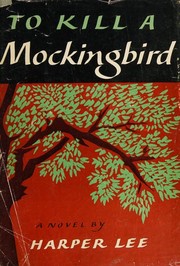
to kill a mockingbird
In 60 seconds
Scout Finch looks back on three Depression-era years in Maycomb, Alabama, when her widowed father Atticus defends Tom Robinson, a black man falsely accused of raping a white woman. The trial exposes the town's racism, and Tom is convicted despite the evidence, then shot dead trying to escape. Meanwhile the children's obsession with their reclusive neighbor Boo Radley turns from spooky game to quiet kindness. When Bob Ewell attacks Scout and Jem in the dark, it is Boo who saves them, and the sheriff covers for him.
Before you start
Why it matters
This is the rare classic that actually earns its reputation: a child's-eye story of conscience, told with warmth and humor while it dismantles a town's racism. Read it for Atticus's integrity, Scout's voice, and the quiet devastation of the verdict. It suits anyone who wants American literature's clearest argument about prejudice, courage, and what it costs to do right when you know you'll lose.
Spoilers ahead
The story
- 1
Act 1
Boo Radley and the Knothole
Scout Finch is nearly six, her brother Jem is ten, and their widowed father Atticus practices law in Maycomb, Alabama, 'a tired old town' where nothing much happens and everyone knows everyone's business. Calpurnia, the family's black cook, helps raise them. Then Dill Harris arrives for the summer, a seven-year-old from Meridian, Mississippi, bursting with schemes. His obsession: Arthur 'Boo' Radley, the neighbor who hasn't been seen outside in years. The kids trade rumors—Boo is six-and-a-half feet tall, eats raw squirrels, has a jagged scar across his face, once stabbed his father with scissors. The adults won't say a word about him. The children try to lure him out with a note on a fishing pole; Atticus catches them and tells them to stop tormenting the man: 'What Mr. Radley did was his own business. If he wanted to come out, he would.' Then the game changes. Gifts start appearing in the knothole of a tree on the Radley property—chewing gum, two polished Indian-head pennies, a ball of twine, soap carvings of Jem and Scout, a broken pocket watch, a spelling medal. Someone is reaching out. Before they can answer, Nathan Radley, Boo's older brother, fills the knothole with cement, claiming the tree is dying. Atticus says the tree looks healthy. Jem stands on the porch until nightfall, and Scout sees he has been crying.
- 2
Act 2
Mad Dogs, Old Ladies, and a Dangerous Case
School brings its own lessons. Scout's new teacher scolds her for already knowing how to read—'Your father does not know how to teach'—and Scout learns the hard way about the Cunninghams, poor folks who never take what they can't pay back. Atticus gives her the book's central rule: 'You never really understand a person until you consider things from his point of view—until you climb into his skin and walk around in it.' Then Atticus takes the case everyone dreads: defending Tom Robinson, a black man accused of raping a white woman. Classmates call Atticus a 'nigger-lover,' and Scout fights—Cecil Jacobs, her cousin Francis—until Atticus tells her to hold her head high and keep her fists down. 'Simply because we were licked a hundred years before we started is no reason for us not to try to win.' The town's hidden depths surface. A rabid dog named Tim Johnson comes staggering down the street, and the 'feeble' Atticus drops it with one shot—'One-Shot Finch,' the best shot in the county, who put his gun down years ago. Miss Maudie explains he gave it up because God gave him an unfair advantage. Atticus tells the children it's a sin to kill a mockingbird, because mockingbirds only sing. And Mrs. Dubose, a morphine addict who insults Atticus, teaches Jem what courage really is after he wrecks her camellias and must read to her daily: 'It's when you know you're licked before you begin but you begin anyway and you see it through no matter what.'
- 3
Act 3
The Trial of Tom Robinson
Calpurnia takes the children to First Purchase African M.E. Church, where they learn Tom is a congregation member and his wife Helen can't find work because of the trial. Then the trial itself, watched from the 'Colored balcony' with Reverend Sykes. Sheriff Tate testifies Mayella Ewell's bruises were on the right side of her face—a left-handed attacker. Bob Ewell writes his name and shows he's left-handed; Tom's left arm was mangled by a cotton gin and is useless. Mayella's story wobbles under cross-examination, revealing her loneliness, until she spits out her accusation. Tom testifies that Mayella kissed him and he ran because he was afraid: 'I felt right sorry for her'—and the courtroom goes cold, because a black man pitying a white woman breaks every code. Atticus's closing is a direct hit: the case is 'as simple as black and white,' courts are 'the great levelers,' and 'In the name of God, do your duty.' The jury convicts anyway. Scout notices no juror looks at Tom. Reverend Sykes tells her, 'Miss Jean Louise, stand up. Your father's passin'' as the balcony rises for Atticus. Jem sobs, 'It ain't right, Atticus, but I can't understand it.' The black community fills the Finch kitchen with food the next morning. Days later, Tom is shot seventeen times trying to escape prison. Bob Ewell, humiliated, spits in Atticus's face and vows revenge.
- 4
Act 4
The Man in the Corner
The aftermath grinds on. Bob Ewell gets and loses a WPA job, tries to break into Judge Taylor's house, and harasses Helen Robinson until Link Deas threatens him. On Halloween night, Scout performs in a pageant dressed as a ham, falls asleep backstage, misses her cue, and walks home with Jem in the dark. Cecil Jacobs scares them on the way—then something real comes out of the night. Ewell attacks them. Jem's arm is broken; he's knocked unconscious. Scout's ham costume saves her from the knife. A stranger carries Jem home, and Scout finds him standing in the corner of Jem's room: thin, sickly white skin, colorless eyes, 'a man who had been shut up for years.' 'Hey, Boo,' she says. Sheriff Tate finds Ewell dead with a kitchen knife under his ribs. Atticus thinks Jem did it; Tate insists Boo did it defending the children, and he'll report Ewell fell on his own knife: 'Let the dead bury the dead this time, Mr. Finch.' Scout walks Boo home. Standing on his porch, she sees the last three years as he saw them—watching over the children all along. 'Atticus was right. One time he said you never really know a man until you stand in his shoes and walk around in them. Just standing on the Radley porch was enough.' Atticus, sitting by Jem's bed, tells her: 'Thank you for my children, Arthur.'
Who's who
Characters
- Scout FinchThe narrator, a tomboy looking back on her six-to-nine-year-old self. She fights first and thinks later, until the trial and Boo Radley teach her to see from inside other people's skins.
- Atticus FinchScout and Jem's widowed father, a lawyer who defends Tom Robinson knowing he'll lose. The town's moral center, who hides a marksman's past and teaches his children that real courage is starting when you're already licked.
- Jem FinchScout's older brother, who believes in justice until the jury destroys his faith. He cries at the verdict and carries the book's deepest wound.
- Boo RadleyThe reclusive neighbor the children terrorize in their imaginations, who answers with gifts in a tree and finally saves their lives. The mockingbird of the title, in human form.
- Tom RobinsonThe black field hand accused of raping Mayella Ewell, with a crippled left arm that makes the charge impossible. Convicted by a jury that won't look at him, then shot seventeen times escaping prison.
- Mayella EwellThe lonely, abused white woman whose false accusation dooms Tom. She broke the town's code by kissing a black man and pays for it with his life.
- Bob EwellMayella's father, the town's trash, who beats his daughter and gets Tom convicted anyway. Humiliated at trial, he spits on Atticus and finally attacks the Finch children in the dark.
- CalpurniaThe Finches' black cook, who raises the children and bridges two worlds, speaking one way at the Finch house and another at her church.
- Dill HarrisThe summer friend from Meridian who dreams up the Boo Radley games and declares he'll be a clown, because laughing at folks is all he can do about them.
- Miss Maudie AtkinsonThe Finches' neighbor and straight-talker, who explains the mockingbird, the mad dog, and why some men are born to do our unpleasant jobs.
What it's really about
Themes
Racial injustice
Tom Robinson is accused by a white woman, tried before a jury of poor white farmers, and convicted despite a crippled left arm that makes the crime physically impossible. The black balcony stands for Atticus as he exits; the kitchen fills with food; Tom dies in a hail of seventeen bullets. The machinery works exactly as designed—the jury just won't look at what it's doing. The book's point: the law can be formally fair and still be an instrument of racism, and a good man's best defense only buys a slower verdict.
Courage
Atticus separates courage from guns. Mrs. Dubose, dying, breaks her morphine addiction on her own terms, and Atticus calls her the bravest person he knew: courage is 'when you know you're licked before you begin but you begin anyway and you see it through no matter what.' He takes Tom's case for the same reason—he was 'licked a hundred years before' he started. The book's point: real courage is moral, unglamorous, and measured in what you do when winning isn't on the table.
Empathy
Atticus's rule—climb into someone's skin and walk around in it—gets tested all book. Scout learns it with Walter Cunningham, feels Mayella's loneliness during her testimony, and finally stands on Boo Radley's porch and sees the whole story as he lived it. The book's point: understanding isn't sympathy from a distance; it's the discipline of imagining another life completely, and it's the only real antidote to a town's certainties.
Innocence lost
Jem is the one the verdict breaks. He believes the system will work because the evidence is clear, and when it doesn't, he can't stop crying: 'It ain't right, Atticus, but I can't understand it.' Dill's answer is to become a clown; Scout's is to grow up. The book's point: childhood ends the moment you watch adults choose injustice with their eyes open—and the question is what you build from the wreckage.
Class and codes
Maycomb runs on a caste system: Cunninghams too proud to take charity, Ewells allowed to hunt out of season, a black community that fills a white family's kitchen with food. Mayella's crime isn't the lie—it's breaking 'a rigid and time-honored code of our society' by desiring Tom. The book's point: prejudice isn't just racial; it's a whole architecture of who owes what to whom, and the people lowest on the ladder defend it hardest.
Look closer
Symbols
- The mockingbird
- The knothole gifts
- The mad dog
- The ham costume
Spoilers
Ending explained
The ending is a double mercy, and both halves are arguable. Sheriff Tate decides to lie—reporting that Bob Ewell fell on his knife—to protect Boo Radley from becoming a public spectacle. Atticus, the book's conscience, accepts the lie, which unsettles readers who expect him to insist on the truth. The counter-reading is that Tate isn't corrupting justice but sparing the one innocent man in Maycomb the trial-by-town that destroyed Tom Robinson; Scout herself says dragging Boo into the light would be 'sort of like shootin' a mockingbird.' The second mercy is quieter: Scout walks Boo home, stands on his porch, and finally sees the street as he saw it—three years of watching, the gifts, the blanket, the night in the dark. The empathy lesson Atticus taught in chapter one closes the loop, and Atticus's 'Thank you for my children, Arthur' names Boo as family. It lands because the book's one unambiguous good deed is done in secret, by the person the town feared most.
For class or book club
Discussion questions
- 1.Is Sheriff Tate's lie about Bob Ewell's death a moral failure or the book's highest act of justice? Can Atticus, the truth-teller, endorse it without contradiction?
- 2.The novel is told by an adult Scout remembering childhood. How does the double voice—one naive, one knowing—shape what you're allowed to feel about the trial?
- 3.Mayella Ewell is both victim and perpetrator. Does the book earn sympathy for her, or use her loneliness only to explain the lie?
Worth remembering
Best lines
“You never really understand a person until you consider things from his point of view—until you climb into his skin and walk around in it.”
“It's when you know you're licked before you begin but you begin anyway and you see it through no matter what.”
“Miss Jean Louise, stand up. Your father's passin'.”
“Thank you for my children, Arthur.”
A fair critique
Where it falls short
The book's blind spots are real. Tom Robinson is largely a symbol—dignified, passive, dependent on white rescue—rather than a full character, and black Maycomb exists mostly to serve the Finch family's moral education. The plot leans on the 'white savior' frame even as it indicts the town, and Atticus's calm nobility can feel engineered for inspiration. Some readers find the two halves—Boo Radley games and the trial—loosely stitched, and the child narrator's precocious voice occasionally convenient. The novel also says little about what justice for Tom's family would actually look like beyond food on a table.
In one sentence
A child learns that the town's kindest man is the one it fears most, and that doing right is worth it even when the verdict is already written.
Is it for you?
Who should read it
Anyone who wants the American classic on race, conscience, and childhood that actually lives up to its reputation. Perfect for readers who like moral stakes delivered through a child's sharp, funny voice.
4 questions
Quick quiz: how well do you know to kill a mockingbird?
0 of 4 answered
FAQ
What is to kill a mockingbird about?
"To Kill a Mockingbird" is about a young girl, Scout Finch, growing up in the Depression-era South. It chronicles her childhood experiences, her fascination with a reclusive neighbor, and her father Atticus's defense of a Black man falsely accused of rape, exploring themes of racial injustice, prejudice, and the loss of innocence.
Is to kill a mockingbird worth reading?
Yes, "To Kill a Mockingbird" is widely considered a classic for its powerful exploration of racial injustice, empathy, and moral courage. Its timeless themes and memorable characters make it a profound and thought-provoking read that continues to resonate with readers of all ages, offering valuable insights into human nature and societal flaws.
How does to kill a mockingbird end?
Spoiler: The book ends with Bob Ewell attacking Scout and Jem, and Boo Radley emerging from his house to save them, killing Ewell in the process. Sheriff Heck Tate, understanding that exposing Boo would harm him, decides to report that Ewell fell on his own knife. Scout walks Boo home, finally seeing the world from his perspective, and gains a deeper understanding of empathy and the quiet heroism of her reclusive neighbor.
Who should read to kill a mockingbird?
"To Kill a Mockingbird" is suitable for young adults and adults alike. It's particularly recommended for those interested in American history, civil rights, moral dilemmas, and coming-of-age stories. Its accessible narrative and profound themes make it a staple in high school curricula and a beloved book for general readers.
How long does it take to read to kill a mockingbird?
On average, it takes about 6 to 7 hours to read "To Kill a Mockingbird." This estimate is based on an average reading speed of 250 words per minute and the book's approximate length of 100,000 words.
Who wrote to kill a mockingbird?
to kill a mockingbird was written by harper lee and first published in 1960.
What genre is to kill a mockingbird?
to kill a mockingbird is listed under Mystery & Thriller.
More Mystery & Thriller summariesWhere is to kill a mockingbird set?
to kill a mockingbird is set in Southern States, Maycomb and Alabama.
How many pages is to kill a mockingbird?
to kill a mockingbird is about 320 pages long (the median page count across its editions, per Open Library).