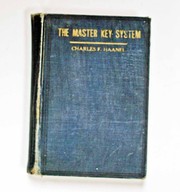
About master key systems
The Master Key System by Charles F. Haanel is a foundational text in the New Thought movement, presenting a systematic course in personal development, mental training, and the application of the Law of Attraction. Published in 1912, it is structured as 24 weekly lessons, each building upon the previous one, designed to unlock the reader's latent mental powers and achieve their desires. The core premise is that the universe operates on immutable laws, and by understanding and applying these laws, individuals can consciously shape their reality.
Haanel posits that thought is a creative force, and by mastering one's thoughts, one can master their circumstances. The book delves into concepts such as the Universal Mind, the power of the subconscious, visualization, concentration, and the principle of attraction. It teaches readers how to cultivate a positive mental attitude, develop self-confidence, and align their individual consciousness with the Universal Mind to attract health, wealth, and success. The Master Key System emphasizes practical exercises and daily disciplines, urging readers to move beyond mere intellectual understanding to actual application, thereby demonstrating the direct link between mental states and tangible results. Its enduring influence is evident in its impact on subsequent self-help literature and its continued relevance for those seeking to understand and harness the power of their minds.
Key takeaways
- Understand that thought is a creative force and that your mental attitude determines your experiences.
- Practice daily concentration and visualization exercises to train your mind to focus on desired outcomes.
- Recognize the power of the subconscious mind and learn to impress it with positive, constructive thoughts.
- Align your individual consciousness with the Universal Mind to tap into infinite wisdom and resources.
- Cultivate a strong sense of purpose and unwavering faith in your ability to achieve your goals.
- Embrace the Law of Attraction by consistently holding thoughts and feelings congruent with your aspirations.
- Develop self-mastery by controlling your thoughts and emotions, preventing negative influences from taking root.
- Apply the principles consistently through practical action, as knowledge without application yields no results.
Key ideas at a glance
Mind Power
- Practice daily concentration and visualization exercises to train your mind to focus on desired outcomes.
- Recognize the power of the subconscious mind and learn to impress it with positive, constructive thoughts.
Law of Attraction
- Embrace the Law of Attraction by consistently holding thoughts and feelings congruent with your aspirations.
Self-Mastery
- Develop self-mastery by controlling your thoughts and emotions, preventing negative influences from taking root.
Creative Visualization
- Understand that thought is a creative force and that your mental attitude determines your experiences.
Subconscious Mind
- Cultivate a strong sense of purpose and unwavering faith in your ability to achieve your goals.
Universal Mind
- Align your individual consciousness with the Universal Mind to tap into infinite wisdom and resources.
Chapter summaries
Part One
Introduces the Master Key System, asserting that all power and wisdom reside within the individual, connected to a Universal Mind. Haanel explains that the outer world is a reflection of the inner, and by understanding and applying natural laws, one can control their circumstances. He emphasizes that thought is the creative force, and by consciously directing thought, individuals can manifest their desires. The lesson sets the foundation for understanding the relationship between the conscious and subconscious mind, urging the reader to recognize their inherent potential and the limitless possibilities available through mental application. This initial part establishes the core philosophy of mental causation and the ability to control one's thoughts constructively.
Part Two
Focuses on the subconscious mind and its role in manifestation, explaining that the subconscious is the creative agent that brings thoughts into form. Haanel details how the conscious mind acts as a gatekeeper, impressing ideas upon the subconscious, which then works tirelessly to actualize them. He introduces the first practical exercise: sitting still for 15-30 minutes daily, relaxing the body, and consciously controlling one's thoughts to prevent them from wandering. This exercise is crucial for developing mental discipline and gaining mastery over the thought process, which is presented as the initial step in harnessing the creative power of the mind and directing it towards desired outcomes.
Part Three
Delves into the creative power of thought and visualization, asserting that the mind is a creative center and that thoughts are spiritual forces that eventually materialize. Haanel explains that the subconscious mind cannot differentiate between a real experience and a vividly imagined one, and therefore, consistent mental images impress the subconscious, leading to their manifestation. He introduces the concept of "mental demand," where a clear mental picture, held with unwavering faith, sets the universal forces in motion. The lesson emphasizes the importance of forming a definite mental picture of what one desires and holding it steadfastly, as this mental blueprint guides the subconscious in bringing the desired reality into existence.
Part Four
Explores the principle of vibration and attraction, stating that thoughts are vibrations, and like attracts like. Haanel explains that by maintaining a specific mental attitude, one sets up a corresponding vibration that attracts similar conditions, people, and circumstances. He emphasizes the importance of "holding the thought" – consistently focusing on a desired outcome with positive expectation – to create a powerful magnetic field. This part introduces the idea that the universe responds to the quality of one's thoughts, and that by consciously choosing positive, constructive thoughts, individuals can attract success, health, and prosperity, thereby shaping their personal reality through mental resonance.
Part Five
Focuses on the power of concentration and attention, explaining that sustained mental focus is essential for impressing the subconscious mind and directing creative energy. Haanel asserts that attention is the key to unlocking mental power, allowing one to select and concentrate on specific thoughts or goals, thereby amplifying their creative potential. He introduces exercises designed to develop concentration, such as focusing on a single object or idea for extended periods, to train the mind to remain steady and unwavering. This discipline is crucial for preventing mental scattering and ensuring that one's mental energy is channeled effectively towards the realization of desired outcomes, making concentration a fundamental tool for manifestation.
Part Six
Explores the relationship between the conscious and subconscious mind, and the pivotal role of the will. Haanel explains that the conscious mind is the "gardener" that plants seeds (thoughts) in the subconscious "soil." The will is presented as the power that directs and sustains these thoughts, ensuring they take root and grow. He emphasizes that persistent, unwavering will is necessary to impress the subconscious with desired ideas and overcome any mental resistance or doubt. This part highlights that true mastery comes from consciously exercising the will to control one's thoughts and emotions, thereby shaping the subconscious programming and ultimately influencing one's external circumstances and experiences.
Part Seven
Delves into the law of attraction in more detail, linking it directly to desire and expectation. Haanel explains that a strong, definite desire, coupled with a firm expectation of its fulfillment, sets the creative forces of the universe into motion. He asserts that the subconscious mind responds to clear, emotionalized desires, and that doubt or fear acts as a counter-force, neutralizing positive intentions. This part emphasizes the importance of maintaining a positive, expectant attitude, free from anxiety, and introduces the concept of "mental demand" – a confident, unwavering request to the Universal Mind. It teaches that by aligning desire with belief, one can effectively draw desired experiences and resources into their life.
Part Eight
Focuses on the importance of gratitude and appreciation as powerful tools for attracting abundance. Haanel explains that gratitude is a high-vibrational emotion that opens the mind to receive more good, aligning one with the universal law of abundance. He asserts that expressing sincere thanks for what one already has, and for what one desires as if it has already been received, creates a magnetic field that draws more positive experiences. This part connects gratitude to the flow of prosperity, suggesting that a grateful heart is a receptive heart, and that by cultivating an attitude of appreciation, individuals can enhance their capacity to attract and retain wealth, health, and happiness.
Part Nine
Explores the principle of "cause and effect," stating that thoughts are causes and conditions are effects. Haanel emphasizes that individuals are the creators of their own circumstances through their dominant thoughts and beliefs. He explains that by understanding this fundamental law, one gains the power to change their effects by consciously altering their causes – their mental patterns. This part highlights personal responsibility, asserting that there is no such thing as chance or luck, only the operation of immutable laws. It empowers the reader to take control of their destiny by becoming a conscious cause, deliberately choosing thoughts that will produce desired outcomes in their life.
Part Ten
Discusses the power of imagination and its crucial role in creating reality. Haanel explains that imagination is not merely fantasy but the "workshop of the mind," where plans are formed, ideas are conceived, and mental blueprints are created before anything manifests in the physical world. He asserts that a vivid, controlled imagination is essential for successful visualization and for impressing the subconscious mind with clear images of desired outcomes. This part encourages the reader to cultivate their imaginative faculty, using it constructively to build mental pictures of their goals, thereby guiding the creative forces to bring these mental images into tangible form.
Part Eleven
Focuses on the importance of definite purpose and clear vision. Haanel explains that vague desires produce vague results, while a clear, well-defined purpose acts as a powerful magnet, directing the subconscious mind and attracting the necessary resources for its fulfillment. He emphasizes the need to clearly articulate one's goals, making them specific, measurable, and time-bound. This part teaches that a strong, unwavering purpose provides direction and focus, preventing mental scattering and ensuring that all mental and physical efforts are aligned towards a single objective. It underscores that clarity of purpose is a prerequisite for effective manifestation and personal achievement.
Part Twelve
Delves into the concept of the "I AM" principle, emphasizing the divine spark and infinite potential within each individual. Haanel explains that recognizing and affirming this inner power – the "I AM" – is key to unlocking one's true capabilities and manifesting desires. He asserts that the "I AM" is the conscious awareness of one's connection to the Universal Mind, the source of all power, wisdom, and supply. This part encourages readers to identify with their higher self, to consciously declare their inherent power and worth, thereby activating the creative forces within them to bring about desired changes and achieve mastery over their circumstances.
Part Thirteen
Discusses the principle of sacrifice and giving, explaining that true prosperity is based on the law of circulation. Haanel asserts that one must be willing to give freely to receive abundantly, as holding onto resources creates stagnation. He emphasizes that giving is not merely about material possessions but also about sharing one's time, talent, and positive energy. This part teaches that by contributing to the well-being of others and the greater good, individuals open the channels for universal abundance to flow into their lives. It highlights that generosity, when practiced with the right mental attitude, is a powerful magnet for attracting wealth and opportunities.
Part Fourteen
Focuses on the importance of mental attitude and its profound impact on health and well-being. Haanel explains that the mind and body are intimately connected, and negative thoughts, fears, and anxieties can manifest as physical ailments, while positive, harmonious thoughts promote healing and vitality. He asserts that by consciously cultivating a mental attitude of health, strength, and perfection, individuals can influence their physical condition. This part encourages the reader to eliminate destructive thought patterns and replace them with constructive ones, emphasizing that mental harmony is a prerequisite for physical health and that the mind holds the key to overcoming illness.
Part Fifteen
Explores the power of intuition and inner guidance, explaining how to cultivate and listen to the "still small voice" within. Haanel asserts that intuition is a direct connection to the Universal Mind, providing wisdom, insights, and solutions that are beyond the scope of logical reasoning. He teaches that by quieting the conscious mind and developing a receptive attitude, individuals can access this inner guidance, which leads them towards their highest good and helps them make correct decisions. This part emphasizes the importance of trusting one's inner promptings and acting upon them, as intuition serves as a reliable compass for navigating life's challenges and opportunities.
Part Sixteen
Discusses the concept of the "Universal Mind" and how individuals can tap into its infinite resources. Haanel explains that the Universal Mind is the source of all knowledge, power, and supply, and that each individual mind is a part of this greater whole. He asserts that by consciously aligning with the Universal Mind through focused thought and visualization, one can access its limitless potential, drawing forth ideas, solutions, and resources necessary for success. This part emphasizes that there are no limitations except those imposed by one's own thinking, and that by recognizing this connection, individuals can manifest anything they desire, becoming co-creators with the universe.
Part Seventeen
Focuses on the importance of action and applying the principles learned throughout the system. Haanel explains that knowledge without application is useless, and consistent, purposeful effort is required to translate mental concepts into tangible results. He asserts that while thought is the cause, intelligent action is the necessary bridge to manifestation. This part emphasizes that one must not only visualize and affirm but also take practical steps, guided by intuition and a clear purpose, to bring their desires into reality. It teaches that persistent, directed action, fueled by unwavering faith, is the ultimate key to achieving mastery and realizing one's full potential.
Part Eighteen
Delves into the nature of truth and reality, explaining that truth is not always what appears on the surface, and understanding underlying principles is crucial for mastery. Haanel asserts that true reality is spiritual and mental, and the physical world is merely a reflection of these deeper truths. He encourages readers to look beyond superficial appearances and to seek the fundamental laws governing existence. This part teaches that by aligning one's thoughts and beliefs with universal truths, individuals can gain a clearer understanding of their power and purpose, enabling them to create a reality that is in harmony with their highest aspirations, free from illusion and limitation.
Part Nineteen
Discusses the power of suggestion and auto-suggestion, explaining how to impress the subconscious mind with positive affirmations and overcome limiting beliefs. Haanel asserts that the subconscious is highly susceptible to suggestion, whether from external sources or from one's own thoughts. He teaches the importance of consciously feeding the subconscious with constructive, empowering affirmations to replace negative self-talk and ingrained limitations. This part emphasizes that through consistent auto-suggestion, individuals can reprogram their mental patterns, cultivate self-confidence, and develop a mindset conducive to success, thereby transforming their inner world to create a more desirable outer reality.
Part Twenty
Focuses on the importance of persistence and overcoming obstacles, asserting that unwavering determination is essential for ultimate success. Haanel explains that setbacks and challenges are inevitable parts of the journey, but they are opportunities for growth and refinement, not reasons for surrender. He emphasizes that by maintaining a steadfast mental attitude, refusing to be discouraged, and continuously applying the principles of the Master Key System, individuals can overcome any adversity. This part teaches that persistence, coupled with faith and a clear vision, ensures that one's efforts will eventually bear fruit, leading to the realization of even the most ambitious goals.
Full summary
Book Overview
"The Master Key System," written by Charles F. Haanel and first published in 1912, is a seminal work in the field of personal development and self-help. The book is structured as a series of lessons that guide readers through the principles of success, mental power, and the law of attraction. Haanel emphasizes the importance of thought and its transformative potential, providing a comprehensive framework for achieving personal and financial success.
Main Content/Plot
The book is divided into 24 parts, each designed to be studied weekly. Haanel introduces the concept of the "Master Key" as a metaphor for unlocking the potential within oneself. He explores various topics, including the power of thoughts, the subconscious mind, and the laws of the universe that govern success.
Key concepts include:
1. The Power of Thought: Haanel posits that thoughts are the foundation of all actions and outcomes. He argues that by controlling one's thoughts, individuals can shape their realities.
2. Visualization and Affirmation: The book encourages readers to visualize their goals and use affirmations to reinforce positive thinking.
3. The Subconscious Mind: Haanel explains how the subconscious mind works and its role in manifesting desires. He provides techniques for effectively communicating with this part of the mind.
4. Universal Laws: Haanel discusses various laws, such as the Law of Attraction, that dictate how success is achieved, emphasizing alignment with these principles.
5. Practical Exercises: Each lesson includes practical exercises that encourage self-reflection and application of the concepts.
Key Themes
1. Mind Power: The central theme of the book is the immense power of the mind. Haanel asserts that one's thoughts directly influence their reality.
2. Self-Discipline: The importance of self-discipline and persistence in achieving goals is highlighted throughout the lessons.
3. Manifestation: The book delves into the process of manifestation, illustrating how focused thought and intention can lead to tangible results.
4. Personal Responsibility: Haanel emphasizes that individuals have the power to shape their destinies, stressing the need for personal accountability in the pursuit of success.
5. Harmony with Universal Laws: The idea of living in harmony with universal laws is a recurring theme, suggesting that understanding and aligning with these laws is essential for success.
Important Takeaways
- Thoughts Create Reality: The most significant takeaway is the notion that thoughts
Memorable quotes
“All riches have their origin in mind. Wealth is from the mind.”
“The Universal Mind is the one great living reality.”
“Thought is the only reality.”
“The great law of attraction is always working.”
“The power of concentration is the only means by which you can make the Universal Mind your own.”
“Every thought is a cause and every condition is an effect.”
Themes
- Mind Power
- Law of Attraction
- Self-Mastery
- Creative Visualization
- Subconscious Mind
- Universal Mind
About Charles F. Haanel
Charles F. Haanel (1866-1949) was an American author, businessman, and New Thought pioneer. He wrote several books on New Thought and success philosophy, with "The Master Key System" being his most famous work. Haanel's writings focused on the power of the mind and the principles of attraction to achieve personal and financial success. He developed his system through extensive study of philosophy, psychology, and metaphysics, aiming to provide a practical, systematic guide for individuals to unlock their inherent potential and manifest their desires.
FAQ
What is master key systems about?
The Master Key System is a 24-part self-study course in personal development and mental training. It teaches readers how to harness the power of their minds, particularly through concentration, visualization, and understanding the Law of Attraction, to achieve their goals and improve their lives. It posits that thought is a creative force that shapes reality.
Is master key systems worth reading?
Yes, for those interested in the origins of New Thought, Law of Attraction, and self-help philosophies, it is highly influential. While its language is dated, the core principles of mental discipline and creative visualization remain relevant. It requires commitment to its weekly exercises for full benefit.
How does master key systems end?
Spoiler: The Master Key System does not have a narrative ending but concludes with the synthesis of all 24 lessons. It reiterates that the 'Master Key' is the consistent, conscious application of mental laws to solve problems and achieve desires. It's a cumulative system designed for ongoing practice, not a story with a resolution.
Who should read master key systems?
Anyone interested in understanding the foundational principles of the Law of Attraction, New Thought philosophy, or mental self-mastery should read this book. It's particularly suited for individuals willing to commit to a structured, weekly practice of mental exercises and introspection to effect personal change.
How long does it take to read master key systems?
Given its length and the recommendation for weekly study, reading and truly engaging with The Master Key System can take anywhere from 4 to 6 hours for a quick read-through, but following its intended 24-week program for practical application would take several months.